
US-Iran Interim Deal Takes Effect, Reopening Strait of Hormuz and Driving Down Global Oil Prices
An interim peace agreement between the United States and Iran has officially gone into effect, reopening the critical Strait of Hormuz to commercial shipping and triggering a sharp decline in global oil prices.
By Factlen Editorial Team
- Energy Consumers & Importers
- Focuses on the immediate macroeconomic relief, celebrating the drop in crude prices as a vital tool for fighting inflation and lowering costs at the pump.
- Market Analysts & Forecasters
- Analyzes the structural shift in global supply, emphasizing the impending oil glut and the mechanical recalibration of energy markets.
- Regional Stakeholders
- Views the deal through a geopolitical lens, welcoming the resumption of trade while remaining cautious about the fragility of the interim pact and shifting regional power dynamics.
What's not represented
- · Environmental groups concerned about the climate impact of cheaper, more abundant fossil fuels.
- · Domestic political opposition groups within Iran regarding the terms of the sanctions relief.
Why this matters
The reopening of the Strait of Hormuz removes a massive bottleneck in global energy supply, directly lowering the cost of crude oil. For consumers, this translates to cheaper gasoline and reduced inflationary pressure on everyday goods, while fundamentally shifting the geopolitical balance in the Middle East.
Key points
- An interim peace deal between the US and Iran has officially taken effect.
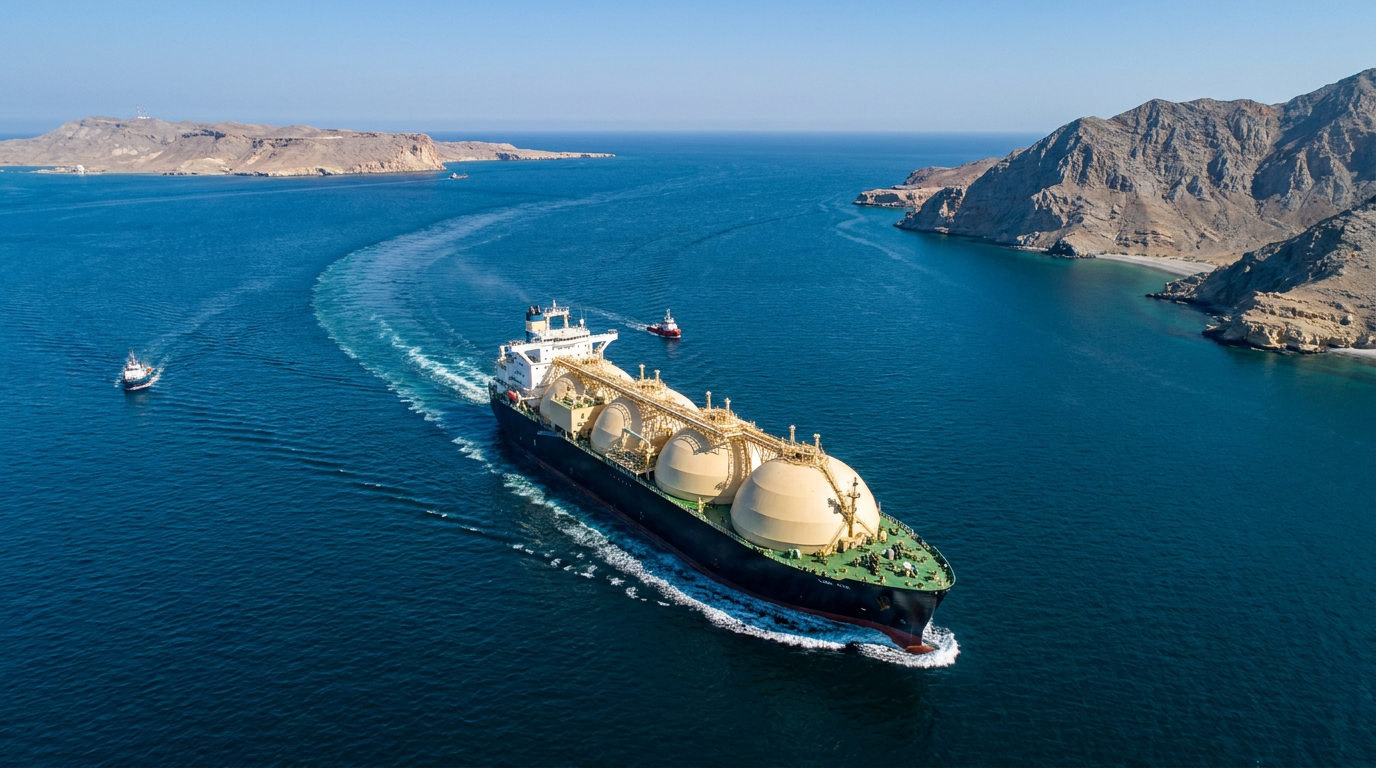
- Commercial shipping, including LNG tankers, has resumed passage through the Strait of Hormuz.
- Global oil benchmark prices tumbled as the geopolitical risk premium was priced out of the market.
- The International Energy Agency forecasts a significant global oil supply glut by next year.
- Lower crude prices are expected to reduce retail gasoline costs and ease broader inflationary pressures.
The ink is dry and the ships are moving. Following months of high-stakes negotiations, an interim peace agreement between the United States and Iran officially took effect this week, marking a sudden de-escalation in one of the world's most critical geopolitical flashpoints. The diplomatic breakthrough has immediately altered the landscape of global trade and energy security.[1][4]
The most visible and economically significant consequence of the pact is the reopening of the Strait of Hormuz. This narrow waterway between the Persian Gulf and the Gulf of Oman had been effectively choked off by military posturing and retaliatory strikes, paralyzing a route that historically handles roughly a fifth of the world's daily oil consumption and a massive share of its liquefied natural gas.[3][5]
Within hours of the deal's implementation, commercial maritime traffic began to resume. Satellite imagery and shipping trackers confirmed that liquefied natural gas tankers, including massive vessels loaded in Qatar, are already navigating the strait, signaling a rapid return to normalized trade operations in the region.[1][4]
The financial markets reacted instantly to the physical movement of ships. Global benchmark Brent crude experienced a sharp sell-off, tumbling as traders rapidly priced out the geopolitical risk premium that had kept energy costs artificially inflated for months. West Texas Intermediate (WTI) followed suit, dropping significantly in early trading.[2][3]
The International Energy Agency (IEA) quickly revised its global outlook in response to the treaty, forecasting a substantial supply glut by next year. With Iranian barrels expected to re-enter the legitimate global market and transit risks eliminated, the IEA anticipates that global oil supply will outstrip demand by over a million barrels per day.[2][6]

To understand the magnitude of this shift, one must look at the mechanics of global energy pricing. Oil is priced on the margin, meaning that even a small perceived shortage or surplus can trigger massive price swings. The closure of Hormuz represented a catastrophic supply threat; its reopening represents a sudden, overwhelming influx of available inventory.[5][6]
For the average consumer, the macroeconomic effects will be tangible within weeks. Lower crude prices directly reduce the cost of refining gasoline and diesel, which in turn lowers transportation costs for consumer goods across the supply chain.[7]
For the average consumer, the macroeconomic effects will be tangible within weeks.
Retail gasoline prices in the United States and Europe are projected to drop significantly ahead of the summer driving season. Economists note that this energy deflation could provide central banks with the breathing room they need to pause or reverse interest rate hikes, as energy costs have been a primary driver of headline inflation.[5][7]

However, the mechanics of the interim deal itself remain complex and fragile. The agreement signed by the US administration is characterized as a "freeze-for-freeze" arrangement. Iran has agreed to halt specific military escalations and guarantee safe passage in the strait, in exchange for targeted sanctions relief and the unfreezing of specific overseas assets.[1][4]
Diplomatic sources emphasize that this is an interim pact, not a comprehensive treaty. The core ideological and strategic disputes between Washington and Tehran remain unresolved, leaving the long-term security of the Persian Gulf in a state of suspended animation while diplomats attempt to forge a permanent framework.[3][4]
Regional powers are watching the implementation closely. Gulf Cooperation Council nations, particularly Saudi Arabia and the United Arab Emirates, rely entirely on the Strait of Hormuz to export their crude. While they welcome the resumption of trade, there is underlying anxiety about Iran's newly legitimized economic leverage and the shifting balance of power.[4][5]

The shipping industry is also navigating a complex recalibration. Insurance premiums for vessels transiting the Persian Gulf, which had skyrocketed to prohibitive levels during the conflict, are beginning to normalize. Yet, maritime insurers remain cautious, requiring extensive security guarantees before fully rolling back war-risk surcharges.[3][5]
Meanwhile, the anticipated supply glut poses a new challenge for OPEC+. The cartel, which includes major Middle Eastern producers and Russia, will now have to decide whether to aggressively cut production to defend a price floor, or allow prices to fall to squeeze out higher-cost producers in North America.[2][5]
The IEA report notes that the influx of Iranian oil, combined with record production from non-OPEC nations like the US, Guyana, and Brazil, creates a fiercely competitive landscape. If OPEC+ fails to maintain discipline, the oil market could see a prolonged period of depressed prices.[6]

Ultimately, the success of this economic recalibration depends entirely on the durability of the political agreement. If the interim deal holds, the global economy stands to benefit from a massive deflationary stimulus. If it fractures, the resulting shock could be even more severe than the initial crisis.[1][3]
How we got here
Early 2026
Geopolitical tensions peak, severely restricting commercial maritime traffic through the Strait of Hormuz.
Spring 2026
Diplomatic negotiations accelerate, leading to the framework of a 'freeze-for-freeze' agreement.
June 2026
The US and Iran sign the interim pact, agreeing to halt escalations in exchange for targeted sanctions relief.
June 18, 2026
The deal officially takes effect, and commercial oil and LNG tankers resume navigation through the strait.
Viewpoints in depth
Energy Consumers & Importers
Focuses on the immediate macroeconomic relief of lower energy costs.
For nations that are net importers of energy, as well as everyday consumers, the reopening of the strait is a massive economic stimulus. Analysts in this camp emphasize that the sudden drop in crude prices will quickly filter down to the retail level, lowering the cost of gasoline, diesel, and aviation fuel. This energy deflation is viewed as a critical weapon in the fight against broader inflation, potentially allowing central banks to ease interest rates sooner than previously expected.
Market Analysts & Forecasters
Analyzes the structural shift in global supply and the impending oil glut.
Market forecasters, including the IEA, are focused on the mechanical recalibration of global supply and demand. With Iranian oil re-entering the market and the war-risk premium evaporating, these analysts project a significant supply glut by next year. They argue that the market is shifting from a state of artificial scarcity to one of structural oversupply, which will force a painful reckoning for higher-cost producers and challenge OPEC+'s ability to manage prices.
Regional Stakeholders
Views the deal through a geopolitical lens, balancing trade resumption with security anxieties.
For Gulf Cooperation Council nations and regional diplomats, the deal is a double-edged sword. While the resumption of safe passage through Hormuz is essential for their own oil exports, there is deep underlying anxiety about the terms of the interim pact. This perspective highlights the fragility of a 'freeze-for-freeze' arrangement, warning that without a comprehensive treaty addressing long-term security architecture, the region remains vulnerable to sudden re-escalation.
What we don't know
- Whether the interim 'freeze-for-freeze' agreement will successfully evolve into a permanent, comprehensive peace treaty.
- How aggressively OPEC+ will respond to the impending supply glut, and whether they will cut production to defend prices.
- The exact timeline for when maritime insurance premiums will fully return to pre-conflict levels.
Key terms
- Strait of Hormuz
- A narrow waterway between the Persian Gulf and the Gulf of Oman, serving as the only sea passage from the Persian Gulf to the open ocean.
- Supply Glut
- A situation where the available supply of a commodity significantly exceeds market demand, typically leading to a sharp drop in prices.
- Brent Crude
- A major trading classification of sweet light crude oil that serves as a primary benchmark price for purchases of oil worldwide.
- War-Risk Premium
- An additional cost embedded in commodity prices or insurance rates due to the threat of military conflict disrupting supply chains.
- OPEC+
- An alliance of crude producers, including the Organization of the Petroleum Exporting Countries and allied non-members like Russia, that coordinates production levels.
Frequently asked
Why did oil prices drop so quickly?
The reopening of the Strait of Hormuz removes the threat of a massive supply disruption, and markets are now pricing in a surplus of oil as Iranian barrels re-enter the market.
Will this lower gas prices at the pump?
Yes, the drop in global crude oil prices typically translates to lower retail gasoline and diesel prices within a few weeks, providing relief for consumers.
Is the conflict permanently resolved?
No. This is an interim agreement designed to halt hostilities and resume trade while a longer-term, comprehensive treaty is negotiated between the US and Iran.
How much oil passes through the Strait of Hormuz?
Historically, roughly 20% of the world's daily oil consumption passes through the strait, making it one of the most critical maritime chokepoints on Earth.
Sources
Source coverage
7 outlets
3 viewpoints surfaced







[1]BloombergMarket Analysts & Forecasters
LNG Tanker Heads Toward Hormuz as US-Iran Pact Goes Into Effect
Read on Bloomberg →[2]CNBCEnergy Consumers & Importers
Oil falls as International Energy Agency forecasts supply glut next year after U.S.-Iran deal
Read on CNBC →[3]ReutersRegional Stakeholders
Oil prices tumble as US-Iran interim pact reopens Strait of Hormuz
Read on Reuters →[4]Al JazeeraRegional Stakeholders
Iran and US begin implementing interim agreement, maritime traffic resumes
Read on Al Jazeera →[5]The Wall Street JournalMarket Analysts & Forecasters
Energy markets recalibrate as Hormuz shipping lanes reopen
Read on The Wall Street Journal →[6]International Energy AgencyMarket Analysts & Forecasters
Oil Market Report - June 2026
Read on International Energy Agency →[7]Fox BusinessEnergy Consumers & Importers
Gas prices expected to drop following US-Iran interim agreement
Read on Fox Business →
Every angle. Every day.
Get business stories with full source coverage and perspective breakdowns delivered to your inbox.