
Global Remittance Fees Hit Historic Lows as Payment Networks Integrate Stablecoins
The average cost of sending money across borders has dropped below 1% for the first time, driven by traditional financial institutions adopting stablecoin technology for backend settlement.
By Factlen Editorial Team
- Financial Inclusion Advocates
- Believe low-cost digital payments are a critical tool for lifting families out of poverty and bypassing predatory fee structures.
- Legacy Payment Providers
- View blockchain integration as a necessary infrastructure upgrade to maintain market share and reduce their own operational costs.
- Regulatory Authorities
- Support the efficiency gains but remain focused on enforcing strict anti-money laundering and reserve-backing standards for stablecoin issuers.
What's not represented
- · Local cash-in/cash-out agents losing commission revenue
- · Central banks in emerging markets concerned about dollarization
Why this matters
For decades, migrant workers and international families lost billions annually to high wire-transfer fees. The invisible integration of stablecoins into everyday financial apps is keeping that money in the hands of the people who earned it, while proving a major real-world use case for blockchain technology.
Key points
- Global remittance costs have fallen below the UN's 3% target, averaging under 1%.
- Major payment processors are using dollar-pegged stablecoins for instant backend settlement.
- Consumers use familiar apps without needing to understand or manage cryptocurrency wallets.
- Regulatory clarity in major markets paved the way for institutional adoption.
- The shift is saving migrant workers an estimated $18 billion annually.
For decades, the cost of sending money across international borders has acted as a regressive tax on the global working class, with fees routinely swallowing up to seven percent of the transferred funds. That paradigm has officially fractured. According to a new benchmark report released by the World Bank, the global average cost of a cross-border remittance has plummeted below one percent for the first time in modern financial history. This milestone, which shatters the United Nations’ long-standing Sustainable Development Goal target of three percent, represents an estimated $18 billion in annual savings returned directly to families in developing economies. The precipitous drop is not the result of incremental policy tweaks, but rather a wholesale infrastructure shift: the quiet, widespread integration of stablecoin technology by the world's largest traditional payment networks.[1][4][6]
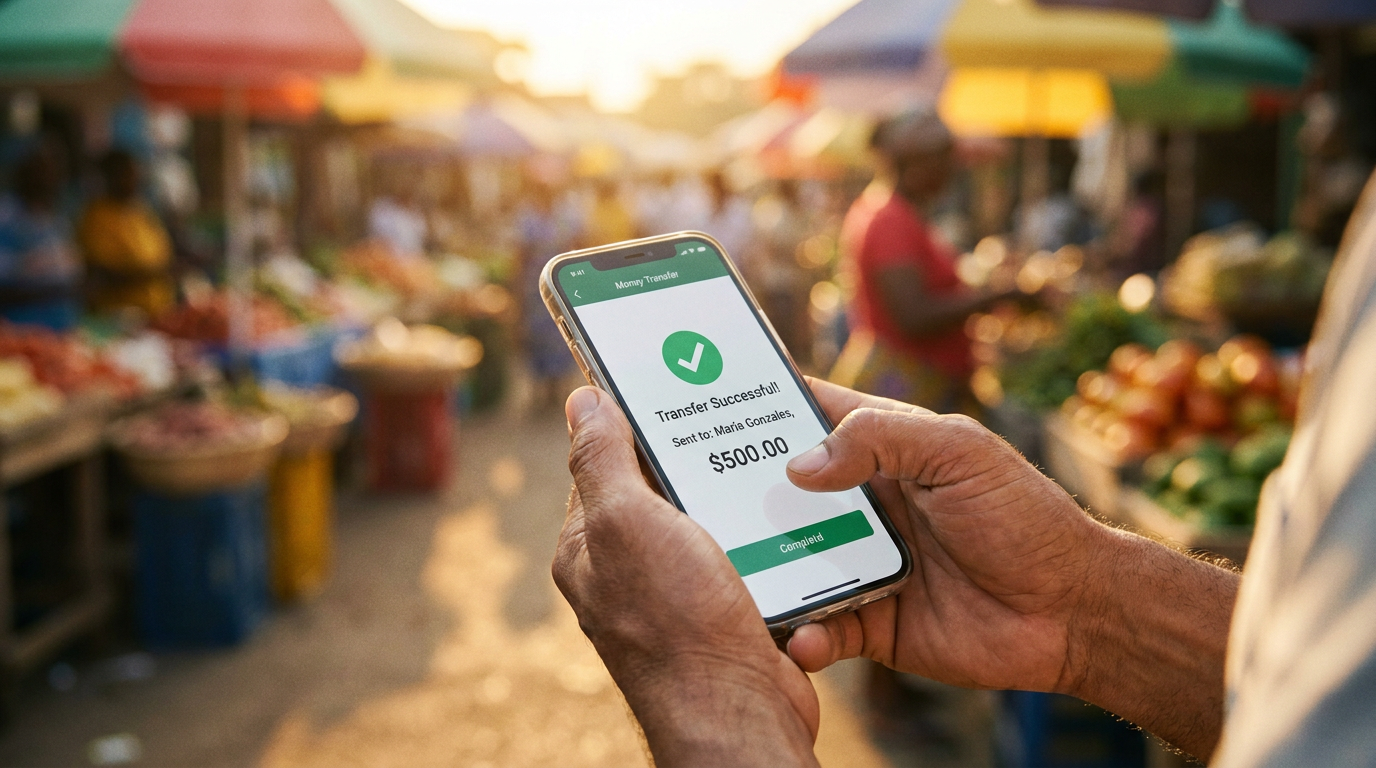
The transformation has occurred largely behind the scenes, invisible to the average consumer. When a worker in the United States or the United Arab Emirates uses a mainstream financial app to send $200 back to the Philippines or Mexico, they are no longer relying on the antiquated correspondent banking system. Instead, companies like Visa, Mastercard, and major fintech platforms are instantly converting that fiat currency into dollar-pegged stablecoins—primarily USDC or PayPal USD—and routing the funds across high-speed, low-cost blockchain networks. Upon arrival in the destination country, the digital dollars are instantly converted back into local fiat currency and deposited into the recipient's mobile wallet or bank account. The entire process settles in seconds rather than days, bypassing the multiple intermediary banks that historically extracted heavy tolls along the route.[2][3][5][7]

This backend revolution represents the most significant real-world validation of cryptocurrency technology to date, pivoting the industry's narrative away from speculative trading and toward tangible global utility. Financial analysts note that the shift was catalyzed by the comprehensive stablecoin regulatory frameworks passed in the United States and the European Union over the last two years. By establishing clear rules for reserve backing and institutional compliance, regulators provided legacy financial giants with the legal certainty required to abandon their proprietary, siloed ledgers in favor of interoperable blockchain rails. Consequently, even traditional remittance stalwarts like Western Union and MoneyGram have been forced to aggressively overhaul their routing architectures to remain competitive against digital-first upstarts.[1][2][5][8]
The macroeconomic implications of frictionless cross-border capital flow are already materializing in emerging markets. Beyond individual family remittances, small and medium-sized enterprises in the Global South are utilizing these same stablecoin rails to pay international suppliers and receive payments for exported goods without losing margins to currency conversion spreads and wire fees. Development economists at the Brookings Institution highlight that this increased dollar liquidity and velocity of money is acting as a localized economic stimulus, particularly in regions where traditional banking infrastructure remains sparse but smartphone penetration is nearly universal. By effectively turning a mobile phone into a globally connected bank account, the technology is rapidly accelerating financial inclusion metrics across Sub-Saharan Africa and Southeast Asia.[4][6][7][8]

The macroeconomic implications of frictionless cross-border capital flow are already materializing in emerging markets.
A critical factor in the institutional embrace of stablecoin rails has been the unexpected enhancement of transaction security and compliance. In the early days of cryptocurrency, the technology was frequently associated with illicit finance and regulatory evasion. However, the modern stablecoin ecosystem utilized by major payment processors features deeply embedded Know Your Customer (KYC) and Anti-Money Laundering (AML) protocols. Because public blockchains provide an immutable, transparent ledger of every transaction, compliance officers and regulatory agencies can trace the flow of funds with far greater precision than was possible within the opaque, fragmented correspondent banking system. This transparency has drastically reduced certain types of remittance fraud, providing peace of mind to both consumers and regulators.[1][3][8]
The success of private stablecoin networks has also forced a strategic pivot among global central banks regarding their own digital currency initiatives. For years, monetary authorities debated the necessity of launching retail Central Bank Digital Currencies (CBDCs) to modernize payment infrastructure. Now, witnessing the efficiency of privately issued, fully reserved stablecoins operating on public blockchains, many central banks are shifting their focus. Instead of building competing retail networks, institutions are increasingly looking to regulate and partner with private stablecoin issuers, treating them as the digital equivalent of commercial bank money. This public-private synthesis is accelerating the modernization of global finance without requiring governments to directly manage consumer-facing payment applications.[2][5][8]

Despite the overwhelming success of the rollout, structural friction remains in specific corridors. The 'last mile' of the remittance journey—converting digital funds into physical cash—still presents a bottleneck in economies that remain heavily reliant on paper currency. In these regions, recipients must often pay a commission to local cash-out agents, slightly offsetting the savings achieved during the international transit. Furthermore, nations with strict capital controls or hostile regulatory stances toward digital assets have largely blocked the integration of stablecoin rails, leaving their citizens reliant on the legacy correspondent banking system and its associated high costs.[4][7][8]
Looking ahead, industry leaders anticipate that the one-percent average fee will continue to compress as blockchain networks scale and local fiat off-ramps become more efficient. Analysts project that by the end of the decade, the cost of moving value across the globe will approach the cost of sending an email, effectively zeroing out the friction of international commerce. For the millions of migrant workers who have historically surrendered a portion of their labor to intermediary banks, the shift represents a permanent structural victory—one where cutting-edge financial technology is finally serving the populations that need it most.[2][5][6][7]
How we got here
2021
El Salvador adopts Bitcoin as legal tender, sparking early but volatile crypto remittance experiments.
2023
Major payment networks like Visa begin piloting USDC settlement on high-speed blockchains.
2024
The US and EU pass comprehensive stablecoin regulatory frameworks, providing legal certainty for institutions.
2025
Leading remittance apps seamlessly switch their backend routing to stablecoin rails.
June 2026
The World Bank reports the global average remittance fee has officially dropped below 1%.
Viewpoints in depth
Global Development Advocates
Focus on financial inclusion and poverty reduction.
Development economists and NGOs view the collapse of remittance fees as a massive victory for global equity. For decades, they have argued that the traditional banking system effectively penalized the world's poorest workers, siphoning off billions of dollars that could have been spent on education, healthcare, and local businesses in developing nations. By treating stablecoin infrastructure as a public utility rather than a speculative asset, advocates argue that blockchain technology is finally fulfilling its original promise of democratizing finance.
Traditional Financial Institutions
Focus on efficiency, cost-cutting, and remaining competitive.
For legacy banks and payment processors, the adoption of stablecoins is less about ideology and entirely about operational efficiency. Maintaining the old correspondent banking network required holding massive amounts of capital in pre-funded accounts across the globe, tying up liquidity and exposing institutions to currency risk. By moving to instant, atomic settlement on public blockchains, these companies have drastically reduced their overhead costs. They view stablecoins simply as a superior software upgrade for moving data—in this case, money—across the internet.
Blockchain Developers
Focus on the validation of their technology as a utility rather than a speculative asset.
The engineering communities behind major blockchain networks see this milestone as vindication against years of skepticism. After enduring multiple boom-and-bust cycles driven by speculative token trading, developers point to the remittance market as proof that decentralized ledgers can solve real-world logistical problems better than centralized databases. They argue that as these networks continue to scale, the underlying infrastructure will become entirely invisible to the end user, much like the TCP/IP protocols that power the internet.
What we don't know
- How quickly regions with strict capital controls will allow stablecoin-based remittance rails to operate legally.
- Whether central bank digital currencies (CBDCs) will eventually compete with or complement these private stablecoin networks.
Key terms
- Stablecoin
- A cryptocurrency pegged to a stable asset, usually the US dollar, designed to maintain a constant value.
- Remittance
- Money sent by a person working abroad back to their home country.
- Settlement
- The final transfer of funds between financial institutions to complete a transaction.
- Correspondent Banking
- A traditional network where banks hold accounts with one another to facilitate international money transfers, often resulting in high fees and delays.
- Fiat Currency
- Government-issued currency, such as the US Dollar, Euro, or Mexican Peso, that is not backed by a physical commodity.
Frequently asked
Do I need to buy cryptocurrency to send money this way?
No. Most users send and receive local fiat currency through familiar apps; the stablecoin conversion happens invisibly on the backend.
Is this safe from crypto market crashes?
Yes. Because the systems use stablecoins pegged 1:1 to the US dollar, the transferred value does not fluctuate like Bitcoin or other volatile cryptocurrencies.
Why is it so much cheaper than a wire transfer?
Stablecoin rails bypass the traditional correspondent banking network, which requires multiple intermediary banks that each take a cut of the transaction.
Can anyone use these new payment rails?
While widely available, access depends on your local regulations. Countries with strict capital controls or bans on digital assets may still restrict these services.
Sources
Source coverage
8 outlets
3 viewpoints surfaced








[1]ReutersLegacy Payment Providers
World Bank reports historic drop in global remittance costs driven by blockchain adoption
Read on Reuters →[2]CoinDeskRegulatory Authorities
Stablecoins push cross-border payment fees below 1% milestone
Read on CoinDesk →[3]BloombergLegacy Payment Providers
Visa and Mastercard's stablecoin rails are finally paying off for global workers
Read on Bloomberg →[4]The World BankFinancial Inclusion Advocates
2026 Remittance Prices Worldwide: The Impact of Distributed Ledgers
Read on The World Bank →[5]Financial TimesLegacy Payment Providers
The quiet crypto revolution: How stablecoins fixed the remittance market
Read on Financial Times →[6]CNBCRegulatory Authorities
Migrant workers save billions as crypto-backed remittance apps go mainstream
Read on CNBC →[7]Al JazeeraFinancial Inclusion Advocates
Families in the Global South see immediate benefits from new digital payment rails
Read on Al Jazeera →[8]Brookings InstitutionFinancial Inclusion Advocates
Financial Inclusion in the Digital Age: Evaluating Stablecoin Remittances
Read on Brookings Institution →


Every angle. Every day.
Get finance stories with full source coverage and perspective breakdowns delivered to your inbox.