
How Parametric Insurance is Changing Disaster Recovery
Instead of waiting months for claims adjusters, a new model of insurance uses satellite data and smart contracts to trigger instant payouts the moment a natural disaster strikes.
By Factlen Editorial Team
- Parametric Insurers & Insurtechs
- Argue that data-driven, automated payouts are the only scalable way to close the global protection gap against climate risks.
- Traditional Actuaries
- Emphasize the dangers of basis risk and maintain that parametric policies should complement, rather than replace, traditional indemnity coverage.
- Sovereign & Agricultural Policyholders
- Value the immediate liquidity that prevents economic collapse after a disaster, prioritizing speed over perfect damage correlation.
What's not represented
- · Local claims adjusters facing industry disruption
- · Small business owners navigating complex hybrid policies
Why this matters
As climate change accelerates the frequency of extreme weather, the traditional insurance model is struggling to keep up. Parametric insurance ensures that vulnerable communities, farmers, and governments receive immediate cash to survive and rebuild, rather than waiting months for a claims adjuster.
Key points
- Parametric insurance pays out automatically based on data triggers like wind speed or rainfall, bypassing claims adjusters.
- The global market for parametric policies is projected to reach $51.3 billion by 2034.
- Advances in satellite imagery and IoT sensors have made these data-driven policies highly reliable.
- Governments use parametric coverage to secure immediate liquidity for disaster response within days of an event.
- The main drawback is 'basis risk,' where actual physical damage may not perfectly match the data trigger.
The aftermath of a natural disaster is often compounded by a second, quieter crisis: the agonizing wait for financial relief. Traditional claims adjusters can take months to assess damage, leaving farmers, businesses, and governments stranded without liquidity during the critical recovery window.[8]
Enter parametric insurance, a model that is rapidly reshaping how the world finances climate resilience. Instead of indemnifying policyholders for the exact value of their physical losses, parametric policies pay out a pre-agreed, fixed amount automatically when a specific data threshold is crossed.[1]
The mechanism is elegantly simple. If a Category 4 hurricane strikes a specific geographic box, or if rainfall drops below 20 millimeters over a 30-day period, the policy triggers. There are no on-site inspections, no disputed claims, and no paperwork—just instant liquidity.[4][5]
This speed is driving explosive growth. The Society of Actuaries notes that the global parametric insurance market, valued at roughly $16.2 billion in 2024, is projected to surge to $51.3 billion by 2034. In the agricultural sector, Swiss Re estimates that parametric markets are expanding at a brisk 15% to 20% annually, vastly outpacing the 5% growth of traditional crop insurance.[2][4]

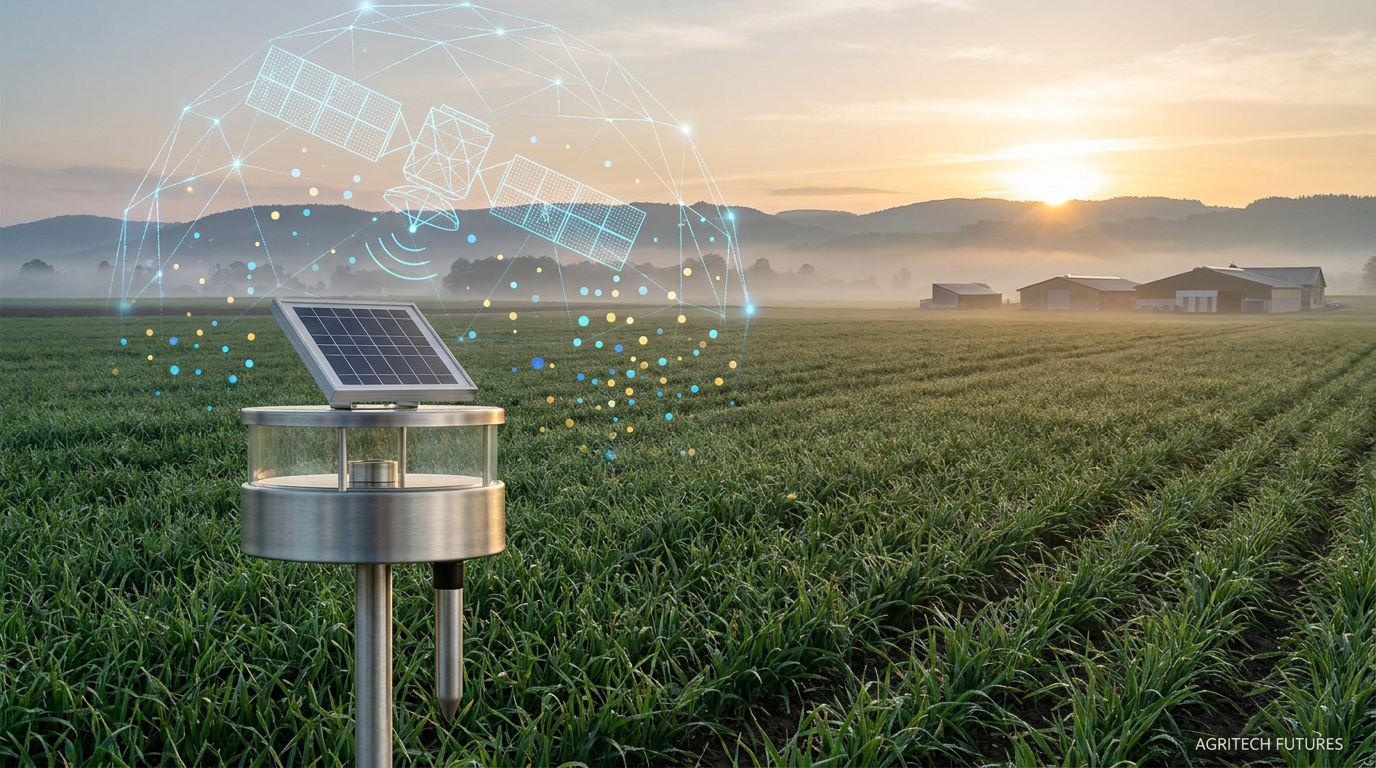
Historically, the primary bottleneck for this model was a lack of reliable, objective data. Today, the proliferation of satellite Earth observation technology, remote IoT sensors, and high-resolution climate modeling has provided the tamper-proof data backbone required to execute these contracts at scale.[4][6]
The agricultural sector has become a primary proving ground. Companies like Descartes Underwriting and Swiss Re are leveraging soil moisture indices and satellite imagery to protect smallholder farmers across the globe. When a severe drought hits, the data triggers an automatic cash transfer in a matter of days, allowing farmers to purchase new seeds or feed livestock before the season is entirely lost.[4][8]
Beyond individual farmers, sovereign governments are utilizing parametric structures to fund immediate disaster response. In June 2026, the Mexican government finalized a massive renewal of its catastrophe coverage, doubling its parametric insurance arrangement to approximately $575 million.[3]
Beyond individual farmers, sovereign governments are utilizing parametric structures to fund immediate disaster response.
This sovereign policy provides rapid risk transfer protection against earthquakes, volcanic eruptions, and hurricanes of medium to high severity, ensuring the government has immediate cash on hand to deploy emergency services and rebuild public infrastructure.[3]
The applications are also expanding far beyond natural disasters. The renewable energy sector uses parametric policies to hedge against lack of wind or lack of sun, stabilizing revenue for wind and solar farms when generation falls below profitable thresholds.[1][2]

In the consumer space, insurers like Mapfre are applying the parametric model to everyday frustrations. Flight delay insurance, for example, can be structured to automatically deposit funds into a traveler's account the moment a delay exceeds a specified duration, transforming the customer experience.[5]
However, the model is not without its flaws. The central vulnerability of parametric insurance is known as basis risk—the potential mismatch between the payout triggered by the policy and the actual losses experienced on the ground.[1]
Because payouts are tied strictly to the data parameter, a farmer might suffer a devastating localized crop failure, but if the regional wind speed or rainfall index falls just short of the trigger, they receive nothing. Conversely, a trigger might be met during a storm that miraculously causes very little actual damage, resulting in a windfall payout for the policyholder.[1][2][8]
To mitigate basis risk, insurtech firms like Arbol are deploying artificial intelligence and machine learning to analyze hyper-local weather data grids, tightening the correlation between the data trigger and the actual ground-level impact.[6]

Many of these next-generation policies are also being encoded as smart contracts on blockchain networks. This ensures that the payout process is entirely trustless and automated, further stripping out administrative overhead and reducing premiums for end-users.[6]
Because basis risk can never be entirely eliminated, industry experts emphasize that parametric insurance is best viewed as a complement to traditional indemnity insurance, rather than a wholesale replacement. It is designed to fill coverage gaps and provide immediate emergency liquidity, while traditional policies cover the long tail of complex rebuilding costs.[1][5]
As climate volatility accelerates, the global economy can no longer afford the friction of traditional loss adjustment. By shifting the insurance paradigm from assess and reimburse to detect and inject, parametric models are providing a vital, data-driven lifeline to the communities that need it most.[7][8]
How we got here
Early 2000s
The first parametric catastrophe bonds are introduced to help governments manage large-scale natural disaster risks.
2006
Mexico issues the groundbreaking CAT-Mex Ltd. transaction, becoming a pioneer in sovereign parametric risk transfer.
2019
Advances in satellite imagery and IoT sensors allow parametric insurance to expand into commercial agriculture and renewable energy.
June 2026
The Mexican government doubles its parametric catastrophe insurance coverage to $575 million, signaling massive sovereign demand.
Viewpoints in depth
Insurtech Innovators
Focusing on speed, automation, and expanding coverage to previously uninsurable risks.
For insurtech startups and major reinsurers, the traditional model of sending human adjusters to inspect storm damage is fundamentally unscalable in an era of accelerating climate volatility. By relying entirely on objective data feeds—such as satellite imagery, IoT soil sensors, and seismic monitors—they argue that the industry can strip out massive administrative overhead. This efficiency allows them to offer coverage in developing nations where traditional insurance markets have historically failed to penetrate.
Traditional Underwriters
Highlighting the persistent challenge of basis risk and the need for hybrid models.
While acknowledging the speed of parametric payouts, traditional actuaries caution against over-reliance on index-based triggers. Their primary concern is 'basis risk'—the scenario where a policyholder suffers catastrophic physical damage but receives no payout because the wind speed or rainfall index fell just short of the contractual threshold. Consequently, they advocate for hybrid approaches where parametric policies provide immediate emergency liquidity, while traditional indemnity insurance covers the long-tail costs of rebuilding.
Sovereign Policyholders
Prioritizing immediate macroeconomic stability over perfect damage correlation.
For governments in disaster-prone regions, the calculus is different. When a hurricane or earthquake strikes, the immediate priority is securing liquid capital to deploy emergency services, clear roads, and stabilize the economy. Sovereign buyers like the Mexican government utilize parametric catastrophe bonds and insurance because the funds arrive in days, preventing a short-term natural disaster from spiraling into a long-term sovereign debt crisis.
What we don't know
- How effectively AI and hyper-local data grids will ultimately reduce basis risk for individual policyholders.
- Whether parametric models will expand significantly into personal lines of insurance beyond niche travel products.
Key terms
- Parametric Insurance
- A type of insurance that pays a fixed amount when a specific, measurable event occurs, based on pre-agreed data triggers rather than actual physical losses.
- Indemnity Insurance
- The traditional insurance model that reimburses policyholders for the actual, verified cost of the damage they incurred.
- Basis Risk
- The risk that the actual losses experienced by a policyholder do not perfectly align with the payout triggered by the parametric index.
- Smart Contract
- A self-executing digital contract on a blockchain that automatically transfers funds when predefined data conditions are met.
Frequently asked
What is the difference between traditional and parametric insurance?
Traditional indemnity insurance reimburses you for the exact value of your physical damage after an adjuster inspects it. Parametric insurance pays a fixed, pre-agreed amount automatically when a specific data trigger (like wind speed) is met, regardless of the exact physical damage.
What is 'basis risk'?
Basis risk is the chance that the insurance payout doesn't match the actual damage. For example, a farmer might suffer severe crop damage, but if the local rainfall didn't drop below the exact policy trigger, they receive no payout.
How fast do parametric policies pay out?
Because they rely on automated data feeds rather than human claims adjusters, parametric policies typically pay out within 24 hours to 30 days of the triggering event.
Who buys parametric insurance?
It is widely used by sovereign governments for disaster relief, agricultural cooperatives protecting against drought, renewable energy farms hedging against low wind/sun, and increasingly by consumers for travel delays.
Sources
Source coverage
8 outlets
3 viewpoints surfaced








[1]Climate Policy InitiativeTraditional Actuaries
Parametric Insurance: Predictable, Fast Liquidity
Read on Climate Policy Initiative →[2]Society of ActuariesTraditional Actuaries
The Growth of Parametric Insurance
Read on Society of Actuaries →[3]ArtemisSovereign & Agricultural Policyholders
Mexico doubles parametric catastrophe insurance to ~$575m at 2026 renewal
Read on Artemis →[4]Swiss ReParametric Insurers & Insurtechs
Triggering change: How parametric insurance is increasingly helping farmers
Read on Swiss Re →[5]MapfreTraditional Actuaries
Parametric Insurance: Key Trends and Mapfre's Vision
Read on Mapfre →[6]Research and MarketsParametric Insurers & Insurtechs
Parametric Insurance Market Report 2026
Read on Research and Markets →[7]Environmental Defense FundSovereign & Agricultural Policyholders
Modernizing agricultural insurance to strengthen farmers' ability to adapt
Read on Environmental Defense Fund →[8]Factlen Editorial TeamParametric Insurers & Insurtechs
Synthesis by Factlen editorial team
Read on Factlen Editorial Team →

Every angle. Every day.
Get finance stories with full source coverage and perspective breakdowns delivered to your inbox.