
How the Geometry and Light of Your Living Room Actively Alter Your Brain Chemistry
The emerging science of neuroaesthetics reveals that interior design is not just about visual appeal—it is a biological intervention that can lower heart rates, reduce stress hormones, and accelerate healing.
By Irina Belova

In short
- Neuroaesthetics uses brain-scanning technology to prove that interior design directly alters human biology and hormone levels.
- Biophilic design—integrating nature into buildings—can lower blood pressure, reduce cortisol, and accelerate healing in hospitals.
- Lighting that mimics the natural sun cycle is critical for maintaining healthy circadian rhythms and sleep quality.
Modern humans are an anomaly in the history of biology. We are a species that evolved over millions of years to navigate forests, track the movement of the sun, and seek shelter under natural canopies, yet we now spend roughly 90 percent of our lives inside rigid, climate-controlled boxes.
For decades, the design of these indoor spaces was dictated by square-foot efficiency, cost-effective materials, or fleeting aesthetic trends. But a quiet revolution at the intersection of neuroscience and architecture is proving that our brains have not forgotten their evolutionary roots. The walls around us are constantly communicating with our nervous systems, and we are finally learning how to translate that dialogue.[1][3]
This emerging discipline is known as neuroaesthetics, or neuroarchitecture. It moves interior design out of the realm of subjective taste and into the realm of measurable biology. Using functional magnetic resonance imaging (fMRI) and biometric tracking, researchers can now document exactly what happens to the human body when it crosses the threshold of a room.
The data reveals that spatial stimuli—such as the angle of a wall, the texture of a floor, or the temperature of a lightbulb—trigger immediate, involuntary physiological responses. When a space is designed with these neurological pathways in mind, it ceases to be a mere container for human activity and becomes an active participant in preventive healthcare.[1][2][6]
The biological mechanisms at play are profound. Studies utilizing advanced brain scanning technology have demonstrated that encountering aesthetically pleasing, biologically resonant environments directly alters brain chemistry. Heart rates slow, blood pressure drops, and the brain releases a cascade of serotonin and dopamine.
Conversely, environments that lack natural light, feature harsh acoustics, or rely heavily on synthetic materials can trigger a low-grade, chronic stress response. In thoughtfully designed spaces, researchers have documented a 15 to 20 percent reduction in stress hormones like cortisol, providing a biological foundation for why certain rooms simply "feel good" to inhabit.[2]
At the core of this movement is biophilic design, an approach that intentionally integrates natural elements, patterns, and processes into the built environment. This is not merely about placing a potted plant in a corner; it is a comprehensive strategy that recognizes our innate biological need to connect with the living world.
Environmental psychologists point to Attention Restoration Theory (ART), which posits that the modern world demands intense, directed attention that quickly depletes our cognitive reserves. Natural stimuli—such as the fractal patterns found in wood grain, the sound of flowing water, or the dappled light of a window—engage our "soft fascination," allowing the brain's directed attention mechanisms to rest and recover.[1][4]
The clinical evidence supporting biophilic interventions is robust and growing. Research indicates that visual connections to nature can significantly lower systolic blood pressure and heart rates while improving overall mood. But the benefits extend beyond the visual.
Non-visual connections, such as the tactile sensation of natural materials or the auditory presence of nature sounds, have been shown to further reduce stress hormones. In healthcare settings, these principles are being deployed as adjunctive therapies. Hospitals utilizing biophilic design report that patients experience reduced pain levels, require less medication, and are discharged faster than those in conventional, sterile rooms.[4][5]
Light is perhaps the most potent neuroarchitectural tool available. The human circadian rhythm—our internal biological clock—is primarily synchronized by light. A design that ignores the natural progression of daylight condemns its occupants to fatigue, insomnia, and cognitive drain.
Neuroarchitecture advocates for spaces that respect light and dark cycles, utilizing strategic window placements and dynamic artificial lighting that mimics the color temperature of the sun throughout the day. Morning light exposure supports phase alignment and alertness, while warmer, dimmer light in the evening signals the brain to produce melatonin, preparing the body for restorative sleep.[3]
Beyond light and nature, the physical geometry of a space dictates how our brains process information. The human brain processes spatial dimensions holistically, and the height of a ceiling can literally change the way we think. High ceilings have been shown to encourage abstract, creative, and expansive thinking, making them ideal for brainstorming spaces or art studios.
Conversely, lower ceilings promote focus, detail-oriented work, and concentration, making them better suited for operating rooms or deep-work office pods. Even the shapes of our furniture matter; fMRI studies reveal that curvilinear spaces and rounded edges activate the brain's pleasure centers, while sharp, jagged angles can trigger subconscious threat-detection mechanisms.[3][6]
Acoustics also play a critical, often overlooked role in the multi-sensory experience of a building. Sound pollution in open-plan offices or echoing homes is a primary driver of sensory overload and anxiety. Thoughtful neuroarchitectural design incorporates acoustic solutions—such as specialized panels, heavy curtains, and strategic spatial layouts—to mitigate noise and create environments that support relaxation. Recent studies in living labs have demonstrated that immersive indoor environments combining visual biophilic features with curated natural soundscapes significantly improve occupant satisfaction and cognitive performance while simultaneously reducing stress.[4][6]
The economic and educational implications of these findings are staggering. In commercial settings, employees working in biophilic offices report up to a 15 percent increase in productivity, alongside lower rates of absenteeism and fatigue. In the educational sector, classrooms designed with dynamic daylighting, natural materials, and views of greenery are associated with improved attention spans, higher test scores, and better emotional stability among students. By fostering a subconscious sense of safety and connection, these environments allow the brain to redirect energy from stress management toward learning and collaboration.
Despite the overwhelming physiological evidence, researchers caution that neuroaesthetics is not a one-size-fits-all prescription. Human perception is highly individualized, influenced by a concept known as "audiovisual aptitude." What serves as a restorative, stimulating environment for one person might cause sensory overload for another, particularly among neurodivergent individuals. The challenge for modern designers is to create adaptable spaces that offer occupants a degree of control over their lighting, acoustics, and visual privacy, ensuring that the environment can be tuned to meet varying cognitive needs.[1][4]
As the technology to measure human biological responses becomes more accessible, the standard for what constitutes "good design" is fundamentally shifting. It is no longer sufficient for a building to simply look beautiful in a photograph; it must actively support the physical and mental health of the people inside it. By bridging the gap between art and neuroscience, we are moving toward a future where our homes, schools, and hospitals are engineered not just for shelter, but as active allies in human flourishing.[1][2][3]
Jargon, explained
- Neuroarchitecture
- A discipline that combines neuroscience and architecture to understand how the built environment affects human behavior, health, and cognitive function.
- Biophilic Design
- An architectural approach that seeks to connect building occupants more closely to nature by incorporating natural lighting, ventilation, plants, and organic materials.
- Attention Restoration Theory (ART)
- A psychological theory suggesting that exposure to natural environments helps humans recover from cognitive fatigue caused by prolonged periods of intense focus.
- Circadian Entrainment
- The alignment of the body's internal biological clock with external environmental cues, primarily the natural cycle of sunlight and darkness.
- Salutogenic Design
- An approach to design that focuses on factors that support human health and well-being, rather than on factors that cause disease.
Common questions
What is neuroaesthetics?
Neuroaesthetics is the scientific study of how the brain processes and responds to beauty, art, and spatial design, measuring biological changes like heart rate and hormone levels.
How does biophilic design reduce stress?
By mimicking the natural environments humans evolved in, biophilic design engages 'soft fascination,' allowing the brain's directed attention mechanisms to rest, which lowers cortisol and blood pressure.
Does ceiling height actually affect thinking?
Yes. Brain imaging shows that high ceilings encourage abstract, creative thinking, while lower ceilings promote focus and detail-oriented concentration.
Do I need a massive budget to apply these principles?
No. While structural changes are expensive, simple interventions like maximizing natural light, adding indoor plants, and using soft, curvilinear furnishings can significantly improve a space's neuroaesthetic profile.
Competing readings
Environmental Psychologists
Focus on the evolutionary mismatch between our biology and modern indoor environments.
This camp argues that the human brain is fundamentally unsuited for the rigid, artificial boxes we currently inhabit. Relying heavily on Attention Restoration Theory (ART), they posit that the sharp angles, synthetic lighting, and constant noise of modern buildings demand exhausting levels of directed attention. By reintroducing natural stimuli—fractal patterns, flowing water, and greenery—they believe we can trigger "soft fascination," a state that allows the brain's cognitive reserves to replenish naturally without pharmacological intervention.
Clinical Researchers
Prioritize measurable physiological outcomes to validate design choices in healthcare.
For medical professionals and public health researchers, neuroarchitecture is a tool for tangible harm reduction. They focus on the hard data: fMRI scans showing reduced amygdala activation, blood tests revealing 20% drops in cortisol, and hospital metrics proving that patients in biophilic rooms require less morphine and are discharged days earlier. To this group, aesthetic beauty is secondary; the primary goal is engineering spaces that act as passive, continuous medical treatments.
Commercial Architects
Look to leverage neuroaesthetics to boost productivity, creativity, and economic output.
Architects designing corporate headquarters and educational institutions view neuroaesthetics as a mechanism for optimizing human performance. By manipulating ceiling heights to foster specific types of thinking, or adjusting acoustic panels to eliminate distracting soundscapes, they aim to create frictionless environments. They point to the 15% increase in worker productivity and reduced absenteeism as proof that investing in biologically resonant design yields massive returns on investment.
- Neuroarchitects & Designers
- Focus on translating scientific data into practical spatial manipulation to actively improve human well-being.
- Environmental Psychologists
- Emphasize evolutionary biology and Attention Restoration Theory, studying how natural stimuli replenish cognitive reserves.
- Clinical & Public Health Researchers
- Prioritize measurable physiological outcomes, such as reduced cortisol and faster hospital recovery times, to validate design choices.
Perspectives this story doesn't cover
- Neurodivergent individuals who may experience sensory stimuli differently
- Low-income communities lacking access to neuroarchitectural interventions
Sources
Source coverage
6 outlets
3 viewpoints surfaced






- [1]Factlen Editorial TeamClinical & Public Health Researchers
Synthesis by Factlen editorial team
Read on Factlen Editorial Team → - [2]Science in DesignNeuroarchitects & Designers
Neuroaesthetics: The Convergence of Neuroscience and Aesthetics
Read on Science in Design → - [3]We Are ShiftaNeuroarchitects & Designers
Neuroarchitecture in Interior Design: How Spaces Transform Emotions
Read on We Are Shifta → - [4]MDPIEnvironmental Psychologists
Multi-Sensorial Experience of Contact with Nature in the Built Environment
Read on MDPI → - [5]National Institutes of HealthClinical & Public Health Researchers
Integrating digital health and biophilic design for therapeutic environments
Read on National Institutes of Health → - [6]BaskervillNeuroarchitects & Designers
Neuroarchitecture: How Spaces Transform Emotions and Well-Being
Read on Baskervill →
More in Lifestyle
See all →Bio-Fabrication
The Mycelium Revolution: How Furniture Designers Are Using Fungi, Algae, and Circular Design to End the Landfill Crisis
2 sources
Acoustic Design
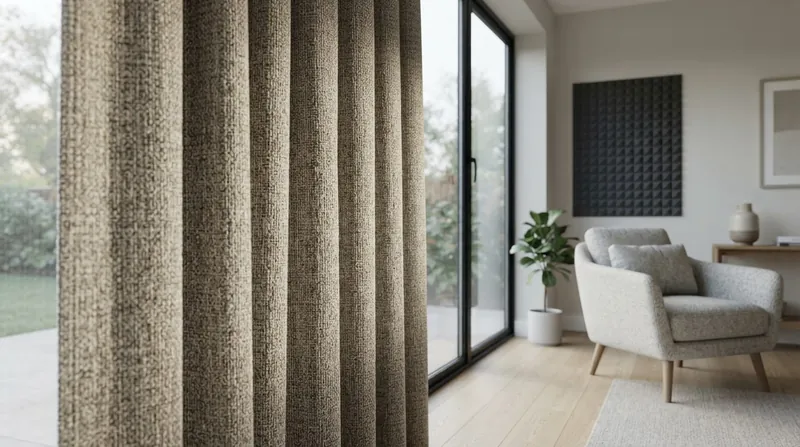
Why Curtains and Soft Furnishings Can Only Absorb High-Frequency Sound Above 1,000 Hertz
5 sources
Lighting Tech
The Mathematical Blind Spot in LED Lighting: Why High-CRI Bulbs Still Dull Wood Finishes and Skin Tones
4 sources

Wayfair Strategy
Wayfair Launches 'Wayfair Delivers' Platform, Centering Brand on Logistics and 'Wayfair Verified' Product Vetting
3 sources

Comments
Every angle. Every day.
Get Lifestyle stories with full source coverage and perspective breakdowns, free every day.