
Do Sleep Trackers Actually Work? What the Clinical Evidence Says About Wearable Accuracy
Consumer sleep trackers are highly accurate at measuring total sleep time, but clinical studies reveal significant limitations in their ability to track specific sleep stages like REM and deep sleep.
By Factlen Editorial Team
- Clinical Sleep Specialists
- Medical professionals who rely on direct brain-wave data for diagnosis.
- Quantified Self Advocates
- Data-driven consumers and researchers focused on longitudinal trends.
- Behavioral Psychologists
- Experts focused on the psychological feedback loop of health tracking.
What's not represented
- · Individuals with chronic insomnia whose treatment is complicated by wearable data
- · Wearable hardware engineers designing the next generation of non-contact sensors
Why this matters
Millions of consumers base their daily routines, exercise intensity, and even their mood on the 'sleep scores' generated by their wearables. Understanding exactly what these devices can and cannot measure prevents unnecessary anxiety and helps users make genuinely evidence-based decisions about their health.
Key points
- Consumer sleep trackers are highly accurate (>95%) at detecting when you are asleep versus awake.
- Wearables struggle to accurately classify specific sleep stages like REM and deep sleep, as they cannot measure brain waves.
- In clinical trials, the Oura Ring demonstrated higher sleep stage accuracy than the Apple Watch or Fitbit.
- Obsessing over sleep metrics can lead to 'orthosomnia,' a condition where tracking anxiety actively worsens sleep quality.
- New FDA-cleared features make wearables effective screening tools for sleep apnea, though they cannot replace a medical diagnosis.
Every morning, millions of people wake up and immediately check their wrists or fingers to find out how they slept. Consumer sleep trackers—led by devices like the Oura Ring, Apple Watch, and Whoop—have transformed sleep from a subjective feeling into a quantified metric. These devices report exact percentages of REM cycles, deep sleep, and light sleep, often distilling the night into a single, color-coded 'recovery score.'[7]
The precision of these numbers suggests a level of medical authority. However, precision and accuracy are not the same thing. As the wearable market has matured, clinical researchers have spent the last few years rigorously testing these consumer devices against the gold standard of sleep medicine to answer a fundamental question: do these trackers actually know what your brain is doing while you are unconscious?[1][2]
To understand the evidence, it is necessary to understand the mechanism. In a clinical sleep lab, patients undergo polysomnography (PSG). This involves attaching electrodes to the scalp to measure electroencephalogram (EEG) brain waves, alongside sensors for eye movement and muscle tension. PSG directly observes the neurological signatures of different sleep stages.[5][6]
Consumer wearables do not measure brain waves. Instead, they rely on two primary sensors: an accelerometer to detect physical movement, and a photoplethysmography (PPG) sensor, which uses tiny LEDs to measure heart rate and blood flow at the skin. The devices use proprietary algorithms to infer brain states from these peripheral signals. They are essentially trying to diagnose the engine by listening to the vibrations of the chassis.[1][2][7]

When it comes to the most basic metric—total sleep time—the clinical evidence is overwhelmingly positive. A comprehensive 2024 multicenter validation study published in the Journal of Medical Internet Research evaluated 11 different consumer sleep trackers against PSG. The researchers found that wearables demonstrate greater than 95% sensitivity for detecting sleep versus wake states.[2]
If a user simply wants to know whether they are consistently getting seven hours of sleep or chronically surviving on five, consumer trackers are highly reliable. They effectively capture the macro-trends of sleep duration and sleep efficiency (the percentage of time spent asleep while in bed).[2][3]
The data becomes significantly less reliable when devices attempt to classify specific sleep stages. Distinguishing between light sleep, deep sleep (N3), and REM sleep requires detecting subtle neurological shifts that do not always manifest as changes in heart rate or wrist movement. Consequently, the accuracy of sleep stage classification drops considerably across all consumer devices.[1][3]
The data becomes significantly less reliable when devices attempt to classify specific sleep stages.
A rigorous 2024 study published in MDPI Sensors compared the Oura Ring Gen 3, the Apple Watch Series 8, and the Fitbit Sense 2 simultaneously against clinical PSG in a single-night inpatient protocol. The results revealed stark differences in how well the algorithms handled sleep architecture.[1]
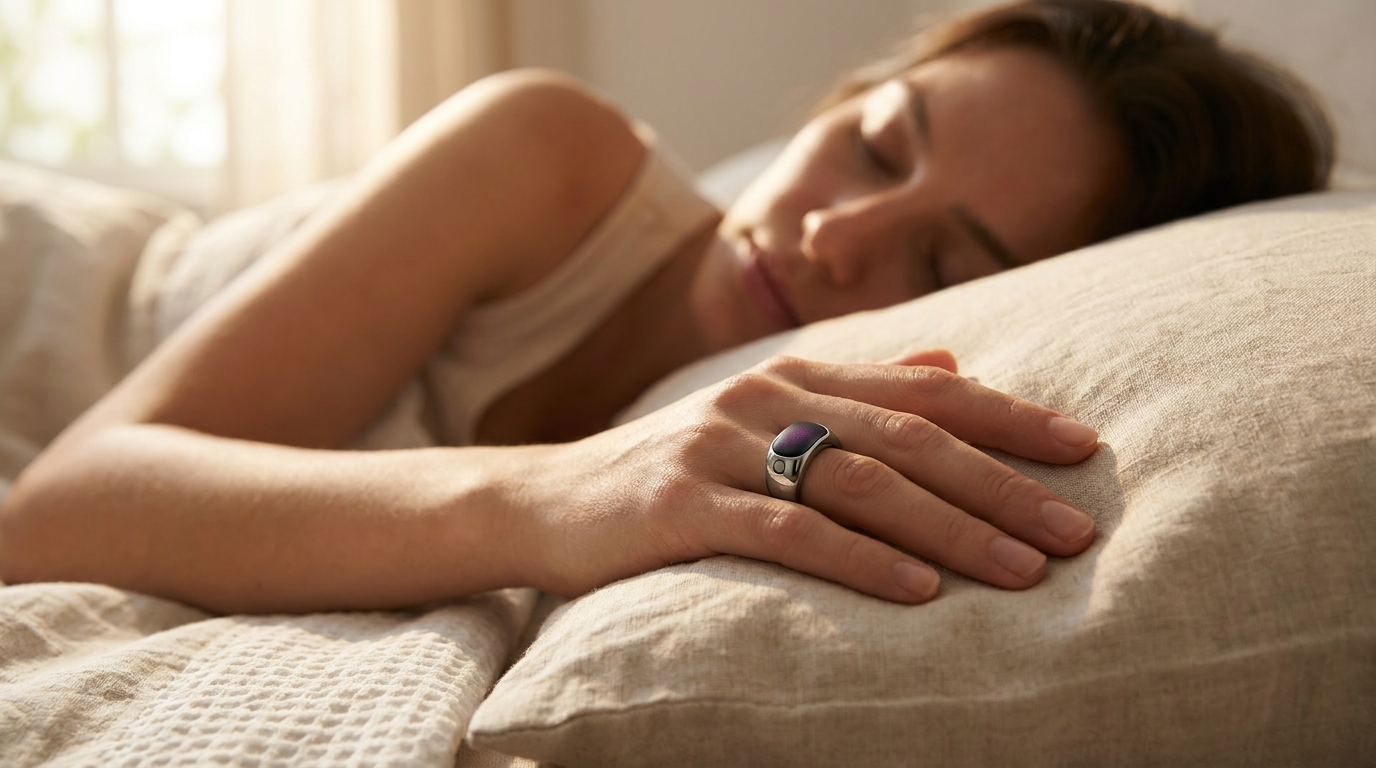
The Oura Ring demonstrated the highest accuracy among the tested devices, achieving a sensitivity of 76.0% to 79.5% across the four-stage classification (wake, light, deep, and REM). Researchers noted that the ring form factor—which measures signals from the finger's dense capillary bed rather than the wrist—combined with its specific algorithm, allowed it to track closely with PSG estimates.[1]
In contrast, the smartwatch models struggled with specific stages. The study found that the Apple Watch severely underestimated deep sleep, showing only a 50.5% sensitivity for the N3 stage, while overestimating light sleep by an average of 45 minutes. The Fitbit Sense 2 similarly overestimated light sleep and underestimated deep sleep, achieving only 61.7% sensitivity for deep sleep detection.[1]

These limitations highlight a growing psychological concern among sleep specialists: 'orthosomnia.' Coined by researchers, the term describes an unhealthy preoccupation with achieving perfect sleep metrics. When users anchor their daily expectations to algorithmic guesses about their REM cycles, they can develop performance anxiety around bedtime, which paradoxically worsens their actual sleep quality.[5][6]
This psychological feedback loop is compounded by the nocebo effect. A user might wake up feeling naturally refreshed, but upon seeing a low 'recovery score' on their app, they begin to feel genuinely fatigued and cognitively sluggish. Behavioral psychologists warn that for anxiety-prone individuals, the daily grading of sleep can do more harm than good.[7]

Despite these staging limitations, wearables are making genuine breakthroughs in medical screening. Recent updates to devices like the Apple Watch Series 10 and Samsung Galaxy Watch 7 include FDA-cleared features for detecting signs of moderate-to-severe sleep apnea. By monitoring breathing disturbances via accelerometry over a 30-day period, these devices act as early warning systems.[4]
Systematic reviews of oximetry and movement-based wearable screening show an average sensitivity of roughly 93% for detecting sleep apnea. This means the devices are excellent at catching the condition if it exists. However, their specificity is lower (around 63%), meaning they produce false positives. A wearable can flag a potential issue, but a formal diagnosis still requires a clinical sleep study.[4]

Ultimately, the true value of a consumer sleep tracker lies in behavioral modification rather than diagnostic precision. The simple act of measuring sleep often nudges users toward better 'sleep hygiene'—prompting earlier bedtimes, consistent routines, and a reduction in late-night alcohol or caffeine consumption.[5][7]
When viewed as behavioral mirrors rather than medical monitors, sleep trackers are powerful tools. They excel at establishing a personal baseline and highlighting how lifestyle choices affect overnight heart rate and total rest. But when the app claims you missed your deep sleep target by twelve minutes, the clinical evidence suggests you should take the number with a grain of salt.[3][6][7]
How we got here
2015
The first generation of the Oura Ring launches on Kickstarter, shifting sleep tracking from the wrist to the finger.
2020
The term 'orthosomnia' gains traction in medical literature to describe patients seeking treatment for poor sleep scores despite feeling fine.
2024
Major multicenter clinical trials publish comprehensive data comparing top consumer wearables against gold-standard polysomnography.
Late 2024
Apple receives FDA clearance for a sleep apnea notification feature on the Apple Watch Series 10, moving wearables into clinical screening.
Viewpoints in depth
Clinical Sleep Specialists
Medical professionals who rely on direct brain-wave data for diagnosis.
For board-certified sleep doctors, the distinction between screening and diagnosis is paramount. They emphasize that consumer wearables cannot measure electroencephalogram (EEG) brain activity, meaning any sleep stage data (like REM or deep sleep percentages) is an algorithmic guess based on heart rate and movement. While they welcome the FDA-cleared sleep apnea screening features as a way to identify at-risk patients, they caution that relying on consumer devices to self-diagnose or micromanage sleep stages often leads to unnecessary anxiety and misdirected treatments.
Quantified Self Advocates
Data-driven consumers and researchers focused on longitudinal trends.
This camp argues that while wearables may lack the absolute precision of a clinical sleep study, their true power lies in continuous, long-term data collection. A polysomnography test only captures a single, often uncomfortable night in a lab. In contrast, a smart ring worn for six months establishes a highly personalized baseline. By tracking deviations from this baseline, users can accurately measure how lifestyle interventions—like cutting out late-night alcohol, changing bedroom temperature, or shifting exercise times—impact their overall sleep efficiency and resting heart rate.
Behavioral Psychologists
Experts focused on the psychological feedback loop of health tracking.
Psychologists warn about the rising phenomenon of 'orthosomnia'—an unhealthy obsession with achieving perfect sleep scores. They point out that sleep trackers can induce a powerful nocebo effect: a user might wake up feeling naturally refreshed, check their app, see a 'poor recovery' score, and subsequently experience genuine fatigue and cognitive sluggishness. This camp advocates for 'data fasting' or disabling daily score notifications for individuals prone to anxiety, emphasizing that subjective well-being should always override algorithmic feedback.
What we don't know
- How upcoming non-contact radar sensors (like those built into smart displays or mattresses) will compare to wrist and finger wearables in large-scale clinical trials.
- The long-term psychological impact of daily sleep grading on pediatric and adolescent populations who adopt wearables early.
Key terms
- Polysomnography (PSG)
- The clinical gold standard for sleep studies, which uses electrodes to measure brain waves, eye movement, and muscle activity.
- Photoplethysmography (PPG)
- An optical sensor technology used in wearables to measure heart rate and blood flow using tiny LED lights.
- Orthosomnia
- A medical term for the unhealthy preoccupation with sleep data and the pursuit of perfect sleep metrics.
- Sleep Efficiency
- The percentage of time a person spends actually asleep while lying in bed.
- Sensitivity vs. Specificity
- In medical screening, sensitivity is the ability to correctly identify those with a condition, while specificity is the ability to correctly identify those without it.
Frequently asked
Can a smartwatch accurately tell me how much REM sleep I get?
No consumer device can perfectly track REM sleep. They estimate stages using heart rate and movement, which achieves only 50-80% accuracy compared to clinical brain-wave monitoring.
Can my Apple Watch or Oura Ring diagnose sleep apnea?
While newer Apple Watches have FDA-cleared features to detect signs of moderate-to-severe sleep apnea, they are screening tools, not diagnostic devices. A formal diagnosis requires a medical sleep study.
What is orthosomnia?
Orthosomnia is an unhealthy obsession with achieving perfect sleep metrics on a tracking device, which can ironically cause anxiety that worsens actual sleep quality.
Are smart rings better than smartwatches for tracking sleep?
Rings and watches use similar sensors, but clinical studies show the Oura Ring currently has the highest published accuracy for sleep staging. Rings are also generally rated as more comfortable for all-night wear.
Sources
Source coverage
7 outlets
3 viewpoints surfaced






[1]MDPI SensorsQuantified Self Advocates
Validation of Consumer Sleep Trackers Against Polysomnography
Read on MDPI Sensors →[2]JMIR mHealth and uHealthQuantified Self Advocates
Accuracy of 11 Wearable, Nearable, and Airable Consumer Sleep Trackers
Read on JMIR mHealth and uHealth →[3]Journal of Clinical Sleep MedicineClinical Sleep Specialists
Meta-Analysis of Wrist-Worn Sleep Tracking Devices
Read on Journal of Clinical Sleep Medicine →[4]Sleep Medicine ReviewsBehavioral Psychologists
Oximetry-based devices in diagnosis of obstructive sleep apnea: A systematic review
Read on Sleep Medicine Reviews →[5]National Sleep FoundationClinical Sleep Specialists
Are Sleep Trackers Accurate?
Read on National Sleep Foundation →[6]Cleveland ClinicClinical Sleep Specialists
Do Sleep Trackers Actually Work?
Read on Cleveland Clinic →[7]Factlen Editorial TeamBehavioral Psychologists
Synthesis by Factlen editorial team
Read on Factlen Editorial Team →

Every angle. Every day.
Get shopping stories with full source coverage and perspective breakdowns delivered to your inbox.