
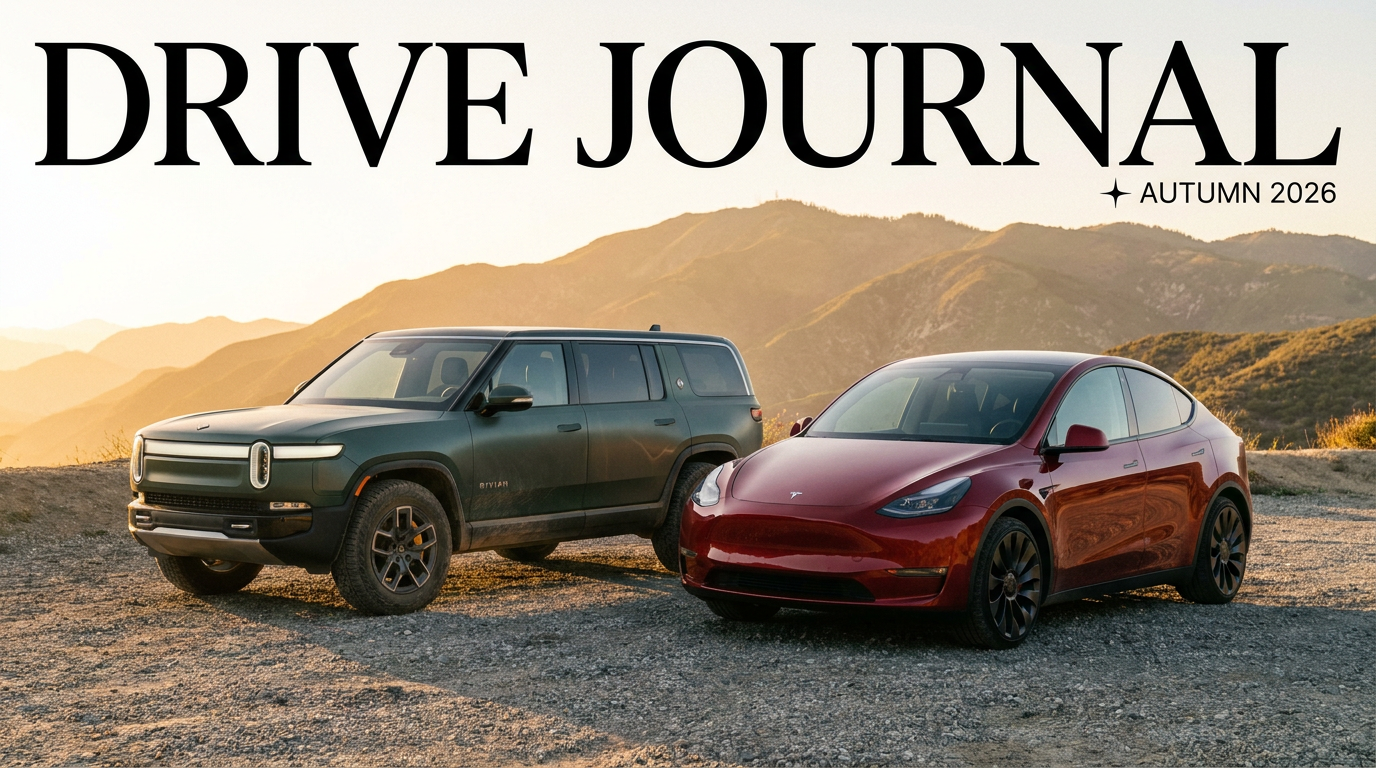
2026 Rivian R2 vs. Tesla Model Y: The Midsize EV SUV Comparison
The refreshed Tesla Model Y and the all-new Rivian R2 offer competing visions for the $50,000 electric SUV market, pitting aerodynamic efficiency against rugged utility.
By Factlen Editorial Team
- Outdoor Adventurers
- Prioritize ground clearance, boxy cargo space, and off-road capability.
- Efficiency Maximizers
- Focus on aerodynamic range, proven charging curves, and on-road dynamics.
- Value-Conscious Buyers
- Focus on the lowest cost of entry for a premium EV experience.
What's not represented
- · Traditional Automaker Loyalists
- · Urban Commuters with Tight Parking Constraints
Why this matters
For the first time, buyers in the most popular automotive segment have a genuine, comparably priced alternative to the Tesla Model Y that doesn't compromise on charging infrastructure or software.
Key points
- The Rivian R2 and Tesla Model Y Performance trims are priced nearly identically at roughly $58,000.
- Rivian's R2 offers significantly more cargo space (90.1 cu ft) and ground clearance (9.6 inches).
- Tesla's Model Y maintains an edge in aerodynamic efficiency, charging speed, and straight-line acceleration.
- Both vehicles use the NACS charging port, granting adapter-free access to Tesla Superchargers.
- The Model Y offers a much lower starting price in 2026, with base models starting around $40,000.
The electric midsize SUV segment has a new heavyweight bout for 2026. Tesla’s Model Y, fresh off its comprehensive "Juniper" refresh, has long been the default choice for families and commuters. But Rivian’s highly anticipated R2 has finally arrived, offering a radically different take on what a $50,000 electric crossover should be.[1][9]
Buyers now face a genuine choice between two distinct engineering philosophies. The Model Y prioritizes sleek aerodynamic efficiency and on-road dynamics, while the R2 leans heavily into rugged versatility and maximum interior volume.[4][6]
On price and availability, the Model Y holds a distinct advantage for early 2026 shoppers. Tesla’s entry-level rear-wheel-drive variant starts around $39,990. In contrast, Rivian is launching the R2 exclusively in its top-tier Performance Launch Edition for $57,990, with the more affordable $45,000 standard trims delayed until 2027.[6][8]
However, at the top of the range, the financial gap vanishes. The Model Y Performance, priced at roughly $57,490, sits within a few hundred dollars of the launch R2. At this price point, the decision comes down entirely to capability and lifestyle fit rather than cost.[6][7]

The case for the Rivian R2 centers on sheer utility and off-road capability. Against it is a higher aerodynamic drag and slightly slower steering response. The evidence is found in its physical geometry: 9.6 inches of ground clearance compared to the Model Y's 6.0 inches, giving the R2 genuine trail-ready credentials that the Tesla cannot match.[1][3]
The case for the Tesla Model Y centers on on-road dynamics and proven efficiency. Against it is a lack of off-road prowess and a teardrop shape that limits bulky cargo. The evidence lies in its 3.3-second sprint to 60 mph and a drag coefficient that allows it to extract maximum highway range from every kilowatt-hour.[6][9]
Cargo space reveals a stark contrast in design. The Rivian’s upright greenhouse, flat hood, and slightly longer wheelbase yield a massive 90.1 cubic feet of total storage. This includes a cavernous front trunk and clever under-floor compartments.[3][8]
The Rivian’s upright greenhouse, flat hood, and slightly longer wheelbase yield a massive 90.1 cubic feet of total storage.
The Model Y, while highly practical for its class, tops out around 76 cubic feet. Its sloping roofline cuts into vertical storage, making it less ideal for hauling boxy furniture or large outdoor gear, though it remains one of the most spacious options among aerodynamic crossovers.[3][7]

Ride quality has historically been a point of contention for both brands, but 2026 brings major improvements. The Model Y's "Juniper" refresh introduced retuned suspension, acoustic glass, and upgraded cabin materials, transforming it into a remarkably quiet and comfortable highway cruiser.[6][9]
Rivian has similarly learned from its larger R1 models. The R2 abandons complex air suspension for traditional coils over electronic dampers. The result is a smooth, composed ride that absorbs road imperfections effortlessly, even if it lacks the razor-sharp cornering of a sports sedan.[2][5]
Charging infrastructure, once Tesla’s ultimate trump card, is now a shared asset. The Rivian R2 ships natively with the North American Charging Standard (NACS) port, granting it seamless, adapter-free access to the vast Supercharger network.[1][6]
Yet, the Model Y still holds a slight edge at the plug. Its superior efficiency means it completes a 10-to-80 percent fast charge in roughly 24 to 26 minutes, compared to the R2’s 29 minutes. Over a long road trip, Tesla's optimized charging curve compounds into noticeable time savings.[6]

Inside the cabin, both vehicles embrace minimalism but execute it differently. The Model Y relies almost entirely on its central 15.4-inch screen, augmented by new ambient lighting, ventilated seats, and an optional rear-passenger display that elevate its previously stark interior.[8][9]
The R2 maintains a screen-centric approach but adds a secondary digital driver display and dual haptic scroll wheels. Its cabin feels more like a modern outdoor living room, featuring durable materials, dual gloveboxes, and a power-rolling rear window that allows for open-air driving.[1][5]

How we got here
2020
Tesla launches the Model Y, which quickly becomes the world's best-selling electric vehicle.
March 2024
Rivian officially unveils the R2, promising a smaller, more affordable alternative to its flagship R1S.
Late 2025
Tesla introduces the 'Juniper' refresh for the Model Y, upgrading its suspension, interior, and cabin insulation.
Spring 2026
The first Rivian R2 Performance Launch Edition models begin reaching customers.
Viewpoints in depth
Outdoor Adventurers
Prioritize ground clearance, boxy cargo space, and off-road capability.
For this camp, the Rivian R2 is the clear winner. They argue that the Model Y's 6.0 inches of ground clearance and sloping roofline make it a tall sedan rather than a true SUV. The R2's 9.6 inches of clearance, flat folding seats, and massive 90.1 cubic feet of storage allow for car-camping and hauling gear that the Tesla simply cannot accommodate.
Efficiency Maximizers
Focus on aerodynamic range, proven charging curves, and on-road dynamics.
This group favors the Tesla Model Y. They point out that 99% of driving occurs on pavement, making the R2's off-road geometry an unnecessary drag on efficiency. The Model Y's teardrop shape allows it to extract more highway miles per kilowatt-hour, and its 3.3-second 0-60 mph sprint provides sports-car acceleration in a family hauler.
Value-Conscious Buyers
Focus on the lowest cost of entry for a premium EV experience.
For buyers strictly watching their budget in 2026, the Model Y remains the default choice. Because Rivian is launching the R2 exclusively in its $57,990 Performance trim, the $39,990 entry price of the base Model Y offers a $18,000 advantage. This camp argues that until Rivian releases its $45,000 standard trims in 2027, the Model Y is the only option for mainstream budgets.
What we don't know
- How Rivian's new Autonomy+ driver assistance system will perform in real-world conditions compared to Tesla's mature FSD software.
- The exact release timeline and final specifications for the cheaper $45,000 Rivian R2 trims slated for 2027.
Key terms
- NACS
- North American Charging Standard, the plug design pioneered by Tesla that is now the industry standard for fast charging.
- Frunk
- A front trunk, utilizing the space where a traditional gas engine would sit to provide additional enclosed cargo storage.
- Drag Coefficient
- A measurement of how easily a vehicle moves through the air; lower numbers mean better aerodynamic efficiency and longer highway range.
- Electronic Dampers
- Suspension components that automatically adjust their stiffness in real-time to improve ride comfort and handling.
Frequently asked
Can the Rivian R2 use Tesla Superchargers?
Yes. The Rivian R2 comes natively equipped with a NACS port, allowing it to plug into Tesla Superchargers without an adapter.
Which SUV is faster?
The Tesla Model Y Performance is slightly quicker, reaching 60 mph in 3.3 seconds compared to the Rivian R2 Performance's 3.6 seconds.
Does the Rivian R2 have a third row?
No, the Rivian R2 is strictly a two-row, five-passenger SUV. The Tesla Model Y offers an optional, albeit cramped, third row.
Which vehicle has more cargo space?
The Rivian R2 offers 90.1 cubic feet of total storage, significantly beating the Model Y's 76 cubic feet.
Sources
Source coverage
9 outlets
3 viewpoints surfaced









[1]EdmundsOutdoor Adventurers
2027 Rivian R2 First Drive Review: Full of Character and Easy to Like
Read on Edmunds →[2]Car and DriverOutdoor Adventurers
2027 Rivian R2 First Drive: From Normal, Is Normal
Read on Car and Driver →[3]ElectrekValue-Conscious Buyers
Rivian R2 vs Tesla Model Y: The 2026 EV showdown
Read on Electrek →[4]ForbesValue-Conscious Buyers
Rivian R2 Is Imminent: How It Stacks Up Against The Tesla Model Y
Read on Forbes →[5]Top GearOutdoor Adventurers
Rivian R2 review: a very composed, modern utility vehicle
Read on Top Gear →[6]Road EthosEfficiency Maximizers
Tesla Model Y vs Rivian R2: An Honest Comparison For 2026 Buyers
Read on Road Ethos →[7]Car ConfectionsValue-Conscious Buyers
2027 Rivian R2 vs. 2026 Tesla Model Y: Which EV SUV is best?
Read on Car Confections →[8]AutoblogValue-Conscious Buyers
Rivian R2 vs Tesla Model Y: Specs, dimensions and features compared
Read on Autoblog →[9]CarSauceEfficiency Maximizers
2026 Tesla Model Y Performance 'Juniper' Review
Read on CarSauce →
Every angle. Every day.
Get automotive stories with full source coverage and perspective breakdowns delivered to your inbox.