
How Built-In Satellite SOS is Eliminating the Backcountry Dead Zone
Smartphones equipped with direct-to-satellite connectivity are quietly revolutionizing remote travel, turning everyday devices into lifelines that are transforming search and rescue operations worldwide.
By Factlen Editorial Team
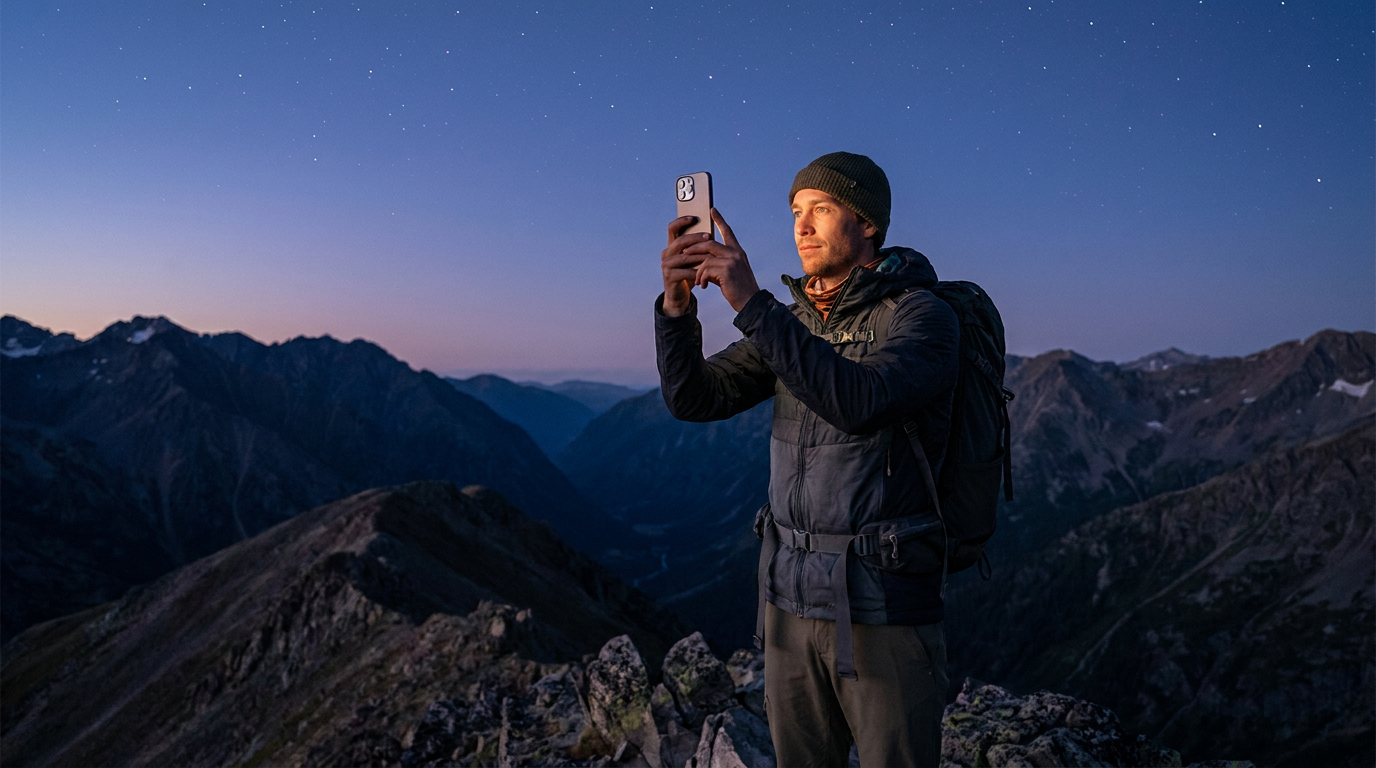
- Search and Rescue Operators
- Value the precise GPS coordinates and two-way communication that satellite phones provide, though they caution against the rising tide of automated false alarms.
- Telecom Providers
- Focus on the infrastructure and market potential of eliminating cellular dead zones through direct-to-cell satellite constellations.
- Wilderness Medicine Experts
- Emphasize that while technology is a powerful tool, it cannot replace physical preparation, medical knowledge, and redundant communication plans.
- Off-Grid Adventurers
- Appreciate the democratization of safety, noting that built-in smartphone SOS covers the vast 'middle ground' of non-life-threatening remote emergencies.
What's not represented
- · Emergency dispatchers handling the influx of automated false alarms
- · Environmental groups monitoring the impact of increased backcountry traffic
Why this matters
For decades, traveling beyond the reach of cell towers meant accepting a total loss of communication. The integration of satellite connectivity into standard consumer smartphones means millions of people now carry a global safety net in their pockets, dramatically reducing the risks of hiking, driving, and living in remote areas.
Key points
- Modern smartphones can now connect directly to satellites, bypassing the need for ground-based cell towers.
- The technology relies on Low Earth Orbit satellites and requires a clear line of sight to the sky.
- Two-way satellite messaging allows Search and Rescue teams to assess emergencies before dispatching resources.
- Automated crash detection has led to an increase in false alarms, challenging emergency dispatchers.
- Upcoming direct-to-cell networks will expand capabilities from emergency SOS to standard text messaging in dead zones.
- Experts warn that smartphones should not replace dedicated hardware or proper preparation in extreme environments.
For the entire history of mobile communications, the golden rule of the backcountry has been simple: once the bars on your screen vanish, you are entirely on your own. Roughly 500,000 square miles of the United States alone have zero cellular coverage, leaving hikers, rural drivers, and off-grid travelers vulnerable to sudden emergencies. But over the past few years, a quiet revolution in aerospace and consumer electronics has fundamentally rewritten that rule.[4][8]
The era of the "dead zone" is closing. Modern smartphones are no longer just terrestrial radios; they are increasingly functioning as satellite communicators. By connecting directly to Low Earth Orbit (LEO) satellites flying hundreds of miles overhead, these devices can bypass ground-based cell towers entirely. What began as a niche emergency feature has rapidly evolved into a standard safety net, saving lives in environments where a twisted ankle or a stranded vehicle once meant a desperate, multi-day struggle for survival.[3][8]
The catalyst for this shift arrived when Apple introduced Emergency SOS via satellite, utilizing the Globalstar network. Initially, the outdoor community viewed the feature with skepticism, fearing it might encourage inexperienced hikers to take reckless risks under the assumption that a helicopter was just a button press away. However, the real-world results quickly silenced the critics. From skiers trapped in a Lake Tahoe avalanche to a climber stranded at 11,000 feet in the Colorado wilderness, the technology has proven to be an undeniable lifesaver.[1][2]
The mechanism behind this connectivity is a marvel of modern engineering. Traditional satellite phones require bulky, specialized antennas to punch a signal through the atmosphere. To make this work on a sleek smartphone, manufacturers had to design highly directional antennas and intuitive software. When a user attempts an emergency call outside of cellular range, the phone prompts them to point the device at the sky, visually guiding them to track an invisible satellite hurtling through orbit at thousands of miles per hour.[6][8]

Because these connections rely on a brief window of alignment with a fast-moving satellite, bandwidth is severely constrained. You cannot stream a video or make a crystal-clear voice call via these initial SOS systems. Instead, the phone compresses critical data—exact GPS coordinates, medical details, and battery life—into tiny text packets. Under a clear sky, these messages can take anywhere from 15 seconds to a minute to transmit to a ground station, which then routes the data to emergency dispatchers.[6][8]
Because these connections rely on a brief window of alignment with a fast-moving satellite, bandwidth is severely constrained.
The technology is no longer exclusive to a single ecosystem. The Android market has aggressively adopted satellite capabilities, democratizing access across the globe. Google's Pixel lineup and Samsung's Galaxy series have integrated satellite SOS, while international manufacturers like Huawei utilize the BeiDou satellite network to offer similar lifelines. This widespread adoption means that satellite connectivity is transitioning from a luxury feature to a baseline expectation for any flagship device.[3][8]
For Search and Rescue (SAR) teams, the most transformative aspect of this technology is two-way communication. Historically, a triggered personal locator beacon (PLB) provided a GPS coordinate but no context. Rescuers had no way of knowing if they were flying into a mass-casualty event, a minor injury, or a false alarm. Now, dispatchers can text the stranded party directly, asking about the nature of the injuries, the number of people involved, and whether anyone has preexisting medical conditions, allowing them to tailor the rescue response perfectly.[2][6]

However, the integration of safety tech into everyday devices has introduced a new headache for emergency responders: the false alarm. Many of these phones pair satellite SOS with automated crash and fall detection. If a backcountry skier takes a hard tumble and fails to hear the warning chime muffled beneath layers of winter clothing, the phone may automatically dispatch a helicopter to a perfectly healthy, albeit clumsy, athlete. SAR teams are currently sifting through hundreds of these unintentional calls, though most commanders agree it is an acceptable trade-off for the lives saved.[1][2]
The next frontier of this technology is moving beyond pure emergencies. Companies like SpaceX, through its Starlink Direct-to-Cell initiative, are partnering with major carriers like T-Mobile and US Mobile to provide seamless, non-emergency texting in dead zones. This fills a massive "middle ground" in remote travel. If a 4WD vehicle gets bogged down in the Australian Outback, or a hiker decides to camp an extra night, they can simply text their family to prevent an unnecessary panic and a costly SAR callout.[4][5]
Despite the incredible advancements, wilderness medicine experts stress that a smartphone is not a substitute for preparation. The military utilizes a communication strategy known as a PACE plan—Primary, Alternate, Contingency, and Emergency. A smartphone might serve as the primary and alternate method, but its battery will eventually die, especially in the cold. Furthermore, satellite connections require a clear line of sight to the sky; they will not work deep inside a slot canyon, under heavy forest canopy, or during severe thunderstorms.[1][7]

For true off-grid professionals, dedicated hardware remains essential. Standalone satellite messengers and rugged satellite phones offer significantly larger batteries, physical durability, and the ability to function in extreme temperatures where a consumer smartphone would simply shut down. Most modern satellite phones provide up to 160 hours of standby time, a metric that standard smartphones cannot match when constantly searching for a signal.[7][8]
Yet, for the average traveler, the psychological shift is profound. The wilderness remains as wild and unforgiving as ever, but the barrier to calling for help has been virtually eliminated. By turning the device we already carry into a bridge to the stars, the tech industry has quietly built one of the most significant public safety nets of the 21st century.
How we got here
September 2022
Apple introduces Emergency SOS via satellite on the iPhone 14 lineup, utilizing the Globalstar network.
August 2023
Huawei launches the Mate 60 Pro, featuring satellite calling capabilities via the BeiDou network.
January 2024
SpaceX launches its first batch of Starlink satellites equipped with Direct-to-Cell capabilities.
Late 2024
Google integrates native satellite SOS capabilities into the Pixel 9 series.
2025-2026
Major telecom carriers begin rolling out supplemental direct-to-cell text coverage to eliminate rural dead zones.
Viewpoints in depth
Search and Rescue Operators
Value the precise GPS coordinates and two-way communication that satellite phones provide, though they caution against the rising tide of automated false alarms.
For decades, Search and Rescue teams operated in the dark. When a traditional personal locator beacon was triggered, dispatchers received a coordinate but no context, forcing them to assume the worst and deploy maximum resources. The advent of two-way satellite messaging on smartphones has fundamentally changed this dynamic. Rescuers can now text the stranded party to determine if they need a helicopter for a severe trauma or simply ground guidance for a lost hiker. However, this massive leap in capability comes with a frustrating side effect: automated crash and fall detection. SAR teams are increasingly burdened by false alarms triggered when skiers fall or mountain bikers drop their phones, forcing dispatchers to waste critical time verifying whether an emergency is real.
Telecom Providers
Focus on the infrastructure and market potential of eliminating cellular dead zones through direct-to-cell satellite constellations.
For wireless carriers, the ultimate goal has always been ubiquitous coverage, a physical impossibility when relying solely on ground-based towers that cannot be built in national parks, deep canyons, or vast oceans. Telecom giants view direct-to-cell satellite technology not just as an emergency feature, but as the final frontier of network expansion. By partnering with companies like SpaceX, carriers aim to offer seamless, supplemental coverage that kicks in the moment a user steps out of terrestrial range. They argue that this infrastructure will eventually support voice and data, fundamentally erasing the concept of a 'dead zone' and providing a massive value-add for rural customers and travelers.
Wilderness Medicine Experts
Emphasize that while technology is a powerful tool, it cannot replace physical preparation, medical knowledge, and redundant communication plans.
Wilderness medicine professionals view the smartphone satellite revolution with cautious optimism. While they acknowledge the undeniable lives saved, they worry about the psychological hazard of 'tech reliance.' A smartphone is a fragile piece of consumer electronics; its battery drains rapidly in cold weather, its screen shatters easily, and its antenna requires a wide-open view of the sky. Experts advocate for the military-style PACE plan (Primary, Alternate, Contingency, Emergency), arguing that a phone should only be one layer of a broader safety strategy. They stress that the ability to call for a rescue does not negate the need to carry first aid supplies, extra layers, and the knowledge to stabilize an injury while waiting for help to arrive.
Off-Grid Adventurers
Appreciate the democratization of safety, noting that built-in smartphone SOS covers the vast 'middle ground' of non-life-threatening remote emergencies.
For the overlanding, 4WD, and backpacking communities, the integration of satellite tech into everyday phones is a massive quality-of-life upgrade. Historically, adventurers had to purchase expensive, dedicated satellite messengers and pay monthly subscription fees just to have a safety net. Now, the device already in their pocket serves that role. More importantly, upcoming direct-to-cell texting capabilities address the 'middle ground' of backcountry travel—situations that are not life-threatening enough to warrant triggering a rescue beacon, but serious enough to require communication. Being able to text a spouse that a vehicle is bogged down, or that a hike is taking longer than expected, prevents unnecessary panic and allows for safer, more confident exploration.
What we don't know
- How well direct-to-cell networks will handle bandwidth congestion if thousands of users attempt to connect simultaneously during a regional power outage.
- The exact timeline for when voice and high-speed data capabilities will become reliably available on standard smartphones via satellite.
- Whether tech companies will eventually charge steep premium subscription fees for these services once the initial 'free trial' periods expire.
Key terms
- Low Earth Orbit (LEO)
- Satellites orbiting relatively close to Earth (120 to 2,000 miles), which allows for faster communication with smaller, less powerful antennas like those in smartphones.
- Direct-to-Cell
- Emerging technology that allows standard consumer smartphones to connect directly to satellite networks without the need for specialized hardware or bulky antennas.
- PACE Plan
- A military-derived communication strategy standing for Primary, Alternate, Contingency, and Emergency methods, used to ensure redundant safety in remote areas.
- Bandwidth
- The maximum rate of data transfer across a network. In current smartphone satellite connections, bandwidth is so low that only highly compressed text and GPS data can be sent.
Frequently asked
Can I make a voice call via satellite on my smartphone?
Currently, most built-in smartphone satellite features are restricted to compressed text messages and GPS coordinates due to bandwidth limits. However, voice and data capabilities are in development for future direct-to-cell networks.
Does satellite SOS work indoors or under heavy tree cover?
No. The technology requires a clear, unobstructed line of sight to the sky to connect with passing satellites. It will not work indoors, in deep slot canyons, or under dense forest canopies.
Do I need to pay a subscription for smartphone satellite SOS?
Apple and Google currently include basic emergency SOS features for free for the first few years after purchasing a compatible device. Future non-emergency features, like standard texting, will likely be bundled into carrier plans.
Sources
Source coverage
8 outlets
4 viewpoints surfaced





[1]Wilderness Medical SocietyWilderness Medicine Experts
Apple Emergency SOS Aids in Rescue
Read on Wilderness Medical Society →[2]BackpackerSearch and Rescue Operators
How Apple's SOS Feature is Changing Search and Rescue
Read on Backpacker →[3]T-MobileTelecom Providers
Future of Satellite Connectivity
Read on T-Mobile →[4]US MobileTelecom Providers
How Starlink Direct-to-Cell Technology Works
Read on US Mobile →[5]Outcamp AustraliaOff-Grid Adventurers
What Starlink Direct to Cell Means for Off-Grid Camping and 4WD Travel
Read on Outcamp Australia →[6]Nature RelianceSearch and Rescue Operators
Satellite SOS on Modern Smartphones: A Search and Rescue Perspective
Read on Nature Reliance →[7]Mobile Systems NZOff-Grid Adventurers
Satellite Solutions for Off-Grid Connectivity
Read on Mobile Systems NZ →[8]Factlen Editorial Team
Synthesis by Factlen editorial team
Read on Factlen Editorial Team →
Every angle. Every day.
Get travel stories with full source coverage and perspective breakdowns delivered to your inbox.