
How Enhanced Geothermal Systems Are Unlocking 24/7 Clean Energy
By borrowing advanced drilling techniques from the oil and gas industry, next-generation geothermal technology is tapping into hot dry rock to provide limitless, round-the-clock carbon-free power.
By Factlen Editorial Team
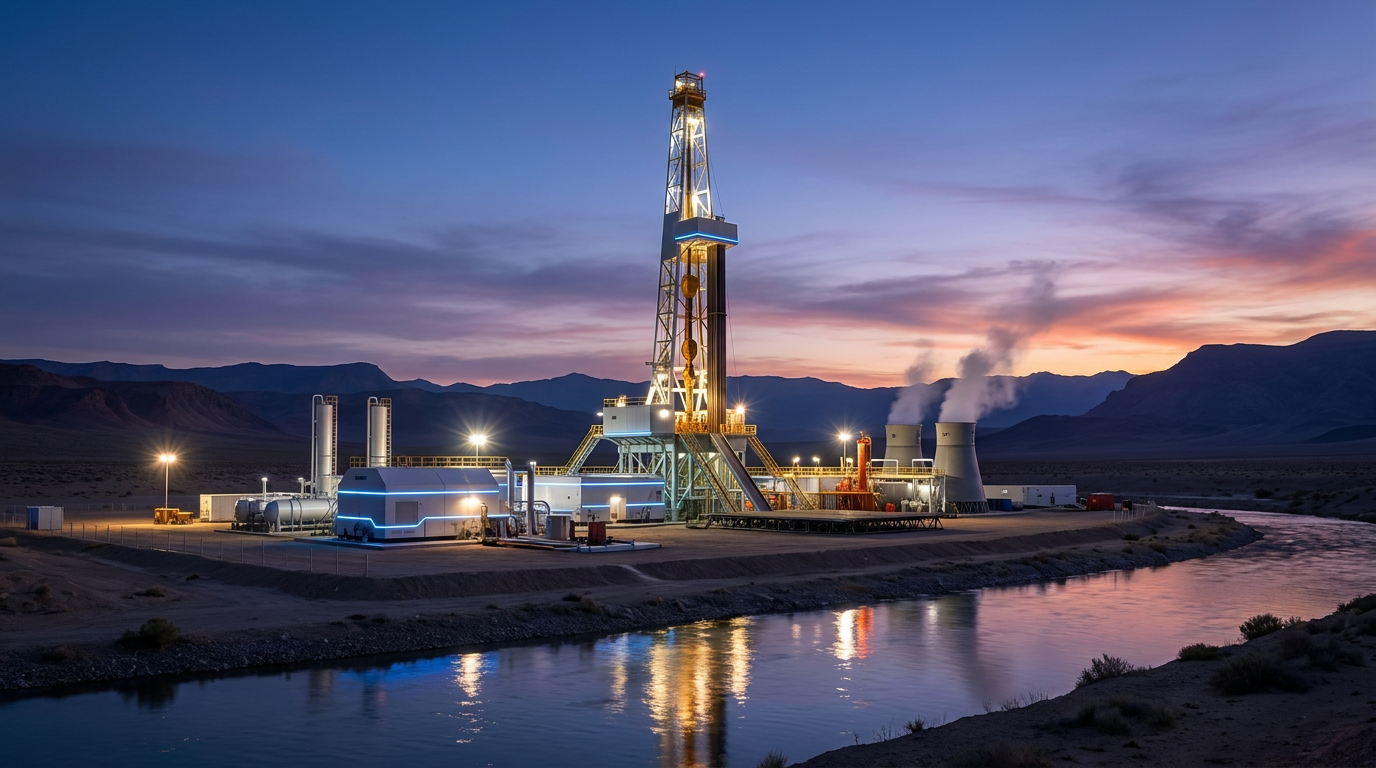
- Geothermal Developers
- View EGS as the missing link for a fully decarbonized grid, emphasizing its ability to provide 24/7 baseload power by repurposing oil and gas drilling innovations.
- Energy Economists
- Focus on the steep financial barriers to entry, noting that while the technology works, it requires massive capital investment and rapid cost reductions to compete with cheap solar and wind.
- Subsurface Scientists
- Prioritize the technical and geological challenges, particularly the need to monitor induced seismicity and develop new drilling materials capable of surviving extreme subterranean environments.
What's not represented
- · Fossil fuel workers transitioning to geothermal
- · Local communities near proposed EGS sites
Why this matters
As the grid struggles to balance intermittent solar and wind power with the surging electricity demands of AI data centers and heavy industry, EGS offers a holy grail: a carbon-free baseload power source that runs 24 hours a day, regardless of the weather.
Key points
- Enhanced Geothermal Systems (EGS) allow developers to extract heat from dry rock anywhere, removing the need for natural hot springs.
- The technology uses horizontal drilling and hydraulic fracturing techniques pioneered by the oil and gas industry.
- Recent pilot projects have successfully run for over 600 continuous days, proving the long-term viability of engineered reservoirs.
- Next-generation geothermal can provide 24/7 carbon-free baseload power, complementing intermittent wind and solar.
- High upfront drilling costs remain the primary barrier to widespread commercial adoption.
The global transition to clean energy has a persistent blind spot: the sun sets, and the wind stops blowing. While lithium-ion batteries can bridge gaps of a few hours, powering heavy industry, manufacturing, and modern AI data centers requires "firm" baseload power that runs continuously, 24 hours a day. For decades, the only carbon-free options for continuous power were nuclear energy, which is notoriously slow and expensive to build, and hydroelectric dams, which are strictly limited by geography.[8]
But a massive, virtually inexhaustible battery sits directly beneath our feet. The Earth's core is roughly as hot as the surface of the sun, and that immense thermal energy radiates outward through the crust. According to researchers at the Massachusetts Institute of Technology, tapping just a fraction of this subterranean heat could theoretically meet total global energy demand twice over.[1][6]
Historically, accessing this energy has been limited by a strict geological lottery. Traditional geothermal power—known as hydrothermal energy—requires three naturally occurring elements to work: extreme heat, underground fluid, and permeable rock that allows the fluid to flow freely. Because these three factors rarely align in nature, conventional geothermal plants have been restricted to volcanic regions and tectonic fault lines, such as Iceland, Kenya, or California's Geysers.[1][5]
That geographical limitation is now being shattered by a breakthrough known as Enhanced Geothermal Systems (EGS). Instead of hunting for naturally occurring underground aquifers, EGS engineers create their own. By drilling deep into "Hot Dry Rock" (HDR) formations and artificially introducing both fluid and permeability, next-generation geothermal developers can theoretically build a power plant almost anywhere on the planet.[1][7]

The irony of this clean-energy breakthrough is that it relies heavily on technologies pioneered by the fossil fuel industry. During the shale revolution of the 2000s and 2010s, oil and gas companies perfected horizontal directional drilling and hydraulic fracturing. EGS developers are now using those exact same tools to fracture hot, impermeable granite miles below the surface, creating a web of tiny, engineered fissures.[1][7]
The mechanism is elegantly simple once the subsurface engineering is complete. Cold water is pumped down an injection well under high pressure. As it moves through the newly created fracture network, the water absorbs the intense heat of the surrounding rock. The superheated fluid is then drawn up through a separate production well to the surface, where it passes through a heat exchanger. This flashes a secondary working fluid into vapor, which spins a turbine to generate electricity, before the cooled water is injected back underground in a closed loop.[1][8]
For years, EGS was viewed as a promising but unproven science experiment. That changed dramatically in the 2024–2026 window. Fervo Energy, a leading EGS developer, recently published comprehensive data from its Project Red pilot site in Nevada, confirming the technology's commercial viability and validating the fundamental physics of EGS at field scale.[2]
For years, EGS was viewed as a promising but unproven science experiment.
Project Red operated continuously for more than 614 days, requiring zero chemical treatments or well remediations—a testament to the durability of the engineered reservoir. The system delivered a steady gross power output of 2.1 megawatts, with subsurface water temperatures reaching 347 degrees Fahrenheit. Following this success, Fervo filed a landmark commercial-scale patent in 2025 and began construction on Cape Station, a 400-megawatt facility in Utah backed by the U.S. Department of Energy's FORGE initiative.[2][7]

While EGS focuses on fracturing rock, other next-generation geothermal approaches are also racing toward commercialization. Advanced Geothermal Systems (AGS), often called "closed-loop" geothermal, function like massive underground radiators. Instead of fracturing the rock and letting water touch it directly, AGS circulates a proprietary fluid through a sealed piping system buried deep underground, absorbing ambient heat purely through conduction.[5][7]
Further out on the technological horizon is Superhot Rock (SHR) geothermal. This approach targets extreme depths where temperatures exceed 400 degrees Celsius (752 degrees Fahrenheit). At these extreme temperatures and pressures, water enters a "supercritical" state where it behaves as both a liquid and a gas, capable of carrying exponentially more thermal energy to the surface than standard steam.[1][6]
Reaching superhot rock, however, requires drilling through incredibly hard crystalline basement rock, which quickly destroys conventional mechanical drill bits. To solve this, researchers at MIT and startups like Quaise Energy are developing millimeter-wave drilling technology. By using directed microwave energy to literally vaporize the rock, this method could eventually allow developers to drill up to 12 miles deep, unlocking superhot geothermal energy anywhere on Earth.[6]
Despite the immense promise, the geothermal industry faces steep economic hurdles. The upfront capital expenditure (CAPEX) for next-generation geothermal is daunting. According to BloombergNEF, a modern EGS project can cost upwards of $8.7 million per megawatt of capacity to build—nearly eight times the capital cost of a comparable onshore wind or solar farm.[5]

The bulk of this cost comes from the sheer difficulty and time required for deep drilling. However, energy economists at Princeton University note that EGS is poised to benefit from a rapid "learning curve." Just as the cost of solar panels plummeted as manufacturing scaled up, geothermal drilling costs have already dropped by 70 percent in the last two years as crews gain experience and deploy specialized polycrystalline diamond compact (PDC) drill bits.[4][7]
There are also environmental and safety considerations, primarily the risk of induced seismicity. Because EGS involves injecting water at high pressures to fracture rock, it can trigger micro-earthquakes. To manage this, scientists from the Lawrence Berkeley National Laboratory have deployed custom, high-temperature seismometers nearly 7,000 feet underground at the Utah FORGE site. These sensors continuously monitor the fracture networks, allowing operators to adjust fluid pressures and prevent larger seismic events.[3]

If developers can drive down costs while safely managing subsurface operations, the payoff will be transformative. Geothermal energy boasts the lowest land-use footprint of any renewable resource, requiring vastly less surface area than sprawling solar arrays or wind farms, making it ideal for powering dense industrial zones or data center campuses.[5]
The U.S. Department of Energy estimates that next-generation geothermal could provide up to 120 gigawatts of firm, flexible capacity in the United States by 2050—enough to supply roughly 20 percent of the nation's electricity. As the grid struggles to balance intermittent renewables with the surging power demands of the 21st century, the heat beneath our feet may prove to be the ultimate anchor for a carbon-free future.[4][5][8]
How we got here
1960
The Geysers geothermal field in California begins generating electricity at scale using traditional hydrothermal resources.
2000s–2010s
The shale revolution rapidly advances horizontal drilling and hydraulic fracturing technologies.
2023
Fervo Energy completes initial testing at Project Red, demonstrating a peak gross power output of 3.5 megawatts.
July 2025
Berkeley Lab deploys custom high-temperature seismometers 7,000 feet underground at the Utah FORGE site to monitor EGS safety.
April 2026
Fervo Energy's 2025 WO patent is recognized as the clearest signal that EGS has transitioned from pilot-phase to commercial-scale deployment.
Viewpoints in depth
Geothermal Developers
View EGS as the missing link for a fully decarbonized grid, emphasizing its ability to provide 24/7 baseload power.
Industry leaders argue that the clean energy transition cannot survive on intermittent wind, solar, and short-duration batteries alone. They position Enhanced Geothermal Systems as the ultimate solution: a firm, dispatchable power source that operates around the clock. Developers emphasize that by repurposing the workforce, supply chains, and drilling technologies perfected by the oil and gas industry, geothermal can scale rapidly without reinventing the wheel. They point to successful pilot data as proof that engineered reservoirs are durable and ready for grid-scale deployment.
Energy Economists
Focus on the steep financial barriers to entry and the need for rapid cost reductions to compete with cheap renewables.
While acknowledging the technical success of recent EGS pilots, financial analysts caution that the economics remain challenging. The upfront capital expenditure for deep drilling is massive—often exceeding $8 million per megawatt, compared to roughly $1 million for solar. Economists argue that for geothermal to become more than a niche player, the industry must demonstrate a steep 'learning curve.' This means proving that as more wells are drilled, the cost and time required will plummet, eventually bringing the levelized cost of energy (LCOE) into parity with fossil fuels and battery-backed renewables.
Subsurface Scientists
Prioritize the technical and geological challenges, particularly the need to monitor induced seismicity and develop new drilling materials.
Geophysicists and national laboratory researchers focus on the immense physical challenges of operating miles below the Earth's surface. They highlight that injecting high-pressure fluids into fault lines inherently carries the risk of induced seismicity (micro-earthquakes). Consequently, they advocate for rigorous, continuous subsurface monitoring and transparent data sharing. Additionally, materials scientists stress that reaching even deeper, 'superhot' rock will require entirely new paradigms in drilling—such as directed energy or millimeter-wave technology—because conventional mechanical drill bits simply melt or degrade at extreme temperatures.
What we don't know
- How quickly the cost of deep geothermal drilling will fall as the industry scales up commercial production.
- Whether millimeter-wave drilling and other experimental technologies will successfully unlock 'superhot' rock at extreme depths.
- How local communities and regulators will respond to the widespread use of hydraulic fracturing for clean energy purposes.
Key terms
- Enhanced Geothermal Systems (EGS)
- A next-generation technology that generates electricity by injecting fluid into artificially fractured hot rock deep underground.
- Hot Dry Rock (HDR)
- Deep geological formations that possess extreme heat but lack the natural fluid or permeability needed for traditional geothermal extraction.
- Induced Seismicity
- Minor earthquakes or tremors caused by human activity, such as injecting high-pressure fluids into the Earth's crust.
- Supercritical Fluid
- A substance at a temperature and pressure where distinct liquid and gas phases do not exist, allowing it to transfer thermal energy highly efficiently.
- Baseload Power
- The minimum amount of electric power needed to be supplied to the electrical grid at any given time, requiring energy sources that can run continuously 24/7.
Frequently asked
What is the difference between traditional and enhanced geothermal?
Traditional geothermal relies on naturally occurring underground hot water reservoirs. Enhanced Geothermal Systems (EGS) create artificial reservoirs by injecting water into hot, dry rock and fracturing it to allow fluid to circulate and absorb heat.
Does EGS use fracking?
Yes, EGS uses hydraulic fracturing techniques adapted from the oil and gas industry to create permeable pathways in solid rock, though it generally uses water without the heavy chemical mixtures associated with fossil fuel extraction.
Can EGS cause earthquakes?
Injecting high-pressure fluid into deep rock can cause "induced seismicity" or micro-earthquakes. Operators use deep underground sensors to continuously monitor the rock and adjust pressures to prevent larger seismic events.
Why isn't geothermal energy used everywhere yet?
Historically, it was limited to volcanic regions. While next-generation tech allows it to be deployed anywhere, the upfront capital costs for deep drilling remain extremely high compared to wind and solar.
Sources
Source coverage
8 outlets
3 viewpoints surfaced








[1]U.S. Department of EnergySubsurface Scientists
How an Enhanced Geothermal System Works
Read on U.S. Department of Energy →[2]Fervo EnergyGeothermal Developers
Project Red: Validating the Physics of EGS at Field Scale
Read on Fervo Energy →[3]Lawrence Berkeley National LaboratorySubsurface Scientists
Scientists Develop New Technology to Continuously Monitor Geothermal Energy Operations
Read on Lawrence Berkeley National Laboratory →[4]Princeton UniversityEnergy Economists
A pathway to commercialization for enhanced geothermal
Read on Princeton University →[5]BloombergNEFEnergy Economists
Next-Generation Geothermal Technologies Gain Traction
Read on BloombergNEF →[6]Massachusetts Institute of TechnologySubsurface Scientists
Next-generation geothermal energy
Read on Massachusetts Institute of Technology →[7]Information Technology and Innovation FoundationGeothermal Developers
Advanced Geothermal Technologies
Read on Information Technology and Innovation Foundation →[8]Factlen Editorial Team
Synthesis by Factlen editorial team
Read on Factlen Editorial Team →
Every angle. Every day.
Get guides stories with full source coverage and perspective breakdowns delivered to your inbox.