
U.S. and Iran Sign Agreement to End Hostilities and Reopen Strait of Hormuz
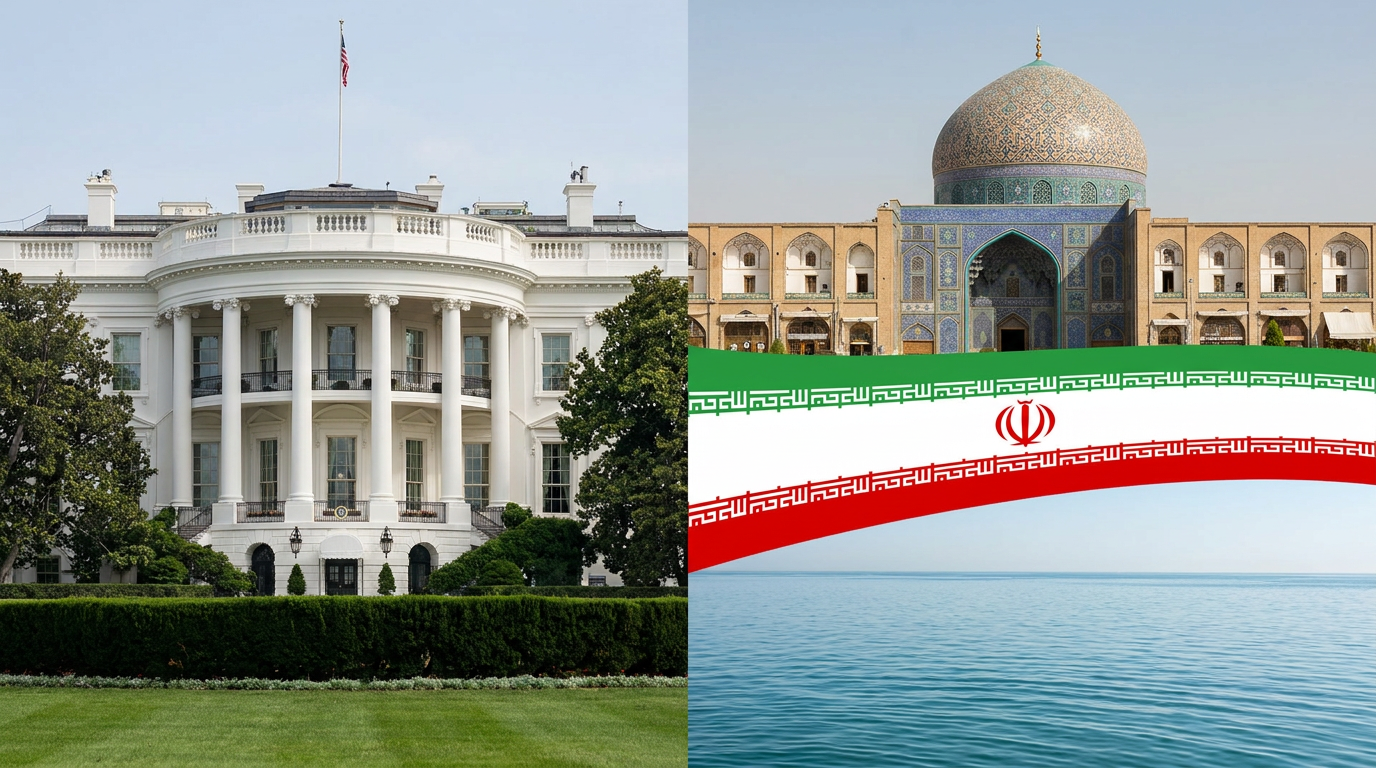
The United States and Iran have signed a Memorandum of Understanding to halt military confrontations and stabilize global energy markets, though the deal leaves several of Washington's initial demands unmet.
By Factlen Editorial Team
- U.S. Administration
- Argues the deal is a pragmatic success that ends the immediate threat of war and stabilizes the global economy.
- Iranian Leadership
- Views the outcome as a victory of resistance, proving that economic leverage can force the U.S. to moderate its demands.
- Congressional Skeptics
- Criticizes the agreement for failing to dismantle Iran's nuclear program and for validating Tehran's disruptive tactics.
- Global Markets
- Prioritizes the resumption of international trade and the stabilization of energy prices over geopolitical victories.
What's not represented
- · Middle Eastern allied nations
- · Global shipping conglomerates
Why this matters
The agreement immediately reopens the critical Strait of Hormuz, easing a global energy crisis that had driven up fuel costs, while fundamentally reshaping the geopolitical balance and deterrence strategies in the Middle East.
Key points
- The U.S. and Iran signed an MoU to end their two-month military confrontation.
- The agreement immediately reopens the Strait of Hormuz, stabilizing global energy markets.
- The deal falls short of initial U.S. demands for Iran to completely surrender its nuclear program.
- Iran demonstrated its ability to use global economic disruption as leverage in negotiations.
- The agreement has exposed rifts within the Republican party over the lack of comprehensive concessions.
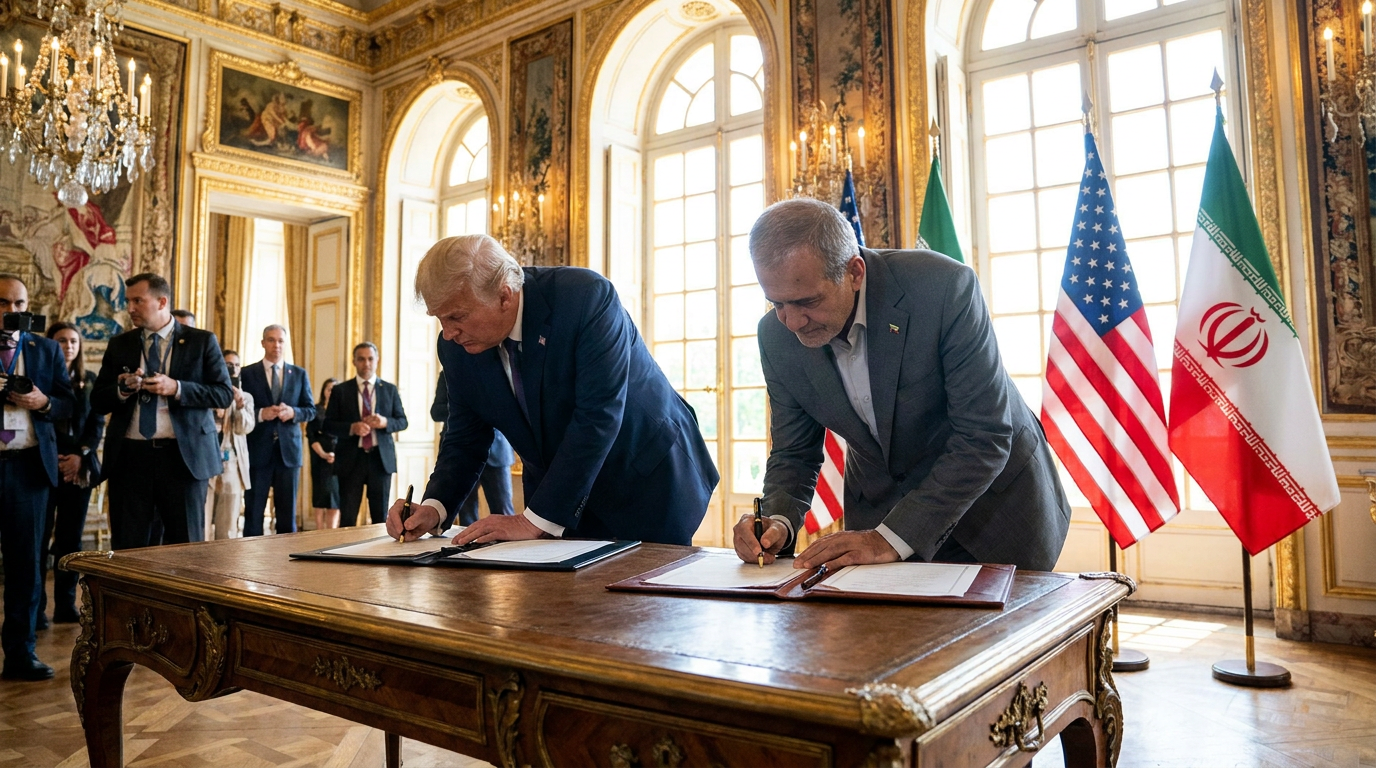
The United States and Iran have officially signed a Memorandum of Understanding (MoU) aimed at ending their recent military confrontation. The agreement, brokered after weeks of escalating tensions, was confirmed by U.S. President Donald Trump and Iranian President Masoud Pezeshkian.[1]
The immediate operational priority of the pact is the reopening of the Strait of Hormuz. This critical maritime chokepoint handles roughly a fifth of the world's daily oil consumption, making it the most important oil transit transit route on the globe.[2][5]
For two months, the conflict effectively paralyzed this vital trade corridor. The resulting blockade sent shockwaves through global energy markets, threatening widespread economic destabilization and driving up costs for consumers worldwide.[2][8]

During an hour-long press conference on Wednesday, President Trump framed the agreement as a necessary and pragmatic step to stabilize global energy markets and restore international commerce.[2][6]
He emphasized that the deal successfully ends the immediate threat of a broader regional war. However, he also issued a stark warning that the U.S. military remains prepared to strike if future negotiations regarding Iran's nuclear program collapse.[2][6]
Despite the administration's positive framing, the final terms of the MoU represent a significant departure from the White House's initial public posture.[2][3]
Prior to the negotiations, U.S. officials had demanded what amounted to an unconditional surrender from Tehran, insisting on the complete and verifiable dismantling of its nuclear infrastructure.[3]
officials had demanded what amounted to an unconditional surrender from Tehran, insisting on the complete and verifiable dismantling of its nuclear infrastructure.
Instead, Iran emerged from the confrontation having demonstrated its capacity to weaponize global economic anxiety. By sustaining the blockade of the Strait of Hormuz despite taking substantial military losses, Tehran proved it could inflict intolerable costs on the global economy.[3][7]

This leverage effectively forced Washington to moderate its demands, prioritizing the immediate resumption of global trade over the total capitulation of the Iranian government.[3][7]
This dynamic has triggered immediate political fallout in Washington, exposing deep rifts within the Republican Party regarding the administration's foreign policy strategy.[4]
Several prominent GOP lawmakers have publicly questioned whether the agreement secures adequate concessions from Iranian officials, particularly regarding the country's ballistic missile program and its network of regional proxy forces.[4]
Critics within the party argue that by settling for a ceasefire without securing a comprehensive nuclear surrender, the administration has inadvertently validated Iran's strategy of economic disruption.[2][4]

Conversely, international markets reacted with immediate relief. Brent crude prices, which had spiked dramatically during the two-month standoff, began to stabilize as shipping conglomerates prepared to resume transit through the Persian Gulf.[5][8]
How we got here
April 2026
Military confrontation escalates, leading to the effective closure of the Strait of Hormuz.
May 2026
Global energy markets experience severe volatility as the blockade continues.
June 17, 2026
President Trump and President Pezeshkian sign a Memorandum of Understanding to halt hostilities.
Viewpoints in depth
U.S. Administration's View
The deal is a necessary stabilization measure that protects the global economy.
The White House frames the Memorandum of Understanding as a pragmatic victory that achieves its most urgent goal: reopening the Strait of Hormuz and preventing a global energy crisis. By securing a cessation of hostilities, the administration argues it has protected American consumers from skyrocketing fuel costs while maintaining the military readiness to strike if Iran pursues nuclear weapons in the future.
Iranian Leadership's View
The outcome validates Iran's strategy of economic resistance.
Tehran views the agreement as proof that its "resistance economy" and asymmetric military capabilities can successfully counter U.S. pressure. By enduring military losses but maintaining a chokehold on global oil transit, Iranian officials believe they forced Washington to abandon its maximalist demands for unconditional surrender, proving that Iran cannot be dictated to by Western powers.
Congressional Hawks' View
The agreement is a missed opportunity that leaves a dangerous threat intact.
Skeptics in Washington, particularly within the Republican party, argue that the administration blinked. They contend that by prioritizing short-term market stability over long-term security, the U.S. has allowed Iran to retain its nuclear infrastructure and validated its tactic of holding global trade hostage. These critics fear the deal merely delays a larger, inevitable conflict.
What we don't know
- Whether the ceasefire will hold if future negotiations regarding Iran's nuclear program break down.
- How quickly global shipping companies will return to normal transit volumes through the Strait of Hormuz.
- What specific, unpublicized concessions may have been made by either side to secure the agreement.
Key terms
- Memorandum of Understanding (MoU)
- A formal agreement between two or more parties that establishes a framework for cooperation, though it is often less legally binding than a formal treaty.
- Strait of Hormuz
- A narrow waterway between the Persian Gulf and the Gulf of Oman through which roughly 20% of the world's oil supply is transported.
- Brent Crude
- A major trading classification of sweet light crude oil that serves as a benchmark price for purchases of oil worldwide.
Frequently asked
Does this agreement end the conflict between the U.S. and Iran?
It halts the immediate military confrontation and reopens trade routes, but it does not resolve the underlying disputes over Iran's nuclear program or regional influence.
Why did the U.S. agree to the deal?
The administration prioritized stabilizing global energy markets and ending the economic chaos caused by the two-month closure of the Strait of Hormuz.
What happens to Iran's nuclear program now?
The Memorandum of Understanding does not include the complete surrender of Iran's nuclear infrastructure, leaving the issue open for future, potentially tense, negotiations.
Sources
Source coverage
8 outlets
4 viewpoints surfaced







[1]Al JazeeraIranian Leadership
US and Iran sign Memorandum of Understanding to end war
Read on Al Jazeera →[2]AxiosU.S. Administration
Trump settles for Iran deal that falls short of his promises
Read on Axios →[3]The New York TimesCongressional Skeptics
Before Making a Deal, Trump Demanded Iran’s Surrender. He Got a Surprise.
Read on The New York Times →Trump’s Deal With Iran Opens New Rifts in G.O.P.
Read on The New York Times →[5]ReutersGlobal Markets
Oil prices stabilize as US-Iran pact reopens Strait of Hormuz
Read on Reuters →[6]Fox NewsU.S. Administration
Trump touts historic peace deal, warns Iran against nuclear pursuit
Read on Fox News →[7]Tehran TimesIranian Leadership
Iran's economic resistance forces Washington to the negotiating table
Read on Tehran Times →[8]BBC NewsGlobal Markets
Global markets breathe sigh of relief following US-Iran ceasefire
Read on BBC News →

Every angle. Every day.
Get news politics stories with full source coverage and perspective breakdowns delivered to your inbox.