
How 'Sponge Cities' Are Rewriting the Rules of Urban Flood Survival
By replacing rigid concrete with nature-based infrastructure, cities worldwide are learning to absorb extreme rainfall rather than fight it.
By Factlen Editorial Team
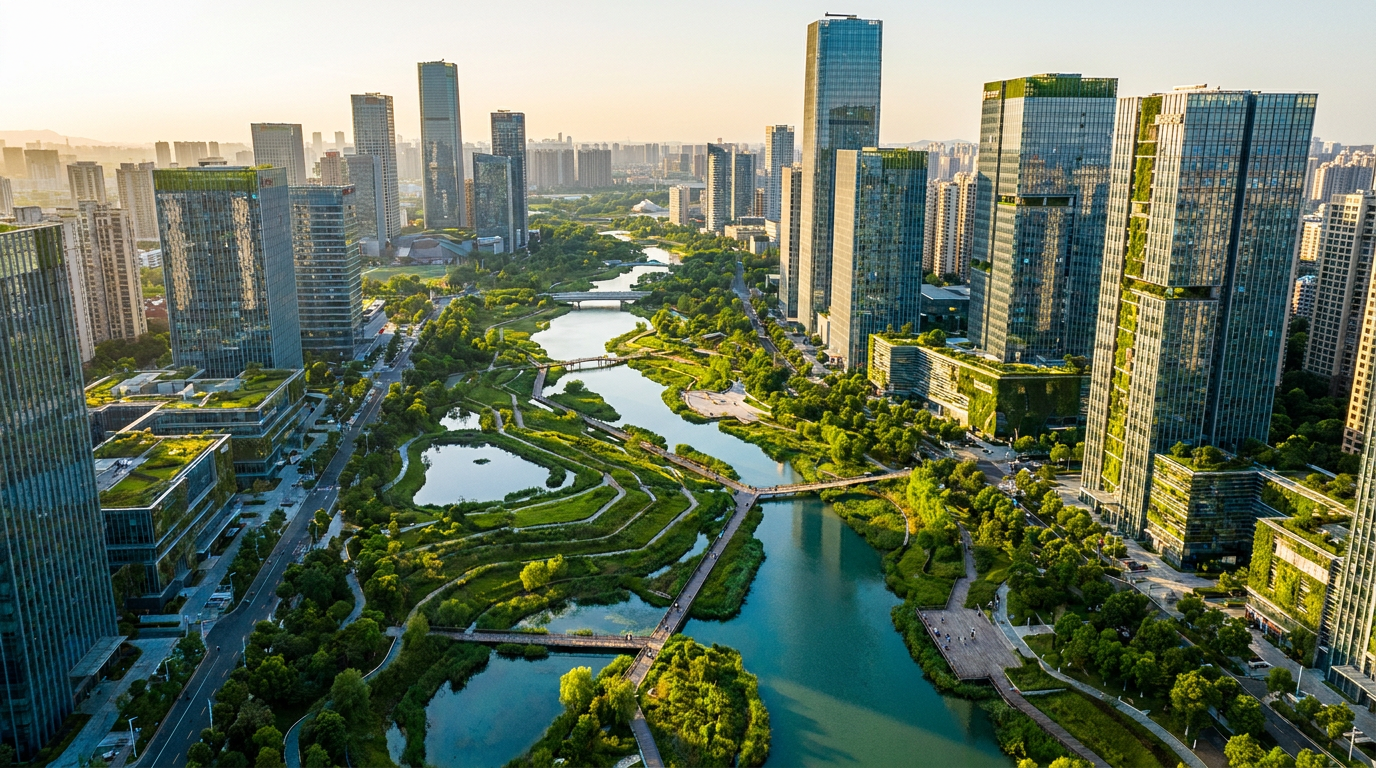
- Ecological Urbanists
- Advocate for the widespread integration of blue-green infrastructure to restore natural hydrological cycles and improve urban livability.
- Pragmatic Engineers
- Emphasize the necessity of a hybrid approach, warning that green infrastructure alone cannot handle catastrophic peak flows without grey infrastructure backups.
- Economic Analysts
- Focus on the long-term cost savings and ecosystem service valuations that make nature-based solutions financially superior to traditional concrete.
- Factlen Synthesis
- Provides the overarching narrative connecting the ecological, engineering, and economic realities of urban climate adaptation.
What's not represented
- · Displaced Urban Residents
- · Traditional Municipal Maintenance Workers
Why this matters
As climate change accelerates, traditional concrete drainage systems are catastrophically failing. Transitioning to nature-based urban design is no longer just an environmental ideal—it is a critical prerequisite for protecting billions of people and trillions of dollars in real estate from extreme weather.
Key points
- Traditional 'grey infrastructure' like concrete pipes is increasingly failing to handle extreme rainfall driven by climate change.
- The 'sponge city' concept uses nature-based solutions to absorb, retain, and purify water where it falls.
- Permeable pavements, bioswales, and constructed wetlands replace impermeable asphalt to restore natural water cycles.
- Beyond flood mitigation, these systems recharge groundwater, filter pollutants, and cool urban heat islands.
- Nature-based infrastructure is estimated to be 50% more cost-effective than traditional engineered alternatives.
- Experts advocate for a hybrid approach, combining green absorption with grey infrastructure backups for catastrophic storms.
For more than a century, modern metropolises have been built on a fundamental premise: water is an enemy to be repelled. As urban populations exploded, city planners paved over natural landscapes with impermeable asphalt and concrete, designing environments that prioritized rapid human transit over ecological balance. However, as climate change accelerates, this industrial approach to water management is catastrophically failing. Extreme weather events are delivering unprecedented volumes of rain in highly concentrated bursts, overwhelming traditional drainage systems and turning city streets into destructive rivers. Today, an estimated 1.8 billion people worldwide are exposed to significant flood risks, with urban flooding causing hundreds of billions of dollars in economic damages annually. The escalating frequency of these disasters has forced a global reckoning among architects, engineers, and policymakers. It is becoming increasingly clear that the 20th-century strategy of simply building higher walls and wider pipes is no longer sufficient to protect the world's growing urban centers from the realities of a warming planet.[3][4]
The conventional defense against urban flooding relies almost entirely on what engineers call "grey infrastructure." This encompasses the vast, hidden networks of concrete storm drains, subterranean pipes, pumping stations, and engineered levees that define modern municipal plumbing. The primary objective of grey infrastructure is to channel stormwater away from populated areas and discharge it into nearby rivers or oceans as rapidly as possible. While this system functioned adequately under historical climate baselines, it possesses a fatal flaw in the modern era: it is entirely rigid. When a severe storm drops a massive volume of water in a matter of hours, the rigid pipes quickly reach their maximum volumetric capacity. Once that threshold is crossed, the water has nowhere to go but up, resulting in rapid, severe surface flooding. Furthermore, this rapid expulsion of water prevents it from soaking into the ground, exacerbating drought conditions during dry seasons and disrupting the natural hydrological cycle that local ecosystems depend upon.[4][6]
In response to these mounting failures, a radical paradigm shift has emerged in urban design, championed most prominently by Chinese landscape architect Dr. Kongjian Yu. Observing the devastating impacts of rigid concrete infrastructure, Yu proposed a return to ancient agricultural water management principles, formalized as the "Sponge City" concept. Rather than fighting water and rushing it out of the city, a sponge city is designed to work in tandem with nature to absorb, retain, and purify rainwater exactly where it falls. By strategically integrating natural ecosystems into the urban fabric, the city itself acts as a massive, porous sponge. This philosophy represents a fundamental departure from the adversarial relationship modern cities have traditionally held with weather. The concept gained immense traction after severe floods in Beijing in 2012, eventually being adopted as a nationwide urban development policy by the Chinese government in 2014, and has since sparked a global movement toward nature-based climate adaptation.[1][5][6]

The foundational mechanism of a sponge city begins at the surface level, addressing the vast expanses of impermeable pavement that define modern urban landscapes. Traditional asphalt and concrete act as hard seals over the earth, instantly converting rainfall into fast-moving surface runoff. Sponge city designs replace these barriers with permeable pavements, porous asphalt, and interlocking pavers. These advanced materials are engineered with microscopic voids that allow water to pass directly through the surface and into an underlying stone reservoir base. From there, the water slowly percolates into the natural subsoil. By transforming roads, sidewalks, and public squares into absorptive surfaces, cities can drastically reduce the initial volume and velocity of runoff during a storm. This single intervention prevents millions of gallons of water from ever reaching the municipal sewer system, effectively neutralizing the primary trigger for flash flooding while simultaneously reducing the risk of hazardous surface ponding and ice formation.[2][4][5]
Beyond permeable surfaces, sponge cities rely heavily on a network of decentralized green infrastructure designed to capture and slow the movement of water. This includes the widespread installation of bioswales, rain gardens, and green roofs. Bioswales are gently sloped, vegetated channels integrated into streetscapes and parking lots, designed to concentrate and convey stormwater runoff while allowing it to soak into the earth. Rain gardens serve a similar purpose, acting as shallow, planted depressions that collect runoff from roofs and driveways. Meanwhile, green roofs replace barren building tops with living vegetation, providing natural insulation while absorbing significant amounts of rainfall before it can cascade down to the streets below. Together, these features act as thousands of localized sponges distributed throughout the city. By holding the water temporarily and releasing it at a controlled, gradual pace, they effectively flatten the curve of a flood, ensuring that downstream drainage systems are not overwhelmed by a sudden, massive surge.[1][2][6]
While mitigating flood volume is the primary goal, sponge city infrastructure also performs a critical secondary function: water purification. Urban runoff is notoriously toxic, picking up heavy metals, motor oils, microplastics, and chemical fertilizers as it washes over city streets. In traditional grey infrastructure systems, this polluted cocktail is often discharged directly into local rivers and oceans, devastating aquatic ecosystems. Sponge cities address this by utilizing constructed wetlands and bioretention basins as natural, decentralized water treatment plants. These engineered ecosystems mimic the purification functions of natural marshes. As the runoff slowly filters through the soil and root systems of carefully selected aquatic plants, a complex interaction of microbial communities breaks down pollutants, traps sediments, and absorbs excess nitrogen and phosphorus. This biological filtration process significantly improves the quality of the water before it re-enters the broader environment, demonstrating how urban design can actively heal, rather than harm, surrounding ecosystems.[3][5]
The benefits of this natural absorption extend deep underground, addressing another critical environmental crisis: the depletion of urban groundwater. In heavily paved cities, the natural process of aquifer recharge is completely severed. Rainwater that would historically seep into the earth to replenish underground water tables is instead flushed out to sea. This has led to severe water scarcity in many global cities, forcing them to import water from distant sources at great expense. By prioritizing infiltration, sponge cities restore this broken hydrological cycle. The water captured by permeable pavements, rain gardens, and wetlands slowly percolates downward, naturally recharging local aquifers. This stored groundwater acts as a vital ecological savings account, providing a reliable, localized water supply that can be drawn upon during periods of extended drought. In this way, the sponge city model transforms stormwater from a destructive hazard into a valuable, life-sustaining resource.[1][2]

The benefits of this natural absorption extend deep underground, addressing another critical environmental crisis: the depletion of urban groundwater.
The most ambitious implementation of this concept is currently unfolding in China, where the government launched a massive, multi-billion-dollar Sponge City Initiative in 2015. Driven by a rapid increase in catastrophic urban flooding, the program initially selected dozens of pilot cities to undergo radical ecological retrofitting. The initiative set an unprecedented national target: by the year 2030, 80 percent of all urban areas in China must be equipped to absorb, retain, and reuse at least 70 percent of their annual stormwater runoff. This top-down mandate has spurred the construction of thousands of acres of urban wetlands, sunken parks, and interconnected green corridors across the country. While the scale of the engineering challenge is immense, the initiative represents the largest coordinated effort in human history to adapt urban environments to the realities of climate change, serving as a real-time, continent-spanning laboratory for nature-based urban design.[1][3]
The principles of the sponge city are not confined to Asia; they are being rapidly adopted and adapted by Western metropolises facing their own climate crises. Copenhagen, Denmark, provides one of the most striking examples of this proactive adaptation. In 2011, the city was struck by a torrential, "once-in-a-millennium" cloudburst that caused nearly two billion dollars in damage in just two hours. The disaster served as a profound wake-up call, prompting the city to develop a comprehensive Cloudburst Management Plan. Copenhagen's approach masterfully blends green and grey infrastructure. The city has redesigned public parks to function as temporary floodplains during heavy rains and transformed public squares into sunken, permeable basins. Crucially, these nature-based surface solutions are backed up by massive subterranean tunnels designed to store and redirect catastrophic overflows. This hybrid model has transformed Copenhagen into a global benchmark for climate resilience, proving that historic, densely populated cities can successfully retrofit themselves to survive extreme weather.[4]
While some cities must engineer their resilience from scratch, others benefit from a natural baseline of "sponginess" dictated by their geography and urban layout. A recent analysis by the global engineering firm Arup evaluated the natural flood resilience of major cities worldwide, ranking Auckland, New Zealand, as one of the most naturally spongy urban centers. Auckland's resilience is derived from its abundant, interconnected network of parks, expansive green spaces, and relatively low-density development, which collectively allow excess water to drain away quickly. Furthermore, a city's underlying geology plays a massive role in its absorptive capacity. Cities built on sandy, highly permeable soils naturally absorb water much faster than those situated on dense, clay-based earth. Understanding these natural baselines is crucial for urban planners, as it dictates exactly how much artificial green infrastructure must be constructed to achieve a safe level of flood mitigation.[4]
Beyond the obvious ecological and safety benefits, the transition to sponge cities is increasingly driven by hard economic data. Historically, municipal governments viewed green infrastructure as an expensive luxury, prioritizing the perceived reliability of concrete pipes. However, extensive economic analyses have inverted this assumption. According to research highlighted by the World Economic Forum, nature-based climate solutions are, on average, 50 percent more cost-effective than their engineered grey infrastructure counterparts. Furthermore, green infrastructure delivers approximately 28 percent more added value to the local economy. These savings stem from reduced construction costs, lower long-term maintenance requirements, and the avoidance of catastrophic flood damages. When cities factor in the staggering economic toll of rebuilding after a major flood, investing in permeable pavements and urban wetlands transitions from a progressive environmental ideal to a strictly pragmatic financial necessity.[4]

The value of sponge city infrastructure extends far beyond water management, providing a suite of vital co-benefits that dramatically improve the daily quality of urban life. One of the most significant secondary advantages is the mitigation of the "urban heat island" effect. Concrete and asphalt absorb and radiate massive amounts of solar radiation, making cities significantly hotter than surrounding rural areas. By replacing these hard surfaces with vegetation, sponge cities utilize the natural process of evapotranspiration to actively cool the surrounding air, reducing the lethal risks associated with summer heatwaves. Additionally, the proliferation of urban wetlands and green corridors creates vital habitats for local wildlife, boosting urban biodiversity. For human residents, the integration of these lush, biophilic environments into the daily commute has been consistently linked to reduced stress levels, improved mental health, and stronger community cohesion, transforming sterile concrete grids into vibrant, livable spaces.[1][2][5]
Despite the overwhelming benefits, the sponge city model is not a panacea, and its limitations are becoming apparent as climate change accelerates. The most pressing uncertainty is whether nature-based solutions can withstand the absolute extremes of modern weather volatility. A tragic example occurred in 2021, when the Chinese city of Zhengzhou—a heavily funded sponge city pilot—was inundated by a historic deluge that dropped nearly a year's worth of rain in just three days. The sheer volume of water instantly overwhelmed the city's green infrastructure, resulting in devastating floods and tragic loss of life. This event highlighted a stark reality: while sponge cities are incredibly effective at managing moderate to heavy rainfall, soil and vegetation have absolute saturation points. Once the sponge is entirely full, it ceases to function, leaving the city vulnerable if adequate secondary overflow systems are not in place.[6]
Implementing these systems also presents monumental logistical and political challenges, particularly in older, densely populated cities. Retrofitting a historic urban core to function as a sponge requires tearing up existing streets, rerouting utilities, and fundamentally altering the established cityscape. In cities where real estate is at a premium, dedicating valuable land to expansive retention ponds or constructed wetlands often faces fierce opposition from developers and local businesses. Furthermore, maintaining green infrastructure requires a completely different skill set than managing concrete pipes. Municipalities must train workforces to manage living ecosystems, ensuring that permeable pavements don't become clogged with sediment and that bioswales are properly cultivated. The transition requires not just a change in architectural materials, but a fundamental overhaul of municipal governance, funding structures, and community engagement.[3][6]

Because of these limitations, leading civil engineers and urban planners advocate for a pragmatic, hybrid future. The consensus is that neither pure grey infrastructure nor pure green infrastructure is sufficient to protect cities in the 21st century. The most resilient cities will be those that seamlessly integrate both. In this hybrid model, the green "sponge" infrastructure serves as the first line of defense, absorbing the vast majority of routine storms, filtering pollutants, and providing daily ecological benefits. However, this natural system must be undergirded by robust, high-capacity grey infrastructure—massive overflow tunnels and emergency pumping stations—designed specifically to activate only during catastrophic, once-in-a-century weather events. By combining the ecological elegance of nature-based solutions with the brute-force capacity of modern engineering, cities can create a layered defense system capable of handling the unpredictable extremes of a warming climate.[4][6]
Ultimately, the rise of the sponge city represents a profound philosophical shift in how human civilization interacts with the natural world. For generations, urban development was defined by a hubristic attempt to dominate nature, paving over ecosystems in the belief that engineering could permanently hold the elements at bay. The escalating disasters of the modern era have proven that this war against water is unwinnable. The sponge city model offers a path toward a truce. By inviting nature back into the urban core and designing our habitats to bend, absorb, and adapt rather than resist and break, we are learning to live in harmony with the hydrological cycle. As global populations continue to urbanize and the climate continues to warm, this transition from rigid concrete fortresses to resilient, living sponges is no longer just an innovative design trend; it is a fundamental prerequisite for the survival and flourishing of the modern city.[7]
How we got here
1997
Dr. Kongjian Yu begins studying urban water systems, laying the groundwork for the sponge city concept.
2011
A catastrophic 'once-in-a-millennium' cloudburst floods Copenhagen, prompting its pioneering Cloudburst Management Plan.
2014
The Chinese government officially adopts the Sponge City model as a nationwide urban development policy.
2015
China launches the multi-billion-dollar Sponge City Initiative across dozens of pilot cities.
2021
Historic floods in Zhengzhou highlight the limitations of green infrastructure during unprecedented extreme weather.
Viewpoints in depth
Ecological Urbanists
Advocate for the seamless integration of blue-green infrastructure to restore natural hydrological cycles.
This camp argues that the 20th-century approach of fighting water with concrete is fundamentally flawed and ecologically destructive. By replacing impermeable surfaces with living, breathing infrastructure like wetlands and bioswales, they believe cities can not only eliminate the root cause of surface flooding but also reap massive co-benefits. These include restoring depleted groundwater tables, naturally filtering toxic urban runoff, and dramatically improving the mental health and daily livability of urban spaces through biophilic design.
Pragmatic Engineers
Emphasize the necessity of a hybrid approach, warning that green infrastructure alone cannot handle catastrophic peak flows.
While acknowledging the daily benefits of sponge cities, civil engineers caution against over-relying on natural systems. They point to disasters like the 2021 Zhengzhou floods as evidence that soil and vegetation have absolute saturation points. Once a sponge is full, it ceases to mitigate flooding. Therefore, they argue that green infrastructure must be viewed as a first line of defense, which must be undergirded by massive, high-capacity grey infrastructure—such as subterranean overflow tunnels—designed specifically to handle once-in-a-century climate extremes.
Economic Analysts
Focus on the long-term cost savings and ecosystem service valuations that make nature-based solutions financially superior.
Historically, municipal governments hesitated to adopt green infrastructure due to perceived high costs and unproven reliability. However, economic analysts now point to data showing that nature-based solutions are actually 50% more cost-effective than traditional grey infrastructure. By factoring in the reduced need for concrete maintenance, the avoidance of catastrophic flood damages, and the added value of ecosystem services like natural water purification and urban cooling, they argue that sponge cities are a strictly pragmatic financial necessity for the 21st century.
What we don't know
- Exactly how much extreme rainfall a fully mature sponge city can absorb before its natural saturation point is breached.
- The long-term maintenance costs of living infrastructure as plant species are forced to adapt to rapidly shifting climate zones.
- How quickly historically dense megacities can retrofit their concrete cores without causing massive economic disruption.
Key terms
- Grey Infrastructure
- Traditional engineered water management systems, including concrete pipes, storm drains, and pumping stations.
- Green Infrastructure
- Nature-based solutions like wetlands and parks designed to manage water and provide ecological benefits.
- Bioswale
- A vegetated, shallow channel designed to capture, slow, and filter stormwater runoff from streets and parking lots.
- Permeable Pavement
- Porous surfacing materials that allow rainwater to pass through into the ground, reducing surface runoff.
- Evapotranspiration
- The process by which water is transferred from the land to the atmosphere by evaporation from the soil and transpiration from plants.
- Urban Heat Island Effect
- A phenomenon where urban areas experience significantly higher temperatures than surrounding rural areas due to heat-absorbing concrete and asphalt.
Frequently asked
What exactly is a sponge city?
A sponge city is an urban area designed to mimic natural hydrological processes, using green infrastructure to absorb, store, and purify rainwater rather than channeling it away through concrete pipes.
How does a sponge city purify polluted water?
It uses constructed wetlands and rain gardens where soil microbes and plant root systems naturally filter out heavy metals, oils, and other pollutants from urban runoff.
Can sponge cities prevent all urban flooding?
No. While highly effective for most storms, extreme 'once-in-a-millennium' weather events can still overwhelm the soil's saturation point, requiring backup grey infrastructure.
Are nature-based solutions more expensive to build?
Actually, they are generally cheaper. Research shows that green infrastructure is on average 50% more cost-effective than traditional engineered alternatives when factoring in maintenance and flood damage prevention.
Sources
Source coverage
7 outlets
4 viewpoints surfaced







[1]WikipediaEcological Urbanists
Sponge city
Read on Wikipedia →[2]University of the Built EnvironmentEcological Urbanists
What on earth are sponge cities?
Read on University of the Built Environment →[3]Journal of Water Resource and ProtectionPragmatic Engineers
Nature-Based Solutions for Disaster Risk Reduction: Sponge Cities Increase Resilience
Read on Journal of Water Resource and Protection →[4]World Economic ForumEconomic Analysts
How 'sponge cities' can help protect against flooding
Read on World Economic Forum →[5]The Rivers TrustEcological Urbanists
Sponge Cities: A sustainable solution to preventing flooding?
Read on The Rivers Trust →[6]MDPIPragmatic Engineers
From Concept to Practice: Evidence and Lessons from Sponge City Implementation
Read on MDPI →[7]Factlen Editorial TeamFactlen Synthesis
Synthesis by Factlen editorial team
Read on Factlen Editorial Team →
Every angle. Every day.
Get environment stories with full source coverage and perspective breakdowns delivered to your inbox.