
AWS and QuEra Target 2028 for First Cloud-Based Fault-Tolerant Quantum Computer
A new partnership aims to launch the 'Libra' system, utilizing neutral-atom technology to overcome the crippling error rates that have long held back quantum computing.
By Factlen Editorial Team
- Quantum Hardware Developers
- Emphasize the architectural elegance of neutral atoms and the necessity of moving past the NISQ era to unlock commercial value.
- Industry Analysts
- Highlight the aggressive timeline, the massive engineering overhead required, and the competitive pressure placed on superconducting rivals.
- Applied Science & Cryptography Watchers
- Focus on the end-user implications for materials science and chemistry, while noting the system falls short of breaking RSA encryption.
What's not represented
- · Classical Supercomputing Providers
- · End-user Enterprise Customers
Why this matters
Quantum computers have long been trapped in an experimental phase where fragile hardware produces too many errors for sustained, complex calculations. By targeting a fully error-corrected system by 2028, this breakthrough promises to unlock the technology's actual commercial value—enabling unprecedented simulations for drug discovery, battery design, and materials science.
Key points
- AWS and QuEra Computing plan to launch 'Libra,' a fault-tolerant quantum computer, on the cloud by 2028.
- The system targets over 256 logical qubits and an error rate of one in a million.
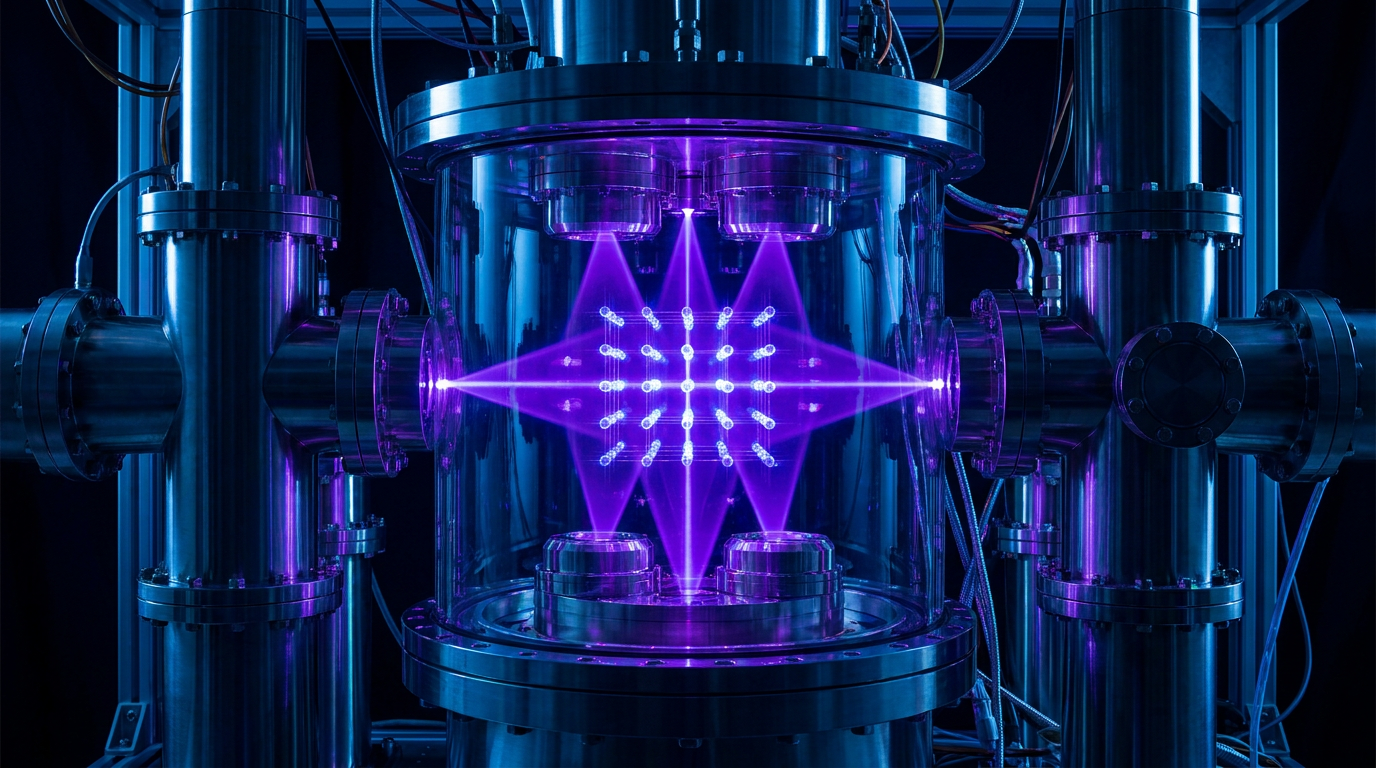
- It utilizes a neutral-atom architecture, using lasers to trap and move individual rubidium or cesium atoms.
- The hardware actively groups noisy physical qubits together to create stable, error-corrected logical qubits.
- The 2028 timeline puts intense competitive pressure on rival superconducting systems from Google and IBM.
- While powerful enough for advanced materials science, the system will not yet be large enough to break standard internet encryption.
The quantum computing industry has long operated under a looming, elusive deadline: the transition from experimental, error-prone prototypes to reliable, fault-tolerant machines. That timeline just became significantly more concrete. Amazon Web Services (AWS) and hardware developer QuEra Computing have announced an expanded strategic collaboration to bring a fault-tolerant quantum computer, dubbed "Libra," to the cloud by 2028. The system is designed to execute roughly one million reliable quantum operations—a threshold the industry refers to as "Megaquop-scale" performance.[2][3][4][7]
For years, the field has been stuck in what researchers call the Noisy Intermediate-Scale Quantum (NISQ) era. In this phase, quantum processors can perform complex calculations, but the underlying quantum bits, or qubits, are so fragile that they quickly succumb to environmental noise, degrading the computation before it can finish. QuEra’s Libra system aims to break this barrier, promising an architecture that actively detects and corrects its own errors in real time.[2][3][5]
To understand why this is a watershed moment, one must understand the fundamental fragility of quantum information. Unlike classical computing bits, which are locked into binary states of zero or one, qubits exist in delicate superpositions. The slightest thermal fluctuation, stray electromagnetic field, or even cosmic ray can cause a qubit to lose its quantum state—a phenomenon known as decoherence. If a quantum computer cannot correct these errors faster than they occur, the machine is effectively useless for long, complex algorithms.[4][5]
The solution is Quantum Error Correction (QEC), a mathematical and physical framework that forms the bedrock of QuEra’s 2028 roadmap. QEC does not attempt to perfectly shield individual qubits from the universe. Instead, it accepts that physical qubits will fail and uses clever encoding to protect the underlying information. By grouping hundreds or even thousands of noisy physical qubits together, the system creates a single, highly stable logical qubit.[3][4][5][7]

This physical-to-logical ratio is the central engineering challenge of the decade. If a system requires 1,000 physical qubits to yield just one logical qubit, scaling up to a commercially useful machine demands millions of physical qubits. QuEra’s Libra processor is projected to deliver over 256 error-corrected logical qubits, backed by an anticipated logical error rate of one in a million. Achieving this requires an architecture that can minimize the overhead ratio while maximizing connectivity.[3][4][5]
This is where QuEra’s specific hardware modality—neutral atoms—enters the picture. While tech giants like IBM and Google have heavily invested in superconducting circuits, and companies like IonQ utilize trapped ions, QuEra relies on neutral rubidium or cesium atoms suspended in a vacuum. Because these atoms are electrically neutral, they can be packed tightly together without interfering with one another, offering a natural pathway to scaling up physical qubit counts.[4][5][7]
This is where QuEra’s specific hardware modality—neutral atoms—enters the picture.
The mechanism driving this neutral-atom architecture sounds like science fiction. The system uses optical tweezers—highly focused, microscopic laser beams—to trap individual atoms and dynamically reposition them in real time. This ability to physically move qubits around during a computation allows for all-to-all connectivity. Unlike static superconducting chips where a qubit can only interact with its immediate neighbors, QuEra’s atoms can be shuffled to entangle with any other atom in the array.[4]
This dynamic reconfigurability is the secret weapon for efficient Quantum Error Correction. It allows the system to run ultra-high-rate, transversal error-correcting codes that require far fewer physical qubits to create a stable logical qubit. The foundational science for this approach was validated in a series of landmark, peer-reviewed experiments conducted by QuEra alongside academic partners at Harvard University and the Massachusetts Institute of Technology between 2023 and 2025.[2][4]

Those academic milestones proved that the core ingredients for fault tolerance—such as logical magic state distillation and real-time syndrome decoding—were physically possible on neutral-atom hardware. Now, the challenge shifts from academic proof-of-concept to commercial engineering. By hosting Libra natively on Amazon Braket, AWS’s quantum computing service, the partnership aims to democratize access to this fault-tolerant environment.[2][4][6]
The 2028 target date places immense competitive pressure on the broader quantum landscape. IBM has outlined its own roadmap targeting roughly 200 logical qubits by 2029, while Google is aiming for a similar threshold in the late 2020s. By planting a flag in 2028, QuEra and AWS are signaling that neutral-atom technology may reach the fault-tolerant finish line faster than the more historically entrenched superconducting approaches.[5][6]
If successful, a machine with 256 logical qubits and a one-in-a-million error rate will not just be a laboratory curiosity; it will be a tool capable of executing algorithms that are impossible on classical supercomputers. Early applications are expected to center on simulating quantum mechanics itself. This includes modeling complex molecular interactions for drug discovery, designing novel battery materials, and optimizing chemical catalysts for industrial processes.[2][3][5]
However, industry analysts caution that 256 logical qubits will not be enough to break modern cryptographic standards. Algorithms like Shor’s algorithm, which could theoretically crack the 2048-bit RSA encryption that secures the global internet, would require thousands of logical qubits and billions of reliable operations. Libra is a stepping stone toward that cryptographic horizon, not the arrival.[6][7]

The road to 2028 is also paved with immense, unresolved engineering hurdles. Transitioning from a laboratory demonstration of a few logical qubits to a sustained, cloud-accessible system with hundreds of logical qubits requires unprecedented advancements in laser control systems, cryogenic cooling, and automated atom-reloading mechanisms. The physical error rates of the underlying neutral atoms must be driven down significantly to make the math of error correction viable at scale.[4][5]
Despite these uncertainties, the AWS and QuEra announcement represents a definitive inflection point. The quantum computing narrative is shifting from a race to build the most physical qubits to a race to build the most reliable logical qubits. As the 2028 deadline approaches, the industry will be watching closely to see if neutral atoms can deliver on the promise of the fault-tolerant era, unlocking the next great leap in computational power.[3][5][7]
How we got here
2020
AWS launches Amazon Braket, providing cloud access to early quantum hardware.
2022
QuEra launches Aquila, a 256-physical-qubit analog system, on Amazon Braket.
Late 2023
Harvard, MIT, and QuEra publish landmark research demonstrating early fault-tolerant quantum error correction.
June 2026
AWS and QuEra announce the expanded collaboration to launch the Libra system.
2028
Target launch date for Libra, bringing 256+ logical qubits to the cloud.
Viewpoints in depth
Quantum Hardware Developers
Advocates for the architectural elegance of neutral atoms and the necessity of moving past the NISQ era.
Hardware developers emphasize that the quantum industry cannot survive indefinitely on the promise of future capabilities; it must deliver reliable computation. By leveraging neutral atoms, which can be dynamically reconfigured using optical tweezers, developers argue they have found a shortcut to fault tolerance that bypasses the rigid wiring constraints of superconducting chips. They view the 2028 Libra launch as the definitive proof-of-concept that will validate years of academic research at Harvard and MIT.
Industry Analysts
Observers highlighting the aggressive timeline and the massive engineering overhead required.
While optimistic about the theoretical math, industry analysts remain cautious about the physical engineering required to hit the 2028 deadline. They note that scaling from a few logical qubits in a lab to 256 logical qubits in a cloud data center requires unprecedented reliability in laser control, cryogenic systems, and automated atom reloading. Furthermore, analysts point out that this announcement serves as a strategic shot across the bow at IBM and Google, forcing the entire industry to accelerate their fault-tolerance roadmaps.
Applied Science & Cryptography Watchers
Focuses on the end-user implications for materials science, chemistry, and digital security.
For applied scientists, a machine with 256 logical qubits operating at a one-in-a-million error rate is the holy grail for simulating complex molecular interactions, potentially revolutionizing drug discovery and battery design. However, cryptography watchers are quick to temper expectations regarding digital security. They emphasize that while Libra represents a massive leap forward, breaking 2048-bit RSA encryption would require thousands of logical qubits, meaning the global internet remains safe from quantum decryption for the immediate future.
What we don't know
- Whether the immense engineering challenges of scaling laser control and cryogenic cooling can be solved by the 2028 deadline.
- Exactly how many physical qubits will be required to maintain the 256 logical qubits at the targeted error rate.
- How quickly commercial software developers will be able to write algorithms that take full advantage of fault-tolerant hardware.
Key terms
- Quantum Error Correction (QEC)
- A method of protecting quantum information from environmental noise by encoding one stable logical qubit across many fragile physical qubits.
- Logical Qubit
- A reliable, error-corrected quantum bit that can sustain complex computations without losing its state.
- Physical Qubit
- The actual hardware component (like a single atom or superconducting circuit) that holds a quantum state, which is highly susceptible to errors.
- Optical Tweezers
- Highly focused laser beams used to trap, hold, and move individual atoms in a vacuum chamber.
- Decoherence
- The process by which a quantum bit loses its fragile quantum state due to interference from its surrounding environment.
- Megaquop
- A performance threshold indicating a quantum computer can execute one million reliable quantum operations before errors degrade the calculation.
Frequently asked
What is a logical qubit?
A highly stable quantum bit created by grouping many noisy physical qubits together using error-correcting codes, allowing for sustained computations.
Why are neutral atoms used in this computer?
Neutral atoms can be tightly packed without interfering with each other and dynamically moved with lasers, allowing for highly efficient error correction.
Will this computer break internet encryption?
No. While powerful, breaking standard RSA encryption would require thousands of logical qubits, far beyond the 256 targeted for the 2028 Libra system.
What is the NISQ era?
The Noisy Intermediate-Scale Quantum era is the current period where quantum computers are powerful but too error-prone for long, complex calculations.
Sources
Source coverage
7 outlets
3 viewpoints surfaced







[1]Ars TechnicaApplied Science & Cryptography Watchers
Sooner than expected? Useful quantum error correction promised for 2028.
Read on Ars Technica →[2]Amazon Web ServicesQuantum Hardware Developers
AWS and QuEra will bring the first fault-tolerant quantum computers to the cloud
Read on Amazon Web Services →[3]QuEra ComputingQuantum Hardware Developers
QuEra Announces 2028 Fault-Tolerant Quantum Computer
Read on QuEra Computing →[4]Quantum Computing ReportQuantum Hardware Developers
QuEra Outlines 2028 Roadmap for 256-Logical-Qubit “Libra” System
Read on Quantum Computing Report →[5]Quantum Intelligence NetworkIndustry Analysts
QuEra announces Libra, a fault-tolerant quantum system for Amazon Braket
Read on Quantum Intelligence Network →[6]Quantum ZeitgeistIndustry Analysts
QuEra Computing will deliver Libra, its first fault-tolerant quantum computer
Read on Quantum Zeitgeist →[7]Crypto BriefingApplied Science & Cryptography Watchers
AWS and QuEra Computing put a date on quantum computing's biggest promise
Read on Crypto Briefing →

Every angle. Every day.
Get technology stories with full source coverage and perspective breakdowns delivered to your inbox.