
Trump and Pezeshkian Sign Historic MoU to End Iran War and Reopen Strait of Hormuz
The U.S. and Iran have signed a 14-point memorandum of understanding to halt military operations and reopen the Strait of Hormuz, though the deal faces fierce resistance from Israeli leadership and U.S. lawmakers.
By Factlen Editorial Team
- U.S. Foreign Policy Hawks
- Condemns the memorandum as an unconditional surrender that rewards a hostile regime with massive financial windfalls.
- Israeli Defense Hardliners
- Views the agreement as a dangerous capitulation that abandons Israel's security needs and emboldens regional adversaries.
- Ceasefire & Economic Stabilizers
- Argues the deal is a necessary diplomatic breakthrough to stabilize the global economy and prevent a nuclear-armed Iran.
- Iranian Strategic Interests
- Frames the agreement as a historic victory that ends crippling sanctions and asserts Iranian sovereignty on the world stage.
What's not represented
- · Lebanese Civilians
- · Global Shipping Companies
Why this matters
The agreement aims to end a 110-day conflict that has devastated global energy markets and sent shockwaves through the Middle East. However, with Israel vowing to continue its fight in Lebanon and U.S. lawmakers threatening to derail the concessions, the fragile 60-day ceasefire could easily collapse.
Key points
- Presidents Trump and Pezeshkian signed a 14-point MoU to end the 110-day conflict.
- The deal establishes a 60-day ceasefire and mandates the reopening of the Strait of Hormuz.
- Iran agreed to down-blend its highly enriched uranium in exchange for immediate sanctions relief.
- The agreement requires a halt to fighting in Lebanon, a condition Israel has fiercely rejected.
- U.S. lawmakers from both parties have heavily criticized the deal as a capitulation to Tehran.
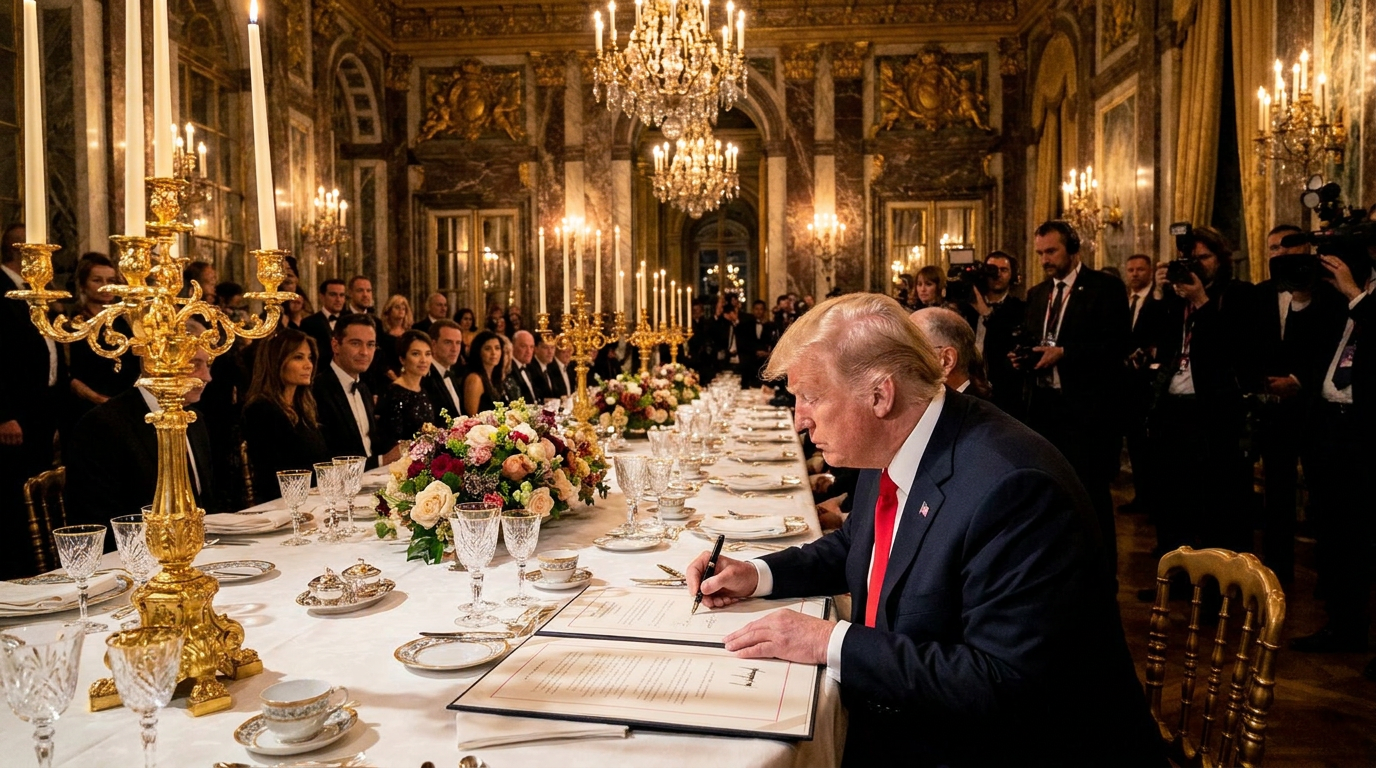
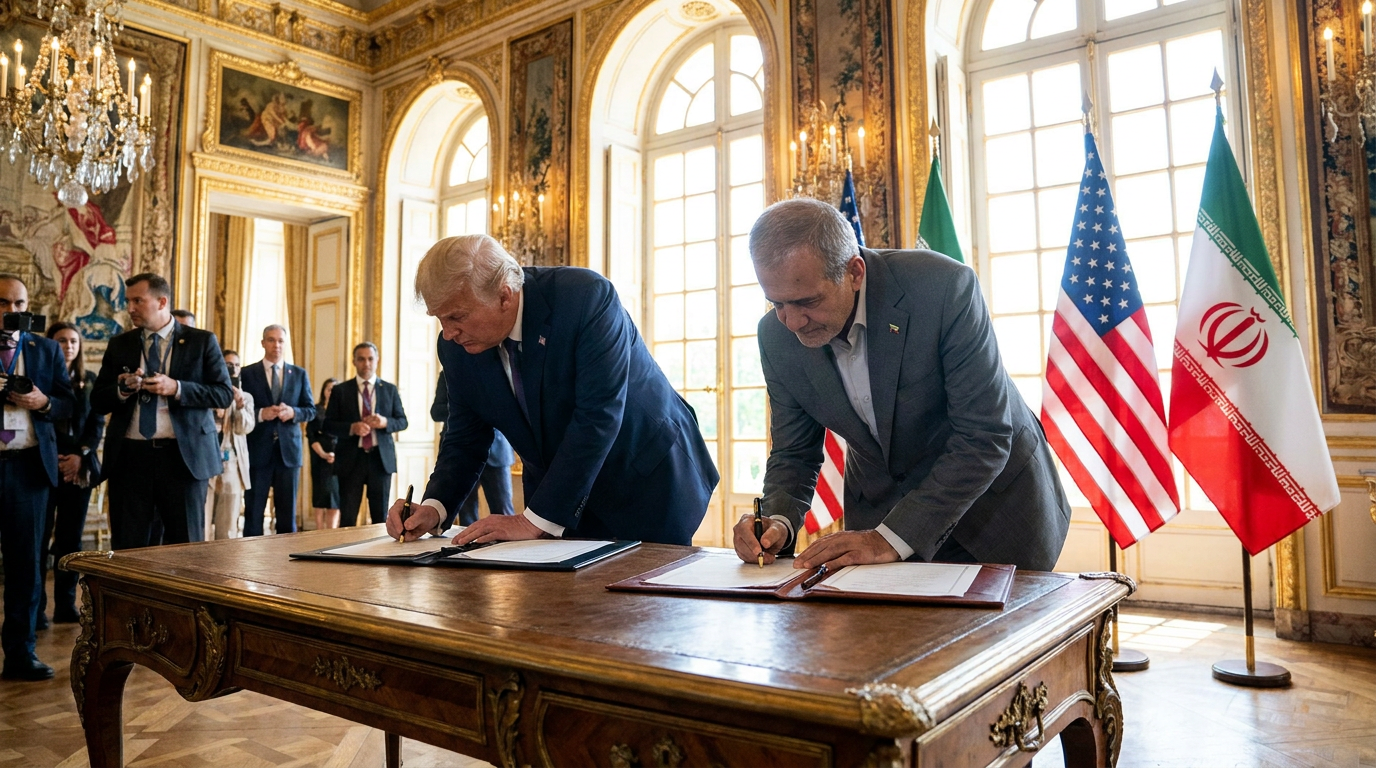
U.S. President Donald Trump and Iranian President Masoud Pezeshkian have officially signed a sweeping 14-point Memorandum of Understanding aimed at ending the devastating 110-day war that has fractured the Middle East and sent global energy markets into a tailspin. The provisional agreement, which Trump signed on Wednesday evening while dining with French President Emmanuel Macron at the Palace of Versailles, establishes an immediate 60-day ceasefire and sets the stage for comprehensive negotiations over Iran's nuclear program and regional influence. The symbolic choice of Versailles—the site where leaders gathered in 1919 to formally end World War I—underscores the administration's desire to frame the accord as a historic diplomatic triumph. However, the rapid push to finalize the deal has exposed deep fractures, with the White House bypassing traditional congressional oversight to secure a halt to hostilities before the conflict could escalate further.[3][4]
The core of the provisional deal mandates an immediate and permanent halt to military operations on all fronts, a clause that explicitly includes the parallel conflict raging in Lebanon. In exchange for Iran agreeing to down-blend its 440-kilogram stockpile of highly enriched uranium—a critical step away from weapons-grade material—the United States has committed to issuing immediate sanctions waivers for Iranian crude oil and petrochemicals. Furthermore, the agreement promises to unfreeze billions of dollars in restricted Iranian assets that have been locked in international banks for years. Administration officials argue that these immediate financial concessions are the necessary price for bringing Tehran to the negotiating table and neutralizing the immediate threat of a nuclear breakout, though critics warn that the influx of cash will simply be funneled to Iran's network of regional proxy militias.[4][9]

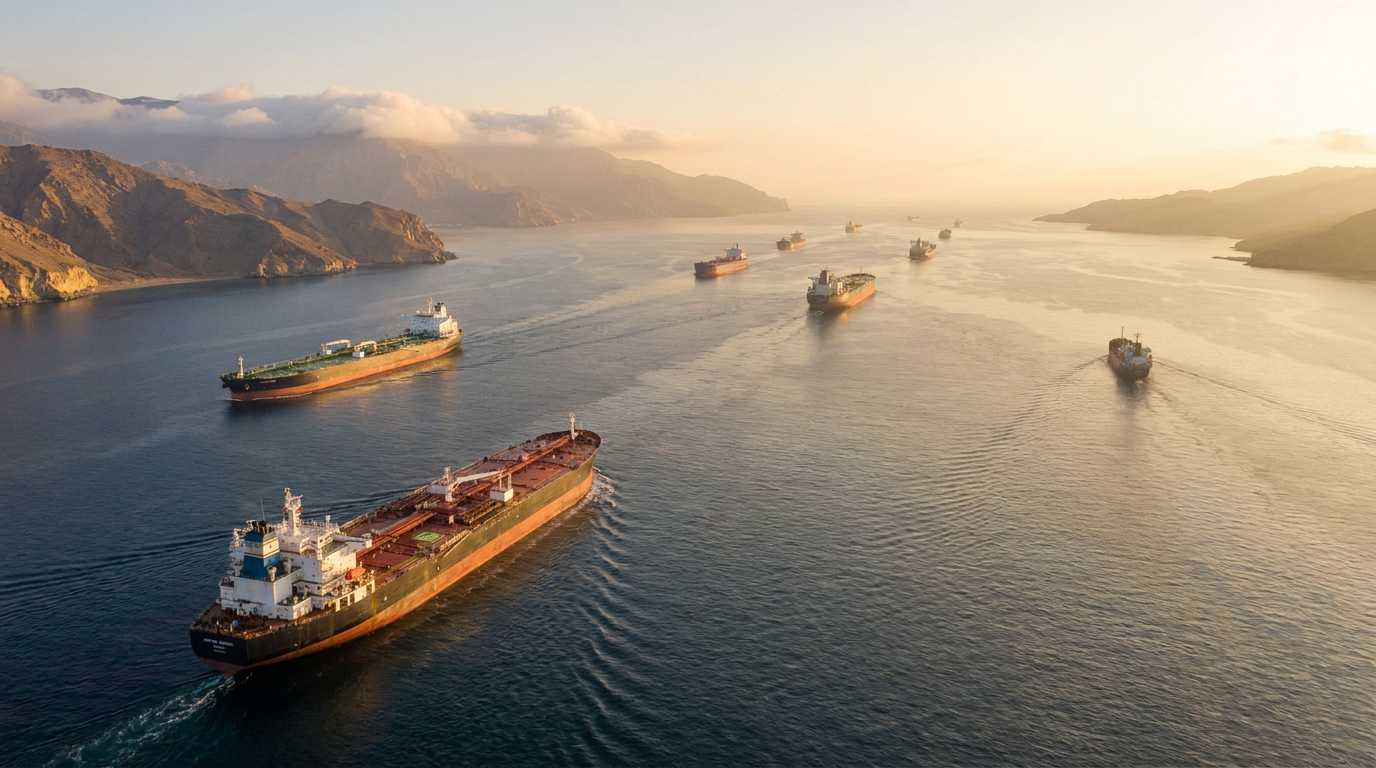
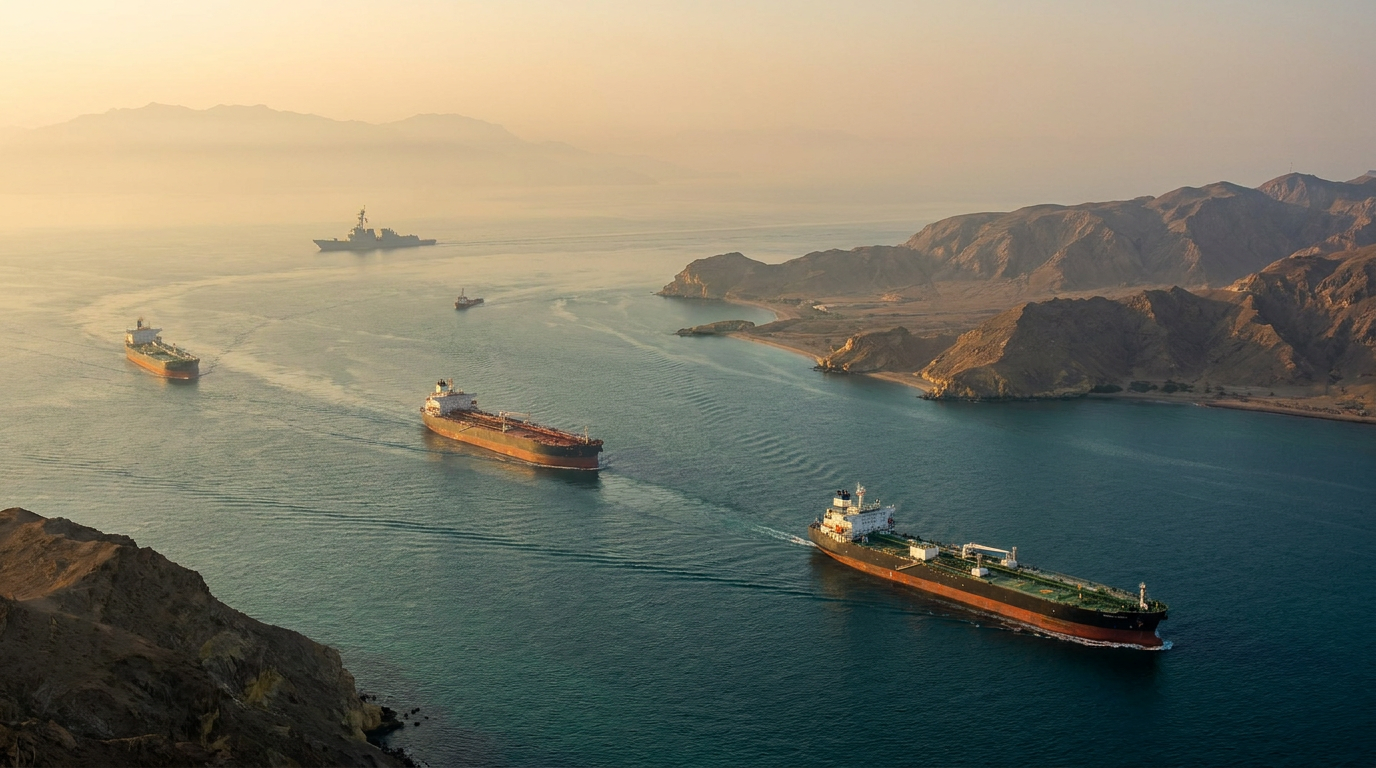
A central pillar of the agreement is the immediate reopening of the Strait of Hormuz, a critical maritime chokepoint whose effective closure by Iranian forces triggered a historic spike in global energy prices and threatened to plunge the world into an economic depression. The U.S. draft of the memorandum secures toll-free passage through the strait for the duration of the 60-day negotiation window, providing a vital lifeline to international shipping companies that had largely abandoned the route due to the threat of naval mines and drone strikes. However, the long-term status of the waterway remains highly contested. Iranian Parliament Speaker Mohammad Bagher Ghalibaf has already stated on state television that Tehran intends to assert its sovereignty and charge transit fees to commercial vessels once the initial 60-day grace period expires, setting the stage for future clashes over freedom of navigation.[2][4][7]
Beyond immediate sanctions relief, the Trump administration has floated the creation of a massive $300 billion reconstruction fund designed to rebuild Iran's war-torn infrastructure and integrate the nation into the broader regional economy. While the president angrily rejected suggestions that American taxpayers would foot the bill—insisting that wealthy Gulf Arab states would provide the capital—the sheer scale of the proposed investment has stunned foreign policy analysts. U.S. officials maintain that these sweeping financial incentives are strictly conditional on Iran's verifiable compliance with nuclear inspections and its commitment to restraining allied militias. Nevertheless, the prospect of enriching the Islamic Republic has fueled accusations that the White House is prioritizing short-term economic stability and lower domestic gas prices ahead of the upcoming midterm elections over long-term strategic security in the Middle East.[4]

The most explosive element of the memorandum is its mandate to end the fighting in Lebanon, a condition that has triggered a severe diplomatic rupture between Washington and Jerusalem. President Trump publicly criticized Israeli Prime Minister Benjamin Netanyahu's handling of the conflict against Hezbollah, dismissing it as a 'minor war' that has dragged on unnecessarily and complicated the broader peace effort with Tehran. Speaking to reporters at the G7 summit, Trump expressed visible frustration with the Israeli military's recent airstrikes in Beirut, arguing that the continued bombardment throws a negative light on the historic U.S.-Iran accord. The public rebuke marks a stunning reversal in the U.S.-Israel alliance, with the White House effectively demanding that Israel abandon its campaign to dismantle Hezbollah's military infrastructure along its northern border.[4][6]
Israeli officials have fiercely rejected the mandate to withdraw their forces from southern Lebanon, viewing the U.S.-brokered ceasefire as a betrayal that leaves their northern communities vulnerable to future attacks. Far-right National Security Minister Itamar Ben-Gvir bluntly declared that 'Trump's agreement does not bind us,' asserting Israel's sovereign right to continue military operations against Hezbollah regardless of the memorandum's terms. Other Israeli leaders across the political spectrum echoed this defiance, warning that the deal leaves Iran's ballistic missile program intact while failing to neutralize the immediate threat posed by its proxies. In response to Israel's intransigence, Iranian Foreign Minister Abbas Araghchi warned that any continued presence of Israeli troops in Lebanese territory would constitute a direct violation of the agreement, threatening to collapse the fragile truce before it even takes hold.[5][6]

The domestic political blowback in the United States has been equally intense, with lawmakers from both sides of the aisle condemning the administration's sweeping concessions. The Republican Party's hawkish wing, which initially cheered the military campaign against Tehran, has erupted in outrage over what they view as a capitulation. Retiring Republican Senator Bill Cassidy called the agreement the 'worst foreign policy blunder in decades,' remarking that Ronald Reagan would be 'rolling over in his grave' at the sight of the U.S. rewarding a hostile regime. Senator Ted Cruz warned against handing Tehran 'massive buckets of cash' that would inevitably be used to rebuild its military capabilities, urging the president not to squander the tactical victories achieved during the 110-day bombing campaign.[8]
Democratic lawmakers have been equally scathing in their assessment of the memorandum, framing it as a desperate political maneuver rather than a sound strategic treaty. Senator Richard Blumenthal characterized the pact as an 'unconditional surrender' by the United States, arguing that the deal emboldens Iran and strengthens its standing in the global community without achieving any of the war's original objectives. Critics point out that the 14-point plan makes no mention of dismantling Iran's ballistic missile arsenal or curbing its support for militant groups across the region. By deferring these critical issues to future negotiations, opponents argue that the administration has effectively given the Iranian Revolutionary Guard Corps a free hand to consolidate its power while enjoying the benefits of unfettered oil exports and international legitimacy.[8][9]

Despite the fierce opposition from Jerusalem and Capitol Hill, the diplomatic machinery is moving forward at a rapid pace. Vice President J.D. Vance is scheduled to attend a formal signing ceremony in Geneva, Switzerland, on Friday, officially kicking off the 60-day window to forge a binding, permanent treaty. The coming weeks will test whether the administration can navigate the immense pressure from its allies and domestic critics while keeping Tehran engaged in the peace process. With global energy markets hanging in the balance and Israeli forces still actively engaged in Lebanon, the memorandum of understanding represents a massive geopolitical gamble—one that could either stabilize the Middle East or set the stage for an even more devastating regional conflict if the fragile truce collapses.[1][4][7]
How we got here
Feb 2026
The U.S. and Israel launch coordinated military strikes against Iran, beginning the 110-day conflict.
Spring 2026
Iran effectively closes the Strait of Hormuz, triggering a global energy crisis and spiking oil prices.
June 14, 2026
U.S. Vice President J.D. Vance and Iranian Parliament Speaker Mohammad Bagher Ghalibaf digitally sign the preliminary MoU.
June 17, 2026
Presidents Donald Trump and Masoud Pezeshkian officially sign the agreement, establishing a 60-day ceasefire.
June 19, 2026
A formal signing ceremony is scheduled to take place in Geneva, Switzerland.
Viewpoints in depth
The Trump Administration's View
The deal is a necessary diplomatic breakthrough to stabilize the global economy and prevent a nuclear-armed Iran.
Administration officials argue that the 110-day war had reached a point of diminishing returns, and that reopening the Strait of Hormuz was essential to preventing a worldwide economic depression. By securing Iran's commitment to down-blend its highly enriched uranium, the White House claims it has neutralized the immediate threat of a nuclear breakout. They view the financial concessions as leverage to keep Tehran at the negotiating table for a permanent treaty.
The Israeli Government's View
The agreement is a dangerous capitulation that abandons Israel's security needs and emboldens regional adversaries.
Israeli leaders across the political spectrum view the MoU as a strategic disaster. They argue that the deal leaves Iran's ballistic missile program and nuclear infrastructure largely intact while providing the regime with billions of dollars to fund proxy militias. Furthermore, Jerusalem fiercely rejects the mandate to halt operations in Lebanon, viewing the dismantling of Hezbollah as an existential necessity that cannot be traded away for lower global gas prices.
U.S. Congressional Hawks
The memorandum represents an unconditional surrender that rewards a hostile regime with massive financial windfalls.
Both Republican and Democratic critics argue that the administration squandered the military leverage gained during the war by rushing into a flawed agreement. Lawmakers point out that the deal fails to address Iran's ballistic missile development or its sponsorship of terrorism, effectively allowing the Islamic Republic to end its international isolation without making meaningful structural concessions. They fear the unfrozen assets will be used to rebuild Iran's military capabilities.
The Iranian Government's View
The agreement is a historic victory that ends crippling sanctions and asserts Iranian sovereignty on the world stage.
Tehran frames the MoU as a successful resistance against Western military pressure. Iranian officials highlight the immediate lifting of oil sanctions and the unfreezing of assets as proof that their strategy of closing the Strait of Hormuz forced the U.S. to the negotiating table. Additionally, leaders like Parliament Speaker Ghalibaf are already signaling that Iran will assert its sovereign right to control and toll the strategic waterway once the interim 60-day period expires.
What we don't know
- Whether Israel will actually withdraw its forces from southern Lebanon or defy the U.S.-brokered ceasefire.
- If Iran will permanently allow toll-free passage through the Strait of Hormuz after the initial 60-day window.
- How the proposed $300 billion reconstruction fund will be financed and managed by Gulf states.
Key terms
- Strait of Hormuz
- A crucial waterway between the Persian Gulf and the Gulf of Oman, through which a significant portion of the world's oil supply passes.
- Down-blending
- The process of reducing the concentration of the fissile isotope in enriched uranium, making it suitable for civilian use but not for nuclear weapons.
- Memorandum of Understanding (MoU)
- A non-binding agreement outlining the terms and details of a mutual understanding, often serving as the foundation for a final treaty.
Frequently asked
Does this agreement mean the war is completely over?
Not necessarily. The MoU establishes a 60-day ceasefire to negotiate a final binding treaty, but either side can walk away. Additionally, Israel has threatened to ignore the ceasefire and continue fighting in Lebanon.
What happens to Iran's nuclear program under the deal?
Iran has agreed to down-blend its 440-kilogram stockpile of highly enriched uranium, moving it away from weapons-grade purity, in exchange for immediate sanctions relief.
Will global gas prices go down?
The reopening of the Strait of Hormuz and the lifting of sanctions on Iranian oil are specifically intended to stabilize global energy markets and lower prices, though long-term stability remains uncertain.
Sources
Source coverage
9 outlets
4 viewpoints surfaced









[1]AxiosCeasefire & Economic Stabilizers
Trump settles for Iran deal that falls short of his promises
Read on Axios →[2]The New York TimesU.S. Foreign Policy Hawks
Before Making a Deal, Trump Demanded Iran’s Surrender. He Got a Surprise.
Read on The New York Times →[3]Al JazeeraIranian Strategic Interests
Iran war live: Trump, Pezeshkian sign MoU to end fighting, reopen Hormuz
Read on Al Jazeera →[4]The GuardianU.S. Foreign Policy Hawks
US-Iran deal takeaways: reopening the strait of Hormuz, waived oil sanctions and Lebanon
Read on The Guardian →[5]The Washington PostIsraeli Defense Hardliners
Israeli officials disparaged the peace deal and said Israel's fight against Hezbollah in Lebanon would go on.
Read on The Washington Post →[6]CBS NewsIsraeli Defense Hardliners
What to know about the Iran war: Trump criticizes Netanyahu's handling of Lebanon
Read on CBS News →[7]Global NewsCeasefire & Economic Stabilizers
U.S., Iran draft agreement includes Lebanon provisions, Strait of Hormuz reopening
Read on Global News →[8]Jewish InsiderU.S. Foreign Policy Hawks
'Worst foreign policy blunder in decades': Senate Republicans break with Trump on Iran
Read on Jewish Insider →[9]The NationU.S. Foreign Policy Hawks
Trump’s Iran Deal Is an Epochal Surrender
Read on The Nation →
More in news politics
See all 6 stories →Geopolitics
U.S. and Iran Sign 14-Point Agreement at Versailles to End 110-Day War
6 sources

U.S.-Iran Deal
U.S. and Iran Sign Memorandum of Understanding to End 110-Day War
8 sources
UI Fraud Crackdown
Labor Department Threatens to Withhold State Funds in Sweeping Unemployment Fraud Crackdown
7 sources
US-Iran Accord
U.S. and Iran Sign 14-Point Memorandum of Understanding to End War and Reopen Strait of Hormuz
8 sources
Every angle. Every day.
Get news politics stories with full source coverage and perspective breakdowns delivered to your inbox.