
U.S. and Iran Sign Memorandum of Understanding to End 110-Day War
President Trump and Iranian President Pezeshkian have signed a 14-point agreement to halt military operations, reopen the Strait of Hormuz, and begin 60 days of negotiations on Iran's nuclear program.
By Factlen Editorial Team
- U.S. & Allied Negotiators
- Focuses on averting global depression, reopening the Strait, and capping the nuclear threat.
- Regional Stakeholders & Observers
- Focuses on the immediate regional impacts, the lifting of the blockade, and the Lebanon ceasefire.
- Strategic Skeptics & Security Hawks
- Focuses on the survival of Hezbollah, the retention of lower-level enriched uranium, and the lack of a definitive strategic victory.
- Global Economic Interests
- Focuses on the resumption of oil flows, the unfreezing of assets, and market stabilization.
What's not represented
- · Lebanese civilians affected by the ceasefire terms
- · Commercial shipping companies navigating the Strait of Hormuz
Why this matters
The signing of this agreement halts a major global conflict that had severely disrupted international energy markets and threatened to pull the Middle East into a wider war. For the global economy, it means an immediate resumption of vital oil shipments through the Strait of Hormuz, while for regional security, it sets the stage for high-stakes nuclear negotiations over the next 60 days.
Key points
- The U.S. and Iran signed a 14-point Memorandum of Understanding to end their 110-day military conflict.
- The agreement mandates the immediate reopening of the Strait of Hormuz and the lifting of the U.S. naval blockade on Iran.
- Both sides have a 60-day window to negotiate a final, comprehensive agreement regarding Iran's nuclear program.
- The ceasefire explicitly includes Lebanon, requiring Iran to restrain Hezbollah forces.
- The deal faces intense skepticism from Israeli officials and Republican hardliners who argue it leaves Iran's nuclear infrastructure largely intact.
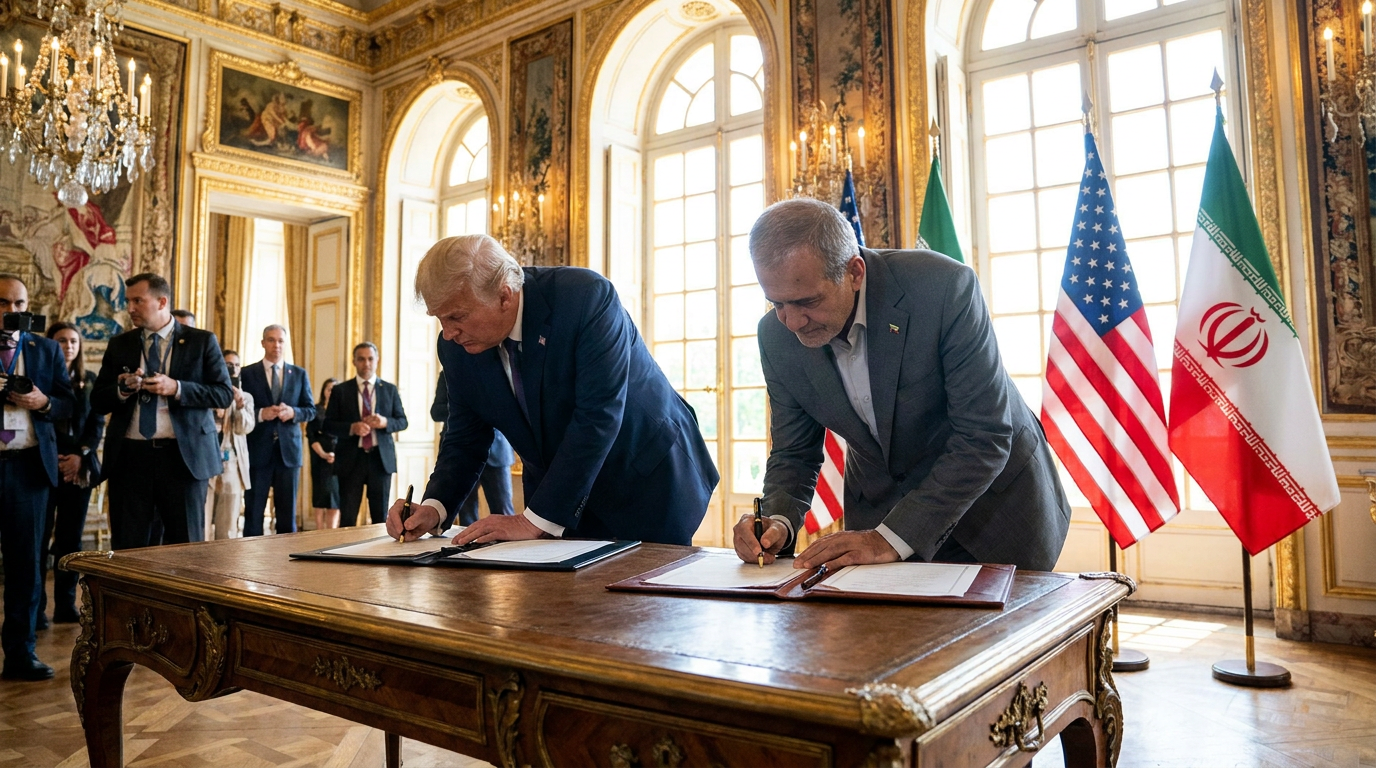
The signing of the 14-point Memorandum of Understanding (MoU) between U.S. President Donald Trump and Iranian President Masoud Pezeshkian marks the official end to a devastating 110-day conflict. The agreement, signed electronically and confirmed by officials on Wednesday, mandates an immediate and permanent termination of military operations across all fronts.[1][5][8]
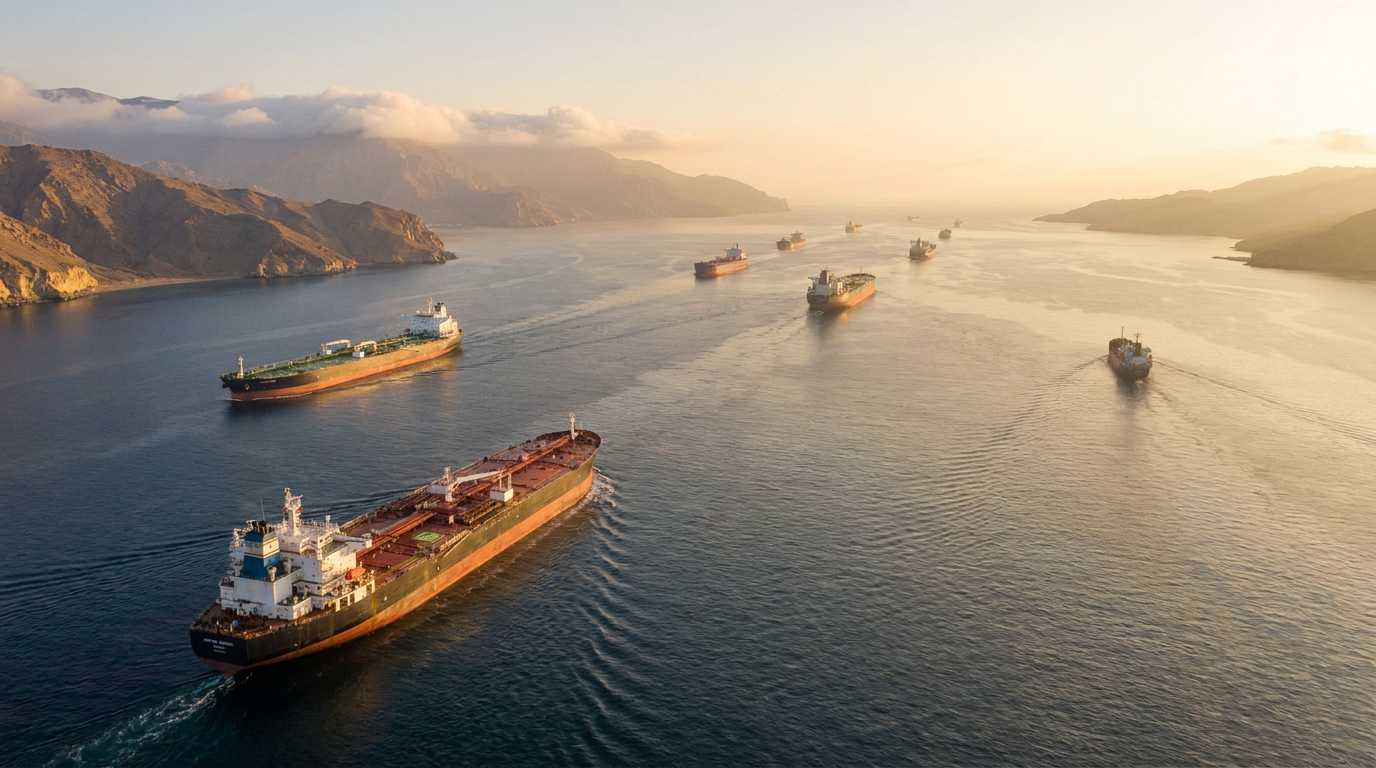
At the center of the immediate relief is the unblocking of global energy arteries. President Trump authorized the immediate removal of the U.S. naval blockade on Iranian ports, a measure initially imposed in retaliation for Tehran's grip on the vital waterway. In exchange, Iran has committed to restoring full, toll-free commercial traffic through the Strait of Hormuz within 30 days.[5][6]
The economic stakes of the blockade had reached a critical threshold. According to the International Energy Agency, the conflict triggered a massive drawdown of 163 million barrels from the strategic reserves of wealthy OECD nations, pushing global oil stocks to their lowest levels since 1990. The Trump administration argued that failing to secure the strait's reopening would have plunged the global economy into a severe depression.[5][8]

Beyond the immediate ceasefire, the MoU establishes a fragile 60-day window to negotiate a comprehensive final agreement regarding Iran's nuclear ambitions. As a preliminary concession, Tehran agreed to discuss down-blending its 440-kilogram stockpile of highly enriched uranium, which currently sits at a purity level that could be further enriched for weaponization.[2][5]
In return for these nuclear and maritime concessions, the United States has offered a sweeping package of financial incentives. The agreement outlines the unfreezing of billions of dollars in Iranian assets and the issuance of waivers allowing Iranian crude oil to be shipped abroad. Additionally, the framework floats a potential $300 billion reconstruction fund for Iran, financed by regional Gulf partners, though U.S. officials stressed that these payouts remain strictly conditional on Iran's compliance.[3][5]

In return for these nuclear and maritime concessions, the United States has offered a sweeping package of financial incentives.
One of the most significant and contentious clauses of the MoU extends the ceasefire to Lebanon. The agreement explicitly requires Iran to rein in its proxy, Hezbollah, effectively halting the northern front of the broader regional conflict. While the U.S. maintains that Israel retains the right to defend itself if attacked, the clause is designed to freeze the current battle lines and prevent further Israeli incursions into Lebanese territory.[5][7]
The inclusion of Lebanon has triggered intense anxiety in Israel and among Republican hardliners in Washington. Critics argue that the deal grants Hezbollah a crucial reprieve and fails to permanently dismantle Iran's nuclear infrastructure, allowing Tehran to retain large quantities of lower-enriched uranium. The diplomatic rift has even spilled into public view, with President Trump openly criticizing Israeli Prime Minister Benjamin Netanyahu's judgment as the U.S. finalized the accord.[4][7][8]
Friction is also visible within Iran's own political establishment. While the MoU stipulates toll-free passage through the Strait of Hormuz for 60 days, Iran's conservative parliament speaker, Mohammad Bagher Ghalibaf, publicly declared that the waterway will not return to prewar conditions. Ghalibaf insisted that Iran retains sovereignty over the strait and plans to charge commercial vessels a fee for services once the 60-day grace period expires, setting the stage for future maritime disputes.[3][5]

The Gulf states, which did not advocate for the initial military confrontation, are now left to navigate a shifted regional balance of power. Under the terms of the MoU, U.S. forces are scheduled to withdraw from areas immediately surrounding Iran within thirty days of a final, comprehensive agreement. This planned drawdown leaves regional partners wary of a security vacuum, even as they are expected to bankroll Tehran's reconstruction.[5][7]
Ultimately, the durability of the peace remains highly precarious. Senior U.S. officials have acknowledged that the 60-day negotiating window is fragile and that either side can walk away at any time. If the talks collapse, the Trump administration has signaled its readiness to reimpose crushing economic pressure, leaving the global economy and the Middle East suspended in a tense diplomatic holding pattern.[2][5]
How we got here
Early 2026
A major military confrontation erupts, leading to a 110-day conflict that disrupts global shipping and energy markets.
Spring 2026
The U.S. imposes a strict naval blockade on Iranian ports in retaliation for Iran's disruption of the Strait of Hormuz.
May 2026
OECD nations draw down 163 million barrels of oil reserves to offset the blockage of Gulf crude shipments.
June 17, 2026
U.S. and Iranian officials finalize the text of a 14-point preliminary agreement to halt hostilities.
June 18, 2026
President Trump and President Pezeshkian electronically sign the Memorandum of Understanding, officially ending the war.
Viewpoints in depth
The U.S. Administration's View
The deal is a necessary pragmatic step to avert a global economic crisis and cap Iran's nuclear progress.
President Trump and his allies frame the 14-point memorandum as a major victory that achieves the primary goal of reopening the Strait of Hormuz without committing the U.S. to an endless regional war. By securing Iran's agreement to down-blend its highly enriched uranium and tying sanctions relief to strict compliance, the administration argues it has built a 'wall' against an Iranian nuclear weapon. Officials emphasize that the alternative was a worldwide economic depression driven by skyrocketing energy costs.
The Iranian Leadership's View
The agreement is a validation of Iran's resilience and a necessary step to relieve crushing economic pressure.
For Tehran, the immediate lifting of the U.S. naval blockade and the unfreezing of billions in assets represent a critical lifeline for a battered economy. However, Iranian hardliners are already framing the deal not as a surrender, but as a recognition of their leverage. Figures like parliament speaker Mohammad Bagher Ghalibaf have publicly insisted that Iran will eventually charge tolls in the Strait of Hormuz, signaling to domestic audiences that Tehran has successfully defended its sovereignty against Western military pressure.
Israeli and Skeptic View
The ceasefire prematurely relieves pressure on Iran and allows Hezbollah to survive and regroup.
Israeli officials and Republican foreign policy hawks view the MoU with deep suspicion. They argue that the deal fails to permanently dismantle Iran's nuclear infrastructure, allowing Tehran to retain vast amounts of lower-enriched uranium. Furthermore, the inclusion of a ceasefire in Lebanon is seen as a strategic defeat for Israel, as it effectively forces a halt to operations against Hezbollah just as the militant group was under severe military strain. Critics fear the U.S. has traded long-term regional security for short-term economic relief.
What we don't know
- Whether Iran and the U.S. can successfully negotiate a final, comprehensive nuclear agreement within the fragile 60-day window.
- How strictly Iran will adhere to the requirement to restrain Hezbollah in Lebanon over the long term.
- Whether the proposed $300 billion Gulf-backed reconstruction fund will materialize if Iran charges tolls in the Strait of Hormuz.
Key terms
- Memorandum of Understanding (MoU)
- A formal agreement between two or more parties that outlines the terms and details of a mutual understanding, often serving as the foundation for a final, binding treaty.
- Strait of Hormuz
- A narrow, strategically vital waterway between the Persian Gulf and the Gulf of Oman through which a significant portion of the world's oil supply passes.
- Uranium Down-blending
- The process of mixing highly enriched uranium with lower-grade material to reduce its purity, making it unsuitable for use in a nuclear weapon.
- Naval Blockade
- An act of war in which a country uses its navy to prevent vessels from entering or leaving the ports of an enemy nation.
Frequently asked
What does the agreement say about the Strait of Hormuz?
The deal requires Iran to restore full, toll-free commercial traffic through the Strait of Hormuz within 30 days. In exchange, the U.S. is immediately lifting its naval blockade on Iranian ports.
Will Iran give up its nuclear program?
The preliminary agreement requires Iran to discuss down-blending its 440-kilogram stockpile of highly enriched uranium. A final, comprehensive agreement on the nuclear program must be negotiated within the next 60 days.
How does this affect the fighting in Lebanon?
The memorandum includes an immediate and permanent termination of military operations on all fronts, including Lebanon. This effectively requires Iran to rein in Hezbollah, though Israel retains the right to respond if attacked.
Is the United States paying Iran?
The U.S. is unfreezing billions of dollars in Iranian assets that were previously sanctioned. There is also a proposed $300 billion reconstruction fund for Iran, but U.S. officials say it will be financed by regional Gulf partners, not American taxpayers.
Sources
Source coverage
8 outlets
4 viewpoints surfaced







[1]Al JazeeraRegional Stakeholders & Observers
US and Iran sign Memorandum of Understanding to end war
Read on Al Jazeera →[2]AxiosU.S. & Allied Negotiators
Trump settles for Iran deal that falls short of his promises
Read on Axios →[3]The New York TimesStrategic Skeptics & Security Hawks
Before Making a Deal, Trump Demanded Iran’s Surrender. He Got a Surprise.
Read on The New York Times →Trump’s Deal With Iran Opens New Rifts in G.O.P.
Read on The New York Times →[5]The GuardianGlobal Economic Interests
US-Iran deal takeaways: reopening the strait of Hormuz, waived oil sanctions and Lebanon
Read on The Guardian →[6]PBS NewsHourU.S. & Allied Negotiators
Deal is reached to end Iran war and Trump orders stop to U.S. naval blockade
Read on PBS NewsHour →[7]Council on Foreign RelationsStrategic Skeptics & Security Hawks
Trump's Iran Deal Reopens the Strait. Much Remains to Be Done.
Read on Council on Foreign Relations →[8]The HinduRegional Stakeholders & Observers
West Asia highlights: Trump has signed Iran deal, says U.S. official
Read on The Hindu →
Every angle. Every day.
Get news politics stories with full source coverage and perspective breakdowns delivered to your inbox.