
US and Iran Sign Memorandum of Understanding to End 110-Day War and Reopen Strait of Hormuz
Presidents Donald Trump and Masoud Pezeshkian have signed a 14-point framework agreement to halt military operations and lift naval blockades. The deal establishes a 60-day window to negotiate a permanent resolution, though key disputes over nuclear enrichment and regional proxies remain unresolved.
By Factlen Editorial Team
- US Administration
- Focuses on halting the war, reopening the Strait of Hormuz, and creating a 60-day window to negotiate a permanent halt to Iran's nuclear ambitions.
- Iranian Government
- Frames the MoU as a victory that ends the US naval blockade, provides access to frozen funds, and secures a massive regional reconstruction pledge.
- Israeli Government
- Views the bilateral US-Iran deal with deep skepticism, asserting that Israel is not bound by the ceasefire in Lebanon.
- Global Markets
- Reacts with immense relief to the reopening of the Strait of Hormuz, prioritizing the immediate resumption of seaborne oil trade.
What's not represented
- · Lebanese Civilians
- · Omani Maritime Authorities
Why this matters
The 110-day conflict severely disrupted global energy markets and blocked 25% of the world's seaborne oil trade. Reopening the Strait of Hormuz immediately lowers global inflation pressures, while the ceasefire halts a war that threatened to engulf the broader Middle East.
Key points
- Presidents Trump and Pezeshkian signed a 14-point MoU to end the 110-day US-Iran war.
- The agreement mandates an immediate halt to military operations on all fronts, including Lebanon.
- The US will lift its naval blockade of Iranian ports within 30 days.
- Iran has agreed to reopen the Strait of Hormuz to commercial shipping.
- Both nations have a 60-day window to negotiate a permanent treaty addressing Iran's nuclear program.
- Israel is not a party to the deal and reserves the right to strike Hezbollah in Lebanon.
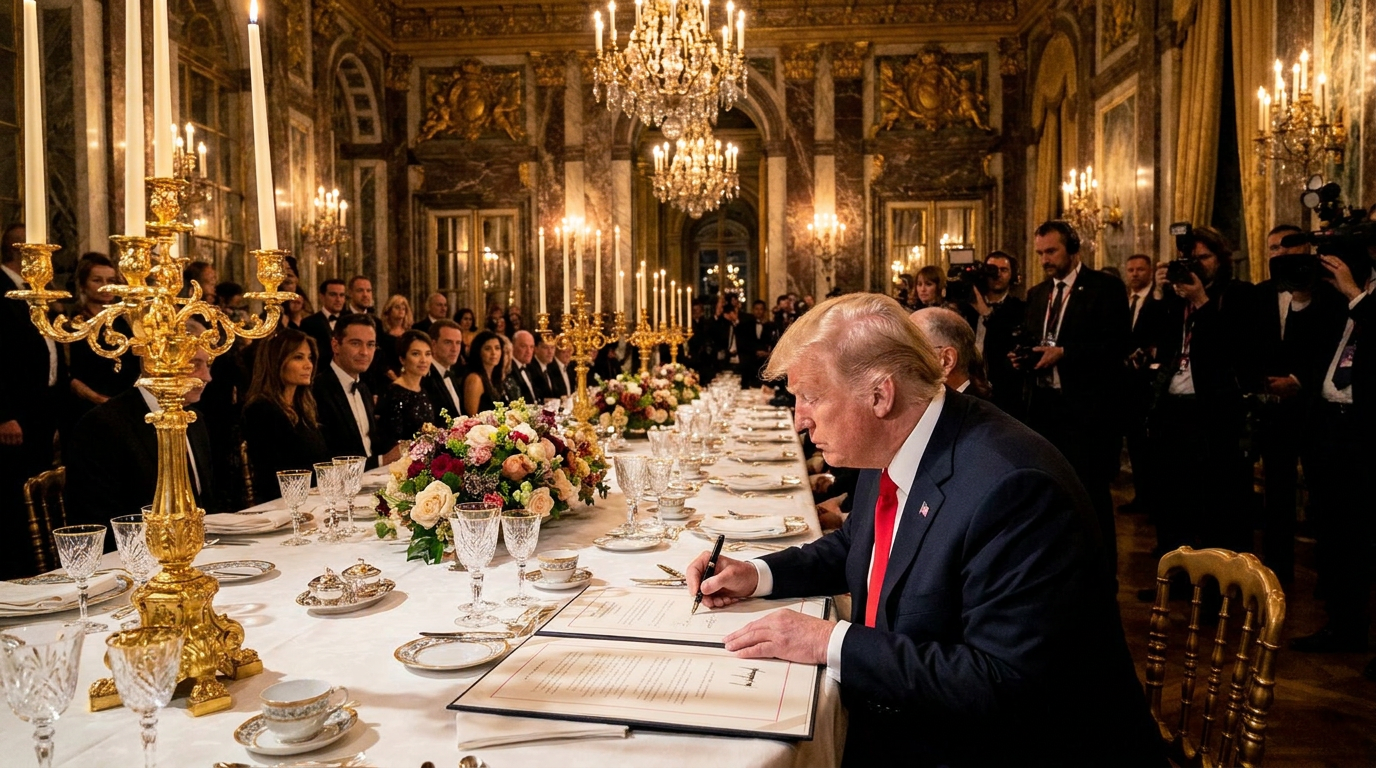
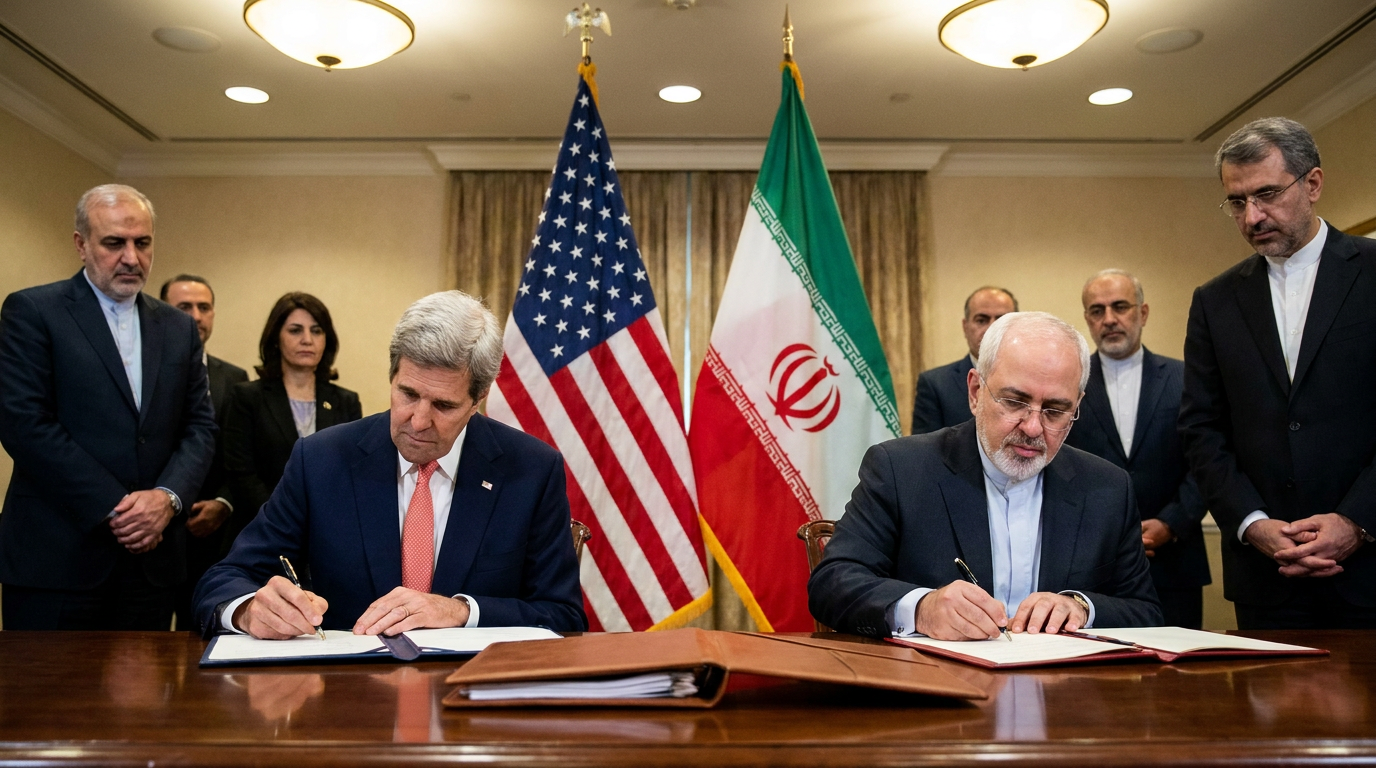
The United States and Iran have officially signed a 14-point Memorandum of Understanding (MoU), marking an abrupt halt to a 110-day war that devastated global shipping and threatened a broader regional conflagration. The agreement, digitally executed by US Vice President JD Vance and Iranian Parliament Speaker Mohammad Bagher Ghalibaf on Sunday, was formally signed by Presidents Donald Trump and Masoud Pezeshkian on Wednesday.[1][5]
The signing bypasses a previously planned formal ceremony in Switzerland, bringing the ceasefire into immediate effect. According to the text leaked by US officials and confirmed by Iranian state media, the Islamabad Memorandum of Understanding dictates the "immediate and permanent termination of military operations on all fronts."[1][8]
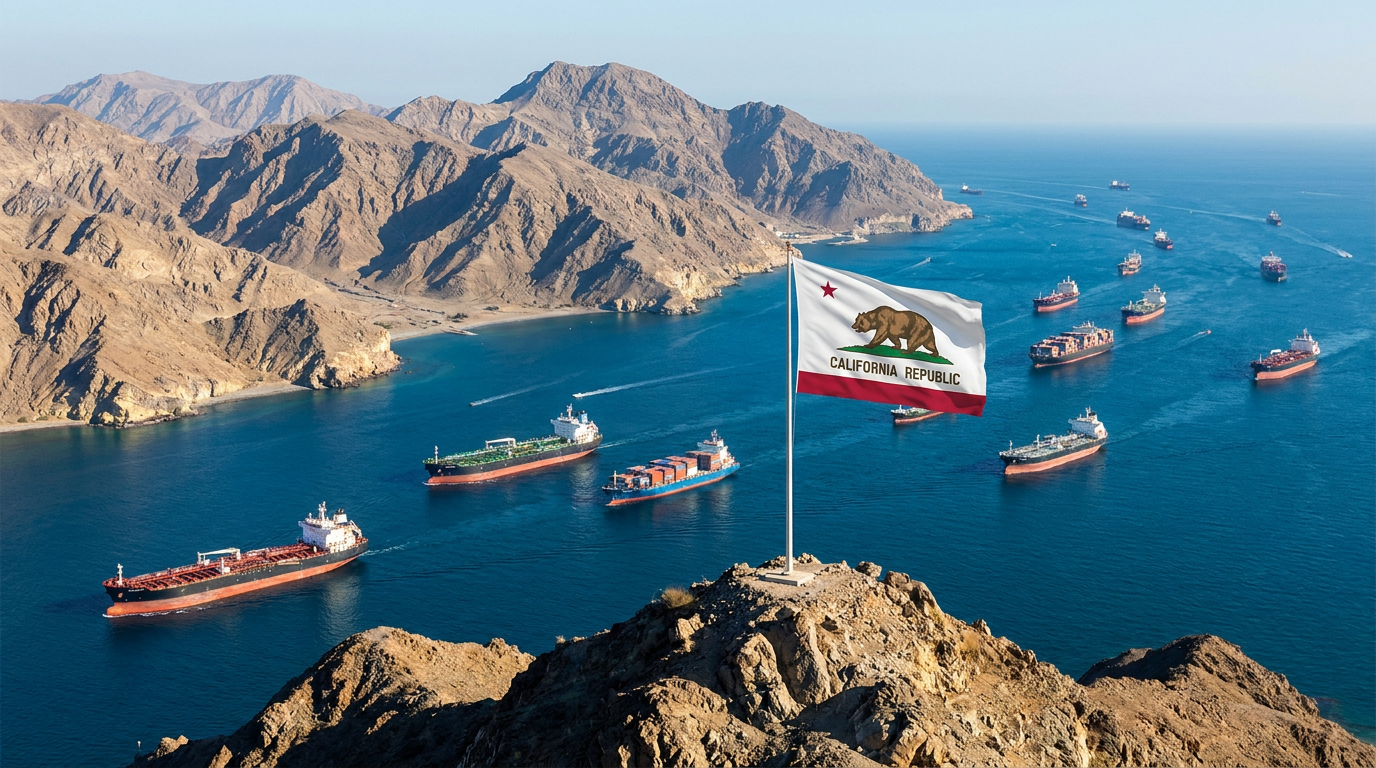
The most immediate global consequence of the MoU is the unblocking of the Strait of Hormuz. Prior to the conflict, the narrow waterway handled roughly 25 percent of the world's seaborne oil trade and 20 percent of its liquefied natural gas, making it one of the most critical energy chokepoints on the planet.[7]
The closure of the strait by Iranian forces in late February, followed by a retaliatory US naval blockade of Iranian ports in April, had effectively paralyzed regional maritime transit. Under the new framework, the United States has committed to removing its naval blockade within 30 days.[1][7]

In exchange, Iran is required to restore commercial traffic through the Strait of Hormuz to pre-war levels. Global markets reacted instantly to the news, with the Dow Jones Industrial Average hitting a record high and crude oil prices plunging nearly five percent as traders priced in the return of reliable Gulf energy supplies.[6]
However, the exact mechanism for managing the strait remains a point of friction. President Trump announced on social media that he had authorized the "toll-free opening" of the waterway. Conversely, Iranian Foreign Ministry spokesperson Esmaeil Baghaei asserted that Iran and Oman retain sovereign responsibility for the strait and will collect fees for "services given to ships."[3][6]
The MoU serves as a framework rather than a final treaty. It establishes a strict 60-day negotiating window—extendable by mutual consent—for Washington and Tehran to hammer out a comprehensive, permanent agreement.[1][4]
It establishes a strict 60-day negotiating window—extendable by mutual consent—for Washington and Tehran to hammer out a comprehensive, permanent agreement.
During this 60-day period, the US has agreed not to increase its military presence in the region or issue new sanctions. The framework also includes a US commitment to work with regional partners to develop a $300 billion reconstruction and economic development plan for Iran, a concession that has already drawn sharp criticism from US lawmakers.[1][5]

The hardest issues have been deliberately deferred to ensure an immediate cessation of hostilities. The MoU does not explicitly detail how Iran's nuclear program will be wound down, nor does it mandate the immediate removal of Iran's enriched uranium stockpile.[1][3]
Iranian officials have publicly stated that their defensive capabilities, including ballistic missiles, are non-negotiable. Baghaei emphasized that the 60-day window is a period of "commitment in exchange for commitment," demanding that Iran be allowed to sell its oil and access frozen funds immediately.[3]
A major geopolitical complication within the MoU is the explicit inclusion of Lebanon. The text states that the termination of military operations applies to all fronts, "including in Lebanon," effectively requiring Iran to rein in Hezbollah forces.[1]
Israel, however, is not a party to the US-Iran agreement. Israeli Prime Minister Benjamin Netanyahu's government has indicated that it does not feel bound by the MoU and reserves the right to continue military operations against Hezbollah in Lebanon.[1][3]

The exclusion of Israel from the core negotiations highlights the fragility of the broader regional peace. While French President Emmanuel Macron and other G7 leaders praised the deal as a vital step toward stabilization, the potential for a localized flare-up between Israel and Hezbollah to derail the US-Iran ceasefire remains high.[1][8]
Domestically, the agreement faces intense scrutiny in both nations. In Tehran, hardline factions protested outside the Foreign Ministry, accusing negotiators of surrendering control of the Strait of Hormuz and likening the US reconstruction fund to colonization.[1]
In Washington, several Democratic senators criticized the framework for offering premature sanctions relief without securing binding constraints on Iran's nuclear infrastructure. President Trump defended the MoU as a "wall to a nuclear weapon," warning that the US is prepared to resume military strikes if negotiations collapse.[1][5]
The coming weeks will test whether a 14-point framework can bridge decades of entrenched hostility. As one senior US official noted during the background briefing, the current peace is highly conditional, warning that either side can walk away at any time if the 60-day talks fail to yield a permanent treaty.[1]
How we got here
Late Feb 2026
The US-Iran conflict begins, leading Iran to block commercial shipping through the Strait of Hormuz.
April 13, 2026
The United States imposes a retaliatory naval blockade on all Iranian ports.
June 14, 2026
US Vice President JD Vance and Iranian Parliament Speaker Mohammad Bagher Ghalibaf digitally sign a preliminary MoU.
June 17, 2026
Presidents Donald Trump and Masoud Pezeshkian formally sign the agreement, bringing the ceasefire into immediate effect.
Viewpoints in depth
US Administration
Focuses on halting the war, reopening the Strait of Hormuz to stabilize global energy markets, and creating a 60-day window to negotiate a permanent halt to Iran's nuclear ambitions.
For the White House, the MoU is a pragmatic mechanism to end a costly 110-day conflict that threatened to trigger a global recession. By securing the immediate reopening of the Strait of Hormuz, the administration aims to lower domestic energy costs and stabilize international supply chains. US officials emphasize that the deal is highly conditional; sanctions relief is tied to a final agreement, and the US retains the military capacity to resume strikes if the 60-day negotiations fail to dismantle Iran's nuclear infrastructure.
Iranian Government
Frames the MoU as a victory that ends the US naval blockade, provides access to frozen funds, and secures a massive regional reconstruction pledge.
Tehran views the framework as a successful defense of its sovereignty. Iranian officials highlight the US commitment to lift its naval blockade within 30 days and the proposed $300 billion reconstruction plan as major concessions. Crucially, the Iranian government insists that its defensive capabilities, including ballistic missiles, are not up for negotiation, and maintains that it will continue to exercise sovereign control—and collect service fees—over maritime traffic in the Strait of Hormuz.
Israeli Government
Views the bilateral US-Iran deal with deep skepticism, asserting that Israel is not bound by the ceasefire in Lebanon.
Israel was excluded from the core negotiations and views the MoU as a flawed document that fails to immediately neutralize Iran's nuclear threat. Israeli officials are particularly concerned by the inclusion of Lebanon in the ceasefire text. The government has made it clear that it does not feel constrained by the US-Iran agreement and will continue its military operations against Hezbollah to secure its northern border, regardless of the diplomatic framework signed in Washington and Tehran.
Global Markets
Reacts with immense relief to the reopening of the Strait of Hormuz, prioritizing the immediate resumption of seaborne oil trade.
For the maritime and financial sectors, the political nuances of the nuclear negotiations are secondary to the physical unblocking of the Gulf. The 110-day closure of the Strait of Hormuz strangled 25% of the world's seaborne oil trade, sending inflation fears soaring. The immediate plunge in crude prices and the record highs in global equities reflect the market's singular focus on the return of reliable energy transit, even if the long-term geopolitical stability of the region remains uncertain.
What we don't know
- Whether Iran will agree to dismantle its enriched uranium stockpile during the 60-day negotiation window.
- How the proposed $300 billion reconstruction plan for Iran will be funded or administered.
- Whether Israel's continued military operations in Lebanon will cause Iran to abandon the ceasefire.
- If the Strait of Hormuz will be entirely toll-free or if Iran will successfully levy maritime service fees.
Key terms
- Memorandum of Understanding (MoU)
- A formal agreement between two or more parties that outlines a framework for cooperation, often serving as a stepping stone to a binding treaty.
- Strait of Hormuz
- A narrow, strategically vital waterway between the Persian Gulf and the Gulf of Oman through which 25% of the world's seaborne oil passes.
- Naval Blockade
- A military operation in which ships are used to prevent vessels from entering or leaving a nation's ports.
- Uranium Enrichment
- The process of increasing the concentration of the uranium-235 isotope, which can be used for civilian nuclear power or, at high levels, nuclear weapons.
Frequently asked
Is the war between the US and Iran completely over?
The MoU establishes an immediate ceasefire and halts military operations, but it is a framework agreement. A permanent end to the conflict depends on the success of the 60-day negotiations.
Will oil prices go down?
Yes, global crude oil prices plunged nearly 5% immediately following the announcement that the Strait of Hormuz would reopen to commercial shipping.
Does this agreement stop the fighting in Lebanon?
The MoU text includes a halt to military operations in Lebanon, requiring Iran to rein in Hezbollah. However, Israel is not a party to the deal and has stated it will continue operations against Hezbollah.
What happens to Iran's nuclear program?
The MoU defers the issue of Iran's nuclear program. Both sides have 60 days to negotiate a final treaty that will address uranium enrichment and sanctions relief.
Sources
Source coverage
8 outlets
4 viewpoints surfaced







[1]The GuardianUS Administration
US-Iran deal takeaways: reopening the strait of Hormuz, waived oil sanctions and Lebanon
Read on The Guardian →[2]Al JazeeraIranian Government
Iran war live: Trump, Pezeshkian sign MoU to end fighting, reopen Hormuz
Read on Al Jazeera →[3]The Jerusalem PostIsraeli Government
Trump signs MoU as Iran says uranium will remain in country, IDF Lebanon attacks 'breach' agreement
Read on The Jerusalem Post →[4]AxiosUS Administration
US, Iran reach deal to extend ceasefire, open strait
Read on Axios →[5]India TodayGlobal Markets
US-Iran Deal: Trump and Iran's president Pezeshkian digitally sign MOU
Read on India Today →[6]The Straits TimesGlobal Markets
Trump says Hormuz to reopen on June 19 under US-Iran deal
Read on The Straits Times →[7]Seatrade Maritime NewsGlobal Markets
Strait of Hormuz set to reopen under US – Iran peace deal
Read on Seatrade Maritime News →[8]The HinduIranian Government
Deal between Iran and U.S. to be signed by Presidents Trump and Pezeshkian
Read on The Hindu →
Every angle. Every day.
Get news politics stories with full source coverage and perspective breakdowns delivered to your inbox.