
Vasco Vilaça and Beth Potter Lead World Triathlon Championship Series Standings Ahead of Quiberon Sprint
Portugal's Vasco Vilaça and Great Britain's Beth Potter sit atop the 2026 World Triathlon Championship Series leaderboards as the tour heads to France for its first sprint-distance race of the season.
By Meera Iyer

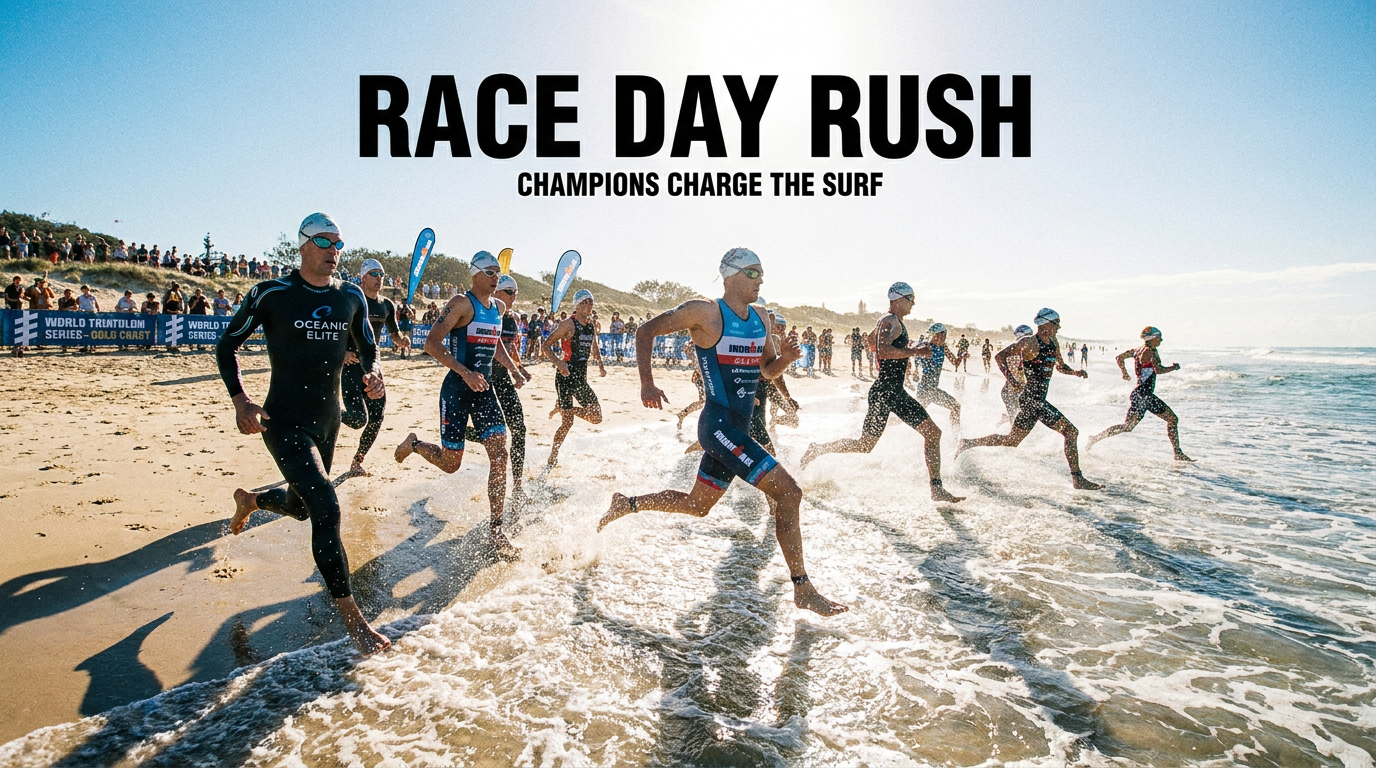
- Series Leaders
- Athletes currently topping the standings are focused on maintaining consistency, defending their points lead, and adapting their pacing to the faster sprint format.
- Challengers & Breakthrough Stars
- Rising athletes and close runners-up are aiming to disrupt the established hierarchy with aggressive racing, breakaway bike packs, and peak run splits.
- Home Nation Contenders
- French athletes are looking to leverage local crowds, course familiarity, and psychological momentum to secure victories on home soil.
- National Federations
- Team managers are strategizing for LA28 Olympic qualification points and testing mixed relay combinations to build depth for future team events.
Why this matters
The World Triathlon Championship Series determines the sport's ultimate world champions and allocates crucial qualification points for the Los Angeles 2028 Olympic Games. As the season shifts to the faster sprint format, the standings are primed for a major shakeup.
Key points
- Vasco Vilaça leads the men's WTCS standings with 2,000 points after wins in Samarkand and Yokohama.
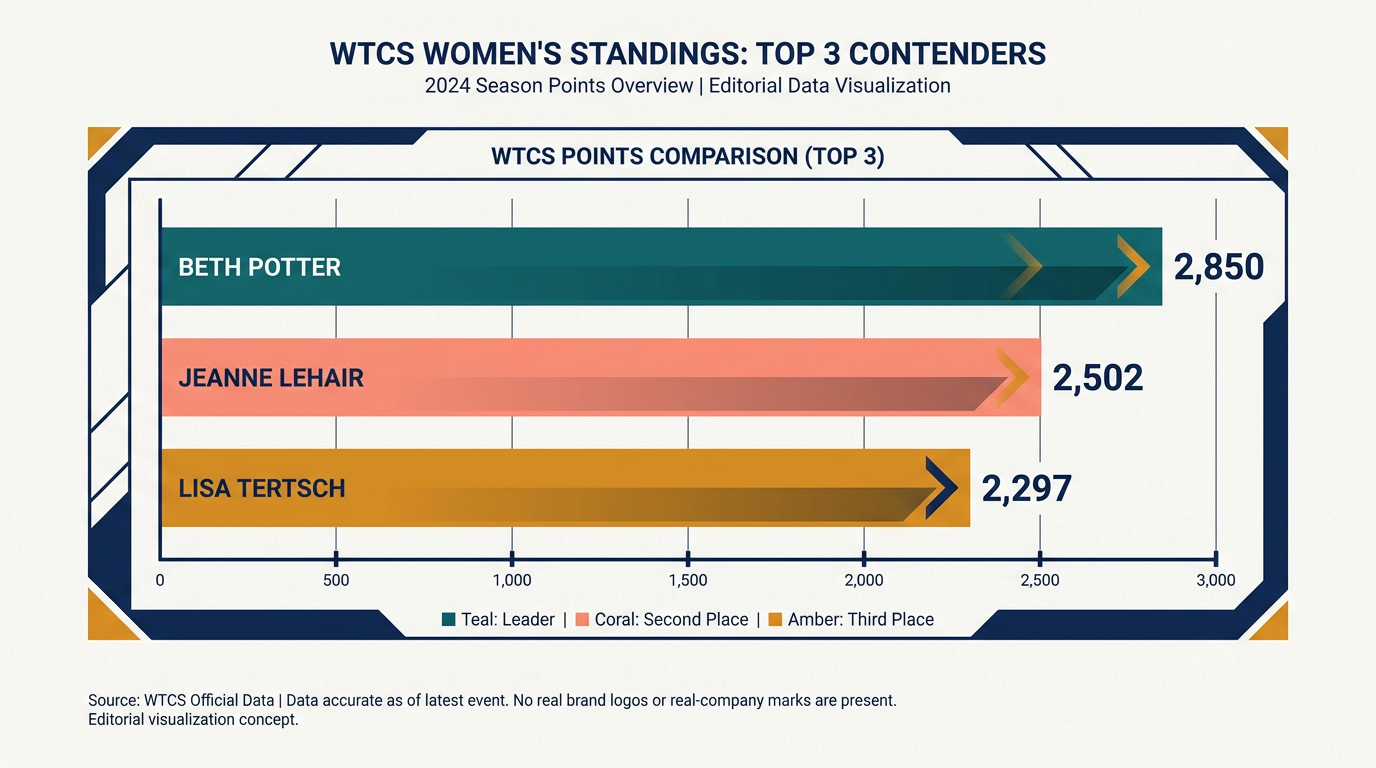
- Beth Potter holds the top spot in the women's rankings with 2,850 points.
- The tour moves to Quiberon, France, for the first sprint-distance race of the 2026 season.
- Reigning Olympic champion Cassandre Beaugrand will face Swedish phenom Tilda Månsson in a highly anticipated duel.
- The weekend will also feature the first Mixed Relay competition of the year, offering crucial LA28 Olympic qualification points.
The 2026 World Triathlon Championship Series (WTCS) has reached a pivotal juncture as the world's elite endurance athletes descend on the spectacular Quiberon Peninsula in Brittany, France. Scheduled for June 20-21, the fourth stop of the global tour marks a critical shift in racing dynamics. After opening the season with standard Olympic-distance events, the circuit now pivots to its first sprint-distance contest of the year. With crucial points for the world title and early LA28 Olympic qualification on the line, the standings are beginning to take a definitive shape.
In the men's division, Portugal's Vasco Vilaça has established himself as the undisputed frontrunner. The 26-year-old sits comfortably atop the leaderboard with a perfect 2,000 points, having secured back-to-back victories in Samarkand and Yokohama. Vilaça's early-season dominance has been built on a lethal combination of a front-pack swim exit, a controlled bike leg, and an explosive run that his rivals have yet to answer. A third consecutive win in France would give him a commanding 3,000 points at the season's halfway mark, putting him in a dream scenario for the world title.
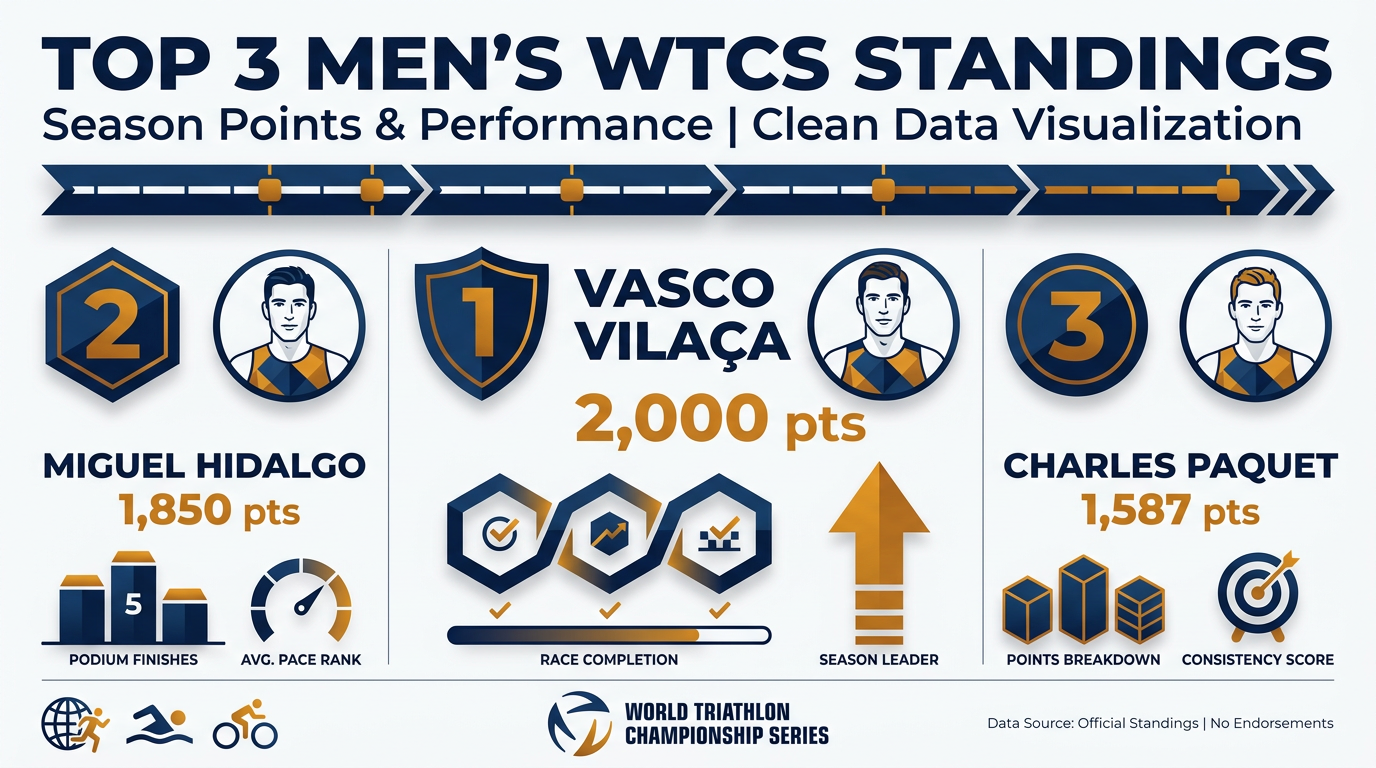
However, Vilaça's path to a three-peat is fraught with challengers eager to exploit the shorter, more frantic sprint format. Brazil's Miguel Hidalgo currently holds second place in the overall standings with 1,850 points, fueled by two consecutive silver medals. Hidalgo will be looking to finally step onto the top step of the podium, while Canada's Charles Paquet lurks in third with 1,587 points. The 750-meter beach start swim, followed by a tight four-loop 20-kilometer bike circuit and a blistering 5-kilometer run, leaves zero margin for error.
The sprint distance also opens the door for the sport's pure runners to dictate the outcome. Great Britain's Alex Yee and New Zealand's Hayden Wilde, two of the fastest runners in triathlon history, are primed to disrupt the standings. Wilde, looking to rebound from a recent DNF in Sardinia, will rely on a fragmented, high-pace bike leg to set up a footrace where he can unleash his trademark speed. If the lead pack hesitates, the explosive pace of the chasers could completely rewrite the men's leaderboard.
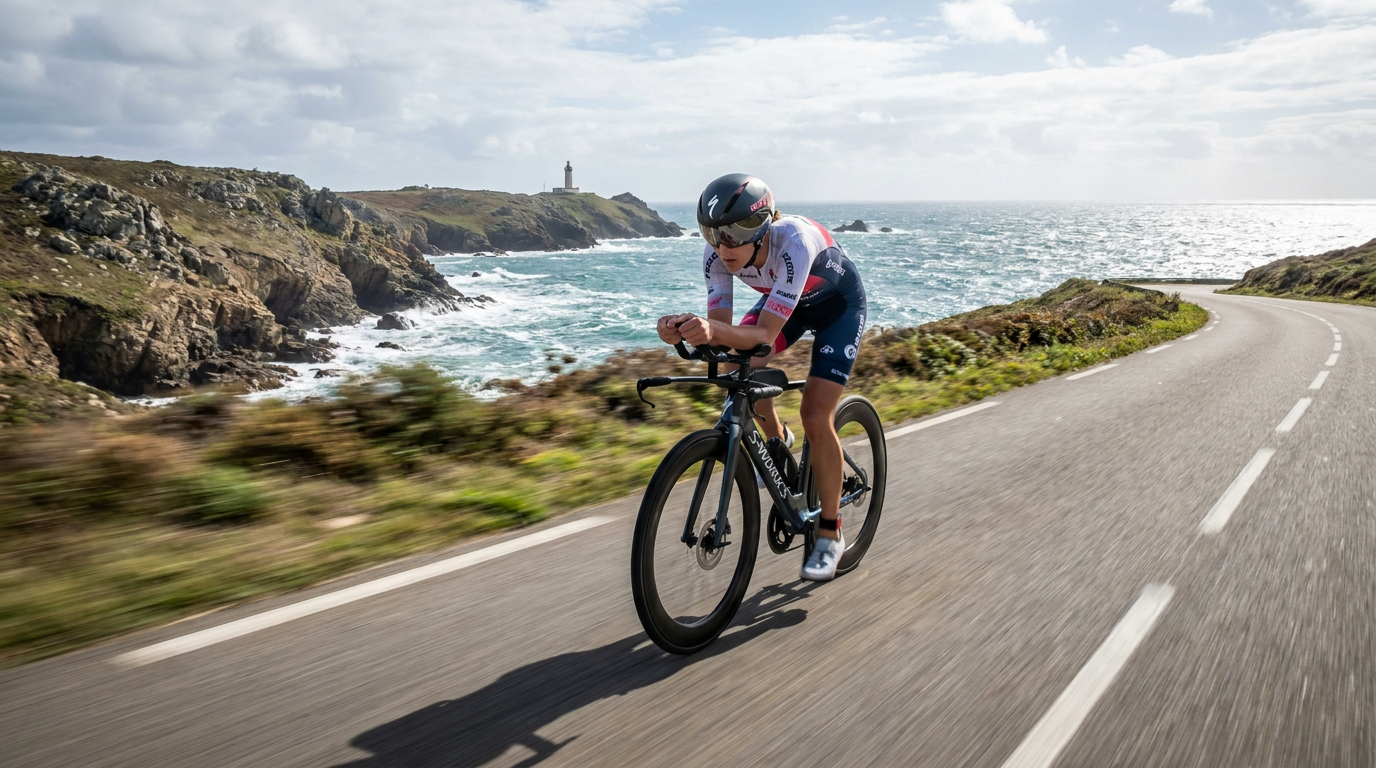
The sprint distance also opens the door for the sport's pure runners to dictate the outcome.
On the women's side, Great Britain's Beth Potter is tightly gripping the yellow jersey. The 2023 world champion leads the rankings with 2,850 points, having banked maximum points with a decisive victory at the season opener in Uzbekistan. Potter has maintained her advantage through sheer consistency, adding silver medals in Yokohama and Alghero to her 2026 resume. Her blistering run splits have made her the woman to beat, but the chasing pack is steadily closing the gap.[1][2]
Luxembourg's Jeanne Lehair has firmly established herself as Potter's primary threat, sitting in second place overall with 2,502 points after a string of top-four finishes. Germany's Lisa Tertsch occupies the third spot with 2,297 points, keeping the pressure on the leaders. The sprint format in Quiberon, however, introduces a highly anticipated duel that could shake up the top tier. France's Cassandre Beaugrand, the reigning Olympic champion, arrives fresh off a dominant victory in Sardinia and will enjoy a massive home-country advantage.
Racing in Brittany is essentially a home event for Beaugrand, and the French crowds are expected to be deafening. Her biggest challenge may come from 22-year-old Swedish phenom Tilda Månsson, who stunned the triathlon world with a breakthrough sprint victory over Potter in Yokohama. Månsson has previously won on the Quiberon course and possesses the precise swim-bike combination required to arrive at the second transition shoulder-to-shoulder with the French star.[2]
Beyond the individual standings, the Quiberon weekend carries immense strategic weight for national federations. Sunday will feature the first Mixed Relay competition of the 2026 season, a high-octane format where two men and two women each complete a super-sprint triathlon. Teams like the United States, led by Olympic medalists Gwen Jorgensen and Seth Rider, will use the relay to test team dynamics and secure vital qualification points for the Los Angeles 2028 Games. As the WTCS tour heats up, the sprint to the finish in France promises to redefine the championship race.
How we got here
April 2026
Beth Potter and Vasco Vilaça win the season-opening WTCS race in Samarkand, Uzbekistan.
May 2026
Tilda Månsson stuns the field with a breakthrough victory in Yokohama, while Vilaça secures his second win.
May 30, 2026
Cassandre Beaugrand dominates WTCS Alghero to claim her first win of the season on Italian soil.
June 20-21, 2026
The WTCS tour arrives in Quiberon, France, for the first sprint-distance race and mixed relay of the year.
Viewpoints in depth
The Leaders' Strategy
How the current points leaders are managing the pressure of the yellow jersey.
For Vasco Vilaça and Beth Potter, the goal in Quiberon is risk mitigation. Holding the top spot in the WTCS standings means they do not need to force a breakaway to succeed; they simply need to mark their closest rivals. By staying near the front of the swim and riding safely in the main pack, they can rely on their proven running speed to secure the top-five finishes necessary to defend their overall leads.
The French Advantage
The psychological and tactical edge for athletes racing in their home country.
Racing in Brittany offers a unique boost for the French national team. Cassandre Beaugrand and her compatriots benefit not only from deafening crowd support but also from deep familiarity with the local climate, road surfaces, and coastal winds. In a sprint race where a single technical error on the bike can end a podium bid, knowing the nuances of the Quiberon course provides a distinct, quantifiable advantage.
The Sprint Distance Factor
How the shift from Olympic distance to sprint distance changes race dynamics.
The sprint format fundamentally alters triathlon strategy. Because the distances are halved, the race operates at a redline threshold from the starting horn. A poor swim exit, which might be recoverable over a 40-kilometer bike leg in an Olympic-distance event, is often fatal in a sprint. This urgency favors aggressive, explosive athletes who can surge out of transitions and immediately settle into a blistering pace.
What we don't know
- Whether the high-paced sprint format will cause the main bike pack to fragment, allowing breakaway riders to build an insurmountable lead.
- Which nations will finalize their optimal four-person rosters for the Mixed Relay event ahead of the LA28 Olympic cycle.
Key terms
- WTCS
- The World Triathlon Championship Series, the premier annual global circuit for short-course elite triathlon racing.
- Sprint Distance
- A fast-paced triathlon race format consisting of a 750-meter swim, a 20-kilometer bike ride, and a 5-kilometer run.
- Mixed Relay
- A team event where two men and two women from the same nation each complete a super-sprint triathlon before tagging the next teammate.
Frequently asked
What is the difference between Olympic and sprint distance?
An Olympic-distance triathlon consists of a 1.5km swim, 40km bike, and 10km run. A sprint-distance race is exactly half that: a 750m swim, 20km bike, and 5km run.
Who is leading the 2026 WTCS standings?
Great Britain's Beth Potter leads the women's standings with 2,850 points, while Portugal's Vasco Vilaça leads the men with 2,000 points.
Why is the Quiberon race significant?
It is the first sprint-distance race of the 2026 season, features the first mixed relay event of the year, and offers crucial qualification points for the Los Angeles 2028 Olympics.
Sources
Source coverage
2 outlets
4 viewpoints surfaced


[1]CADEX CyclingSeries Leaders
Potter Wins 2026 WTCS Season Opener at Samarkand!
Read on CADEX Cycling →[2]TRI247Challengers & Breakthrough Stars
WTCS Yokohama 2026 women's results: Månsson stuns Potter for breakthrough win
Read on TRI247 →

Every angle. Every day.
Get sports stories with full source coverage and perspective breakdowns delivered to your inbox.