
How the Senate's New 100% Tariff Bill Aims to Rewire the Global Trade of Russian Oil
The U.S. Senate has advanced bipartisan legislation authorizing massive tariffs on countries that continue to buy Russian fossil fuels. The bill represents a major shift toward secondary sanctions, targeting the buyers and the 'shadow fleet' to defund the Russian war effort.
By Sergei Orlov

- Sanctions Advocates
- Argue that cutting off energy revenue via secondary sanctions is the only effective way to defund the Russian war machine.
- Energy Importers
- View secondary sanctions as an overreach that unfairly penalizes developing economies relying on discounted energy for growth.
- Trade Skeptics
- Question the efficacy of tariffs as a deterrent, warning they may simply empower executive tariff wars and disrupt global markets.
Why this matters
Understanding this legislation is crucial because it signals a shift in how global conflicts are fought economically. If enacted, these secondary sanctions could fundamentally alter international trade routes, impact diplomatic relations with major economies like India, and potentially trigger shifts in global energy prices that affect consumers worldwide.
Key points
- The U.S. Senate advanced a bipartisan bill authorizing tariffs of up to 100% on major buyers of Russian oil and gas.
- The legislation shifts focus from primary embargoes to secondary sanctions, targeting the third-party nations that fund the Russian war effort.
- India and China, which have absorbed massive volumes of discounted crude, are the primary targets of the proposed tariffs.
- The bill also includes strict penalties for foreign entities and vessels participating in the clandestine 'shadow fleet' logistics network.
- Critics warn the aggressive tariff strategy could spark retaliatory trade wars and disrupt the delicate balance of global energy prices.
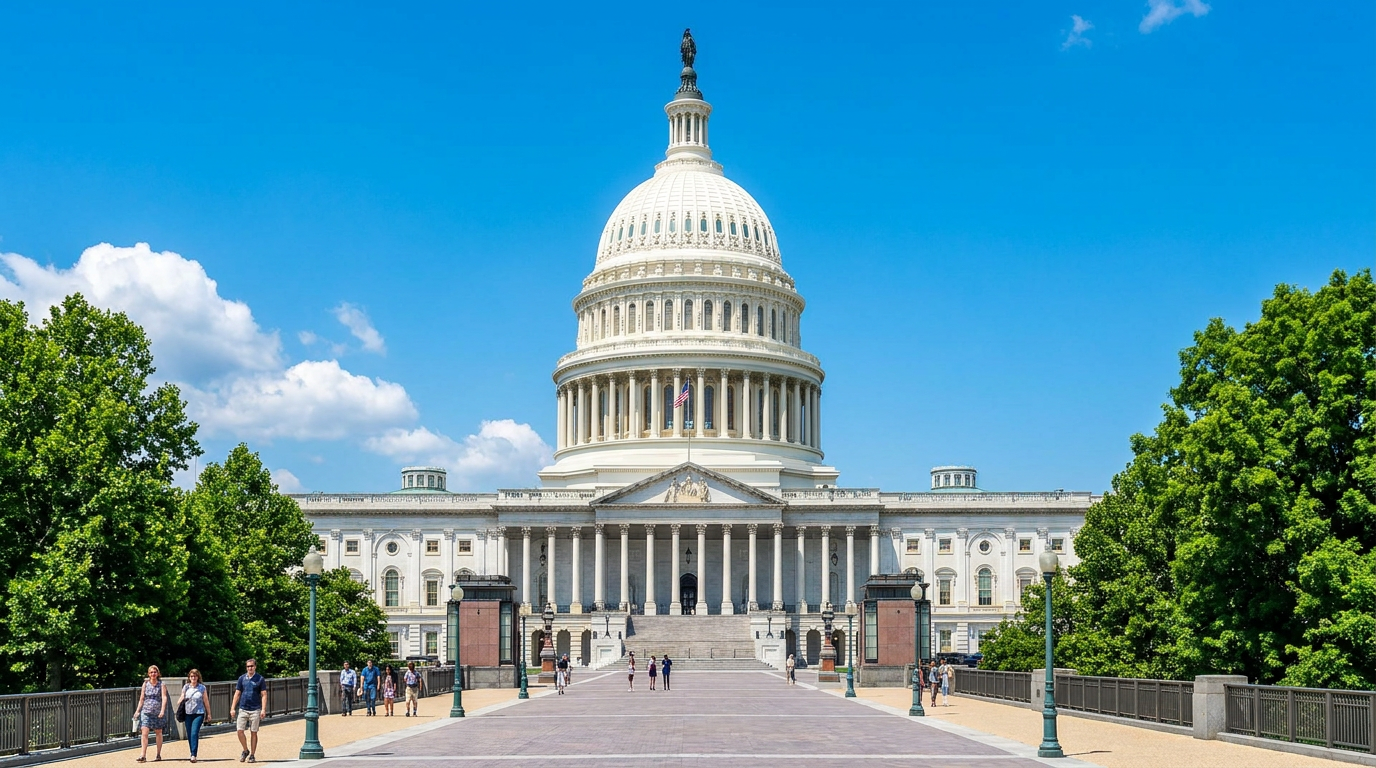
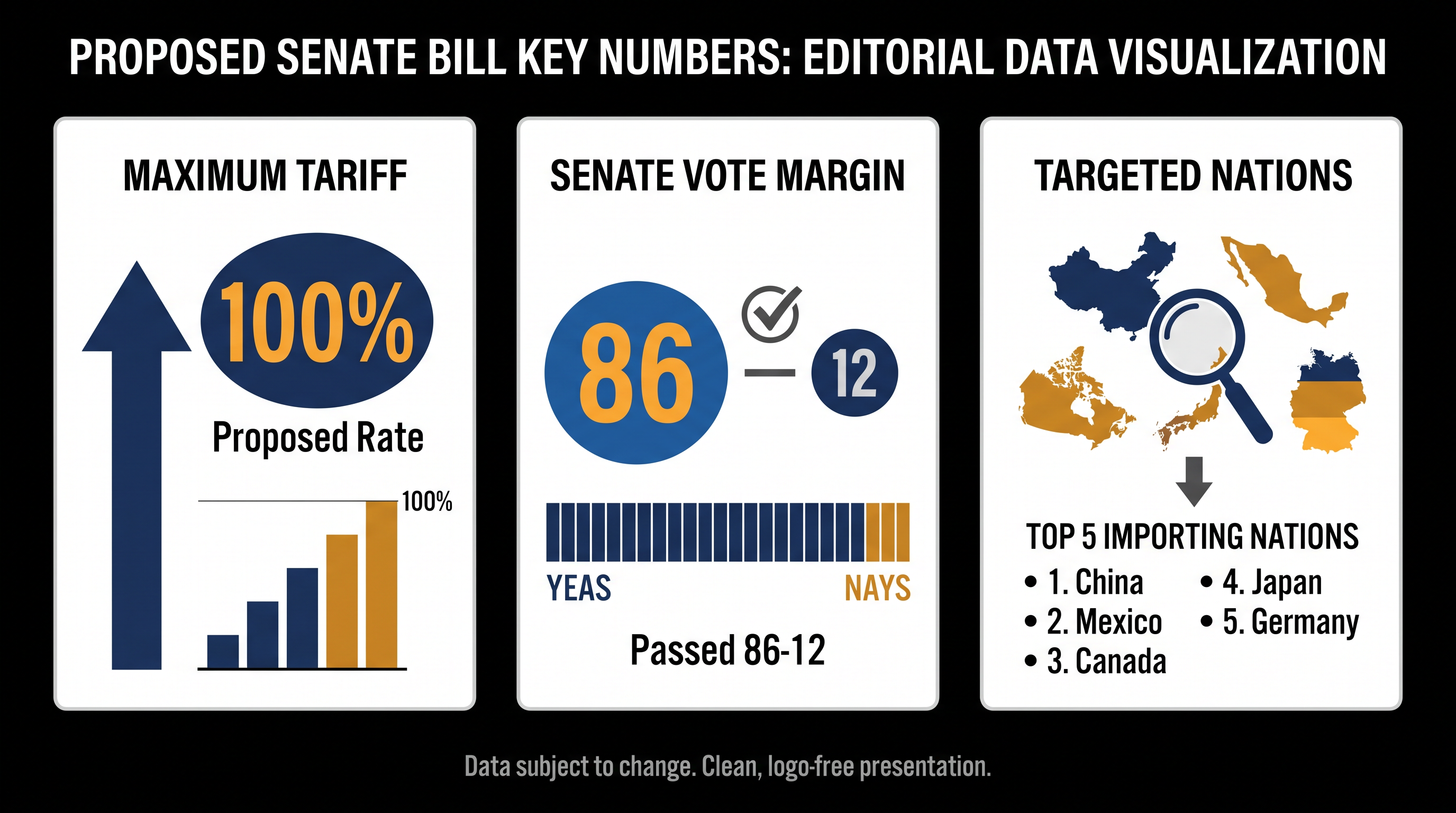
The landscape of global economic statecraft is undergoing a significant transformation as the United States Senate advances sweeping new legislation designed to fundamentally alter how international energy markets operate. In a rare display of overwhelming bipartisan consensus, the Senate voted 86–12 to invoke cloture on S. 5025, formally known as the Lindsey O. Graham Sanctioning Russia and Iran Act of 2026. The legislation represents a pivot from traditional, direct embargoes toward a more complex web of secondary enforcement mechanisms. Rather than solely penalizing the nation exporting the sanctioned goods, this new legislative framework explicitly targets the third-party countries that continue to purchase those resources. By advancing this measure, lawmakers are signaling a readiness to leverage the sheer size of the American consumer market as a blunt instrument to enforce international geopolitical norms, setting the stage for a potential rewiring of global trade relationships.[2][6]
At the heart of the legislation is a concerted effort to systematically dismantle the revenue streams that continue to finance the Russian military apparatus. For years, Western nations have relied on primary sanctions and price caps to restrict Moscow's energy profits, but those measures have frequently been circumvented as global supply chains adapted to the restrictions. The new Senate bill acknowledges this reality by authorizing the U.S. President to impose secondary sanctions not just on Russian officials and financial institutions, but on the foreign entities that facilitate their continued economic survival. By threatening to sever access to U.S. financial systems and markets, the legislation aims to force neutral or non-aligned nations to make a stark economic choice between discounted energy imports and access to the world's largest economy.[2][3]
The most potent and controversial mechanism within the bill is its provision for targeted, punitive tariffs. The legislation explicitly authorizes the executive branch to levy tariffs of up to 100 percent on goods imported from the top five countries that purchase the largest volumes of Russian crude oil and natural gas. Furthermore, these massive tariffs can also be applied to the top five nations deemed to be actively facilitating the evasion of existing energy sanctions. This creates a cascading economic threat: a country that relies heavily on exporting manufactured goods or services to the United States could suddenly find its products priced out of the American market entirely, simply because its domestic energy sector chose to import discounted Russian fossil fuels.[3][6]
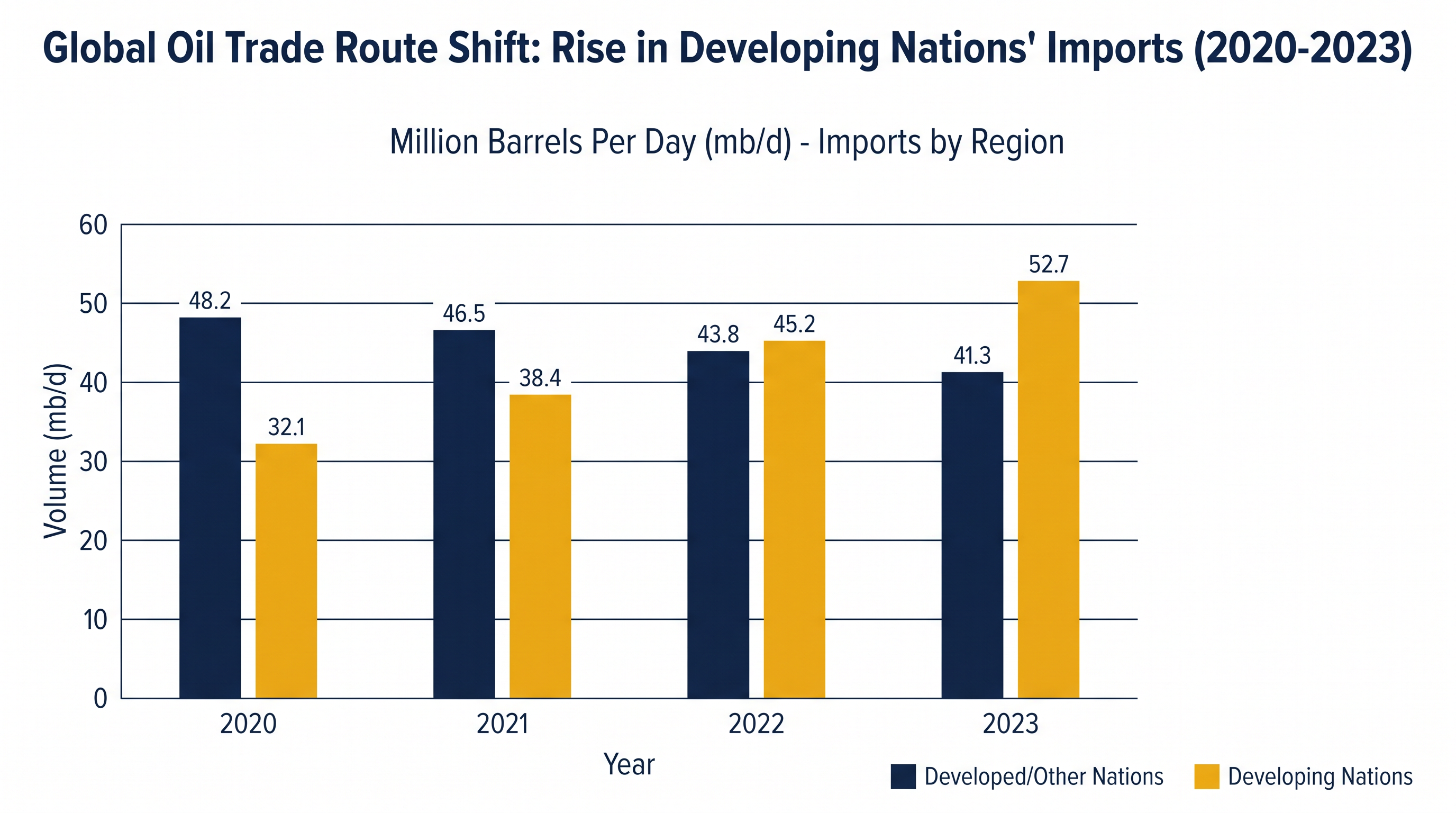
This aggressive shift toward secondary enforcement highlights the limitations of the initial sanctions regime implemented at the onset of the conflict. When Western nations first banned the import of Russian energy, the immediate effect was a massive rerouting of global trade rather than a complete halt in production. Russian crude that previously flowed into European ports was simply redirected to willing buyers in Asia and the Global South, often at a steep discount. The architects of the new Senate bill argue that as long as these alternative markets remain open and unpenalized, the core objective of defunding the war effort will remain out of reach. By weaponizing tariffs against the buyers, the U.S. is attempting to artificially close those alternative markets.[1][6]
The primary targets of this new legislative architecture are the massive, energy-hungry economies of India and China, which have absorbed the vast majority of redirected Russian crude over the past four years. India, in particular, has seen its energy relationship with Moscow transform dramatically; prior to the conflict, Russian oil accounted for a negligible fraction of India's imports, but recent data indicates that it now constitutes between 36 and 38 percent of the nation's total oil exports. For these rapidly developing economies, the influx of discounted energy has been a crucial buffer against global inflation and a driver of domestic industrial growth. The Senate bill directly challenges this economic calculus, threatening to erase the financial benefits of cheap oil with crippling export tariffs.[4][5]
Beyond its immediate geopolitical goals, the legislation also represents a significant expansion of executive trade authority. The bill is designed to give the President highly flexible powers to impose and adjust these tariffs as diplomatic leverage. This provision has drawn particular attention because it effectively restores and expands the kind of unilateral tariff authority that the U.S. Supreme Court had previously curtailed earlier in the year. By explicitly writing this authority into law under the banner of national security and international sanctions, Congress is providing the executive branch with a legally robust tool to wage aggressive trade policies, a dynamic that aligns closely with the stated preferences of the incoming or current administration's trade philosophy.[1][2]
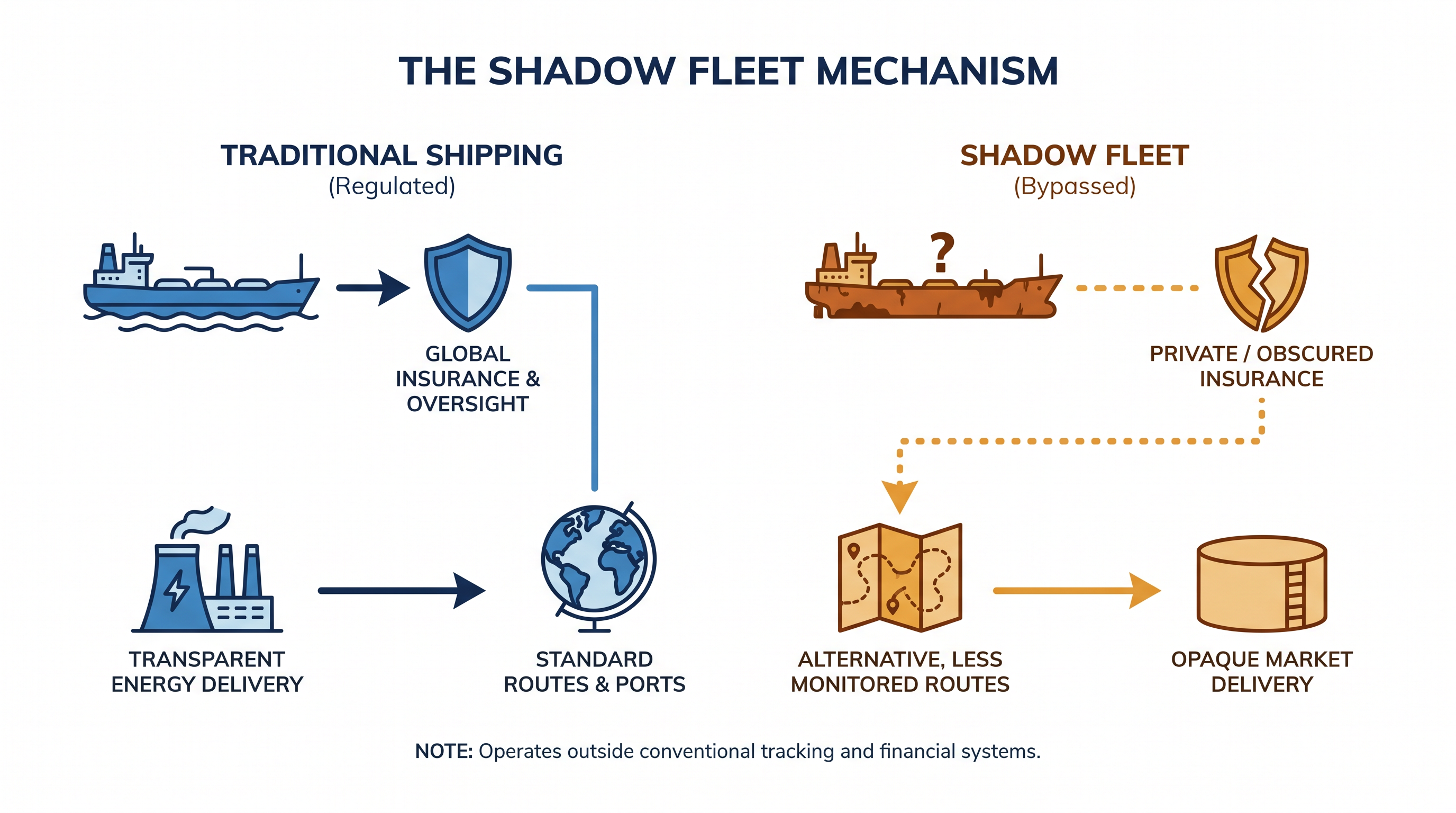
A major focal point of the legislation is the systematic dismantling of the so-called "shadow fleet." As Western sanctions restricted the use of European and American maritime insurance and shipping services for Russian oil, a vast, decentralized network of aging tankers emerged to fill the void. This shadow fleet operates outside the bounds of traditional maritime oversight, frequently changing flags of convenience, utilizing complex corporate shell structures, and conducting dangerous ship-to-ship transfers of crude oil in open waters to obscure the origin of the cargo. The Senate bill includes specific provisions to sanction any foreign person or vessel identified as participating in this clandestine logistics network.[2][3]
The Senate bill includes specific provisions to sanction any foreign person or vessel identified as participating in this clandestine logistics network.
The proliferation of the shadow fleet has raised profound environmental and safety concerns that extend far beyond the realm of economic sanctions. Because these vessels operate outside the traditional Western insurance markets—specifically the Protection and Indemnity (P&I) clubs that cover the vast majority of the world's commercial shipping—there is little guarantee of financial recourse in the event of a catastrophic oil spill. Many of the tankers are operating well past their standard lifecycle, increasing the risk of mechanical failure. By explicitly targeting the shadow fleet, the legislation attempts to force global shipping back into regulated, insured channels, though maritime experts warn that tracking and penalizing these constantly shifting shell companies remains a monumental logistical challenge.[3][5]
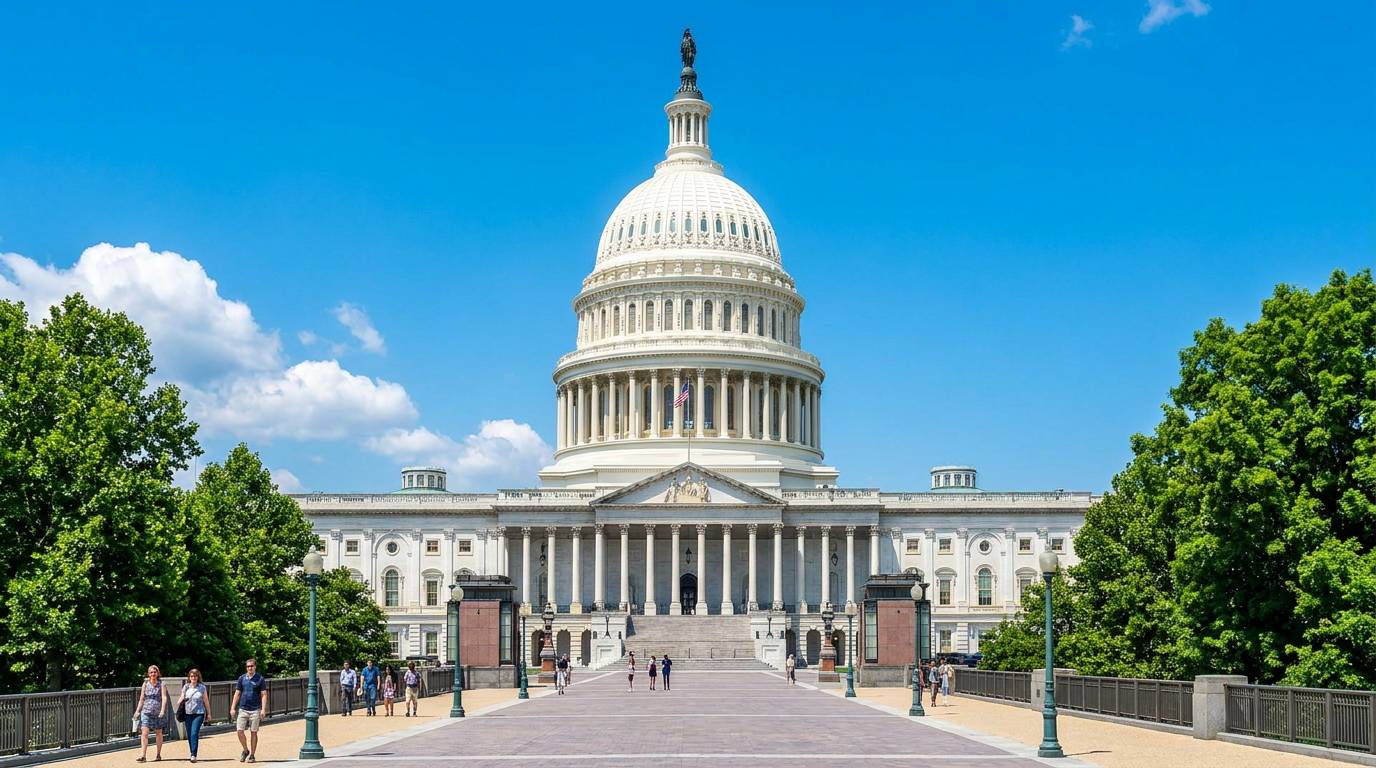
The advancement of the bill coincided with a highly visible diplomatic push in Washington, underscored by a visit from Ukrainian President Volodymyr Zelenskyy. During his meetings at the Capitol, Zelenskyy emphasized that cutting off Russia's energy revenue is just as critical to Ukraine's survival as the provision of military hardware. He specifically advocated for a comprehensive "winter package" of Patriot missile interceptors to defend against anticipated strikes on Ukrainian heating and power infrastructure, framing the sanctions bill as the economic counterpart to that military defense. The overwhelming 86–12 vote margin reflects a durable, bipartisan consensus in the Senate that economic pressure must be escalated in tandem with military support.[1][5]
The legislation is also deeply intertwined with the legacy of its namesake, the late Senator Lindsey Graham, who was a driving force behind the bill prior to his sudden passing. Renaming the package the Lindsey O. Graham Sanctioning Russia and Iran Act served as a powerful unifying mechanism within the Republican caucus, helping to secure the necessary votes to overcome any potential filibuster. Co-sponsors of the bill noted that finalizing the legislation was a priority for Graham in his final days, and the resulting bipartisan agreement preserves the core sanctions architecture he championed while adding provisions that extend restrictions on funding for Iran's energy and weapons sectors through 2031.[2][3]
Despite the strong bipartisan support in the Senate, the legislation has sparked intense debate among trade economists and foreign policy analysts regarding its ultimate efficacy. Skeptics, including former State Department sanctions officials, argue that tariffs have historically proven to be an inefficient and unpredictable tool for altering the behavior of determined geopolitical actors. There is a distinct concern that threatening massive tariffs on major global economies like India and China will not actually deter them from purchasing Russian oil, but will instead provoke retaliatory trade measures against American exports, sparking a broader and economically damaging global tariff war that harms U.S. consumers and manufacturers.[1]
From the perspective of the targeted developing nations, the proposed secondary sanctions are often viewed as an unjust overreach of American financial hegemony. Officials in these countries frequently argue that their primary responsibility is to secure affordable energy to lift their populations out of poverty and drive economic development. They maintain that they should not be forced to bear the economic brunt of a European conflict, nor should they be penalized for acting in their own sovereign economic interests. This fundamental disconnect highlights the growing friction between Western sanctions policy and the economic imperatives of the Global South, a dynamic that complicates the enforcement of any global embargo.[4]
Furthermore, energy market analysts warn of the delicate balancing act inherent in aggressively enforcing these secondary sanctions. If the threat of 100 percent tariffs actually succeeds in forcing major buyers to completely halt their purchases of Russian crude, millions of barrels of oil could be abruptly removed from the global market. In a tightly balanced global energy ecosystem, such a sudden supply shock would inevitably drive up the price of oil worldwide, leading to higher gasoline prices for American consumers and exacerbating global inflation. Policymakers must therefore calibrate the enforcement of these tariffs carefully, attempting to squeeze Russian revenues without inadvertently triggering a global energy crisis.[4][6]
The legislative journey for the Sanctioning Russia and Iran Act is not yet complete. While the bill has cleared a major procedural hurdle in the Senate, it must still survive final passage votes and, crucially, navigate the House of Representatives when lawmakers return from their recess in September. Proponents of the bill have expressed confidence that the momentum generated by the Senate vote—and the reported backing of the executive administration—will be sufficient to push the legislation across the finish line. However, the complex mechanics of implementing and enforcing such sweeping global tariffs ensure that the debate over their impact will continue long after the ink is dry.[3][5]
Ultimately, the advancement of this legislation serves as a powerful explainer on the evolving nature of modern economic warfare. It demonstrates how the tools of statecraft have shifted from simple blockades to highly sophisticated, globally integrated financial threats. By attempting to regulate the behavior of third-party nations and obscure maritime networks through the sheer gravitational pull of the U.S. consumer market, the Senate is testing the absolute limits of secondary sanctions. Whether this approach successfully defunds a war machine or simply fragments the global economy into isolated trading blocs remains one of the most consequential geopolitical questions of the decade.[1][6]
How we got here
2022
Western nations impose initial price caps and primary sanctions on Russian energy exports.
July 16, 2026
The sanctions bill gathers 61 co-sponsors, securing enough support to survive a potential filibuster.
July 28, 2026
The U.S. Senate votes 86-12 to advance the Lindsey O. Graham Sanctioning Russia and Iran Act.
September 2026
The U.S. House of Representatives is expected to take up the legislation after returning from recess.
Viewpoints in depth
Sanctions Advocates' View
Proponents argue that secondary sanctions are essential to close the loopholes that allow Russia to fund its military.
This camp, which includes a bipartisan coalition of U.S. lawmakers and national security analysts, maintains that primary sanctions have failed because global supply chains simply rerouted. They argue that the only way to genuinely defund the Russian military apparatus is to force neutral nations to choose between discounted energy and access to the U.S. market. By targeting the buyers and the shadow fleet, they believe the U.S. can artificially close the alternative markets that have kept the Russian economy afloat.
Energy Importers' View
Developing nations argue they should not be penalized for prioritizing affordable energy for their populations.
For rapidly growing economies like India, the influx of discounted Russian crude has been a vital economic buffer against global inflation. Officials in these nations frequently argue that their primary sovereign duty is to lift their citizens out of poverty, which requires massive amounts of affordable energy. They view the threat of 100 percent tariffs as an unjust exercise of American financial hegemony, arguing that the Global South should not be forced to bear the economic collateral damage of a European conflict.
Trade Skeptics' View
Economic analysts warn that aggressive tariffs may fail to change geopolitical behavior while sparking global trade wars.
Trade economists and former sanctions officials express deep skepticism about the efficacy of tariffs as a geopolitical deterrent. They point out that historical attempts to use tariffs to force sovereign nations to abandon core economic interests often result in retaliatory measures rather than compliance. Furthermore, they warn that if the legislation succeeds in completely removing Russian oil from the market, the resulting supply shock could trigger a massive spike in global energy prices, ultimately harming Western consumers and exacerbating inflation.
What we don't know
- It remains unclear if the threat of tariffs will actually force major economies like India to reduce their energy imports, or if they will retaliate.
- The exact timeline for the bill's passage in the House of Representatives is uncertain, pending their return from recess in September.
- The global oil market's reaction to the potential removal of millions of barrels of Russian crude is highly unpredictable.
Key terms
- Secondary Sanctions
- Penalties imposed on third-party countries or foreign entities for doing business with a sanctioned nation.
- Shadow Fleet
- A decentralized network of older maritime vessels used to transport oil while evading international tracking, insurance, and sanctions.
- Cloture
- A parliamentary procedure used in the U.S. Senate to limit debate and overcome a filibuster, requiring a supermajority vote.
- Price Cap
- A regulatory limit set by a coalition of countries on the maximum price at which a sanctioned commodity can be sold using their maritime services.
Frequently asked
What does the new Senate bill actually do?
It authorizes the U.S. President to impose tariffs of up to 100% on the top five countries that purchase Russian oil and gas or help evade existing sanctions.
Has the bill become law yet?
No. It advanced through a procedural vote in the Senate with an 86-12 margin, but still requires final Senate passage and approval by the House of Representatives.
What is the 'shadow fleet'?
It refers to a network of aging, often uninsured tankers used to transport sanctioned energy products outside of traditional Western financial and maritime systems.
How will this affect global oil prices?
Analysts are divided; some believe it will squeeze Russian revenues, while others warn that aggressively penalizing major buyers could disrupt global supply and drive up energy costs.
Sources
Source coverage
6 outlets
3 viewpoints surfaced






[1]SemaforTrade Skeptics
US lawmakers advance bill that targets Russian oil buyers
Read on Semafor →[2]U.S. SenateSanctions Advocates
Senate Advances Lindsey O. Graham Sanctioning Russia and Iran Act
Read on U.S. Senate →[3]Radio Free Europe/Radio LibertyTrade Skeptics
Senate Advances Sweeping Sanctions Package Targeting Russia and Iran
Read on Radio Free Europe/Radio Liberty →[4]The HinduEnergy Importers
U.S. Senate fast-tracks Bill that could impose 100% tariff on India for buying Russian oil
Read on The Hindu →[5]United24 MediaSanctions Advocates
US Senate advances sweeping Russian energy sanctions
Read on United24 Media →[6]FDD ActionSanctions Advocates
S. 5025, the Lindsey O. Graham Sanctioning Russia and Iran Act of 2026
Read on FDD Action →

More in meta
See all 6 stories →Packaging Standards
Navigating the EU's New Packaging Regulation: A Buyer's Guide to Compliance
6 sources
Regulatory Divergence
The End of Global Regulatory Consensus: Financial Powers Localize Rules on AI, Digital Assets, and Banking
5 sources
Student Visas
The End of the American Student Visa: How the DHS's New 4-Year Cap Is Rewiring Global Talent Flow
7 sources
Gaza Peace Plan
Hamas Agrees to Disarm in Gaza Under Trump-Brokered Peace Plan
6 sources
Every angle. Every day.
Get meta stories with full source coverage and perspective breakdowns delivered to your inbox.