
How the EU is Turning 1.2 Million Hectolitres of Excess Wine Into Industrial Ethanol
The European Union has activated a €40 million emergency fund to distil surplus French red and rosé wine into hand sanitizer and bioenergy amid a historic collapse in global demand.
By Kabir Mehra

The European Commission has triggered an emergency intervention from its agricultural reserve, releasing €40 million to address a historic oversupply crisis in the French wine sector. The funding is designed to act as a financial shock absorber for an industry grappling with overflowing cellars and collapsing bulk prices.[1][5]
Under the newly approved scheme, up to 1.2 million hectolitres of surplus red and rosé wine will be permanently removed from the consumer market. Rather than being poured down the drain, the excess beverage will undergo a process known as "crisis distillation," converting the unsold vintage into raw industrial alcohol.[1][2][4]
Winemakers and agricultural cooperatives participating in the program will receive a guaranteed compensation of €33 per hectolitre. This effectively establishes a price floor, preventing desperate producers from dumping their inventory at ruinous prices and triggering a broader market collapse ahead of the autumn harvest.[2][3][4]
Once the wine is transported to specialized distillation facilities, the alcohol is stripped out and repurposed for non-beverage supply chains. The resulting ethanol is strictly earmarked for the pharmaceutical, cosmetic, and energy sectors, where it will be used to manufacture hand sanitizers, disinfectants, and bioenergy.[2][3]
The necessity of boiling down millions of bottles of wine stems from a profound and structural shift in global consumption habits. Across major markets, consumers are drinking less alcohol overall, driven by health and wellness trends.[1][6]
When they do drink, younger demographics are increasingly pivoting away from heavy, traditional red wines in favor of lighter whites, sparkling varieties, or zero-alcohol alternatives.[3]
Macroeconomic pressures have accelerated this transition. Persistent inflation and tighter household budgets over the past few years have forced many consumers to cut back on discretionary purchases, making mid-tier wines an easy expense to trim from the weekly grocery budget.[3]
Compounding the drop in domestic European consumption is a severe contraction in the export market. Geopolitical tensions, lingering trade disputes, and tariffs imposed by the United States and China have erected steep barriers for European producers.[3][5]
The impact on France, the European Union's largest agricultural producer, has been particularly acute. Shipments of French wine and spirits have plummeted to their lowest volumes in at least two decades, blowing a significant hole in the country's agricultural trade balance.[3]
The most paradoxical element of the current crisis is that it is happening during a period of historically low supply. In 2025, global wine production hovered near century-lows due to extreme weather, and French production is currently estimated to be 16% below its long-term average.[1][6]
However, the structural decline in consumer demand has simply outpaced the drop in agricultural output. The result is a massive bottleneck of unsold stock sitting in vats and warehouses across renowned producing regions like Bordeaux, Burgundy, and the Rhône Valley.[1][4]
This glut has devastated the wholesale market. Despite previous efforts to clear inventory, the average price for bulk transactions of French red and rosé wines has crashed, sitting nearly 20% below the average recorded over the previous five years.[3]
The economic pain is now rippling far beyond the vineyards themselves. A secondary crisis is unfolding across the supply chain, hitting bottle makers, cork suppliers, cooperage firms, and logistics companies. As wineries hoard cash and wait for confirmed orders before bottling, packaging facilities are seeing their revenue plummet, with some operating at a fraction of their normal capacity.[5]
European policymakers are well aware that distillation is only a temporary bandage. The EU previously deployed emergency funding in 2023 and 2024, spending heavily to distil 2.65 million hectolitres of wine—enough to fill more than 100 Olympic swimming pools—into ethanol.[4]
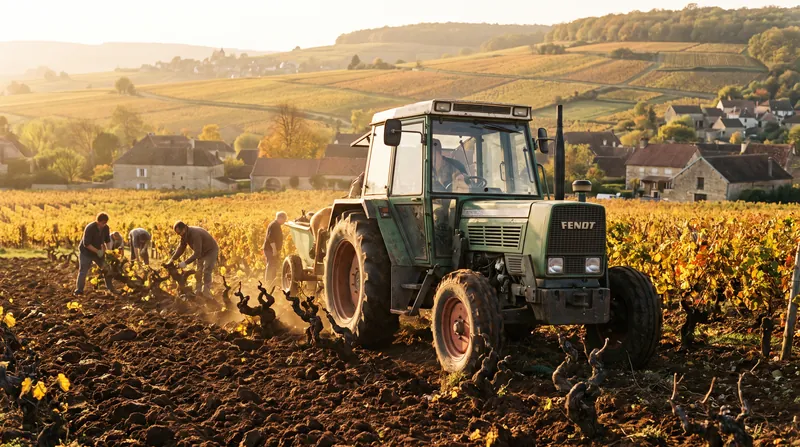
To address the root cause of the oversupply, the French government has been subsidizing a much more painful, permanent solution: "grubbing up." This involves paying farmers to permanently uproot and destroy their grapevines, taking the land out of wine production entirely.[3][4]
Over the last three years, approximately 35,000 hectares of vineyards have been uprooted across France in a desperate bid to resize the industry's capacity to match the new reality of global demand.[3]
France is not alone in this contraction. Across the European bloc, more than 3.5 million hectolitres of red and rosé wines have been withdrawn from the market in recent years, with Germany, Spain, Italy, Hungary, and Portugal all implementing similar crisis measures.[2]
Looking ahead, the European Union is attempting to steer the sector toward long-term sustainability. New legislative frameworks and funding packages are being designed to help producers pivot toward quality over quantity, while heavily subsidizing wine tourism and export promotion in emerging markets.[5]
Additional funds are being unlocked to help vineyards adapt to climate change and transition their crops toward the white and low-alcohol varieties that modern consumers actually want to buy.[1]
For now, the €40 million distillation fund provides a vital, immediate lifeline to rural economies. But it also serves as a stark liquid monument to an industry in the midst of a painful, decade-long transition, forced to align centuries of winemaking tradition with a fundamentally changed global palate.[5]
Key points
- The EU has released €40 million to fund the emergency distillation of 1.2 million hectolitres of surplus French wine.
- Winemakers will receive €33 per hectolitre to convert their unsold red and rosé inventory into industrial ethanol.
- The resulting alcohol will be used exclusively for pharmaceuticals, disinfectants, and bioenergy.
- The crisis is driven by a structural decline in global wine consumption and severe export drops due to geopolitical tariffs.
Unanswered questions
- Whether the €40 million fund will be sufficient to stabilize bulk wine prices before the autumn 2026 harvest begins.
- How quickly consumer demand for traditional red and rosé wines might stabilize, or if the downward trend will continue indefinitely.
- The long-term economic survival rate of the secondary supply chain, including bottle makers and cork suppliers, as overall production shrinks.
How we got here
2023–2024
The EU provides emergency funding to distil 2.65 million hectolitres of surplus French wine into industrial ethanol.
2023–2025
French authorities subsidize the permanent uprooting of 35,000 hectares of vineyards to curb chronic overproduction.
March 31, 2026
The European Union officially drafts the regulation to authorize a new round of crisis distillation.
April 2026
The European Commission formally releases €40 million from its agricultural reserve to fund the removal of 1.2 million hectolitres of wine.
- European Policymakers
- Focus on market stabilization and preventing a prolonged agricultural crisis.
- Wine Producers & Cooperatives
- View the funds as a vital short-term lifeline, though many acknowledge the painful necessity of shrinking.
- Global Market Analysts
- Emphasize that the crisis is a structural demand problem, not a temporary blip.
Perspectives this story doesn't cover
- Environmental Groups
- Industrial Ethanol Buyers
Sources
Source coverage
6 outlets
3 viewpoints surfaced






- [1]The Brussels TimesEuropean Policymakers
EU funds €40m plan to remove surplus French wine amid collapsing prices
Read on The Brussels Times → - [2]Vino Joy NewsWine Producers & Cooperatives
EU Pays €40M to Distill Unsold French Wine
Read on Vino Joy News → - [3]The Straits TimesGlobal Market Analysts
EU releases €40 million to clear surplus French wine
Read on The Straits Times → - [4]The Irish TimesEuropean Policymakers
Deja vu for vineyards as EU intervenes again to help distil excess stocks into ethanol to prevent 'collapse in prices'
Read on The Irish Times → - [5]VineturWine Producers & Cooperatives
European Union Unveils €40 Million Aid Package for Struggling French Wine Producers
Read on Vinetur → - [6]ForbesGlobal Market Analysts
The world of wine continues to suffer from declining wine production and consumption
Read on Forbes →
More in Food & Drink
See all →Wine Regulation
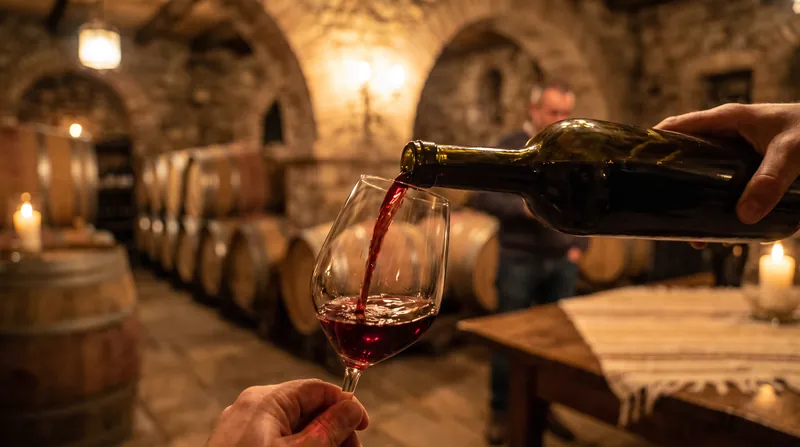
EU Amends Wine Product Specifications to Allow Higher Alcohol and Lower Acid to Combat Climate Change
5 sources
Climate Adaptation
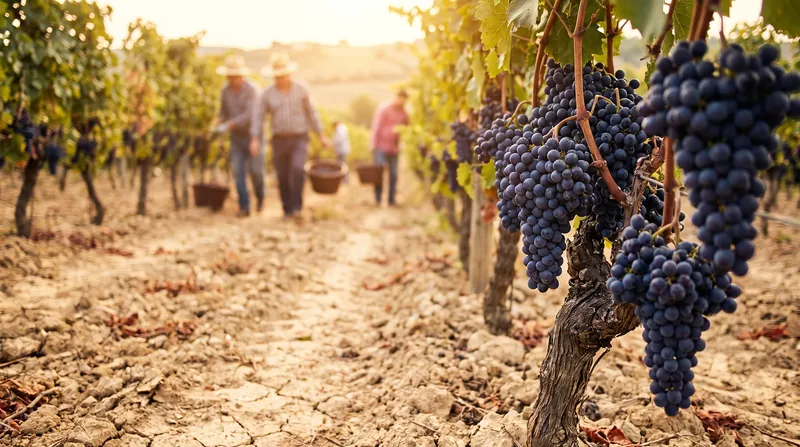
Record Early Harvests Across Northern Hemisphere Force Winemakers to Adapt to 'Sugar-Drunk' 2026 Vintage
3 sources
Labeling Laws
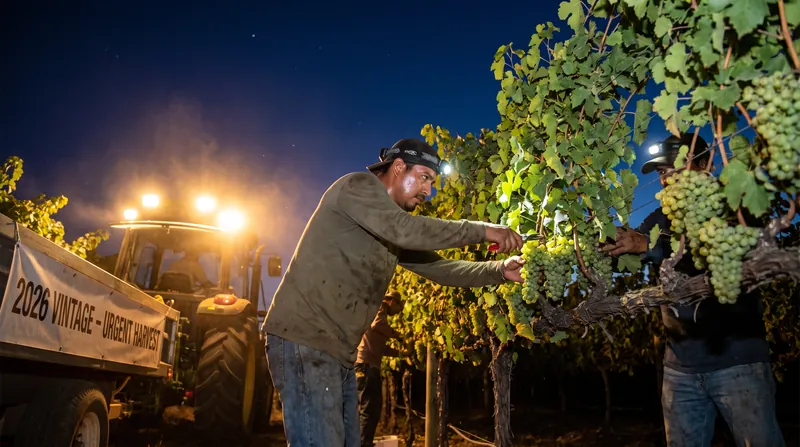
EU Mandates Calorie Counts and Digital Ingredient Lists on All Wine Labels Effective March 2026
5 sources
Wine Economics
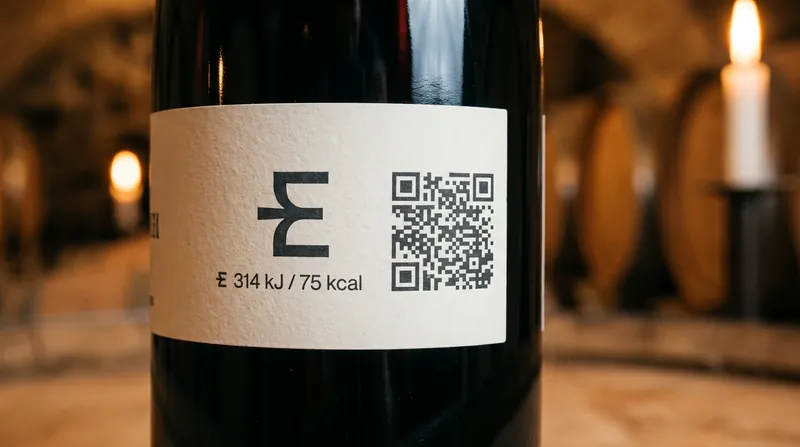
The Mechanics of the Pull: Why the Global Wine Industry is Uprooting Its Vineyards
7 sources
Comments
Every angle. Every day.
Get Food & Drink stories with full source coverage and perspective breakdowns, free every day.