
Record Early Harvests Across Northern Hemisphere Force Winemakers to Adapt to 'Sugar-Drunk' 2026 Vintage
Extreme heat and drought have accelerated the 2026 grape harvest to historic early dates across Europe and the US. Winemakers are deploying aggressive canopy management and nighttime picking to prevent grapes from accumulating too much sugar before their flavors fully develop.

The romantic image of the wine harvest—crisp late-September mornings, golden autumn light, and leisurely picking—is officially a relic of the past. If you envision winemakers patiently waiting for the first chill of fall to bring in their grapes, the reality of the 2026 vintage will come as a shock. Across the Northern Hemisphere, the harvest is already well underway in the sweltering heat of August.
From the storied slopes of Burgundy to the sun-drenched valleys of California, vineyard crews are racing against the clock. The 2026 growing season has delivered a barrage of extreme weather, culminating in record-breaking summer heat that has fundamentally reset the viticultural calendar. Grapes are ripening at an unprecedented pace, forcing an industry steeped in centuries of tradition to tear up the rulebook and adapt on the fly.[1]
The stakes are incredibly high. In France, Burgundy is currently seeing its earliest harvest in nearly 500 years, with some Grand Cru parcels being picked as early as August 13. To put that in perspective, historical records dating back to 1354 show that an August harvest in this region used to be a once-in-a-lifetime anomaly. Now, it is becoming the baseline.[2]
So, what exactly is happening inside the grapes? It all comes down to the delicate dance of photosynthesis and sugar accumulation. Grapevines have a temperature sweet spot—typically between 68°F and 86°F (20°C to 30°C)—where they efficiently convert sunlight and carbon dioxide into the sugars that will eventually ferment into alcohol.
But when temperatures soar into the upper 90s and beyond, the vine goes into survival mode. The intense heat accelerates the ripening process, causing the berries to rapidly accumulate sugar. In regions like Champagne, extreme heat and drought have literally drawn water out of the grapes to keep the vines alive, leaving behind a highly concentrated, sugary juice.[3]
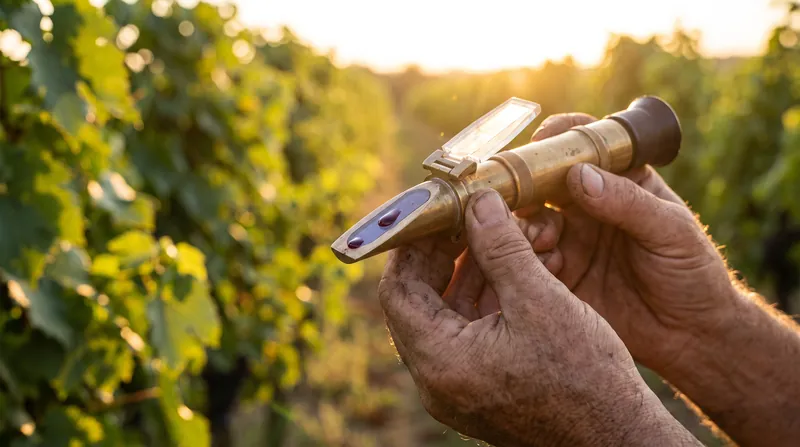
This rapid sugar spike creates a phenomenon winemakers dread: "sugar-drunk" grapes. The berries reach the sugar levels required for harvest, but they lack "phenological maturity." In other words, the complex compounds that give wine its nuanced aromas, flavors, and color haven't had enough time to fully develop.
If a winemaker waits for those flavors to catch up, the sugar levels will continue to climb. During fermentation, yeast converts that abundant sugar into alcohol. The result? A wine that is heavy, overly alcoholic, and lacking the crisp, refreshing acidity that defines classic European styles.
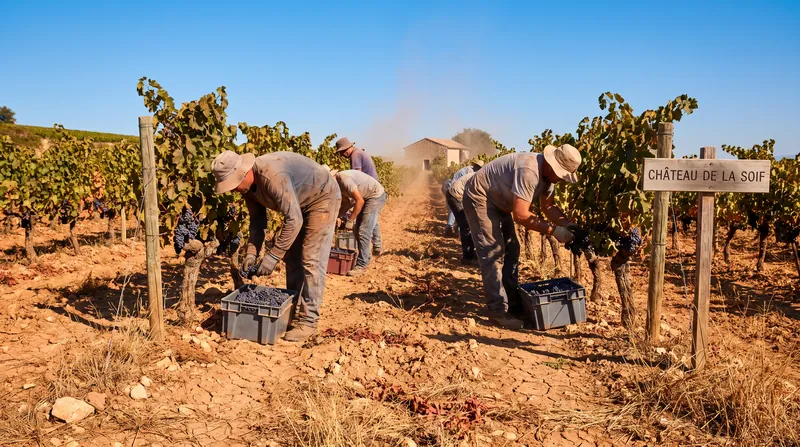
To prevent this, producers are being forced to pick early. In Champagne, where the harvest traditionally began in mid-September, crews are now rushing into the vineyards in mid-August. The goal is to capture the grapes while they still retain enough natural acidity to provide the essential tension and snap required for world-class sparkling wine.[3]
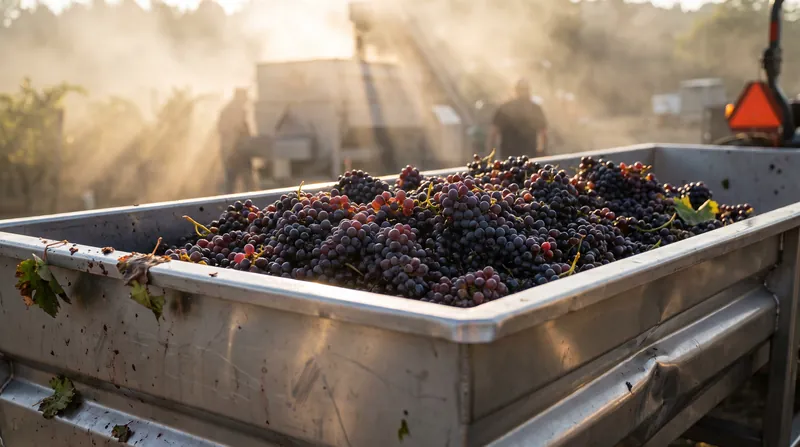
The logistics of this accelerated timeline are staggering. Harvesting in August means working in punishing summer heat. To protect both the workers and the delicate fruit, many estates are now picking before dawn under floodlights. Grapes harvested in the cool of the night are less prone to oxidation and spontaneous fermentation before they reach the press.
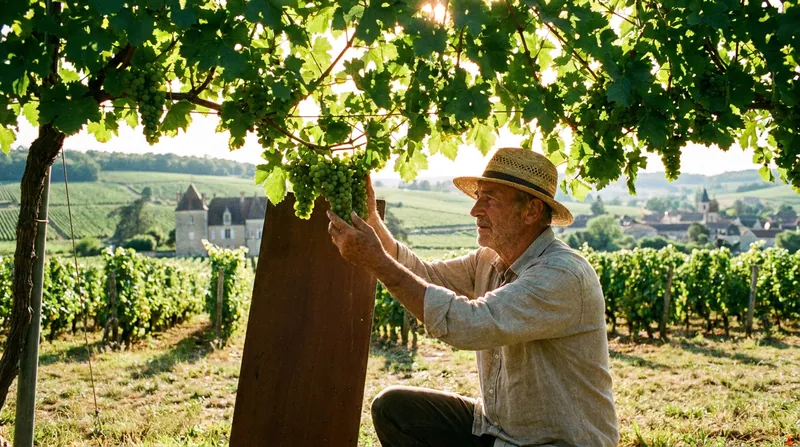
Beyond altering the harvest schedule, viticulturists are deploying aggressive canopy management techniques to slow down the sugar train. In a typical year, a lush canopy of leaves is desired to maximize photosynthesis. In 2026, growers are intentionally trimming shoots and removing leaves to reduce the vine's solar panels.[1]
By severely hedging the canopy, winemakers can effectively throttle the vine's photosynthetic engine. Fewer leaves mean less sugar is pumped into the berries, allowing the flavor compounds a chance to develop without the alcohol potential skyrocketing. It is a precise, high-wire act of agricultural engineering.
Despite the frantic pace and the undeniable stress on the vines, there is a surprising undercurrent of optimism. The grapes that survived the spring frosts and summer heatwaves are remarkably healthy. Canopy management and early picking have largely mitigated the risk of sunburn and raisining, leaving producers hopeful for exceptional quality.[2]
The resulting wines of the 2026 vintage will undoubtedly reflect this new climate reality. Consumers can expect styles that lean slightly richer, with a different structural balance than the vintages of the late 20th century. Yet, the proactive, science-driven response from the vineyards proves that terroir is not just about the soil and the weather—it is also about the resilience and ingenuity of the people tending the vines.
Viewpoints in depth
Viticulturists & Producers
Focused on adapting vineyard practices to save the vintage.
For the people managing the vines, the 2026 season has been a grueling test of agricultural engineering. Producers are no longer passive observers of the weather; they are actively intervening to stall the ripening process. By aggressively hedging canopies and shifting to predawn picking schedules, viticulturists are prioritizing the preservation of acidity and freshness over traditional, calendar-based harvest dates. Their primary goal is to prevent the grapes from becoming overly alcoholic before the tannins and aromas can mature.
Climate Historians
Analyzing the unprecedented shift in harvest dates.
Researchers looking at centuries of harvest data view the 2026 vintage as a stark confirmation of a rapidly accelerating trend. In regions like Burgundy, where meticulous records date back to the 1300s, an August harvest was historically a once-in-a-century anomaly. Today, historians note that the frequency of these extreme early harvests has compressed dramatically, shifting from a rare historical footnote to a regular occurrence over the last three decades, fundamentally redrawing the climatic map of European viticulture.
Oenologists & Critics
Concerned with how accelerated sugar accumulation alters traditional flavor profiles.
Wine scientists and critics are closely monitoring the structural balance of the resulting wines. The primary concern is the decoupling of sugar ripeness and phenolic maturity. When heat drives sugar levels up too quickly, the resulting wines risk becoming 'flabby'—high in alcohol but lacking the crisp acidity and complex aromatic tension that define classic styles. Critics acknowledge that while the 2026 grapes are healthy, the vintage will likely challenge consumer expectations of what traditional appellations are supposed to taste like.
Key points
- The 2026 wine harvest is one of the earliest on record, with some regions picking in mid-August.
- Extreme summer heat accelerates grape sugar accumulation, threatening to produce overly alcoholic wines.
- Winemakers are picking early to preserve essential acidity and prevent "sugar-drunk" grapes.
- Vineyards are utilizing severe canopy trimming to intentionally slow down photosynthesis.
What we don’t know
- Whether the aggressive canopy management techniques used in 2026 will have long-term carry-over effects on vine health and yield in subsequent years.
- How the broader consumer market will react to the potentially higher alcohol and altered flavor profiles of the 2026 vintage once it is bottled and released.
How we got here
1354–1987
Historical records show the average start date for the Burgundy wine harvest was late September, with August harvests being exceedingly rare.
2003–2025
A cluster of record-breaking hot years begins shifting the average harvest date forward by nearly two weeks.
Spring 2026
A warm winter and early bud break, followed by severe spring frosts, set the stage for an accelerated and highly stressed growing season.
July 2026
Extreme summer heatwaves force vines into rapid sugar accumulation, prompting winemakers to begin aggressive canopy trimming.
August 2026
Record-early harvests commence across the Northern Hemisphere, with crews picking in the dark to preserve grape acidity.
- Viticulturists & Producers
- Focused on adapting vineyard practices, such as nighttime picking and rapid harvesting, to save the vintage.
- Climate Historians
- Analyzing the unprecedented shift in harvest dates compared to centuries of historical data.
- Oenologists & Critics
- Concerned with how accelerated sugar accumulation alters the traditional flavor profile and balance of the wine.
Perspectives this story doesn't cover
- Vineyard Laborers
- Wine Importers & Distributors
Sources
Source coverage
3 outlets
3 viewpoints surfaced



- [1]Wine-SearcherOenologists & Critics
2026 Delivers Record Early Harvests
Read on Wine-Searcher → - [2]The Drinks BusinessClimate Historians
Burgundy sees earliest harvest in 500 years
Read on The Drinks Business → - [3]Associated PressViticulturists & Producers
Champagne producers rush to harvest grapes as record heat and drought hit France
Read on Associated Press →
More in Food & Drink
See all →Viticulture Science
How the French Wine Industry is Adapting to a Historic 18% Harvest Drop
8 sources
Harvest Yields
France's 2026 Wine Output Projected to Hit 70-Year Low Amid Climate-Driven Harvest Extremes
4 sources
Harvest Chemistry
The 22 to 24 Brix Range: How Sugar Concentration Dictates Potential Alcohol and Harvest Timing
9 sources
Wine Chemistry
The 350 ppm Maximum: How Sulfur Dioxide Prevents Oxidation and Microbial Spoilage in Wine
4 sources
Comments
Every angle. Every day.
Get Food & Drink stories with full source coverage and perspective breakdowns, free every day.