
Trump Announces Imminent Oil Exploration in Greenland, Reigniting Sovereignty Tensions
U.S. President Donald Trump declared that massive American resource extraction is preparing to begin in Greenland, referring to the autonomous Danish territory as 'our new and beautiful Greenland.' Local officials immediately rejected the timeline, citing a 2021 ban on new drilling licenses and severe logistical barriers.

On October 14, 2026, U.S. President Donald Trump announced that American companies are preparing to launch large-scale resource extraction operations in Greenland. The sudden declaration immediately reignited friction over the autonomous Danish territory's sovereignty and its strict environmental policies regarding fossil fuels.[1][3]
Writing on his Truth Social platform, Trump proclaimed that "Massive Oil, Gas, and Mineral Exploration is getting ready to begin in our new and beautiful Greenland!" He added that industry experts believe the island holds more easily available oil than almost anywhere else in the world.[1][3][6]
Greenlandic officials swiftly rejected both the timeline and the premise of the American announcement. "We are very far away from 'massive' exploration," Jørgen Hammeken-Holm, Greenland's deputy mining minister, told reporters, dismissing the idea of imminent drilling by foreign powers.[2][5]
The fundamental barrier to Trump's timeline is Greenland's own established legal framework. The territory's government formally ceased issuing new oil and gas exploration licenses in 2021, citing severe environmental risks and the accelerating impacts of climate change on the Arctic ecosystem. The ban remains a cornerstone of Nuuk's domestic policy.[2]
While a handful of legacy licenses issued before the 2021 ban remain valid, advancing them to commercial extraction requires extensive environmental reviews and social-impact assessments. Authorities in Nuuk note that no new broad authorizations have been granted to American energy firms. Investors must still prove their projects meet rigorous safety criteria.[2][4]
A Strategic Arctic Foothold
The resource announcement arrives just four weeks after a landmark security agreement signed in September 2026 between the United States, Denmark, and Greenland. That trilateral pact was designed to resolve underlying tensions while significantly expanding the U.S. military footprint across the island. It grants Washington broad access to Greenland's airspace and territory.[1][4]
Under the September deal, Washington secured the right to establish two new military bases at Mestersvig in the east and Narsarsuaq in the south. It also paves the way for the deployment of Trump's proposed "Golden Dome" missile defense system across the Arctic. The installations are roughly 950 miles apart.[1][4]
Trump explicitly tied the proposed resource extraction to national defense, arguing that the island's geography is "second to none" for protecting North America and Europe. He claimed that any future attack on the United States would have to cross Greenland's heavily monitored airspace. This makes the territory a vital strategic asset.[1][3]
"It gives us time, location, and sightline, like nowhere else in the World!" Trump wrote regarding the island's defensive value. He asserted that U.S. defense systems stationed there will routinely intercept drones, missiles, or any other future weapons before they reach the mainland. The Pituffik Space Base already serves as an early-warning radar site.[1][3]
Despite the cooperative nature of the September military pact, Trump's rhetoric has deeply alarmed local leaders. His repeated references to "our" Greenland and claims of having seized the territory echo his controversial first-term proposals to purchase the island outright from Denmark. Greenlandic politicians maintain that the island is not American property.[3][5]
Logistical and Environmental Barriers
Beyond the political hurdles, extracting offshore oil in the Arctic presents massive engineering and financial challenges. Operations require specialized, ice-capable equipment designed to withstand extreme weather, deep freezing, and unpredictable ice floes that threaten standard commercial drilling rigs. The harsh conditions drive up extraction costs significantly.[2]
Hammeken-Holm emphasized that the sheer lack of infrastructure in remote regions severely limits rapid industrial development. He noted that even the smaller, legally permitted mineral explorations currently underway could take years to become fully operational and commercially viable. Building roads and ports in the Arctic requires immense capital.[2]
Tensions were already elevated following a recent international controversy where a U.S.-backed oil venture reportedly unloaded drilling equipment on Greenland's east coast without final government approval. That specific unauthorized project has since been delayed until at least winter 2027. Authorities demanded further environmental reviews before any ground is broken.[4]
While oil drilling remains politically toxic and legally restricted, mineral exploration faces a slightly different regulatory landscape. Greenland holds vast untapped deposits of rare earth elements, copper, gold, and tungsten, which are critical for modern technology and advanced defense manufacturing. These resources are highly sought after by global powers.[1][2]
Greenland is actively courting multiple international partners for these critical minerals to diversify its economy. Vivian Motzfeldt, Greenland's foreign minister, recently emphasized the territory's desire to build new supply chain partnerships with the European Union, pointedly noting that the island is not for sale. The government seeks investments that respect its autonomy.[2]
The Broader Geopolitical Contest
The military expansion at Mestersvig is particularly sensitive because it overlooks the Greenland-Iceland-United Kingdom gap. This specific stretch of ocean is the primary transit route that Russia's Northern Fleet must cross to reach the open Atlantic during a potential conflict. Controlling this chokepoint is a top priority for NATO commanders.[4]
Denmark and Greenland welcomed the September security deal specifically because it places Arctic security firmly under the NATO umbrella. However, local leaders did not agree to cede domestic control over natural resources or environmental regulations to Washington in exchange for protection. The agreement separates military defense from economic exploitation.[3][4]
The September agreement broadly mentions "minerals cooperation" between the nations, but it specifies no details regarding commercial extraction rights. U.S. officials have not clarified whether Trump's announcement relies on undisclosed clauses within that defense treaty or simply reflects his administration's ambitions. The lack of clarity has fueled speculation and diplomatic friction.[1][6]
Industry analysts note that commercially recoverable oil reserves have not yet been definitively established in the region. Until private investors can prove that extraction costs are justified by the actual yield, large-scale drilling remains an economic gamble rather than a certainty. Many major oil companies have previously abandoned Arctic exploration efforts.[1][2]
The immediate future of Greenland's resources depends on whether American energy firms attempt to force the issue this winter. Without explicit permits from the autonomous government in Nuuk, any unilateral drilling operation would trigger a severe diplomatic crisis within the NATO alliance. The standoff tests the limits of American influence in the Arctic.[4][5]
Key points
- President Trump announced imminent, large-scale American oil and mineral exploration in Greenland, referring to the territory as 'our new and beautiful Greenland.'
- Greenlandic officials immediately rejected the timeline, noting that the territory banned new oil drilling licenses in 2021 over environmental concerns.
- The announcement follows a September security pact that granted the U.S. military expanded access to two new bases and early-warning radar sites.
- Extracting resources in the Arctic faces severe logistical barriers, including extreme weather, deep freezing, and a lack of existing infrastructure.
What we don’t know
- Whether the September security agreement contains undisclosed clauses permitting unilateral American resource extraction.
- Which specific U.S. energy companies are involved in the proposed massive exploration operations.
- How the Danish government will respond if American firms attempt to bypass Greenland's 2021 licensing ban.
How we got here
2021
Greenland's government formally ceases issuing new oil and gas exploration licenses due to severe climate and environmental concerns.
September 2026
The United States, Denmark, and Greenland sign a landmark security agreement expanding American military access and establishing new bases.
Early October 2026
A U.S. firm sparks controversy by reportedly unloading drilling equipment on Greenland's east coast without final government authorization.
October 14, 2026
President Trump announces that massive American oil, gas, and mineral exploration is preparing to begin, drawing immediate pushback from local officials.
- U.S. Administration
- Prioritizes securing the Arctic for American defense and energy independence.
- Greenlandic Government
- Defends territorial autonomy and enforces strict environmental regulations on extraction.
- Defense Analysts
- Focuses on the geopolitical necessity of countering Russian naval movements in the GIUK gap.
Perspectives this story doesn't cover
- Danish Government Officials
- Indigenous Greenlandic Communities
- Environmental Advocacy Groups
Sources
Source coverage
6 outlets
3 viewpoints surfaced






- [1]CBS NewsU.S. Administration
Trump says "massive" oil, gas and mineral exploration in Greenland is "getting ready to begin"
Read on CBS News → - [2]ForbesGreenlandic Government
Greenland Rejects Trump's Claims Of 'Massive' U.S. Oil, Gas And Mineral Exploration There
Read on Forbes → - [3]NewsweekU.S. Administration
Trump Refers To 'Our' Greenland As He Touts Oil Drilling
Read on Newsweek → - [4]The IndependentDefense Analysts
Trump hails oil and gas exploration in 'our new and beautiful Greenland' – months after threatening to invade
Read on The Independent → - [5]The Daily BeastGreenlandic Government
Trump, 80, Makes Unhinged Claim That He Seized Greenland
Read on The Daily Beast → - [6]TheJournal.ieDefense Analysts
Trump says 'massive' oil, gas and mineral exploration to get underway in Greenland
Read on TheJournal.ie →

More in World
See all →Border Demarcation
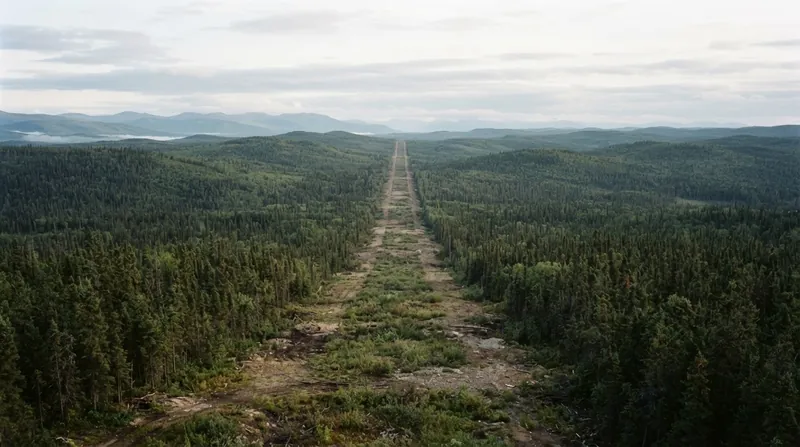
How a 1925 Treaty Mandates a Six-Meter Cleared Swath Across the US-Canada Border
5 sources
Maritime Law
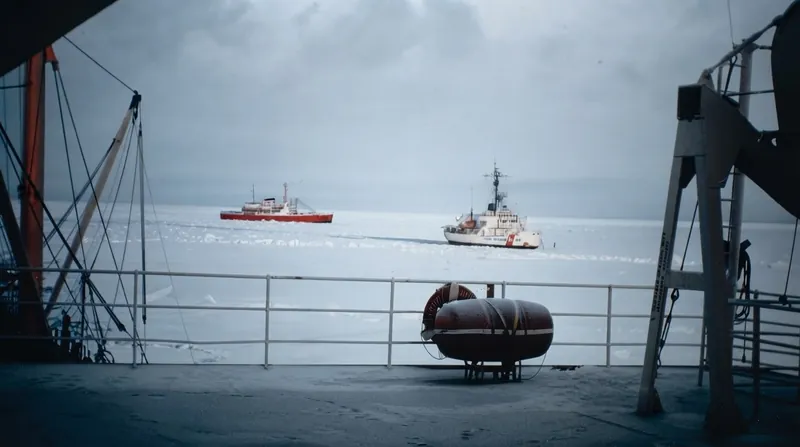
Straight Baselines Against the Corfu Channel Test: Why Canada and the United States Dispute Northwest Passage Transit Rights
6 sources
Energy Infrastructure
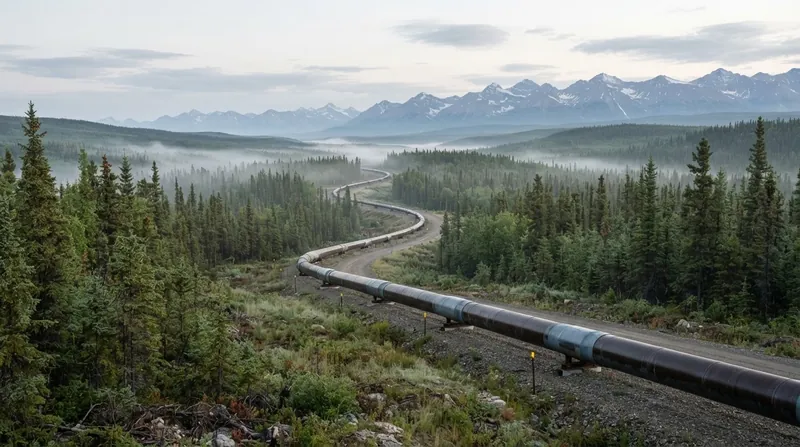
Canada Designates Pacific Link Pipeline a National Interest Project to Pivot Oil Exports Toward Asia
4 sources
Resource Governance
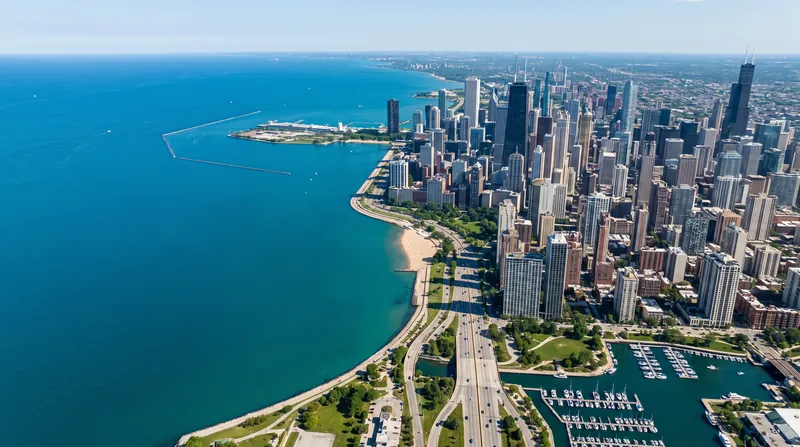
The Ban on Diversions and the Compact Council: How the Great Lakes Compact Governs Water Use
5 sources
Comments
Every angle. Every day.
Get World stories with full source coverage and perspective breakdowns, free every day.