
United States Imposes Sweeping Financial Sanctions on the International Criminal Court
The Trump administration has sanctioned the International Criminal Court as an entire institution, moving to cut off the global tribunal from the American financial system. The announcement drew immediate condemnation from European allies who pledged to defend the court's operations.
By Adel Khoury
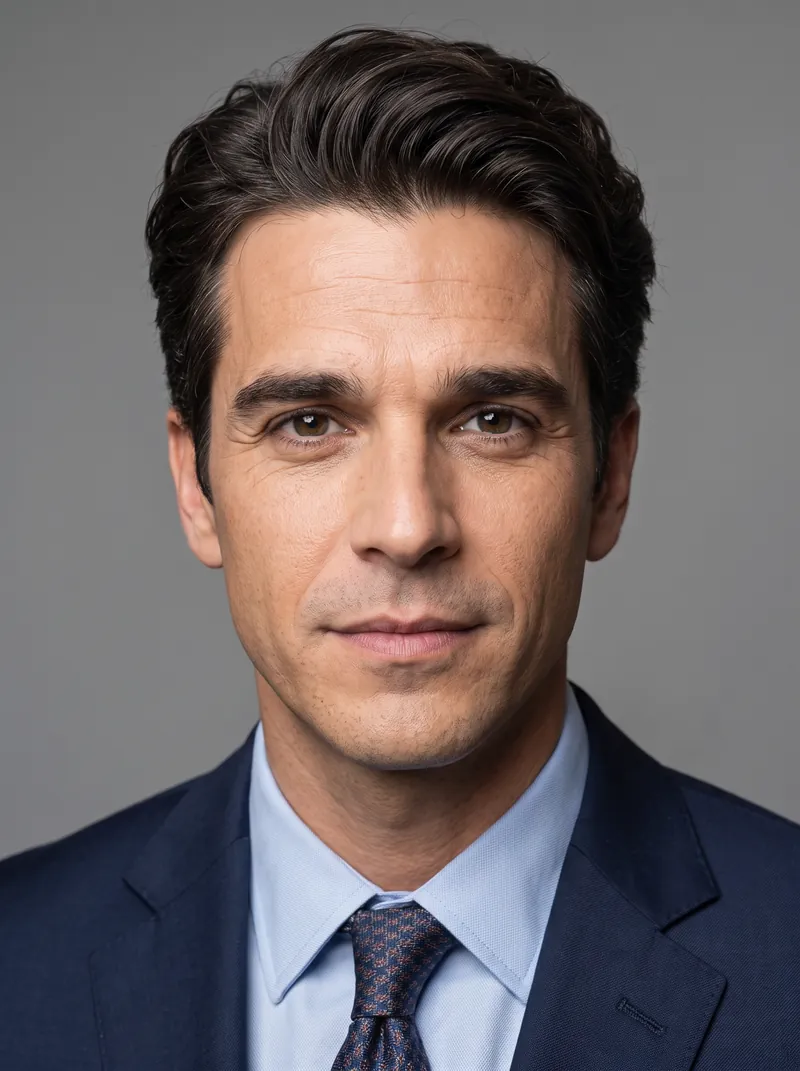
When the United States previously penalized officials of the International Criminal Court in 2020, the measures targeted specific prosecutors and judges. On Friday, the Trump administration escalated that conflict by sanctioning the court as an entire institution, moving to cut off the global tribunal from the international financial system.[3][4]
Secretary of State Marco Rubio announced the sweeping financial sanctions on October 9, 2026, declaring that the United States would ban all transactions with the court. The measures are designed to cripple the institution's ability to operate by severing its access to American banks and technology providers.[1][3]
The diplomatic escalation arrived on a day of stark contrasts for the international justice system. Rubio delivered the sanctions announcement just hours after former ICC judge Navanethem Pillay was awarded the 2026 Nobel Peace Prize for her lifelong work defending international law.[2][3]
"President Trump will never allow the International Criminal Court to prosecute Americans," Rubio said in a video statement. He warned that if allied nations do not rein in the tribunal, the United States will continue its campaign to dismantle the court "brick by brick."[2][3]
The institutional sanctions bar all American companies from conducting business with the sanctioned organization. This mechanism forces banks to shut down accounts, insurers to terminate coverage, and software companies to halt their services to the court in The Hague.[3][4]
Preparing for financial isolation
The ICC immediately rejected the sanctions, describing the American policy as a direct assault on the rule of law. Court officials urged the tribunal's 125 member states to ensure that the institution can continue its operations despite the financial blockade.[2]
"It is an attempt to obstruct the course of justice and to prevent the Court from doing what it was created to do," the ICC said in a statement. "It is an assault on the rule of law and on the very foundations of the international legal order."
Court administrators now face the immediate challenge of insulating their daily operations from the American technology sector. The sweeping restrictions threaten to disrupt the essential software services and digital infrastructure the global war crimes tribunal relies on to pursue its cases.[4]
The financial blockade also targets the institution's ability to process basic administrative transactions. By severing the court's access to the United States banking system, the sanctions threaten to block the international tribunal from paying its staff and managing its operational budget.[4]
The institutional penalties represent a significant escalation from previous American pressure campaigns. While the Trump administration previously blocked individual judges from accessing American financial services, the new measures aim to cripple the entire organization's resource base simultaneously.[3][4]
European allies pledge defense
The Netherlands, which hosts the tribunal in The Hague, vowed to defend the institution "stone by stone." Dutch Prime Minister Rob Jetten warned that the far-reaching sanctions would severely damage relations between the United States and its European partners.[3]
"The ICC is crucial to the international legal order," Jetten said during his weekly press conference on Friday. He noted that the Netherlands had been in contact with the United States for months in an attempt to prevent this escalation.[3]
Dutch Foreign Minister Tom Berendsen and German Foreign Minister Johann Wadephul issued a joint statement pledging to stand firmly behind the court. The European leaders committed to working together to counter the American diplomatic offensive and protect the tribunal's independence.[3]
The European Union signaled its readiness to deploy protective measures on Friday. In a statement, the bloc confirmed it would take any necessary steps to protect the interests of European operators within the Single Market who continue serving the court.[3]
The diplomatic standoff places Washington at odds with its closest traditional allies. The ICC's 125 member states include all 27 countries in the European Union and 30 of the 32 members of the NATO alliance, with the exceptions of the United States and Turkey.[3]
A widening jurisdictional rift
Washington has consistently rejected the court's authority to investigate citizens of countries that have not signed its founding treaty. The United States previously clashed with the tribunal over a now-closed investigation into the actions of American soldiers in Afghanistan.[3]
The current crisis escalated sharply after the ICC issued arrest warrants in November 2024 for Israeli Prime Minister Benjamin Netanyahu and former Defense Minister Yoav Gallant. The United States condemned those warrants, arguing the court lacked jurisdiction over Israel.[3]
In response to those warrants, the United States previously sanctioned ICC President Tomoko Akane and former chief prosecutor Karim Khan. Those targeted measures froze the officials' personal assets and blocked their access to American financial services.[3]
The personal sanctions have already caused significant disruptions for the court's staff. In September 2026, ICC judge Kimberly Prost reported that she had abruptly lost access to all her American financial services, including her 2 credit cards, without any prior warning.[3]
The institutional sanctions represent a massive expansion of that pressure campaign. By targeting the court itself rather than individual judges, the United States is attempting to force member states to choose between supporting the tribunal and maintaining access to American markets.[3][4]
The diplomatic fallout
"Either the ICC stops its threats, or we will put an end to the court," Rubio said in his statement. He explicitly called on American allies who rely on United States military support to rein in the tribunal's activities.[3]
The court's leadership maintains that the American financial blockade will not halt its judicial proceedings. ICC Deputy Prosecutor Nazhat Shameem Khan insisted that the tribunal would continue its work and urged member countries to publicly denounce the American measures.[3]
As the sanctions take effect, the 24-year-old ICC faces an unprecedented logistical test. The tribunal will have to prove whether a global institution can successfully prosecute international crimes while operating entirely outside the American financial and technological ecosystem.[4]
Key points
- The United States has imposed sweeping institutional sanctions on the International Criminal Court, moving to sever the tribunal's access to American banks and technology.
- Secretary of State Marco Rubio threatened to dismantle the court if it continues to pursue cases against Americans and allied nations.
- The Netherlands and the European Union pledged to defend the tribunal, warning that the American financial blockade will severely damage transatlantic relations.
- The sanctions were announced just hours after former ICC judge Navanethem Pillay was awarded the 2026 Nobel Peace Prize for her work in international justice.
Unanswered questions
- How the United States Treasury will implement specific licensing exemptions for European banks that process the court's administrative transactions.
- Whether the European Union will successfully activate a statutory blocking mechanism to shield its domestic companies from American extraterritorial penalties.
- How the sanctions will practically affect the court's ongoing field investigations and witness protection programs outside of Europe.
How we got here
2002
The International Criminal Court is established to prosecute individuals for genocide and crimes against humanity.
November 2024
The ICC issues arrest warrants for Israeli Prime Minister Benjamin Netanyahu and several of his ministers.
August 2026
The United States imposes targeted sanctions on ICC President Tomoko Akane and other senior officials.
September 2026
ICC judge Kimberly Prost reports losing access to all her American financial services, including credit cards.
October 9, 2026
The United States sanctions the ICC as an entire institution, moving to cut off its access to the global financial system.
- US Administration
- Argues the court is a rogue institution that illegitimately targets Americans and allied nations, necessitating severe financial penalties to protect national sovereignty.
- The International Criminal Court
- Views the sanctions as a direct assault on the international rule of law and an attempt to obstruct independent judicial proceedings.
- European Allies
- Maintains that the court is a crucial pillar of the international legal order and pledges to shield the institution from American financial retaliation.
Perspectives this story doesn't cover
- Financial institutions tasked with implementing the sanctions
- Victims of war crimes whose cases are currently before the court
Sources
Source coverage
4 outlets
3 viewpoints surfaced



- [1]U.S. Department of StateUS Administration
Imposing Sanctions on the International Criminal Court
Read on U.S. Department of State → - [2]Anadolu AgencyThe International Criminal Court
US imposes sanctions on International Criminal Court, threatens to 'dismantle' it
Read on Anadolu Agency → - [3]NL TimesEuropean Allies
U.S. threatens to cripple ICC as Trump administration imposes new sanctions
Read on NL Times → - [4]Courthouse News ServiceEuropean Allies
Trump escalates war on International Criminal Court with deep sanctions
Read on Courthouse News Service →
More in World
See all →Energy Infrastructure
Canada Designates Pacific Link Pipeline a National Interest Project to Pivot Oil Exports Toward Asia
4 sources

Resource Governance
The Ban on Diversions and the Compact Council: How the Great Lakes Compact Governs Water Use
5 sources
USMCA Enforcement
Why USMCA Splits Trade Disputes Between Chapter 19 Anti-Dumping Panels and Chapter 31 State Claims
7 sources
Grid Storage
How California's Mandate and Texas's Market Are Both Racing to Deploy Grid-Scale Batteries
4 sources
Comments
Every angle. Every day.
Get World stories with full source coverage and perspective breakdowns, free every day.