
The Mechanics of the Shoulder Season: How Luxury Travelers Are Abandoning August for Arctic Lodges and Balkan Coastlines
Driven by extreme heat and overtourism, ultra-high-net-worth travelers are abandoning peak summer in favor of autumn departures, shifting billions in luxury spending toward cooler climates and quieter coastlines.
By Kabir Mehra


- Anti-Crowd Luxury Seekers
- Travelers prioritizing privacy, moderate climates, and exclusivity over traditional peak-season status.
- Travel Industry Strategists
- Hospitality operators adapting to extended seasons and capitalizing on the 'coolcation' trend.
- Sustainable Tourism Advocates
- Observers who view the shift as a necessary economic correction to overtourism.
Why this matters
This massive reallocation of travel spending is reshaping local economies, forcing the hospitality industry to transition to year-round operations and providing a sustainable blueprint to combat overtourism in the world's most vulnerable destinations.
Key points
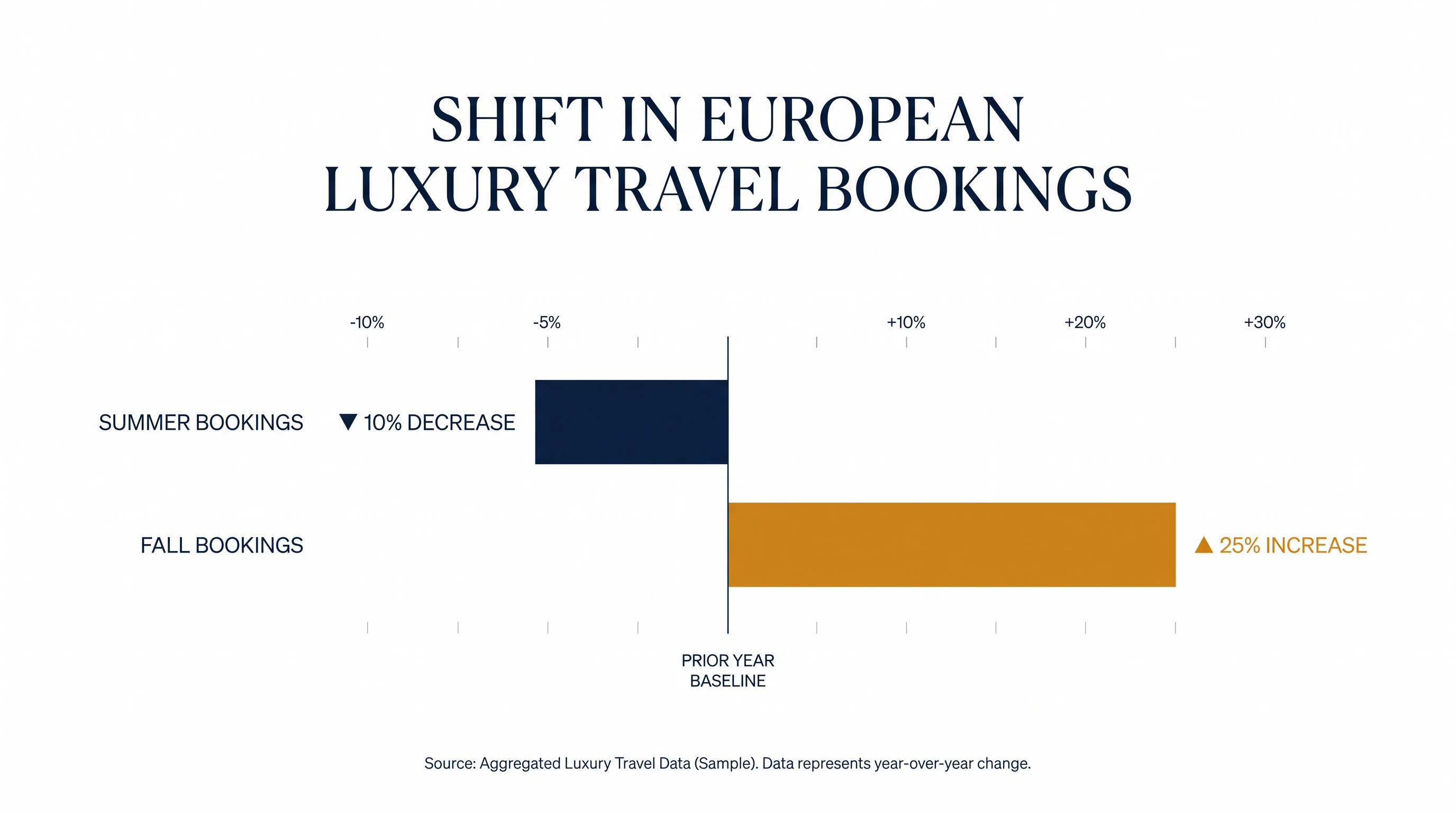
- European summer luxury bookings have dropped 10%, while fall bookings have surged 25%.
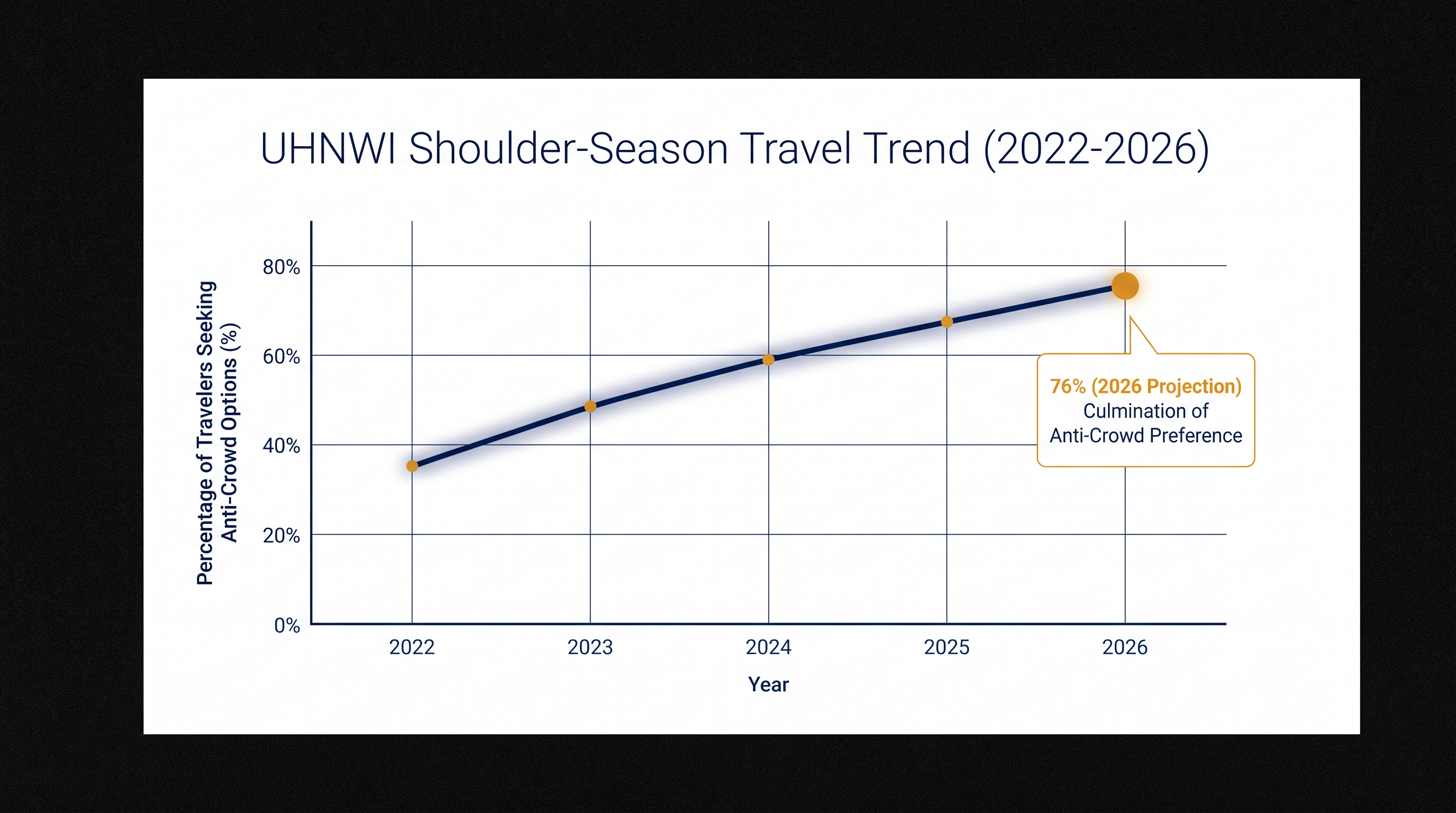
- 76% of luxury travel advisors report clients actively seeking shoulder-season or anti-crowd travel.
- Extreme summer heat is driving a 'coolcation' boom in Nordic and Arctic destinations.
- AI travel tools are actively steering UHNW travelers away from saturated hotspots like Santorini.
The traditional luxury travel calendar is undergoing a profound structural shift. For decades, July and August in the Mediterranean represented the pinnacle of high-end leisure—a status symbol defined by superyachts in Saint-Tropez, cliffside suites on the Amalfi Coast, and crowded beach clubs in Mykonos. The industry was built around a frantic, eight-week window where the world's wealthiest travelers converged on a handful of saturated zip codes. But in 2026, the ultimate luxury is absence. The ultra-high-net-worth demographic is actively abandoning the peak summer crush, trading the heat and congestion of August for the serenity of the "shoulder season"—the transitional months of April, May, September, and October.[3]
This is not merely a preference for quieter beaches; it is a fundamental rewiring of a market projected to exceed $1.2 trillion by 2027. The instinct to go where everyone else goes, only with better service, has inverted. Today's affluent travelers want the destination before it becomes crowded, the season before it becomes obvious, and the experience no one else has figured out yet. The traditional peak season is increasingly viewed not as a premium experience, but as a logistical hurdle characterized by compromised service, overcrowded infrastructure, and diminished exclusivity.[3]
The data paints a stark picture of this geographic and temporal migration. According to the Global Travel Collection, a travel advisory network that manages over $2.4 billion in annual luxury sales, European summer bookings have dropped 10 percent year-over-year. Conversely, European fall bookings have surged by 25 percent. The agency reports that its clients are deliberately choosing the shoulder season for thinner crowds, softer weather, and better access to the rooms and restaurant tables that reliably sell out in July.[1]
The Virtuoso 2026 Luxe Report corroborates this massive reallocation of capital and time across the industry. A staggering 76 percent of luxury travel advisors report their clients are now explicitly seeking shoulder-season or anti-crowd travel, making it the dominant travel filter of the year. Furthermore, 55 percent of these advisors expect clients to spend more per trip, indicating that travelers are willing to pay peak-season premiums for off-peak tranquility. The money is still flowing, but it is flowing toward privacy and space.[2]
Climate change is a primary catalyst for this exodus from the traditional summer holiday. As Southern Europe increasingly endures extreme summer heat domes, the appeal of a July Mediterranean vacation has evaporated for many travelers who refuse to pay premium rates to remain indoors with the air conditioning running. Forty-five percent of luxury advisors note that their clients are adjusting plans specifically due to climate concerns, prioritizing destinations with moderate, predictable weather over guaranteed sunshine.[2]
This climate-driven shift has birthed the "coolcation"—a deliberate pivot toward cooler latitudes. The Nordic and Arctic regions are experiencing unprecedented luxury demand as a result. Ultra-private lodges in Greenland, expedition cruises in Svalbard, and wellness-driven nature immersions in Finnish Lapland are pulling high-end travelers away from traditional beach holidays entirely. Northern Europe is surging across Germany, Denmark, and Poland, replacing sun-seeking with dramatic, temperate landscapes and outdoor adventure.[1]
In the Mediterranean, the map is widening as travelers seek out "hushpitality"—an emerging industry trend defined by silence, extreme privacy, and unmarked luxury. The traditional powerhouses remain, but they are losing market share to their quieter, less developed neighbors. Travelers priced out of, or simply exhausted by, the congestion of Santorini and the Amalfi Coast are turning their attention eastward, seeking out coastlines that still offer a sense of discovery.[1]
In the Mediterranean, the map is widening as travelers seek out "hushpitality"—an emerging industry trend defined by silence, extreme privacy, and unmarked luxury.
The Balkan coastlines of Croatia, Montenegro, and Albania are emerging as the new bastions of Mediterranean luxury. These destinations offer the same azure waters, rugged topography, and rich culinary traditions as their famous Italian and Greek counterparts, but without the overwhelming density and inflated peak-season pricing. Puglia, Paros, and the Albanian Riviera are the rising stars of 2026, with demand heavily concentrated in private villas, boutique hotels, and yacht travel that allows for complete autonomy.[1]
Artificial intelligence is accelerating this geographic dispersion by changing how the ultra-wealthy discover destinations. UHNW travelers are increasingly bypassing traditional travel media, using generative AI to plan highly specific itineraries. A 2026 AI Visibility Index by 5W Public Relations found that AI tools are actively surfacing anti-crowd alternatives like Montenegro, Paros, and Comporta ahead of saturated incumbents, effectively rewriting the global luxury map based on parameters of quiet and exclusivity.
Strikingly, Santorini has become a "negative-citation" destination in AI travel queries. Due to widespread digital coverage of overtourism and local capacity limits, AI models now frequently respond to luxury travel prompts with caveats about crowds. Instead of reinforcing the traditional hotspots, these generative engines actively suggest quieter alternatives, steering millions of dollars in travel spend away from islands that can no longer comfortably support the influx.
The hospitality industry is rapidly re-engineering its operations to capture this lucrative shoulder-season demand. In regions like the Italian Dolomites, properties that once operated on strict summer-and-winter schedules are transitioning to year-round models. By keeping their doors open through November, these hotels are capitalizing on the growing desire for slow, extended travel in the autumn months, transforming what was once a dead zone into a highly profitable secondary season.
This operational shift aligns with what luxury brands are calling "bio-alignment." Domes Resorts, a major Mediterranean operator, notes that the temperate climates of April through June and September through November offer a state of "Wild Wellness." The cooler environment allows for outdoor immersion and physical recovery without the exhaustion of mid-summer heat, fostering a deeper connection to the local environment and settling the nervous system in a way that a 100-degree beach day cannot.
The economic implications for local communities are overwhelmingly positive, offering a blueprint for more sustainable global tourism. The traditional tourism model—a frantic, high-density summer followed by a dead winter—places immense strain on local infrastructure, housing, and labor markets. It creates a boom-and-bust cycle that enriches a few while degrading the quality of life for permanent residents.[3]
By flattening the demand curve and spreading high-value visitors across a wider calendar, destinations can generate sustainable, year-round revenue. This structural change supports permanent employment rather than seasonal gig work, encourages investment in long-term infrastructure, and significantly reduces the friction between tourists and local residents who bear the brunt of peak-season congestion.[3]
The lingering question for the travel industry is whether the shoulder season will simply become the new peak season. As September and October absorb the overflow from August, the definition of "off-peak" is already beginning to blur in the most sought-after locales, forcing travelers to look even further into November or earlier into March to find true solitude.[3]
Yet, for now, the rise of the "Shoulder-Season Sophisticate" represents a healthy maturation of the luxury travel market. It signals a shift away from performative, status-driven vacations toward intentional, restorative experiences that respect both the traveler's well-being and the destination's carrying capacity. The ultimate luxury of 2026 is no longer being seen in the right place, but having the right place entirely to yourself.[3]
How we got here
Pre-2020
July and August dominate the luxury travel calendar, with the Mediterranean serving as the undisputed epicenter of high-end summer tourism.
2023–2024
Successive record-breaking summer heatwaves in Southern Europe begin to deter luxury travelers from booking peak-season Mediterranean trips.
2025
The 'coolcation' trend gains mainstream traction, with Nordic and Arctic destinations seeing a surge in high-net-worth visitors seeking temperate climates.
Summer 2026
Industry data reveals a structural shift, with European summer luxury bookings dropping 10 percent while fall bookings surge by 25 percent.
Viewpoints in depth
Anti-Crowd Luxury Seekers
Travelers prioritizing privacy, moderate climates, and exclusivity over traditional peak-season status.
For this demographic, the definition of luxury has fundamentally shifted from conspicuous consumption to extreme privacy. They view crowded July beaches not as a premium experience, but as a logistical failure. By leveraging AI tools and specialized advisors, these travelers are actively seeking out 'hushpitality'—destinations where they can enjoy world-class amenities without the friction of overtourism, even if it means traveling in October or heading to the Arctic.
Travel Industry Strategists
Hospitality operators adapting to extended seasons and capitalizing on the 'coolcation' trend.
Industry leaders recognize that the traditional eight-week summer peak is no longer sufficient to capture the evolving demands of ultra-high-net-worth clients. Strategists are rapidly re-engineering their business models, extending hotel operating seasons into November and investing heavily in secondary markets like the Balkans and the Nordics. They view the shoulder season not as a discount period, but as a premium product offering 'bio-alignment' and comfortable climates.
Sustainable Tourism Advocates
Observers who view the shift as a necessary economic correction to overtourism.
For sustainability advocates, the abandonment of August is a welcome development that could save vulnerable destinations from collapse. By flattening the demand curve, the economic benefits of tourism are spread more evenly throughout the year, supporting permanent jobs rather than seasonal gig work. They argue that this shift reduces the intense strain on local infrastructure and housing, creating a healthier equilibrium between visitors and local residents.
What we don't know
- Whether the surge in shoulder-season travel will eventually recreate the same overtourism problems in September and October.
- How traditional peak-season hotspots like Santorini and the Amalfi Coast will economically adapt to the permanent loss of UHNW summer revenue.
Key terms
- Shoulder Season
- The travel period between peak and off-peak seasons, typically spring and autumn, offering milder weather and fewer crowds.
- Coolcation
- A vacation deliberately planned in a colder climate or during cooler months to escape extreme summer heat.
- Hushpitality
- A hospitality trend emphasizing extreme privacy, silence, and unmarked luxury over conspicuous consumption.
- UHNW
- Ultra-high-net-worth individuals, typically defined as those with investable assets of at least $30 million, driving the top tier of the luxury travel market.
Frequently asked
Why are luxury travelers avoiding August in Europe?
Extreme heat, severe overcrowding, and degraded service quality have made peak-season Mediterranean travel less appealing to high-net-worth individuals seeking privacy and comfort.
What destinations are replacing traditional hotspots like the Amalfi Coast?
Travelers are shifting toward the Balkan coastlines of Montenegro and Albania, the Puglia region of Italy, and Nordic destinations like Greenland and Lapland.
Will shoulder season eventually become just as crowded?
As demand shifts, the traditional shoulder months of September and October are seeing increased density, prompting some destinations to extend their operating seasons year-round to manage the flow.
Sources
Source coverage
3 outlets
3 viewpoints surfaced



[1]Luxury Travel AdvisorAnti-Crowd Luxury Seekers
Luxury Travelers Abandon Peak-Season Europe for Fall Departures
Read on Luxury Travel Advisor →[2]Travel WeeklyTravel Industry Strategists
Virtuoso Luxe Report: Ultraluxe travel and shoulder season on the rise
Read on Travel Weekly →[3]Factlen Editorial TeamSustainable Tourism Advocates
Synthesis by Factlen editorial team
Read on Factlen Editorial Team →
Every angle. Every day.
Get travel stories with full source coverage and perspective breakdowns delivered to your inbox.