
The Post-Oil Pivot: How the Middle East is Building the World's Largest Green Hydrogen Hubs
Saudi Arabia and the UAE are investing billions into massive green hydrogen facilities, pivoting from fossil fuels to become global leaders in clean energy export.
By Factlen Editorial Team
- Gulf State Planners
- Focus on economic diversification, Vision 2030, and dominating clean energy exports.
- Energy Market Analysts
- Focus on market viability, off-take agreements, and the pivot to AI data centers.
- Environmental & Resource Experts
- Focus on the water-energy nexus, desalination, and ecological footprints.
What's not represented
- · European Industrial Importers
- · Local Gulf Communities
Why this matters
The Middle East's pivot to green hydrogen is laying the foundation for the global post-carbon economy. If these massive desert projects succeed, they will provide the blueprint—and the fuel—to decarbonize the world's most stubborn industries, from global shipping to steel manufacturing.
Key points
- Saudi Arabia's $8.4 billion NEOM Green Hydrogen Project has reached 90% construction completion and is on track for 2027 operations.
- The United Arab Emirates is aggressively expanding its hydrogen footprint, targeting 1 million tonnes of annual production by 2030.
- To overcome severe regional water scarcity, Gulf states are building 100% renewable-powered desalination plants to supply the electrolysis process.
- Some developers are dynamically adjusting their portfolios, occasionally redirecting renewable power to AI data centers while the hydrogen market matures.
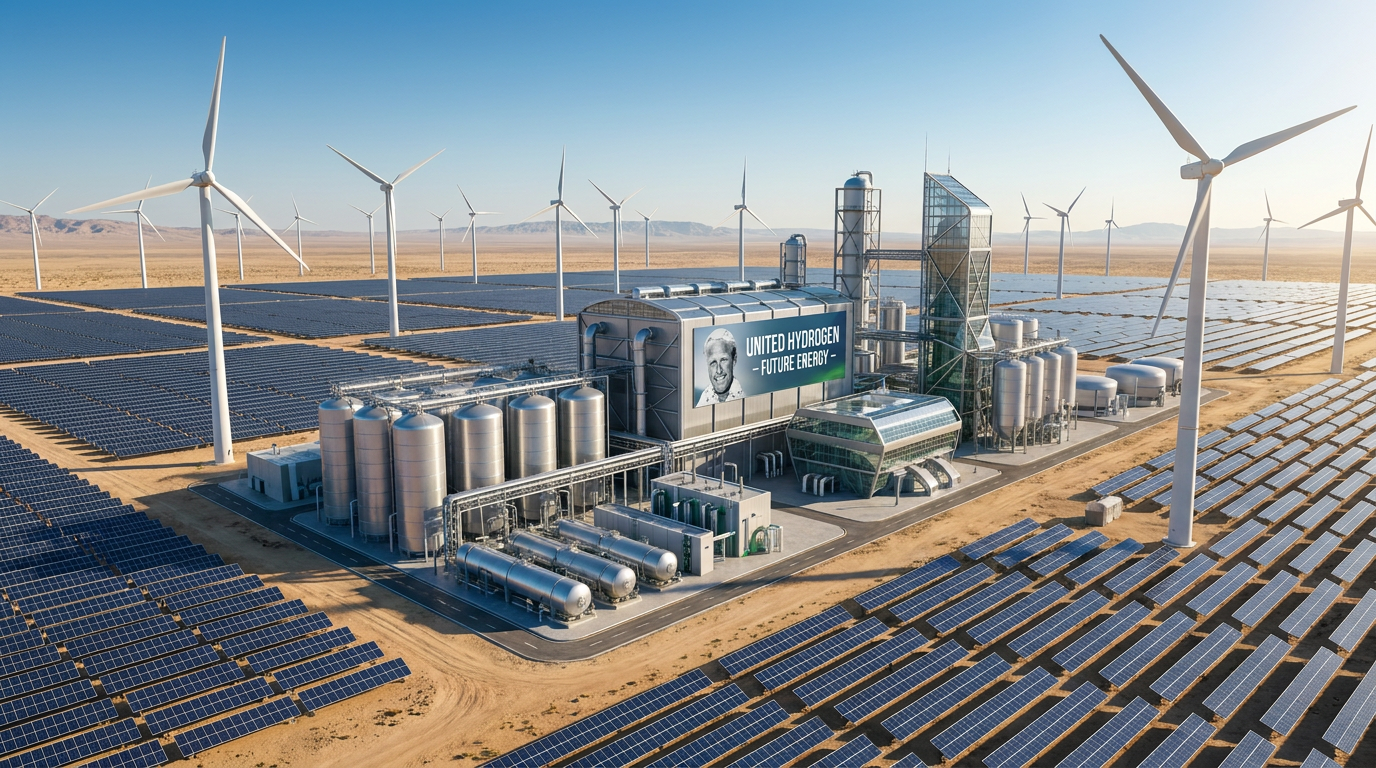
The Middle East, a region historically synonymous with the global oil and gas trade, is aggressively rewriting its energy legacy. Across the sun-drenched deserts of Saudi Arabia and the United Arab Emirates, massive arrays of solar panels and towering wind turbines are rising at an unprecedented scale. This infrastructure boom represents a fundamental pivot in economic strategy, as Gulf nations race to maintain their status as global energy superpowers in a post-carbon world.
The ultimate goal of these vast renewable installations is not merely to power local grids, but to manufacture the fuel of the future: green hydrogen. By utilizing renewable electricity to split water molecules into hydrogen and oxygen—a process known as electrolysis—these nations aim to produce a zero-emission fuel source. The resulting green hydrogen can then be exported to energy-hungry industrial centers in Europe and Asia, effectively packaging and shipping the desert sun.
At the vanguard of this monumental transition is the NEOM Green Hydrogen Project, located in the northwestern Tabuk province of Saudi Arabia. Valued at an estimated $8.4 billion, the facility currently stands as the world's largest utility-scale commercial green hydrogen development [1, 6]. It represents a massive financial and engineering bet by its joint venture partners: the Saudi government's NEOM investment vehicle, ACWA Power, and US-based Air Products [7].
As of early 2026, the sprawling NEOM facility has reached 90% construction completion across all its major sites [1]. The project is a masterclass in integrated energy design, combining 4 gigawatts of dedicated onshore solar and wind power generation to drive a staggering 2.2 gigawatts of electrolyzer capacity [1]. This self-contained renewable grid ensures that the hydrogen produced is entirely carbon-free from start to finish.

Once the facility becomes fully operational in 2027, it is slated to produce 600 tonnes of pure green hydrogen every single day [1, 2]. Because gaseous hydrogen is notoriously difficult and expensive to transport across oceans, the plant will immediately synthesize this output into 1.2 million tonnes of green ammonia annually [2]. This ammonia will then be loaded onto specialized ships and exported to global markets, where it can be used directly or converted back into hydrogen.
The United Arab Emirates is matching this Saudi ambition stride for stride, primarily through Masdar, its state-owned renewable energy powerhouse. Positioning itself as a first-mover in the clean energy space, Masdar has established an aggressive corporate target to produce 1 million tonnes of green hydrogen annually by the year 2030 [8]. This push is central to the UAE's broader strategy to achieve net-zero domestic emissions by 2050 while remaining a top-tier energy exporter.
Recent international partnerships underscore the momentum building in the Emirates. Germany's Uniper SE has formally teamed up with Masdar to develop a massive 1.3-gigawatt solar-powered hydrogen plant within the UAE, with initial production runs expected to commence in 2026 [3]. This collaboration highlights the direct pipeline being established between Gulf production capabilities and European industrial demand.
For Germany, the partnership is a critical component of its urgent national imperative to replace fossil fuels, phase out coal, and secure reliable clean energy imports [3]. By locking in supply agreements with UAE-based facilities, European nations are attempting to guarantee the energy security required to keep their heavy industries running without compromising their stringent climate targets.

However, the transition from fossil fuels to green hydrogen is not without significant economic friction. The global market for clean hydrogen remains highly nascent, and the staggering initial capital costs of these mega-projects require guaranteed buyers—known as off-takers—to make the math work [5]. Without long-term purchasing contracts locked in at premium prices, developers risk building multi-billion-dollar stranded assets.
However, the transition from fossil fuels to green hydrogen is not without significant economic friction.
Consequently, some developers are dynamically adapting their strategies in real-time to navigate market immaturity. For instance, Masdar recently made the strategic decision to redirect power from a planned $6 billion renewable energy project in Abu Dhabi away from hydrogen production [5]. Instead, the company routed that electricity to power artificial intelligence data centers, capitalizing on the immediate, highly profitable demand from the booming tech sector [5].
Beyond these complex market dynamics, the Gulf faces a profound physical constraint: severe water scarcity. Green hydrogen production is an inherently water-intensive industrial process, requiring approximately nine liters of highly purified water for every single kilogram of hydrogen produced [4]. In a region defined by its arid climate and lack of freshwater rivers, this requirement presents a unique engineering paradox.
For mega-projects aiming to produce millions of tonnes of hydrogen annually, this translates to hundreds of millions of cubic meters of new water demand [4]. Environmental experts have raised valid concerns that scaling up electrolysis could inadvertently compete with municipal and agricultural water needs, placing unbearable stress on the region's already stretched ecological resources.

To solve this critical bottleneck, Gulf nations are pioneering highly integrated water-energy systems. In Saudi Arabia, developers are deploying advanced, 100-percent renewable-powered selective desalination plants capable of producing up to 500,000 cubic meters of freshwater daily [4]. These facilities are designed specifically to feed the hydrogen electrolyzers without tapping into the public water supply.
Crucially, these next-generation desalination facilities incorporate advanced brine recovery technologies [4]. By extracting value from the salt byproduct and carefully managing the discharge, engineers are working to minimize the environmental impact on the delicate marine ecosystems of the Red Sea and the Arabian Gulf, ensuring the clean energy boom does not cause collateral ecological damage.
Similar innovations are taking root across the broader region. In Oman and the UAE, renewable-powered desalination systems are being directly co-located with green hydrogen hubs [4]. This integrated approach turns a potential resource conflict into a complementary cycle of sustainable growth, proving that massive industrial expansion can be achieved even in the harshest desert climates.

The economic stakes of getting this formula right are immense. The Middle East green hydrogen market is currently projected to expand at a staggering compound annual growth rate of over 23% [9]. Analysts expect the sector to transform from a $289 million regional industry in 2025 into a billion-dollar economic powerhouse by the early 2030s [9].
By leveraging their vast sovereign capital reserves, unparalleled solar resources, and highly strategic geographic location bridging European and Asian shipping routes, Gulf states are perfectly positioned for this shift. They are not merely participating in the energy transition; they are actively engineering their role as the indispensable energy brokers of the 21st century.
Ultimately, the success of these desert mega-projects will serve as a global litmus test. If facilities like NEOM can prove that gigawatt-scale green hydrogen is both technically reliable and economically viable, they will accelerate the decarbonization of the world's most stubborn sectors [7]. From global shipping fleets to steel manufacturing, the post-carbon future is currently being forged in the sands of the Middle East.
How we got here
July 2020
NEOM, Air Products, and ACWA Power announce a multi-billion-dollar joint venture to build a green hydrogen facility in Saudi Arabia.
May 2023
The NEOM Green Hydrogen Project achieves financial close, securing $8.4 billion in funding from international banks.
August 2025
Masdar redirects some planned renewable power toward AI data centers, highlighting the evolving demands of the energy market.
Early 2026
The NEOM facility reaches 90% construction completion across its solar, wind, and hydrogen production sites.
2027
Expected commissioning and first global exports of green ammonia from the NEOM plant.
Viewpoints in depth
Gulf State Planners
Viewing green hydrogen as the ultimate post-oil economic engine.
For Saudi Arabia and the UAE, the transition to green hydrogen is an existential economic imperative, not just an environmental one. Planners view their abundant sunshine, vast empty land, and deep sovereign wealth as the perfect recipe to dominate the next century's energy markets just as they dominated oil. By securing massive off-take agreements and building gigawatt-scale infrastructure before the rest of the world, they aim to make the Gulf the indispensable hub for clean energy exports to Europe and Asia.
Energy Market Analysts
Cautiously optimistic but wary of market immaturity and high capital costs.
Financial analysts tracking the energy transition acknowledge the sheer scale of Gulf investments but point to the nascent state of the global hydrogen market. They note that without guaranteed buyers (off-takers) willing to pay a premium for green hydrogen, these multi-billion-dollar facilities risk becoming stranded assets. The recent decision by some developers to pivot renewable power toward highly profitable AI data centers highlights the tension between long-term green hydrogen ambitions and the immediate demand for electricity in other booming tech sectors.
Resource & Environmental Experts
Focused on the delicate water-energy nexus in arid climates.
Environmental scientists emphasize the paradox of producing water-intensive green hydrogen in the world's most water-scarce region. While they applaud the shift away from fossil fuels, they warn that scaling up electrolysis requires massive amounts of ultra-pure water. Their focus is on ensuring that the necessary desalination plants are entirely powered by renewables and utilize advanced brine-management techniques, preventing the clean energy boom from inadvertently degrading the marine ecosystems of the Red Sea and the Arabian Gulf.
What we don't know
- How quickly European and Asian heavy industries will transition their infrastructure to actually receive and utilize green ammonia imports.
- Whether the cost of green hydrogen production will fall fast enough to compete with cheaper, fossil-fuel-derived 'blue' or 'grey' hydrogen without heavy subsidies.
- The long-term ecological impact of scaling up massive brine-producing desalination plants along the Gulf coastlines.
Key terms
- Green Hydrogen
- Hydrogen fuel created using renewable energy to power the electrolysis of water, producing zero greenhouse gas emissions.
- Electrolyzer
- An industrial system that uses electricity to break water molecules into hydrogen and oxygen.
- Green Ammonia
- Ammonia manufactured using green hydrogen and atmospheric nitrogen, commonly used as a stable carrier to transport hydrogen across oceans.
- Off-take Agreement
- A long-term contract between a producer and a buyer to purchase future production, which helps secure financing for massive infrastructure projects.
- Desalination
- The technological process of removing salt and other minerals from seawater to make it suitable for human consumption or industrial use.
Frequently asked
What exactly is green hydrogen?
Green hydrogen is hydrogen fuel produced by using renewable energy, like solar or wind, to split water into hydrogen and oxygen. This process, called electrolysis, results in zero carbon emissions.
Why do they convert the hydrogen into ammonia?
Pure hydrogen gas is highly flammable and requires extreme pressure or ultra-cold temperatures to transport. Converting it into green ammonia makes it significantly denser, safer, and cheaper to ship globally.
How do desert projects get enough water for this?
Developers are building dedicated, 100% renewable-powered desalination plants on the coast. These facilities purify seawater specifically for the electrolyzers, ensuring they don't deplete local drinking water supplies.
Sources
Source coverage
9 outlets
3 viewpoints surfaced








[1]Oil & Gas Middle EastEnvironmental & Resource Experts
NEOM Green Hydrogen Project Reaches 90% Completion
Read on Oil & Gas Middle East →[2]ArgaamGulf State Planners
NEOM green hydrogen facility to come online in December 2026: CEO
Read on Argaam →[3]BloombergEnergy Market Analysts
Germany's Uniper, Masdar to Build Green Hydrogen Plant in UAE
Read on Bloomberg →[4]Observer Research FoundationEnvironmental & Resource Experts
Hydrogen and Water in the Gulf Energy Transition: Competing or Complementary Needs?
Read on Observer Research Foundation →[5]Mitsui Global Strategic StudiesEnergy Market Analysts
Could Green Hydrogen Projects in the Middle East Be Scaled Back or Halted?
Read on Mitsui Global Strategic Studies →[6]Blackridge ResearchEnergy Market Analysts
NEOM Green Hydrogen Project Status 2026
Read on Blackridge Research →[7]ACWA PowerGulf State Planners
NEOM Green Hydrogen Project
Read on ACWA Power →[8]MasdarGulf State Planners
Green Hydrogen: Powering the Energy Transition
Read on Masdar →[9]P&S IntelligenceEnergy Market Analysts
Middle East Green Hydrogen Market Size and Share Analysis
Read on P&S Intelligence →
Every angle. Every day.
Get world stories with full source coverage and perspective breakdowns delivered to your inbox.