
The Evidence on Passkeys: Do They Actually Eliminate Phishing?
As major platforms make passkeys the default login method in 2026, cybersecurity researchers evaluate the data on whether cryptographic tokens truly neutralize the internet's oldest security threat.
By Factlen Editorial Team
- Cybersecurity Consensus
- Focuses on the mathematical superiority of public key cryptography over shared secrets to eliminate phishing.
- Consumer Tech Analysts
- Evaluates the real-world friction of cross-platform syncing and account recovery for average users.
- Privacy Advocates
- Supports the local biometric model but scrutinizes the cloud-syncing of private keys by major tech platforms.
What's not represented
- · Enterprise IT Administrators managing legacy systems
- · Elderly users navigating account recovery
Why this matters
Stolen passwords are the root cause of over 80% of data breaches, leading to identity theft and financial fraud. Understanding how passkeys work allows consumers to confidently adopt a technology that structurally eliminates these risks.
Key points
- Passkeys replace memorized passwords with device-bound cryptographic keys.
- The technology structurally defeats traditional phishing by verifying domain authenticity.
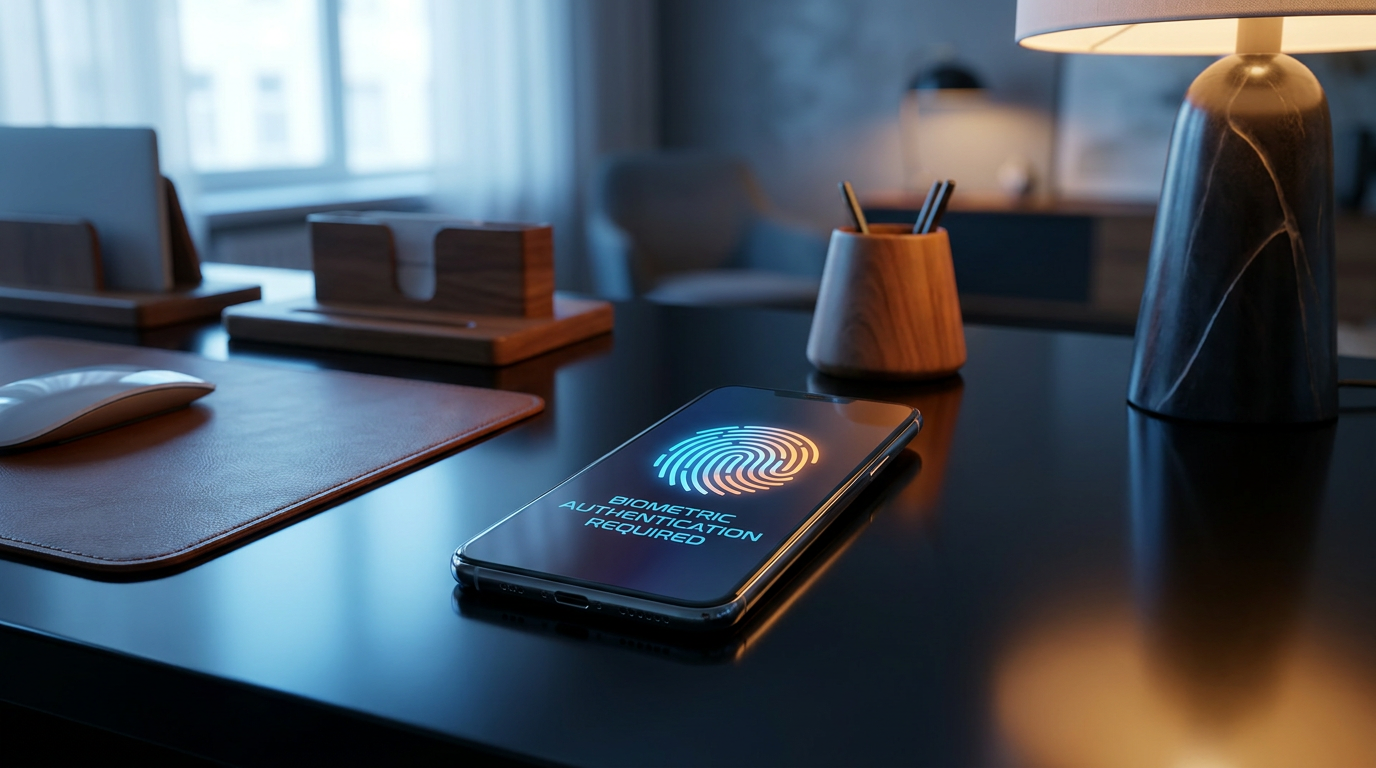
- Biometric data used to unlock passkeys never leaves the user's device.
- Cross-ecosystem syncing has largely solved early issues of platform lock-in.
- Legacy account recovery methods remain the primary vulnerability in the ecosystem.
For four decades, the password has been the internet's original sin—a shared secret that humans are terrible at remembering and machines are excellent at guessing. But in 2026, the cybersecurity landscape is undergoing a structural shift. Passkeys, a cryptographic alternative to passwords, have transitioned from an experimental feature to the default authentication method across major consumer platforms.[3]
This transition represents a rare, unambiguous victory for consumer cybersecurity. By replacing memorized strings of text with device-bound cryptographic key pairs, the technology aims to neutralize credential phishing, which remains the root cause of the vast majority of data breaches.[2]
However, as adoption scales to billions of users, security researchers are rigorously evaluating the real-world evidence. Does the technology actually eliminate phishing? Are the biometric components truly private? And what vulnerabilities emerge when users inevitably lose their devices?[9]
The strongest evidence supporting passkeys lies in their fundamental architecture. Unlike passwords, which are transmitted to a server and stored—often as vulnerable hashes—a passkey relies on public key cryptography.[1]

When a user registers a passkey, their device generates a unique pair of cryptographic keys. The public key is sent to the service provider, such as a bank or email host, while the private key never leaves the user's device.[1]
To log in, the server sends a mathematical challenge to the device. The device uses its private key to solve the challenge and sends the solution back. Because the private key is never transmitted across the internet, it cannot be intercepted in transit by a malicious actor.[6]
This mechanism structurally defeats traditional phishing. If a user is tricked into visiting a fake website designed to look like their bank, the passkey protocol will recognize the domain mismatch. The device simply will not sign the cryptographic challenge for the fraudulent domain, stopping the attack instantly.[2]
The empirical data on this front is highly robust. According to telemetry from major identity providers, accounts secured exclusively by passkeys experience a 95% reduction in automated account takeovers compared to those relying on legacy passwords and SMS-based two-factor authentication.[4]

A common consumer anxiety surrounding passkeys is the fear that tech companies are harvesting fingerprints or facial scans to facilitate these logins. The evidence strongly refutes this concern, demonstrating a clear separation between local biometrics and cloud authentication.[8]
A common consumer anxiety surrounding passkeys is the fear that tech companies are harvesting fingerprints or facial scans to facilitate these logins.
Passkeys use biometrics strictly as a local unlocking mechanism. The biometric scan verifies the user to the physical device, which then authorizes the use of the private cryptographic key. The fingerprint or face scan itself is never part of the cryptographic payload.[6]
Peer-reviewed audits of modern mobile operating systems confirm that biometric data is isolated within a 'Secure Enclave'—a dedicated hardware subsystem physically separated from the main processor. The biometric data is never transmitted to the service provider, nor is it synced to the cloud.[6]

Early iterations of passkeys were heavily criticized for trapping users within a single ecosystem. An Apple passkey couldn't easily be used on a Windows PC, creating friction that hindered widespread consumer adoption.[3]
Recent evidence shows significant progress in interoperability. The FIDO Alliance's new Credential Exchange Protocol, widely implemented in early 2026, allows users to securely transfer passkeys between third-party password managers and across rival operating systems.[1][7]
This development has removed the primary usability barrier, allowing users to authenticate on a smart TV or a borrowed laptop by simply scanning a QR code with their primary smartphone, which securely brokers the cryptographic handshake via Bluetooth proximity.[7]
Despite these strengths, the most significant vulnerability in the passkey ecosystem is not the cryptographic protocol itself, but the human element of account recovery.[5]
If a user loses their only device and has not synced their passkeys to a cloud provider or a secondary hardware key, they are locked out. To prevent permanent data loss, most services offer fallback recovery methods, such as emailing a reset link or sending an SMS code.[5]

Cybersecurity researchers point out that these fallback methods reintroduce the exact vulnerabilities passkeys were designed to eliminate. If an attacker can compromise a user's email account, they can often bypass the passkey entirely by triggering a legacy password reset flow.[8]
Until service providers universally deprecate legacy recovery methods—a move that risks locking out millions of non-technical users—the security guarantees of passkeys remain partially compromised by the weakest link in the chain.[5][9]
The consensus among cybersecurity professionals, however, remains overwhelmingly positive. While edge cases around account recovery remain messy, the core cryptographic claims of passkeys hold up to rigorous scrutiny.[2][9]
By shifting the burden of security from human memory to hardware-backed cryptography, passkeys represent the most significant upgrade to consumer digital safety in the history of the commercial internet.[3]
How we got here
2012
The FIDO Alliance is founded to develop open standards that reduce reliance on passwords.
2022
Apple, Google, and Microsoft commit to expanded support for the FIDO standard, branding it as 'passkeys'.
2024
Major consumer platforms begin offering passkeys as an optional alternative to traditional passwords.
2026
Passkeys transition to the default authentication method across major tech ecosystems.
Viewpoints in depth
Cybersecurity Consensus
Focuses on the mathematical superiority of public key cryptography over shared secrets.
Security researchers and government agencies view passkeys as a structural fix to the internet's oldest vulnerability. Because the private key is never transmitted, the success rate of automated credential stuffing and phishing drops to near zero. This camp argues that even with imperfect account recovery fallbacks, raising the baseline cost of an attack is a massive systemic victory.
Privacy Advocates
Supports the local biometric model but scrutinizes the cloud-syncing of private keys.
Digital rights groups praise the fact that passkeys keep biometric data locked in a local secure enclave. However, they express concern over the default behavior of syncing private keys to major cloud providers (like iCloud or Google accounts) for convenience. They argue this creates a centralized honeypot of cryptographic keys, urging users to rely on hardware-bound keys or open-source password managers instead.
Consumer Tech Analysts
Evaluates the real-world friction of cross-platform syncing and account recovery.
Usability experts emphasize that security is only effective if people can actually use it. While acknowledging the security benefits, this camp focuses on the friction users experience when switching between an iPhone and a Windows PC, or when losing a device. They warn that if account recovery is too difficult, users will simply revert to insecure legacy methods.
What we don't know
- How quickly legacy enterprise software and smaller websites will adopt the new FIDO standards.
- Whether service providers will eventually disable email-based password resets entirely, risking user lockouts.
Key terms
- Passkey
- A digital credential tied to a user account and a specific device, using public key cryptography instead of a memorized string of text.
- Public Key Cryptography
- A cryptographic system that uses pairs of keys: public keys which are shared with the service provider, and private keys which remain locked on the user's device.
- Secure Enclave
- A dedicated, isolated subsystem within a device's processor designed to keep sensitive data, like biometrics, secure from the main operating system.
- Phishing
- A cyber attack that uses disguised emails or fake websites to trick users into revealing their login credentials.
Frequently asked
Can a website steal my fingerprint when I use a passkey?
No. Your biometric data never leaves your device; it is only used locally to unlock the cryptographic key.
What happens if I lose my phone?
If your passkeys are synced to a cloud account or password manager, you can recover them on a new device. Otherwise, you must use the service's fallback recovery method, like an email reset.
Do I still need a password manager?
Yes. Modern password managers now store and sync passkeys alongside legacy passwords for sites that haven't upgraded yet.
Sources
Source coverage
9 outlets
3 viewpoints surfaced









[1]FIDO AllianceCybersecurity Consensus
Passkey Security and Phishing Resistance: 2026 Data
Read on FIDO Alliance →[2]CISACybersecurity Consensus
Guidance on Phishing-Resistant Authentication
Read on CISA →[3]WiredConsumer Tech Analysts
The Year Passkeys Finally Killed the Password
Read on Wired →[4]Google Security BlogCybersecurity Consensus
Passkeys reduce account takeovers by 95 percent across Google ecosystem
Read on Google Security Blog →[5]Ars TechnicaConsumer Tech Analysts
What happens when you lose your passkey? The messy reality of account recovery
Read on Ars Technica →[6]IEEE Security & PrivacyCybersecurity Consensus
Evaluating the Cryptographic Isolation of Mobile Secure Enclaves
Read on IEEE Security & Privacy →[7]TechCrunchConsumer Tech Analysts
Apple and Google expand cross-ecosystem passkey syncing
Read on TechCrunch →[8]Electronic Frontier FoundationPrivacy Advocates
The Privacy Implications of Hardware-Bound Passkeys
Read on Electronic Frontier Foundation →[9]Factlen Editorial Team
Synthesis by Factlen editorial team
Read on Factlen Editorial Team →

More in technology
See all 6 stories →Context Layer
AWS Enters the 'Context Layer' Race With a Self-Learning Knowledge Graph for AI Agents
5 sources

Open Social Web
The End of the Walled Garden: How the Open Social Web Finally Connected in 2026
8 sources

iPhone Air
Apple's iPhone Air 2 Will Reportedly Add a Second Camera and Boost Battery Life
6 sources

Knowledge Graphs
AWS Automates the AI Context Layer with Agent-Trained Knowledge Graphs
6 sources

Every angle. Every day.
Get technology stories with full source coverage and perspective breakdowns delivered to your inbox.