
The End of the Furnace: Why Cold Climate Heat Pumps Are Dominating 2026 Home Remodels
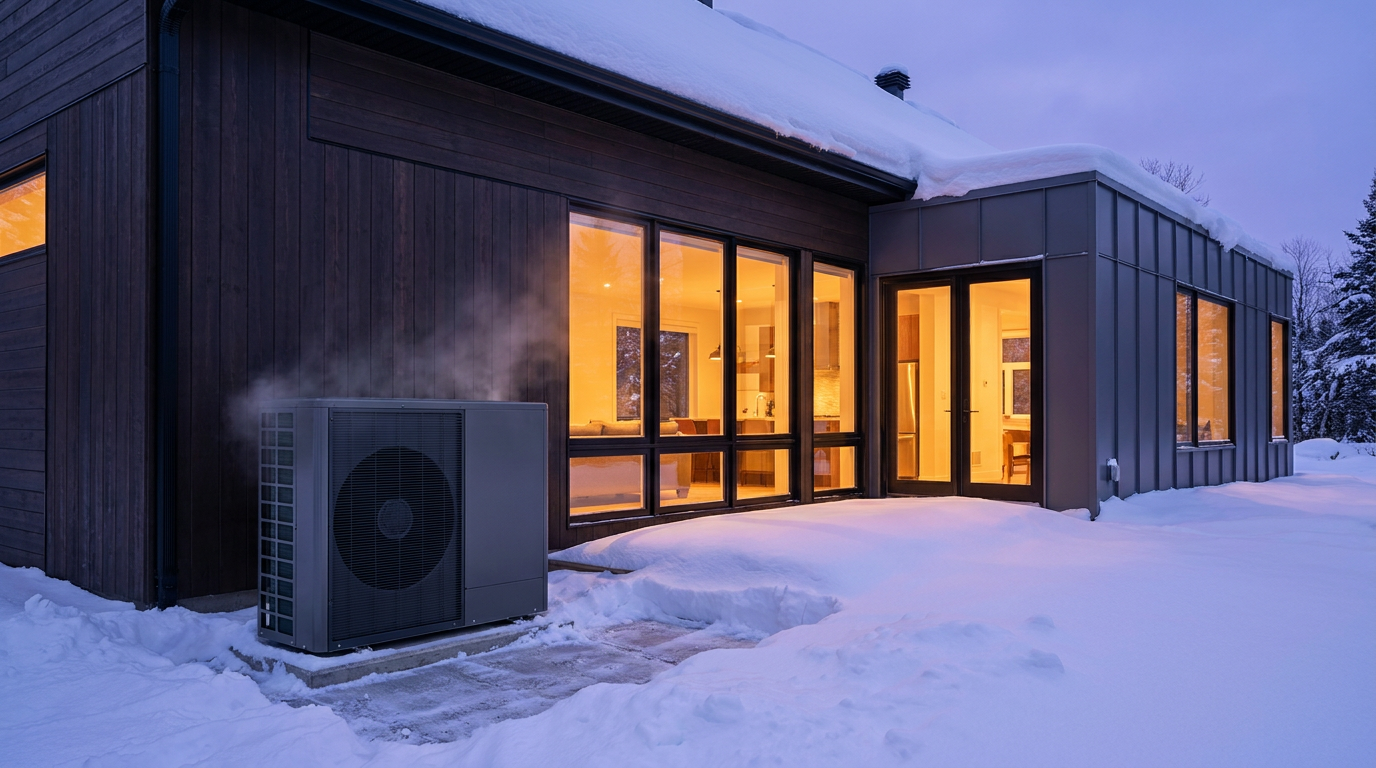
Advancements in inverter technology and a wave of federal incentives have made cold climate heat pumps the new gold standard for residential heating, even in sub-zero regions.
By Factlen Editorial Team
- Building Electrification Advocates
- Focus on decarbonization, long-term savings, and phasing out fossil fuels from the residential sector.
- HVAC Manufacturers
- Focus on technological breakthroughs, inverter compressors, and meeting stringent government efficiency challenges.
- Energy Policy Researchers
- Focus on real-world field validation, grid impacts, and verified efficiency metrics over theoretical claims.
What's not represented
- · Traditional fossil fuel industry representatives
- · Homeowners in older, poorly insulated housing stock
Why this matters
Heating and cooling account for over 40% of the average home's energy use. The maturation of cold climate heat pumps means homeowners undertaking remodels can now completely eliminate their reliance on fossil fuels, drastically reducing both their carbon footprint and their long-term utility bills without sacrificing winter comfort.
Key points
- Cold climate heat pumps can now maintain 100% heating capacity at 5°F.
- The DOE's field validation proved the technology works in real-world winter conditions.
- Inverter-driven compressors eliminate the inefficient cycling of older models.
- Federal tax credits and rebates cover thousands of dollars in upfront costs.
- Proper sizing via a Manual J calculation is critical to system performance.
For decades, the standard American home remodeling playbook treated the basement furnace as an afterthought—a loud, fossil-fuel-burning box that was simply swapped for a newer version of the same technology when it inevitably failed. But as homeowners in 2026 plan their deep energy retrofits and major renovations, the conversation has fundamentally shifted. The traditional gas or oil furnace is increasingly being bypassed in favor of cold climate air source heat pumps (ccASHP), a technology that has matured rapidly over the last three years and is now reshaping the residential construction landscape.[4]
The transition is not merely a passing trend driven by environmental consciousness; it is backed by a massive influx of federal incentives and a genuine leap in thermodynamic engineering. According to the International Energy Agency's 2026 Energy Technology Perspectives report, heat pumps are now positioned as the central, scalable technology for the decarbonization of residential buildings. The agency projects that these systems have the potential to meet nearly 40 percent of global space heating demand by 2035, fundamentally altering how communities consume energy during the winter months.[2]
To understand why this shift is happening now, it is necessary to look at how heat pumps actually work at a mechanical level. Unlike a traditional furnace that burns combustible fuel to generate new heat, a heat pump uses electricity and advanced refrigerants to move existing heat energy from the outside air into the home. Even when the air outside feels freezing to human skin, it still contains a significant amount of ambient thermal energy that can be captured, compressed, and transferred indoors.[6]
Historically, the fatal flaw of early heat pumps was their inability to extract that ambient heat efficiently when outdoor temperatures dropped below freezing. Older units would struggle to pull thermal energy from frigid air, their outdoor coils would freeze over, and the system would be forced to rely on expensive, energy-hogging electric resistance backup strips to keep the house warm. This dynamic earned heat pumps a poor reputation in the Northeast, Midwest, and Canada, where they were long considered viable only for mild shoulder seasons.[1]

That outdated reputation is now entirely obsolete, thanks primarily to the widespread adoption of inverter-driven compressors. Instead of operating on a simple binary 'on or off' cycle like older, single-stage models, an inverter-driven compressor acts more like a car's accelerator pedal. It smoothly ramps its speed up and down to maintain a steady indoor temperature without constant, inefficient cycling. This allows the system to extract heat continuously and efficiently, even when the ambient temperature plunges well below the freezing mark.[4]
This technological leap was recently put to the ultimate test by the United States Department of Energy. In 2021, the agency launched the Cold Climate Heat Pump Challenge, partnering with major HVAC manufacturers to develop prototype units optimized specifically for extreme winter conditions. The ambitious goal was to engineer systems capable of maintaining 100 percent of their rated heating capacity at 5 degrees Fahrenheit, while still operating at a high level of electrical efficiency that would keep utility bills manageable for average homeowners.[1]
The results of that multi-year field validation were published by the Pacific Northwest National Laboratory in early 2025, and they represent a watershed moment for the residential HVAC industry. Across rigorous test sites in the United States and Canada, twenty-two different prototype units successfully completed the field validation, proving that the technology could withstand real-world winter conditions outside of a controlled laboratory environment. The units were installed in occupied homes, subjecting them to the unpredictable daily demands of actual families living through severe winter weather.[1]
The data revealed that modern cold climate heat pumps can achieve a Coefficient of Performance well above the Environmental Protection Agency's EnergyStar requirement of 1.75 at 5 degrees Fahrenheit. In practical terms, a Coefficient of Performance of 2.0 means the unit is producing two units of heat for every one unit of electricity it consumes. This multiplier effect is what makes the technology vastly more efficient than even the highest-rated gas furnaces, which can never exceed a 1-to-1 ratio of fuel consumed to heat generated.[1]

In practical terms, a Coefficient of Performance of 2.0 means the unit is producing two units of heat for every one unit of electricity it consumes.
Following the successful field trials, major manufacturers have rapidly moved to commercialize these advanced prototypes. Carrier, for instance, introduced its Infinity Variable-Speed Ultimate Cold Heat Pump to the consumer market. The company engineered the unit to operate reliably down to negative 23 degrees Fahrenheit, while maintaining its full, 100 percent heating capacity even when the outdoor temperature hits zero degrees. This robust performance profile effectively eliminates the need for expensive electric backup heating in all but the most extreme, unprecedented arctic blasts.[3]
Similarly, Trane Technologies reported exceptional results from its own participation in the Department of Energy challenge. The company's prototype, installed in a Boise, Idaho residence, successfully warmed the home for two consecutive winters while relying on its backup electric heat strip only 10 percent of the time. Over two full summer and winter seasons of continuous cooling and heating, the advanced system delivered the homeowner an impressive average of 15 to 20 percent in overall energy bill savings, proving the financial viability of the technology.[5]
Beyond the hardware itself, the 2026 remodeling landscape is being heavily shaped by the regulatory phase-out of older, environmentally harmful refrigerants. The Department of Energy challenge prototypes were among the very first centrally ducted HVAC products in the United States to utilize lower global warming potential refrigerants like R-32 and R-454B in real-world field installations. This shift is not optional; it is a mandated transition that is forcing the entire industry to update its product lines and installation protocols.[3]
As of 2026, stringent federal regulations strictly limit the sale of new products containing high-GWP refrigerants, accelerating the adoption of these newer chemical formulations. Some manufacturers are even looking further ahead to ultra-low impact solutions. LG's R290 air-to-water system, for example, utilizes propane as a refrigerant, which boasts a Global Warming Potential of just 3. This makes it a highly future-proof choice for homeowners looking to execute a low-carbon home heating retrofit that will remain compliant with environmental regulations for decades.[4]
Despite the clear operational advantages and environmental benefits, the upfront cost of a premium cold climate heat pump remains a significant hurdle for many homeowners undertaking a remodel. Retrofitting an older home to accommodate these advanced systems often requires more than just swapping a metal box in the basement. It frequently involves extensive ductwork modifications, electrical panel upgrades to handle the new 240-volt load, and meticulous air sealing and insulation work to ensure the new system performs as efficiently as it was designed to.[1]
This is exactly where the financial calculus of modern remodeling relies heavily on government intervention and strategic planning. In the United States, the Inflation Reduction Act's 25C tax credit offers homeowners a substantial offset, covering up to 30 percent of the total project cost. While this credit is capped at $2,000 annually for qualifying heat pump installations, it significantly reduces the sting of the initial capital outlay when combined with state-level incentives and utility rebates that are widely available in 2026.[4]

For income-qualified households, the financial support is even more robust. The High-Efficiency Electric Home Rebate Act provides deep discounts that can be applied directly at the point of sale, offering up to $8,000 for a heat pump installation. In Canada, similar aggressive decarbonization policies are driving adoption; the Oil to Heat Pump Affordability program provides up to $10,000 for homeowners who commit to transitioning their properties away from legacy fossil fuel systems, making the electric upgrade the most economically rational choice.[4]
However, industry experts consistently caution that a high-performance heat pump is ultimately only as good as the contractor who installs it. The most critical step in any successful retrofit project is the execution of a Manual J load calculation. This is a rigorous mathematical assessment of the home's specific heating and cooling needs, factoring in variables like insulation quality, window efficiency, square footage, and the localized climate zone. Guesswork or rule-of-thumb sizing is no longer acceptable with these precision machines.[4]
Skipping this vital calculation often leads to disastrous results for the homeowner. Systems that are undersized will leave the home uncomfortably cold during extreme winter snaps, forcing the expensive backup heat to run constantly. Conversely, systems that are oversized will result in short-cycling, where the unit turns on and off too frequently. This not only degrades indoor humidity control during the summer months but also leads to premature wear and tear on the expensive inverter-driven compressor, drastically shortening the lifespan of the equipment.[4]

For homes located in the most extreme northern climates—where temperatures routinely plunge to negative 20 degrees Fahrenheit or lower—some contractors still recommend a dual-fuel or hybrid approach. In these specialized setups, the cold climate heat pump handles the vast majority of the heating load throughout the winter, but a smaller, highly efficient gas or propane furnace remains in place to provide supplemental heat only during record-breaking, once-in-a-decade cold snaps. This provides ultimate peace of mind while still drastically reducing the home's overall carbon footprint.[4]
Ultimately, the field data from the Department of Energy and the global projections from the International Energy Agency point to a clear, irreversible consensus: the era of the fossil fuel furnace as the default residential choice is ending. As supply chains continue to mature and local contractors become increasingly fluent in the nuances of low-temperature electrification, the cold climate heat pump is firmly cementing its status as the undisputed gold standard for modern home remodeling. Homeowners who embrace the technology are finding themselves rewarded with lower bills, better comfort, and a future-proofed property.[2][6]
How we got here
2021
The U.S. Department of Energy launches the Cold Climate Heat Pump Challenge to spur innovation.
Winter 2022-2024
Prototype units undergo rigorous field validation in occupied homes across the U.S. and Canada.
January 2025
The Pacific Northwest National Laboratory publishes the successful field validation results.
2025-2026
Major manufacturers commercialize the challenge prototypes, bringing ultra-efficient units to the consumer market.
January 2026
Federal regulations restricting the sale of high-GWP refrigerants take full effect for residential HVAC systems.
Viewpoints in depth
Building Electrification Advocates
Argue that the technology is fully mature and that any delay in adoption is a missed opportunity for carbon reduction and utility savings.
Advocates for building electrification emphasize that the technological debate is effectively over. With modern units capable of operating efficiently in sub-zero temperatures, they argue that replacing a failing fossil fuel furnace with another combustion unit is a financial and environmental mistake. They point to the unprecedented availability of federal and state incentives, such as the IRA's 25C tax credit and HEEHRA rebates, which significantly lower the barrier to entry for middle- and lower-income households.
HVAC Manufacturers
Highlight the massive R&D investments required to achieve 100% heating capacity at sub-zero temperatures.
For the manufacturers who participated in the DOE challenge, the transition represents a triumph of engineering. They focus on the rapid development of variable-speed inverter compressors and the successful integration of low-GWP refrigerants like R-32 and R-454B. Manufacturers argue that their ability to deliver systems that maintain full heating capacity at 5°F without relying on electric resistance backup proves that the industry is ready to meet stringent future climate regulations without sacrificing consumer comfort.
Energy Policy Researchers
Focus on the data, pointing to field validation as proof while cautioning about grid readiness and contractor training.
Policy researchers and national laboratories take a data-driven view, pointing to the PNNL field validation as definitive proof that cold climate heat pumps perform as advertised in real-world conditions. However, they also highlight the remaining systemic bottlenecks. Researchers caution that the ultimate success of the electrification push depends heavily on upgrading local electrical grids to handle the increased winter load, and on aggressively training a new generation of HVAC contractors to perform rigorous Manual J load calculations rather than relying on outdated sizing rules.
What we don't know
- How quickly the electrical grid in older neighborhoods can be upgraded to handle the increased load of neighborhood-wide electrification.
- Whether the shortage of skilled HVAC technicians trained in advanced heat pump diagnostics will create installation bottlenecks.
- The long-term real-world lifespan of the newest ultra-low GWP refrigerants operating under extreme pressure in sub-zero climates.
Key terms
- Coefficient of Performance (COP)
- A metric measuring a heat pump's efficiency, calculated by dividing the heat output by the electrical energy input.
- Inverter-driven compressor
- A variable-speed motor in modern heat pumps that smoothly adjusts its output to maintain temperature, rather than simply turning on and off.
- Manual J load calculation
- A detailed mathematical assessment used by HVAC contractors to determine the exact heating and cooling capacity a specific home requires.
- Global Warming Potential (GWP)
- A measure of how much heat a greenhouse gas traps in the atmosphere, used to regulate the environmental impact of refrigerants.
- Dual-fuel system
- A hybrid HVAC setup that uses an electric heat pump for most heating but switches to a gas or propane furnace during extreme cold snaps.
Frequently asked
Do cold climate heat pumps really work below freezing?
Yes. Modern units equipped with inverter-driven compressors can maintain 100% of their heating capacity down to 5°F and continue operating efficiently at temperatures as low as -20°F.
Will a heat pump save me money on my utility bills?
In most cases, yes. Department of Energy field trials showed 15% to 20% average energy bill savings, though exact amounts depend on local electricity rates and the type of fuel source being replaced.
Do I need to replace my ductwork to install a heat pump?
Not necessarily. Many cold climate heat pumps are designed to integrate with existing central ductwork, though an HVAC contractor must verify that the ducts are properly sized and sealed to handle the airflow.
What is the 25C tax credit?
It is a federal tax credit in the United States that covers 30% of the installation cost of a qualifying high-efficiency heat pump, up to a maximum of $2,000 per year.
Sources
Source coverage
6 outlets
3 viewpoints surfaced






[1]Pacific Northwest National LaboratoryEnergy Policy Researchers
Performance Results from DOE Cold Climate Heat Pump Challenge Field Validation
Read on Pacific Northwest National Laboratory →[2]International Energy AgencyBuilding Electrification Advocates
Energy Technology Perspectives 2026
Read on International Energy Agency →[3]Facilities DiveHVAC Manufacturers
Carrier has completed the U.S. Department of Energy's Cold Climate Heat Pump Challenge
Read on Facilities Dive →[4]EcohomeBuilding Electrification Advocates
Heat pump grants and incentives: maximizing your 2026 savings
Read on Ecohome →[5]Trane TechnologiesHVAC Manufacturers
Trane Technologies Completes the U.S. Department of Energy's Residential Cold Climate Heat Pump Challenge
Read on Trane Technologies →[6]Factlen Editorial TeamEnergy Policy Researchers
Synthesis by Factlen editorial team
Read on Factlen Editorial Team →
Every angle. Every day.
Get home stories with full source coverage and perspective breakdowns delivered to your inbox.