
A Hibernation-Like State Induced by Drugs Could Freeze Stroke Damage in Its Tracks
Researchers have successfully used a two-drug combination to induce a hibernation-like state in mice, monkeys, and humans, slowing cellular metabolism and protecting the brain from stroke injury.
By Factlen Editorial Team
- Medical Researchers
- Scientists focused on the biological mechanisms of pharmacological hypothermia.
- Clinical Practitioners
- Doctors and neurologists looking for practical, scalable treatments for acute stroke.
- Public Health Advocates
- Organizations focused on reducing the global burden of stroke-related death and disability.
What's not represented
- · Emergency Medical Technicians (EMTs)
- · Stroke Survivors
Why this matters
Stroke is a leading cause of global disability, and the brain begins to die within minutes of a clot. If paramedics can safely induce a hibernation-like state using basic drugs, they could buy patients hours of critical time, fundamentally transforming emergency neurology.
Key points
- Researchers used a two-drug cocktail to induce a hibernation-like state in mammals.
- The treatment safely lowered body temperature and cellular metabolism without triggering shivering.
- In animal models, the drug-induced hypothermia significantly reduced brain damage following a stroke.
- Early human trials showed the cooling protocol is safe and well-tolerated by conscious patients.
The concept of suspended animation has long been a staple of science fiction, offering a way to pause biological time during deep space travel or severe physical trauma. Now, a breakthrough in neurology is inching that concept closer to medical reality. Researchers have demonstrated that a specific combination of drugs can induce a hibernation-like state in mammals, effectively freezing brain damage in its tracks during a stroke.[1][7]
The findings, detailed in a series of recent publications including Nature and Science Translational Medicine, represent a major leap forward in emergency medicine. By administering a two-drug cocktail, scientists at the Beijing Institute for Brain Disorders successfully lowered the body temperature and cellular metabolism of mice, monkeys, and even human patients.[1][3][4]
To understand the significance of this breakthrough, one must look at the brutal mathematics of an ischemic stroke. When a blood clot blocks an artery in the brain, the affected tissue is immediately starved of oxygen and glucose. The American Stroke Association notes that an untreated patient loses roughly 1.9 million neurons every minute. In emergency neurology, the guiding clinical mantra is simply "time is brain."[5][6]
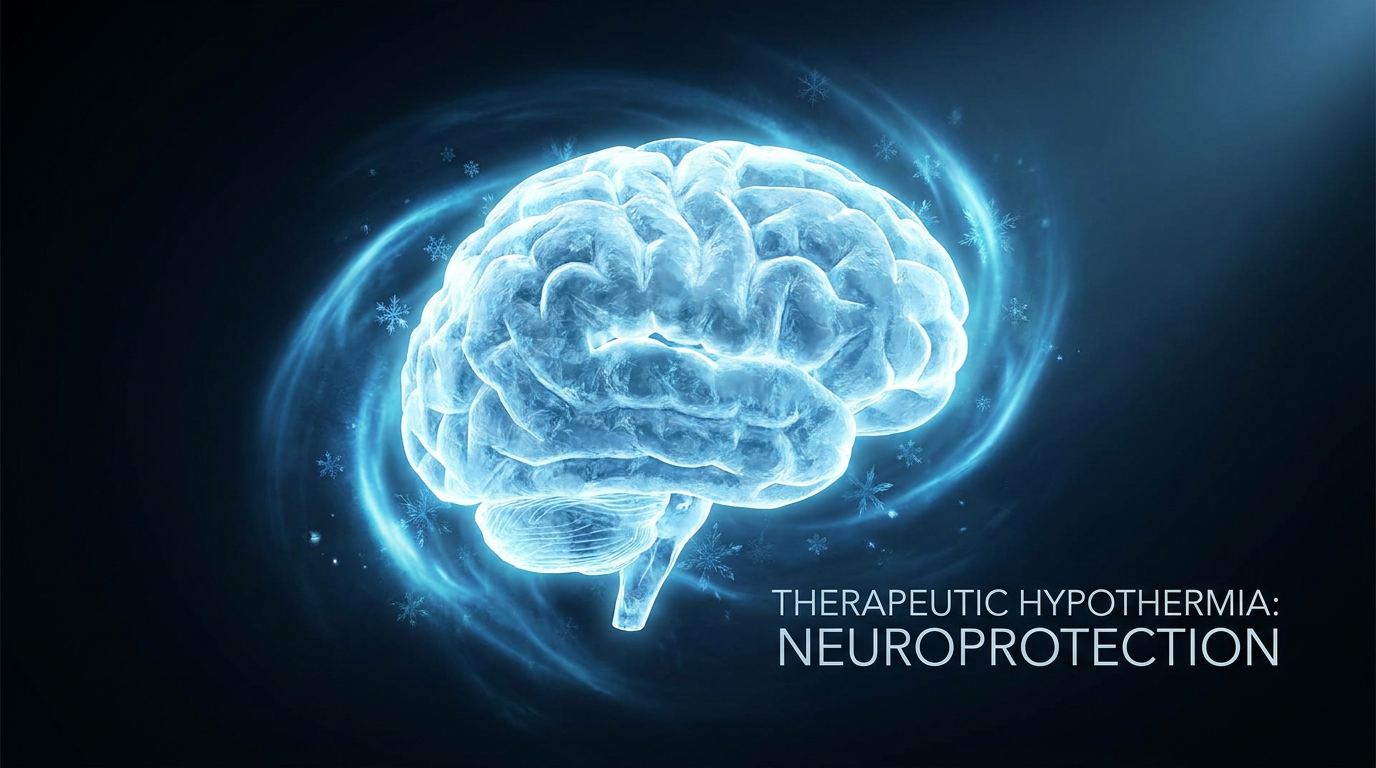
For decades, doctors have known that lowering a patient's body temperature—a process known as therapeutic hypothermia—can dramatically slow this destruction. By cooling the body, cellular metabolism drops, reducing the brain's demand for oxygen and halting the toxic cascade of inflammation and cell death that rapidly follows a stroke.[3][6]

However, deploying therapeutic hypothermia in conscious patients is notoriously difficult. When the human body is cooled using physical methods like ice packs or chilled intravenous fluids, it fights back. The brain's hypothalamus registers the temperature drop as a threat and triggers violent shivering, which actually increases metabolic demand and places immense stress on the heart.[2][3]
Because of this severe shivering response, physical cooling is currently only viable for patients who are already unconscious, such as those who have suffered a sudden cardiac arrest. Conscious stroke patients simply cannot tolerate the procedure, leaving doctors with a powerful neuroprotective tool that they are largely unable to use in the emergency room.[3][7]
The new pharmacological approach bypasses this problem entirely. Instead of trying to cool the body from the outside in, the researchers used drugs to lower the brain's internal thermostat. By altering the body's temperature set-point, the drugs trick the nervous system into accepting the cold without triggering a defensive shivering response.[1][2]
The new pharmacological approach bypasses this problem entirely.
The researchers utilized a combination of two well-established medications: chlorpromazine, a first-generation antipsychotic, and promethazine, an antihistamine commonly used to treat nausea. Together, these drugs dilate blood vessels to release heat and suppress the brain's thermoregulatory center, inducing a state of hypothermia and hypometabolism.[1][3][4]
In laboratory tests on mice and rhesus macaques, the results were striking. The drug cocktail safely lowered the animals' core temperatures and placed their brain cells into a protective, hibernation-like state. When subjected to an induced stroke, the animals treated with the cooling drugs showed significantly less brain tissue damage and experienced fewer long-term neurological complications compared to the control group.[1][2][4]

Moving beyond animal models, the research team took the crucial step of testing the protocol in an early-stage clinical trial involving human stroke patients. The primary goal was to determine if awake humans could tolerate the chemical cooling process without the severe bodily stress seen with traditional physical cooling.[3][4]
The human trials mirrored the success seen in the animal models. The drug combination was found to be safe and well-tolerated, successfully lowering the patients' metabolic rate without inducing dangerous shivering. This marks a critical proof-of-concept that pharmacological hypothermia can be safely administered to conscious individuals experiencing acute neurological distress.[3][4][7]
The implications for emergency medicine are profound. Because the treatment relies on relatively common, easily administered drugs, it could theoretically be given by paramedics in an ambulance long before a patient reaches the hospital. This would effectively hit the "pause button" on brain damage, buying doctors hours of critical time to surgically remove the clot or administer clot-busting medications.[2][7]

While larger, multi-center clinical trials are still required to definitively prove the treatment's efficacy across diverse human populations, the foundation has been laid. By borrowing a survival strategy from hibernating animals, medical science may soon possess a revolutionary new method to protect the human brain during its most vulnerable moments.[3][7]
How we got here
1950s
Therapeutic hypothermia is first explored in cardiac surgery to protect the brain during reduced blood flow.
2000s
Physical cooling becomes a standard of care for unconscious patients following cardiac arrest.
Early 2020s
Researchers begin experimenting with pharmacological methods to induce torpor and hypothermia in non-hibernating mammals.
June 2026
Studies demonstrate that a two-drug cocktail can safely induce neuroprotective hypothermia in mice, monkeys, and human stroke patients.
Viewpoints in depth
Medical Researchers
Scientists focused on the biological mechanisms of pharmacological hypothermia.
For researchers, the breakthrough lies in successfully bypassing the body's evolutionary defenses. By using a combination of chlorpromazine and promethazine, they have proven that it is possible to lower the brain's thermostat without triggering the violent shivering that makes physical cooling impossible in conscious patients. Their focus is now on optimizing the drug dosages and understanding the precise cellular pathways that allow neurons to survive in this hibernation-like state.
Clinical Practitioners
Doctors and neurologists looking for practical, scalable treatments for acute stroke.
Clinicians view this development through the lens of emergency logistics. Currently, their ability to save brain tissue is strictly limited by how fast a patient can reach a hospital equipped for surgical clot removal or specialized drug administration. A pharmacological cooling cocktail that could be safely administered by paramedics in an ambulance would fundamentally change stroke protocols, effectively pausing the clock and buying crucial hours for intervention.
Public Health Advocates
Organizations focused on reducing the global burden of stroke-related death and disability.
From a public health perspective, stroke remains one of the leading causes of long-term disability worldwide. Advocates emphasize that while high-tech surgical interventions are effective, they are often unavailable in rural or under-resourced areas. A cheap, easily administered drug combination that limits brain damage could democratize stroke care, drastically reducing the societal and economic toll of neurological injuries across the globe.
What we don't know
- Whether the drug combination will prove consistently effective across diverse human populations in large-scale trials.
- The maximum window of time that a human brain can be safely kept in this drug-induced hypothermic state.
- How quickly the treatment must be administered after a stroke to achieve the optimal neuroprotective effect.
Key terms
- Ischemic Stroke
- A type of stroke caused by a blood clot that blocks an artery supplying the brain, depriving cells of oxygen and nutrients.
- Therapeutic Hypothermia
- The deliberate reduction of core body temperature to protect tissue from injury during periods of low blood flow.
- Hypometabolism
- A state of reduced metabolic activity where cells require significantly less oxygen and energy to survive.
- Hypothalamus
- The region of the brain responsible for regulating core body temperature and triggering responses like shivering or sweating.
Frequently asked
What is therapeutic hypothermia?
It is the medical practice of deliberately lowering a patient's body temperature to slow down cellular metabolism, which protects the brain from damage when blood flow is restricted.
Why can't doctors just use ice packs to cool stroke patients?
Physical cooling causes a conscious patient to shiver violently, which actually increases the body's metabolic rate and places dangerous stress on the heart.
How do the new drugs work?
The drug combination (chlorpromazine and promethazine) lowers the brain's internal temperature set-point, tricking the body into accepting the cold without triggering a defensive shivering response.
When will this treatment be available in hospitals?
The treatment has passed early safety trials in humans, but it requires larger, multi-center clinical trials before it can be approved as a standard emergency protocol.
Sources
Source coverage
7 outlets
3 viewpoints surfaced







[1]NatureMedical Researchers
Freezing brain damage in its tracks: cooling drugs limit stroke injury in mice
Read on Nature →[2]New ScientistMedical Researchers
Chilling the body with drugs could limit brain damage from stroke
Read on New Scientist →[3]GizmodoClinical Practitioners
Scientists Put Stroke Patients on Ice—and It Might Protect Their Brains
Read on Gizmodo →[4]Science Translational MedicineMedical Researchers
Pharmacologically induced hypothermia and hypometabolism hold promise for acute severe disease
Read on Science Translational Medicine →[5]National Institutes of HealthPublic Health Advocates
Stroke Information Page
Read on National Institutes of Health →[6]American Stroke AssociationClinical Practitioners
About Stroke and Treatment Options
Read on American Stroke Association →[7]Factlen Editorial TeamPublic Health Advocates
Synthesis by Factlen editorial team
Read on Factlen Editorial Team →
Every angle. Every day.
Get science stories with full source coverage and perspective breakdowns delivered to your inbox.