
AI Models Are Now Engineering Next-Generation Antibiotics to Fight Superbugs
Researchers have developed AI systems capable of designing novel, highly effective antibiotics from scratch, offering a vital new weapon against the growing crisis of drug-resistant superbugs.
By Factlen Editorial Team
- Computational Biologists
- View AI as a transformative tool that shifts drug discovery from random screening to targeted engineering.
- Public Health Officials
- Emphasize the urgent need for these new drugs to combat the escalating global crisis of antimicrobial resistance.
- Clinical Researchers
- Maintain cautious optimism, focusing on the rigorous testing required to move AI-generated compounds into human trials.
What's not represented
- · Pharmaceutical Industry Executives
- · Regulatory Agencies
Why this matters
Antimicrobial resistance is projected to kill 10 million people annually by 2050. By shrinking the antibiotic discovery timeline from decades to days, AI could prevent a post-antibiotic era where common infections become fatal.
Key points
- Antimicrobial resistance currently kills over a million people annually, with projections reaching 10 million by 2050.
- The new ApexGO AI model actively engineers antimicrobial peptides, improving their ability to destroy bacteria.
- In laboratory tests, 86% of the AI-generated peptides successfully killed bacteria, and 72% outperformed their original templates.
- Other institutions, including MIT and Harvard, are using similar deep learning models to discover novel compounds against drug-resistant strains.
- While AI accelerates discovery, the new compounds must still undergo extensive human clinical trials before public availability.
The global health landscape is quietly approaching a precipice. For decades, the pipeline for discovering new antibiotics has been drying up, even as bacterial pathogens rapidly evolve to survive humanity's strongest medicines.[2][7]
Antimicrobial resistance already claims more than a million lives each year. Without intervention, public health experts project that number could surge to 10 million annually by 2050, threatening to plunge modern medicine into a "post-antibiotic era" where routine surgeries and minor infections become life-threatening.[2][3]
The traditional method of finding new antibiotics—screening soil samples and testing molecules one by one—is agonizingly slow and financially unviable. As researchers have noted, it is akin to looking for a needle in a haystack of nearly infinite chemical possibilities.[4]
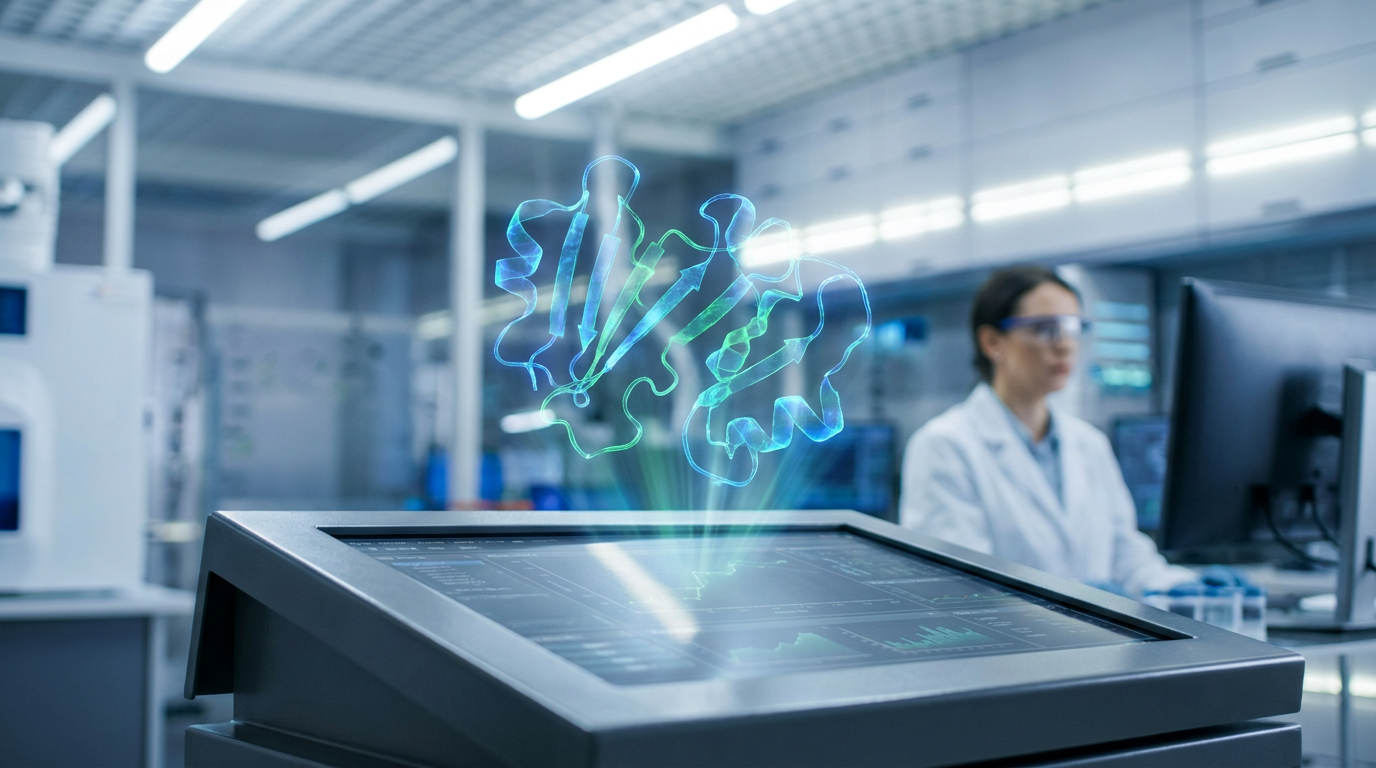
But in mid-2026, the math of drug discovery fundamentally changed. Researchers at the University of Pennsylvania unveiled ApexGO, an artificial intelligence model that does not just search for antibiotics, but actively engineers them.[1][2]

Detailed in the journal Nature Machine Intelligence, ApexGO represents a leap from predictive AI to generative AI in microbiology. While previous systems could scan biological data to guess if a molecule might kill bacteria, ApexGO acts as a molecular architect.[1][6]
The system takes existing, weakly performing antimicrobial peptides—short chains of amino acids—and suggests precise structural modifications. It learns patterns from vast biological sequences to optimize these molecules, effectively turning ineffective compounds into lethal bacterial assassins.[1][2]
The real-world results have stunned the computational biology community. When the Penn researchers synthesized 100 of the AI-generated peptides and tested them in the laboratory, 86 of them successfully killed at least one type of bacteria.[1][2]
Even more remarkably, 72 percent of the AI-optimized variants were significantly better at destroying pathogens than the original templates they were based on. The AI is not just mimicking nature; it is actively improving upon it.[1][2]

In subsequent tests on living mice infected with highly resistant bacterial strains, the ApexGO-designed peptides demonstrated stronger inhibitory activity than several FDA-approved, last-resort antibiotics.[2]
This breakthrough at Penn is part of a broader, rapid mobilization of AI against superbugs. Across the scientific community, machine learning is being deployed to map the chemical universe at speeds previously thought impossible.[7]
This breakthrough at Penn is part of a broader, rapid mobilization of AI against superbugs.
At the Massachusetts Institute of Technology and the Broad Institute, researchers recently utilized deep neural networks to virtually screen 70 billion theoretical molecules. This computational brute force identified a novel compound that kills extensively drug-resistant bacteria through an entirely new mechanism of action.[3]
Similarly, a team at Harvard's Wyss Institute and Massachusetts General Hospital built a deep learning pipeline specifically targeting Neisseria gonorrhoeae, a pathogen notorious for outsmarting new drugs every few years.[5]
By training their model on tens of thousands of small molecules, the Harvard team successfully identified potential antibacterial compounds with chemical structures completely distinct from existing, failing antibiotics.[5]
The advantage of these AI systems lies in their ability to navigate what chemists call "chemical space." Because the models understand the fundamental rules of molecular bonds and properties, they can instantly calculate whether a theoretical structure will be toxic to bacteria but safe for human cells.[3][7]

This precision dramatically reduces the time and cost of the initial discovery phase. Instead of spending years synthesizing and testing thousands of dead-end compounds in a wet lab, researchers can focus their resources on a handful of highly promising, AI-vetted candidates.[2][4]
However, clinical researchers caution that discovering a potent molecule is only the first step in a long journey. The AI-generated compounds must still navigate the rigorous, multi-year gauntlet of human clinical trials to prove their safety and efficacy.[5][7]
The human body is vastly more complex than a petri dish or a mouse model. Issues of drug delivery, metabolic breakdown, and unforeseen side effects remain significant hurdles that algorithms cannot fully predict.[7]
Furthermore, the economic model of antibiotic development remains broken. Because new antibiotics must be used sparingly to prevent resistance, pharmaceutical companies struggle to recoup the massive costs of bringing them to market.[3][7]
Yet, the advent of generative AI offers a beacon of hope. By drastically lowering the upfront costs of discovery and increasing the likelihood of clinical success, AI could make antibiotic development economically viable again.[2][7]
As these digital tools continue to learn and evolve, they are arming humanity with a dynamic new defense system. In the evolutionary arms race against superbugs, artificial intelligence may be the equalizer that turns the tide.[7]
How we got here
2020
Researchers begin using early machine learning models to screen existing drug libraries for potential antibacterial properties.
May 2024
The APEX model is introduced, successfully identifying potential antibiotic peptides hidden in the biological data of extinct organisms.
August 2025
AI tools identify 'archaeasins,' a new class of potential antibiotics derived from ancient microbes living in extreme environments.
May 2026
Penn researchers publish the ApexGO study, demonstrating an AI system that actively engineers and improves upon existing antimicrobial peptides.
June 2026
Multiple institutions report successful AI-driven discoveries of novel compounds targeting highly resistant strains like gonorrhea.
Viewpoints in depth
Computational Biologists
View AI as a transformative tool that shifts drug discovery from random screening to targeted engineering.
For computational researchers, the traditional 'wet lab' approach of testing thousands of compounds by trial and error is fundamentally obsolete. They argue that AI models like ApexGO represent a paradigm shift, allowing science to map the entire chemical space and engineer solutions deterministically. By understanding the underlying grammar of amino acids and molecular bonds, these systems can design bespoke molecules that attack pathogens through entirely novel mechanisms, bypassing existing bacterial defenses.
Public Health Officials
Emphasize the urgent need for these new drugs to combat the escalating global crisis of antimicrobial resistance.
Public health experts view the AI breakthrough through the lens of an impending catastrophe. With superbugs projected to kill 10 million people annually by 2050, they warn that modern medicine is on the brink of losing its foundation. For this camp, the speed of AI discovery is its most critical feature. They advocate for fast-tracking these AI-generated candidates through regulatory pipelines, arguing that the risk of moving too slowly against rapidly mutating pathogens far outweighs the traditional cautious approach to drug approval.
Clinical Researchers
Maintain cautious optimism, focusing on the rigorous testing required to move AI-generated compounds into human trials.
While acknowledging the brilliance of the computational models, clinical researchers emphasize that a successful molecule in a petri dish or a mouse model is not yet a drug. They point out that the human body's complex metabolic processes, potential toxicities, and drug-delivery challenges cannot be fully simulated by an algorithm. This camp stresses that while AI solves the discovery bottleneck, it does not bypass the need for extensive, multi-year human clinical trials to ensure these novel compounds are safe for widespread use.
What we don't know
- How these AI-generated peptides will perform in large-scale human clinical trials regarding toxicity and side effects.
- Whether pharmaceutical companies will invest the billions required to bring these newly discovered antibiotics to market.
- How quickly bacterial pathogens might evolve resistance to these entirely novel mechanisms of action.
Key terms
- Antimicrobial Resistance (AMR)
- The ability of bacteria and other microbes to evolve and survive the drugs designed to kill them, creating 'superbugs'.
- Peptide
- A short chain of amino acids that can act as a building block for proteins; some naturally possess the ability to destroy bacterial cells.
- Generative AI
- Artificial intelligence that can create new content or structures—in this case, designing novel molecular compounds from scratch.
- In vitro
- Experiments performed outside of a living organism, such as testing a drug's effectiveness on bacteria in a laboratory petri dish.
- Chemical Space
- The theoretical universe of all possible chemical compounds and molecular structures that could potentially be created.
Frequently asked
Will these AI-generated antibiotics be available soon?
Not immediately. While AI drastically speeds up the discovery phase, these new compounds must still undergo years of rigorous human clinical trials to prove they are safe and effective.
How does the AI know what will kill bacteria?
The models are trained on massive datasets of known biological sequences and chemical structures, allowing them to learn the specific patterns and molecular bonds that are toxic to bacterial cells but safe for humans.
Can bacteria develop resistance to these new AI drugs?
Yes, bacteria will eventually evolve resistance to any antibiotic. However, AI allows scientists to discover entirely new classes of drugs much faster than bacteria can adapt, helping humanity stay ahead in the evolutionary arms race.
Is this technology only being used for antibiotics?
No. Similar generative AI models are being deployed across the pharmaceutical industry to design treatments for cancer, cardiovascular diseases, and rare genetic disorders.
Sources
Source coverage
7 outlets
3 viewpoints surfaced







[1]National Institutes of HealthPublic Health Officials
AI tool could speed antibiotic development
Read on National Institutes of Health →[2]The Daily PennsylvanianComputational Biologists
Penn researchers develop AI model to improve antibiotic candidates
Read on The Daily Pennsylvanian →[3]PBS News HourClinical Researchers
How artificial intelligence is helping speed the search for new antibiotics
Read on PBS News Hour →[4]Penn MedicineComputational Biologists
Hunting for Antibiotics with AI
Read on Penn Medicine →[5]Wyss Institute at HarvardPublic Health Officials
Machine-learning how to overcome antibiotic-resistant gonorrhea
Read on Wyss Institute at Harvard →[6]Nature Machine IntelligenceComputational Biologists
Generative optimization of antimicrobial peptides using ApexGO
Read on Nature Machine Intelligence →[7]Factlen Editorial TeamClinical Researchers
Synthesis by Factlen editorial team
Read on Factlen Editorial Team →

More in ai
See all 6 stories →Open-Source AI
Open-Source AI Models Match Proprietary Giants, Democratizing Global Access
8 sources

On-Device AI
How On-Device AI and NPUs Are Putting Privacy Back in Users' Hands
8 sources

Machine Unlearning
How AI Learns to Forget: The Rise of 'Machine Unlearning'
7 sources

Local AI
The Rise of Local AI: How to Run Powerful LLMs on Your Own PC
7 sources

Every angle. Every day.
Get ai stories with full source coverage and perspective breakdowns delivered to your inbox.