
The 2026 Guide to Buying a Refurbished Smartphone: Grades, Batteries, and Warranties Explained
As smartphone hardware plateaus, buying a refurbished flagship has become the smartest financial choice in consumer tech. Here is how to navigate cosmetic grades, verify battery health, and secure the right warranty.
By Factlen Editorial Team
- Value-Conscious Consumers
- Focusing on the financial arbitrage of buying two-year-old flagship devices.
- Consumer Protection Advocates
- Emphasizing the risks of the secondary market and the necessity of strict warranties.
- Sustainability Proponents
- Viewing the refurbished market as a critical tool for reducing global electronic waste.
What's not represented
- · Original Equipment Manufacturers (OEMs) who prefer consumers buy new devices
- · Independent repair shops who source the replacement parts
Why this matters
With new flagship phones routinely costing over $1,000, understanding the refurbished market allows you to access premium technology at a fraction of the price while significantly reducing electronic waste.
Key points
- A refurbished flagship phone from 2024 will generally outperform a brand-new mid-range phone sold at the same price in 2026.
- Refurbished devices are categorized by cosmetic condition, with Grade A offering 'like new' aesthetics and Grade C offering the deepest discounts.
- Battery health is the most critical component to check; buyers should insist on a minimum capacity of 85%.
- A reputable refurbished purchase should always include at least a 12-month warranty and a 30-day return window.
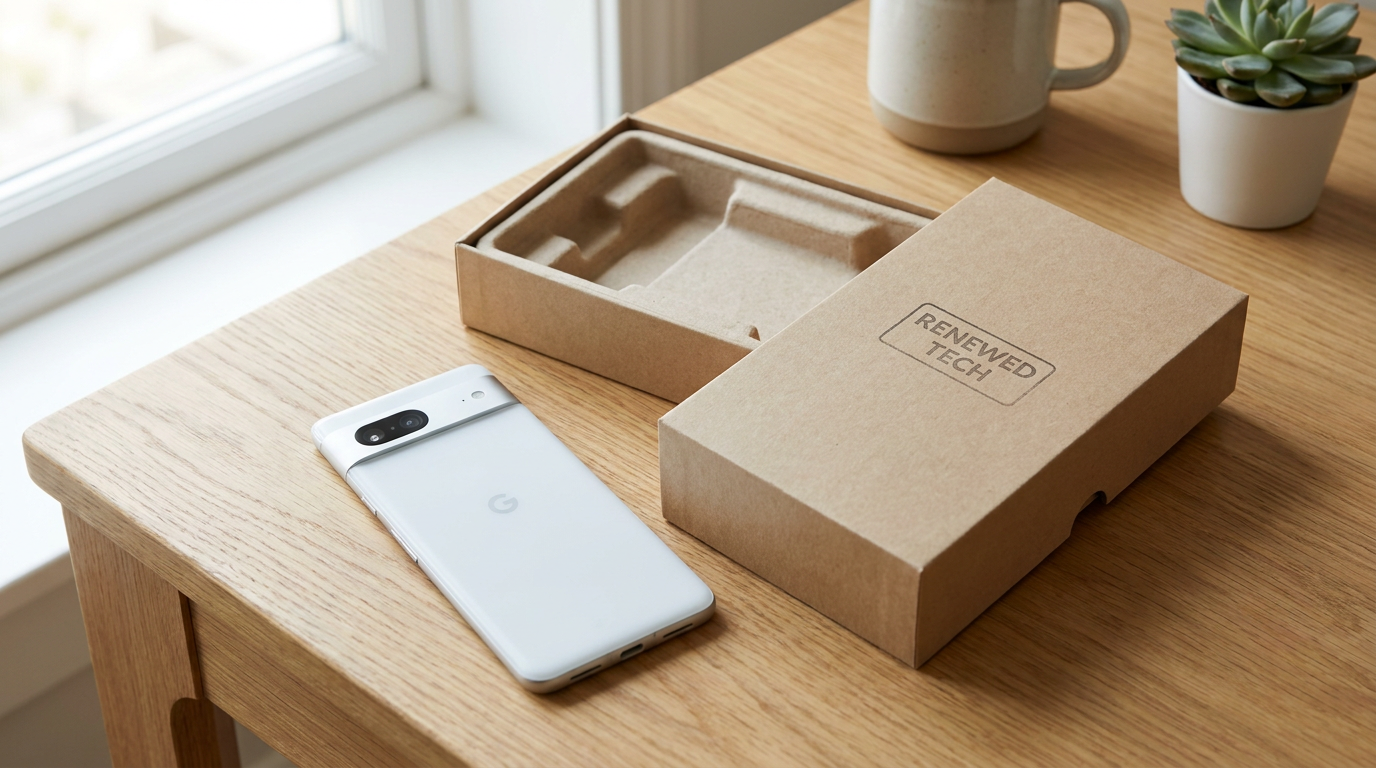
The smartphone market in 2026 is defined by a quiet but profound realization among consumers: the relentless pace of hardware innovation has finally plateaued. While major manufacturers continue to push flagship device prices well past the $1,000 mark, the actual day-to-day experience of using these premium phones has barely shifted since 2024. For shoppers looking to upgrade, this technological ceiling has transformed the refurbished phone market from a budget compromise into the smartest financial decision in consumer tech. Industry analysts now point to a "Golden Rule" of mobile buying: a refurbished flagship device will almost always outperform and outlast a brand-new mid-range phone sold at the exact same price point. Instead of settling for a new device compromised by a plastic frame, a mediocre camera sensor, and a sluggish processor, buyers are increasingly opting for two-year-old premium devices constructed from glass and titanium that still punch above their weight class.[1][6]
The financial math heavily favors the secondary market, fundamentally changing how people budget for personal technology. Depending on the cosmetic condition and the specific model, refurbished smartphones are currently selling for 30% to 70% less than their original retail prices. This massive price arbitrage allows buyers to access top-tier features—such as 5x optical zoom lenses, advanced on-device AI processors, and ultra-bright OLED displays—without absorbing the steep depreciation hit that occurs the moment a brand-new phone is unboxed. A processor from 2024, like the Snapdragon 8 Gen 3 or Apple's A17 Pro, remains vastly overpowered for standard daily tasks like web browsing, social media, and mobile gaming. By sidestepping the premium attached to the "newness" factor, consumers can allocate their tech budgets much more efficiently, securing flagship-level performance for the price of a standard budget device.[1][2][6]
However, successfully navigating the refurbished market requires a clear understanding of how these devices are classified and sold. The industry relies on a standardized grading system to set consumer expectations and price points, starting at the top with "Grade A" or "Like New" devices. These premium refurbished phones exhibit zero to minimal signs of previous use, often passing for brand-new devices right out of the box. They have been meticulously cleaned, tested, and polished, making them the ideal choice for buyers who want the unboxing experience of a new phone without the retail markup. While Grade A devices command the highest prices in the secondary market, they still typically offer savings of 10% to 25% compared to buying the same model brand new, making them a highly attractive entry point for first-time refurbished buyers.[2]

For the more budget-conscious shopper, "Grade B" devices represent the ultimate sweet spot of value and performance. These phones may feature light, superficial scratches on the aluminum casing or minor micro-scratches on the screen—imperfections that are almost entirely hidden the moment the device is placed inside a standard protective case. Because of these minor cosmetic flaws, Grade B phones function perfectly but drop the price by up to 40%. Further down the spectrum are "Grade C" devices, which show visible, deeper wear and tear, such as noticeable dents on the corners or heavier screen scratching. While they lack the pristine aesthetic of higher grades, Grade C phones offer the steepest discounts—often up to 60% off—making them an excellent choice for buyers who prioritize pure functionality over aesthetics, or for parents buying a first smartphone for a child.[2]
Beyond cosmetic grades, the single most critical variable to evaluate in any refurbished phone is the health of its internal battery. Lithium-ion batteries chemically degrade over time and through repeated charging cycles, meaning a two-year-old phone will naturally hold less of a charge than it did on launch day. This degradation is not just an inconvenience; a phone with a severely depleted battery will actively throttle its processor to prevent unexpected shutdowns, leading to a sluggish and frustrating user experience regardless of how powerful the internal chip might be. Because the battery is the component most susceptible to wear, it is the primary factor that separates a great refurbished purchase from a poor one, requiring buyers to be vigilant and proactive before completing a transaction.[3][4]
Beyond cosmetic grades, the single most critical variable to evaluate in any refurbished phone is the health of its internal battery.
Consumer protection experts and tech reviewers strongly advise buyers to explicitly verify that a refurbished device retains at least 80% to 85% of its original battery capacity before purchasing. Fortunately, the professional refurbishment industry has matured significantly to address this exact concern; many top-tier sellers and official manufacturer refurb programs now replace the battery entirely as a standard part of the renewal process. This ensures the device can easily last another three to five years without requiring immediate servicing. When shopping online, buyers should look for retailers that explicitly state their minimum battery health guarantees in the product description, and they should not hesitate to contact customer service to confirm the exact battery status of the unit they are purchasing.[3][4]

The second major trap to avoid in the secondary market is the software support cliff. A smartphone is only as secure and functional as its latest operating system update, and buying a device that is too old means it may no longer receive critical security patches from Apple or Google. In 2026, buyers are advised to establish a strict "software floor" when browsing older models. Devices like the iPhone 11 or the Google Pixel 6 are nearing or have already reached their end-of-life for security updates, creating severe vulnerabilities for banking apps and personal data, and should therefore be avoided entirely. Understanding a manufacturer's historical support window is just as important as checking the physical hardware.[1]
Conversely, newer refurbished models benefit immensely from recent industry shifts toward extreme device longevity. Devices like the Samsung Galaxy S24 series and the Google Pixel 8 and 9 series were launched with unprecedented, guaranteed seven-year software update commitments. Buying one of these devices refurbished in 2026 means it will continue to receive the latest features, interface updates, and critical security patches well into the 2030s. This extended software lifecycle fundamentally changes the value proposition of a refurbished phone, transforming it from a temporary stopgap measure into a highly secure, long-term investment that rivals the lifespan of a traditional laptop or desktop computer.[1][6]

To mitigate the inherent uncertainties of buying pre-owned electronics, a robust warranty serves as the ultimate consumer safety net. A reputable, professional refurbisher will never sell a device "as-is" or force the buyer to assume all the risk. Industry standards in 2026 dictate that buyers should demand at least a 12-month warranty covering hardware defects, alongside a 30-day no-questions-asked return window to allow for thorough personal testing. Some premium platforms in Europe and Australia are even pushing this standard further, offering 18-month or 24-month warranties that directly rival the guarantees offered on brand-new devices. This level of protection ensures that if a hidden defect emerges weeks after purchase, the buyer is fully covered for a repair or replacement.[1][3][5]
Savvy buyers should also run a comprehensive diagnostic checklist the moment their refurbished device arrives in the mail. This includes testing the touch responsiveness across every corner of the screen, checking the camera lenses for trapped dust beneath the glass, and ensuring the device is fully unlocked and not tied to a specific cellular carrier's network. Storage capacity is another crucial check; experts recommend verifying that the phone has a minimum of 128GB of internal storage to comfortably accommodate the increasingly large file sizes of modern applications, 4K video recordings, and high-resolution photos. Taking ten minutes to verify these functions ensures the device meets the promised grade and prevents headaches down the line.[1][3][5][6]

Beyond personal financial savings, the accelerating shift toward refurbished hardware is driving a massive and necessary reduction in global electronic waste. Extending the life of a flagship smartphone by just two or three years significantly cuts down on the carbon emissions associated with mining rare earth metals, manufacturing new silicon chips, and shipping devices across the globe. Ultimately, the outdated stigma of buying "used" technology has entirely evaporated. Armed with a clear understanding of cosmetic grades, battery health metrics, and software lifespans, consumers in 2026 are realizing that the smartest, most sustainable way to buy a new phone is to not buy a new one at all.[2][4]
How we got here
2020
The refurbished market begins rapid growth as flagship phone prices cross the $1,000 threshold.
2022
Major manufacturers like Apple and Samsung expand their own in-house certified refurbished programs.
2024
Smartphone hardware plateaus, making two-year-old devices nearly indistinguishable from new models in daily performance.
2026
Standardized grading and mandatory 12-month warranties make refurbished phones a mainstream consumer default.
Viewpoints in depth
Value-Conscious Consumers
Focusing on the financial arbitrage of buying two-year-old flagship devices.
This camp argues that the smartphone industry has hit a point of diminishing returns. Because a processor from 2024 is still vastly overpowered for daily tasks in 2026, paying a premium for a brand-new mid-range phone is a poor investment. They advocate for buying Grade B or Grade C refurbished flagships to maximize the performance-to-dollar ratio, accepting minor cosmetic flaws in exchange for premium camera sensors and build quality.
Consumer Protection Advocates
Emphasizing the risks of the secondary market and the necessity of strict warranties.
While acknowledging the savings, this perspective highlights the dangers of buying pre-owned lithium-ion batteries and unverified third-party replacement parts. They argue that a refurbished phone is only as good as its warranty and battery health guarantee. This camp pushes for industry-wide standardization, demanding that all sellers provide at least a 12-month warranty, transparent battery health percentages, and a guaranteed 30-day return window to protect buyers from hidden hardware defects.
Sustainability Proponents
Viewing the refurbished market as a critical tool for reducing global electronic waste.
For environmental advocates, the financial savings are secondary to the ecological impact. They point out that manufacturing a single new smartphone generates significant carbon emissions and requires mining rare earth metals. By extending the lifecycle of existing flagship devices through the refurbished market, consumers actively participate in a circular economy, keeping toxic electronic waste out of landfills and reducing the overall demand for new silicon production.
What we don't know
- Whether manufacturers will begin artificially limiting software features on older hardware to force upgrades.
- How the influx of cheap, third-party replacement batteries will affect the long-term reliability of lower-grade refurbished units.
Key terms
- Refurbished
- A previously owned device that has been tested, repaired if necessary, and certified for resale by a professional.
- Grade A / Like New
- The highest cosmetic tier for refurbished phones, showing zero to minimal signs of previous use.
- Battery Health
- A percentage indicating the battery's current maximum capacity compared to when it was brand new.
- End-of-Life (Software)
- The point at which a manufacturer stops providing critical security updates for a specific device model.
- OEM
- Original Equipment Manufacturer; the original maker of the phone and its parts, relevant when checking if replacement screens or batteries are genuine.
Frequently asked
Is a refurbished phone just a used phone?
No. While both are pre-owned, a refurbished phone is professionally tested, repaired, and backed by a warranty, whereas a used phone is sold as-is by an individual with no guarantees.
How long will a refurbished phone last?
Typically 3 to 5 years, depending on the model's software support window and how well the battery is maintained by the user.
What battery health percentage is acceptable?
Experts recommend looking for devices with at least 80% to 85% battery health, though many premium refurbishers now install brand-new batteries before resale.
Are refurbished phones waterproof?
Water resistance ratings (like IP68) are often compromised during the refurbishment process if the phone was opened for repairs, so it is best to keep them away from water.
Sources
Source coverage
6 outlets
3 viewpoints surfaced






[1]KnowYourMobileValue-Conscious Consumers
2026 Smartphone Buying Guide: Screw New, Go Refurbished!
Read on KnowYourMobile →[2]SwitchKartSustainability Proponents
Refurbished vs New Phones: Complete 2026 Comparison Guide
Read on SwitchKart →[3]PhonebotConsumer Protection Advocates
Are Refurbished Phones Good? A Practical Guide
Read on Phonebot →[4]CashifyValue-Conscious Consumers
Best Refurbished Phones in 2026: Top 7 Picks That Won't Disappoint
Read on Cashify →[5]Fone4uConsumer Protection Advocates
Best Refurbished Phones 2026 Under €400 | iPhone and Galaxy Deals
Read on Fone4u →[6]Star TechValue-Conscious Consumers
10 Things to Look For When Buying a Smartphone in 2026
Read on Star Tech →

Every angle. Every day.
Get shopping stories with full source coverage and perspective breakdowns delivered to your inbox.