
The Science of 'Exercise Snacks': How One-Minute Workouts Are Redefining Fitness
New research reveals that accumulating just three to four minutes of vigorous incidental movement per day can drastically reduce mortality risk and improve metabolic health.
By Factlen Editorial Team

- Public Health Researchers
- Focusing on population-level data, this camp views VILPA as a breakthrough for the chronically inactive.
- Metabolic & Fitness Experts
- This group studies the acute physiological changes triggered by short bursts of intense effort.
- Traditional Exercise Physiologists
- While supportive of movement, this camp cautions that snacks cannot fully replace structured training.
What's not represented
- · Corporate HR & Workplace Wellness Directors
- · Physical Therapists treating mobility-impaired patients
Why this matters
For decades, the belief that exercise only counts if it lasts 30 minutes has kept millions of people sedentary. The scientific validation of 'exercise snacks' proves that just three to four minutes of vigorous daily movement can drastically reduce mortality risk, offering a realistic path to fitness for the time-poor.
Key points
- Exercise snacks are 1-to-2-minute bursts of vigorous activity performed throughout the day.
- Just 3 to 4 minutes of daily VILPA can reduce cardiovascular mortality risk by nearly 50%.
- Short bursts of intense effort trigger rapid glucose uptake, improving insulin sensitivity and metabolic health.
- Daily exercise snacks have been shown to significantly improve VO2 max in physically inactive adults.
- While highly effective for baseline health, they do not fully replace the need for sustained endurance or heavy lifting.
The modern fitness dilemma is familiar to millions: the jarring 6 AM alarm, the hour-long gym session, followed by nine uninterrupted hours of sitting at a desk. For decades, public health guidelines insisted that exercise only "counted" if it occurred in sustained, structured blocks of 10 to 30 minutes. If you couldn't find a dedicated window to change into athletic gear and sweat, the prevailing wisdom suggested you were out of luck. This all-or-nothing paradigm has left vast swaths of the population chronically inactive, intimidated by the time commitment and logistical hurdles of formal exercise.[6]
But a wave of new physiological research is dismantling that rigid framework. Enter the "exercise snack"—or, in clinical terms, Vigorous Intermittent Lifestyle Physical Activity (VILPA). These are brief bursts of intense movement lasting just one to two minutes, scattered organically throughout the day. Think sprinting up a flight of stairs, carrying heavy groceries with gusto, or doing 20 air squats between Zoom meetings. The science suggests that these micro-doses of exertion are not just better than nothing; they are a potent biological trigger capable of fundamentally altering our metabolic health and longevity.[4][5][6]
The most compelling evidence for this paradigm shift comes from a landmark study published in Nature Medicine, which tracked over 25,000 non-exercisers via wearable devices for an average of nearly seven years. The researchers aimed to isolate the effects of incidental, everyday movement from structured gym routines. They found that individuals who accumulated just three to four one-minute bouts of VILPA per day experienced a staggering 38% to 40% reduction in all-cause and cancer mortality risk compared to those who remained entirely sedentary.[1]

Even more strikingly, those few minutes of daily exertion were associated with a 48% to 49% reduction in cardiovascular disease mortality. Lead author Emmanuel Stamatakis noted that these incidental micro-bouts yield survival benefits comparable to structured high-intensity interval training (HIIT). The findings upend the notion that cardiovascular protection requires long, grueling sessions on a treadmill. Instead, simply tweaking daily chores to raise the heart rate for 60 seconds at a time can deliver life-saving adaptations. The beauty of VILPA is that it requires no special skills, no gym membership, and zero dedicated preparation time—it simply requires a willingness to move with sudden intensity.[1]
How can 60 seconds of movement trigger such profound systemic changes? The secret lies in the acute physiological stress of vigorous intensity. When you suddenly sprint up the stairs, your body cannot rely on its slow, oxygen-dependent aerobic engine to provide immediate power. Instead, it instantly taps into anaerobic energy systems. This sudden, high-intensity demand triggers a rapid spike in adrenaline, which acts as a chemical alarm bell. In response, muscle cells are forced to rapidly uptake glucose from the bloodstream to fuel the effort, bypassing the sluggish insulin response that often plagues sedentary individuals.[4][6]
How can 60 seconds of movement trigger such profound systemic changes?
A 2025 systematic review published in Sports Medicine and Health Research confirmed this mechanism, showing that exercise snacks significantly lower postprandial (post-meal) blood glucose, insulin, and triglyceride levels. By repeatedly clearing glucose from the blood in short, intense bursts, exercise snacking prevents the chronic blood sugar spikes that drive insulin resistance and metabolic syndrome. Furthermore, the sudden surge in blood flow creates "shear stress" on the inner lining of blood vessels. This friction stimulates the release of nitric oxide, a crucial molecule that dilates blood vessels, improves long-term endothelial function, and lowers resting blood pressure.[3][4][5]

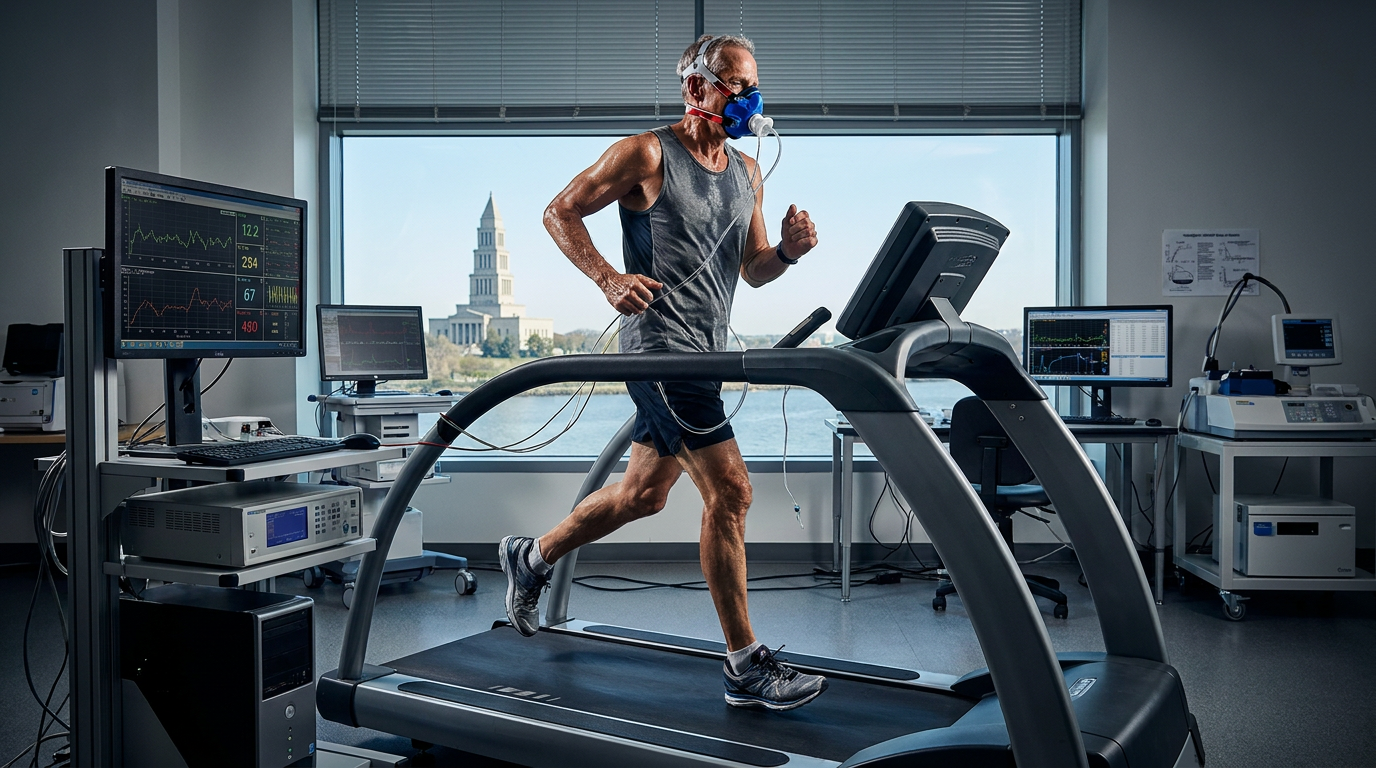
Beyond metabolic health, these micro-workouts also drive measurable improvements in cardiorespiratory fitness. A recent meta-analysis in the British Journal of Sports Medicine aggregated data from multiple randomized controlled trials and found that daily exercise snacks led to large improvements in VO2 max among physically inactive adults over a 4-to-12-week period. VO2 max—the maximum amount of oxygen your body can utilize during intense exercise—is widely considered one of the strongest predictors of human longevity. Improving it without ever stepping foot on a running track is a monumental public health victory.[2]
Muscle hypertrophy—the holy grail of traditional weightlifting—is also surprisingly accessible through the snacking model. "Resistance snacks," such as a few sets of push-ups, lunges, or bodyweight squats performed once or twice daily, have been shown to maintain and even increase muscle protein synthesis. This is particularly vital for older adults, for whom a 10-minute intermittent resistance session can safely increase leg muscle strength and size without the joint strain, intimidation factor, or recovery demands of a commercial gym environment.[3][5]

However, traditional exercise physiologists caution against viewing snacks as a complete replacement for all forms of structured training. While VILPA is highly effective at improving insulin sensitivity, clearing blood glucose, and boosting baseline VO2 max, it does not trigger the exact same physiological adaptations as longer workouts. For example, the sustained mitochondrial growth, capillary density improvements, and endurance capacity built during a 45-minute session of steady-state "Zone 2" cardio cannot be fully replicated in one-minute bursts. Similarly, while bodyweight squats will build baseline strength and preserve mobility, maximizing bone density and absolute muscle mass still requires the progressive mechanical overload provided by heavy weightlifting.[4][6]
Ultimately, the rise of exercise snacking represents a democratization of fitness. It removes the most common barriers to entry: lack of time, lack of equipment, and lack of motivation for a grueling hour-long session. It proves that the human body does not care whether you are wearing expensive athletic gear or standard office attire—it only registers the mechanical and metabolic demand you place upon it. By embracing the power of the one-minute sprint, we can weave life-saving movement back into the fabric of modern life.[6]
How we got here
2020
The World Health Organization updates its physical activity guidelines, removing the stipulation that exercise must occur in 10-minute blocks to 'count'.
Dec 2022
A landmark Nature Medicine study coins the term VILPA, showing that 3-4 minutes of daily vigorous activity drastically reduces mortality.
2024
A systematic review in the British Journal of Sports Medicine confirms that exercise snacks significantly improve VO2 max in inactive adults.
2025
New research highlights the metabolic benefits of 'resistance snacks' for improving insulin sensitivity and muscle protein synthesis.
Viewpoints in depth
Public Health Researchers
Focusing on population-level data, this camp views VILPA as a breakthrough for the chronically inactive.
Public health experts emphasize that traditional exercise guidelines—which demand 150 minutes of sustained moderate activity per week—have largely failed to motivate the general public. By validating the health benefits of incidental, one-minute bursts of movement, researchers hope to remove the psychological and logistical barriers to fitness. They point to the UK Biobank data as proof that you do not need to become a 'gym person' to drastically reduce your risk of cancer and cardiovascular disease.
Metabolic & Fitness Experts
This group studies the acute physiological changes triggered by short bursts of intense effort.
Metabolic researchers focus on the immediate chemical cascade caused by an exercise snack. They highlight that brief, vigorous efforts force the body to rely on anaerobic energy, triggering an adrenaline spike that rapidly clears glucose from the bloodstream. For individuals at risk of type 2 diabetes or metabolic syndrome, these experts argue that scattering movement throughout the day is actually superior to a single 30-minute workout, as it prevents the chronic post-meal blood sugar spikes associated with prolonged sitting.
Traditional Exercise Physiologists
While supportive of movement, this camp cautions that snacks cannot fully replace structured training.
Exercise physiologists warn against the temptation to abandon the gym entirely. While they acknowledge that exercise snacks are fantastic for baseline metabolic health and longevity, they note that certain adaptations require sustained effort. Building dense, resilient bones requires the progressive mechanical overload of heavy weightlifting, and maximizing mitochondrial density requires prolonged, steady-state cardiovascular training. They view VILPA as a powerful supplement to, rather than a total replacement for, a comprehensive fitness regimen.
What we don't know
- It remains unclear exactly how exercise snacks compare head-to-head against traditional 45-minute workouts for long-term fat loss.
- Researchers are still determining the optimal spacing of exercise snacks throughout the day to maximize metabolic benefits.
- The long-term effects of relying solely on exercise snacks without any structured cardiovascular training are not yet fully understood.
Key terms
- VILPA
- Vigorous Intermittent Lifestyle Physical Activity; brief bursts of intense movement embedded into daily life rather than structured exercise.
- VO2 max
- The maximum amount of oxygen your body can absorb and use during intense exercise, serving as a key indicator of cardiovascular fitness.
- Postprandial blood glucose
- The level of sugar in your bloodstream immediately following a meal, which exercise snacks help to lower.
- Endothelial function
- The performance of the inner lining of blood vessels, which dilate and constrict to regulate blood pressure and flow.
- Muscle protein synthesis
- The biological process where cells build new proteins to repair and grow muscle tissue after physical exertion.
Frequently asked
What exactly counts as an exercise snack?
An exercise snack is a 1-to-2-minute burst of vigorous physical activity. Examples include sprinting up a flight of stairs, doing 20 rapid air squats, or power-walking while carrying heavy groceries.
Do I need to get sweaty for it to work?
No. Because the bouts are so short (under two minutes), they typically do not raise core body temperature enough to cause significant sweating, making them ideal for the office.
Can exercise snacks build muscle?
Yes, 'resistance snacks' like push-ups or lunges can stimulate muscle protein synthesis and maintain strength, particularly in older adults or those who are currently inactive.
How many exercise snacks should I do a day?
Research suggests that accumulating just three to four one-minute bouts of vigorous activity per day is enough to unlock substantial reductions in cardiovascular and all-cause mortality.
Sources
Source coverage
6 outlets
3 viewpoints surfaced






[1]Nature MedicinePublic Health Researchers
Association of wearable device-measured vigorous intermittent lifestyle physical activity with mortality
Read on Nature Medicine →[2]British Journal of Sports MedicinePublic Health Researchers
Effects of exercise snacks on cardiometabolic health and fitness: A systematic review
Read on British Journal of Sports Medicine →[3]Sports Medicine and Health ResearchMetabolic & Fitness Experts
Exercise snacks and physical fitness in sedentary populations
Read on Sports Medicine and Health Research →[4]ForbesTraditional Exercise Physiologists
Exercise Snacks Have Different Effects On The Body Than Other Regular Exercise
Read on Forbes →[5]Men's HealthMetabolic & Fitness Experts
Less Time, More Gains? The Science Behind 'Exercise Snacks'
Read on Men's Health →[6]Factlen Editorial TeamTraditional Exercise Physiologists
Synthesis by Factlen editorial team
Read on Factlen Editorial Team →
Every angle. Every day.
Get health stories with full source coverage and perspective breakdowns delivered to your inbox.