
How to Choose an E-Bike in 2026: The Ultimate Buyer's Guide
From mid-drive motors to torque sensors, understanding the latest technology is key to finding the perfect electric bicycle for your commute or weekend ride.
By Factlen Editorial Team
- Commuter & Utility Cyclists
- Prioritizes cargo capacity, weather readiness, and replacing car trips for daily errands.
- Recreational & Trail Riders
- Values natural ride feel, mid-drive motor balance, and high-performance components for fitness and off-road use.
- Budget-Conscious Consumers
- Focuses on affordability, seeking reliable hub-motor models and direct-to-consumer value.
What's not represented
- · Traditional analog cyclists who feel e-bikes crowd multi-use trails
- · Urban planners designing infrastructure for higher-speed micro-mobility
Why this matters
Purchasing an e-bike is a significant investment that can transform your daily commute, improve your cardiovascular health, and drastically reduce your reliance on a car. Understanding the nuances of battery capacity, motor types, and sensor technology ensures you buy a machine that fits your lifestyle rather than an expensive garage ornament.
Key points
- Modern e-bikes feature seamlessly integrated batteries and specialized designs for commuting, cargo, or off-road riding.
- Mid-drive motors offer superior balance and hill-climbing efficiency, while hub motors provide an affordable entry point for city riding.
- Torque sensors measure pedaling force to deliver a natural, intuitive boost, whereas basic cadence sensors act as an on/off switch.
- Real-world battery range is heavily influenced by rider weight, terrain, assist levels, and cold winter temperatures.
- Understanding local e-bike classifications (Classes 1-3) is essential for complying with trail and commuting regulations.
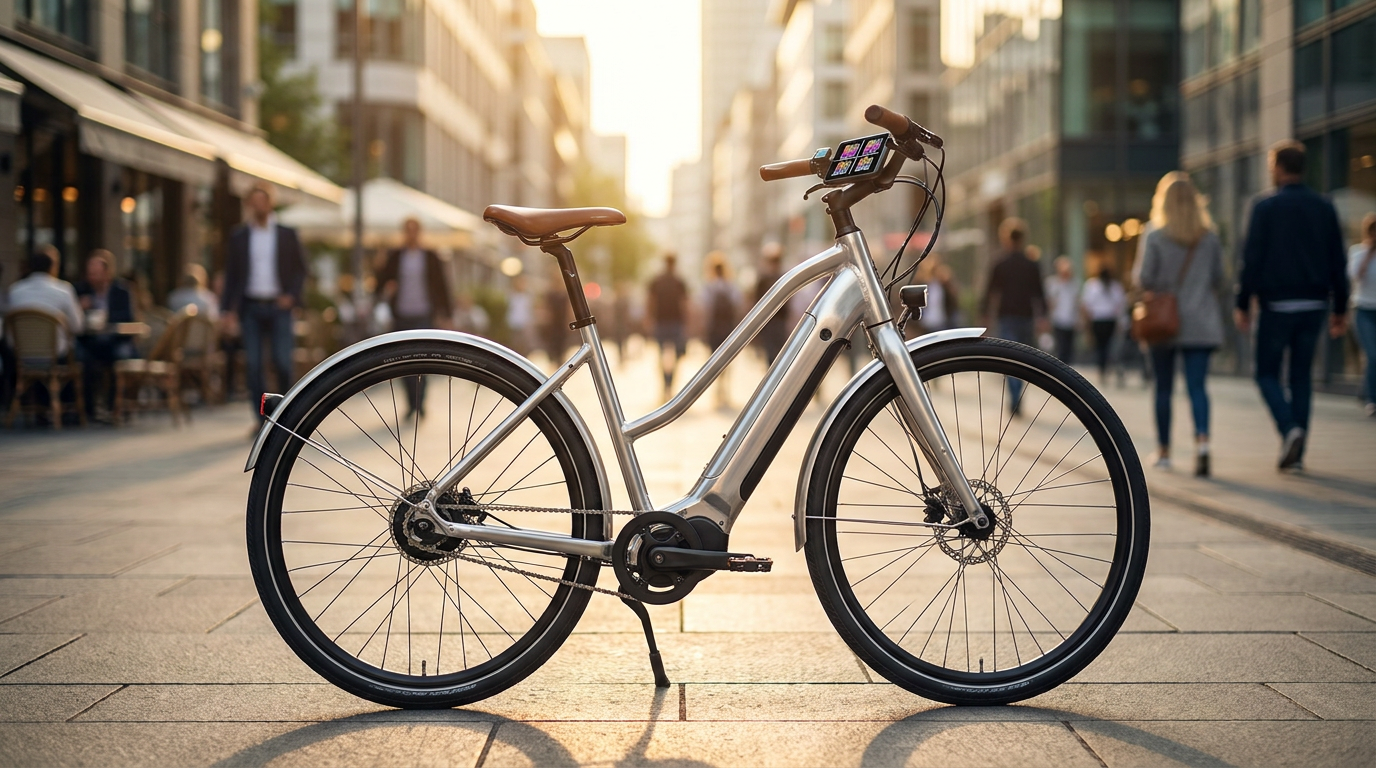
The electric bicycle market in 2026 has reached a golden era of refinement. Gone are the days of bulky, bolted-on batteries and clunky wiring that made early e-bikes look like science experiments. Today’s models feature batteries that are nearly invisible, tucked seamlessly into sleek frames, and motors that manage power consumption with sophisticated electronics. With rising fuel costs and urban congestion, e-bikes have transitioned from novelty recreational items to essential tools for daily transportation, allowing riders to commute, haul heavy groceries, and explore further without arriving at their destination drenched in sweat.[5][2][7]
For consumers looking to purchase an e-bike this year, the sheer volume of options can feel overwhelming. The first and most crucial step is matching the bike's geometry and style to your specific riding mission. If your goal is to replace a car for daily errands, heavy-duty cargo bikes or utility models with extended racks are ideal. For those navigating tight apartment hallways or multi-modal commutes involving trains, compact folding e-bikes have become highly capable, offering robust performance without the massive footprint.[5][2][3][4]
Frame design has also evolved significantly, shedding outdated gender norms in favor of universal accessibility. Step-through frames, once exclusively marketed as ladies' bikes, are now widely recognized as the most practical choice for urban riders of all demographics. A step-through design allows riders to easily mount and dismount without swinging a leg over a high top tube—a massive advantage when the bike is loaded with heavy panniers, a child seat, or when the rider has limited hip mobility. Conversely, traditional step-over frames remain the standard for high-performance electric mountain bikes, where the rigid triangle provides necessary stability for aggressive trail riding.[5]
Once the frame style is settled, the most impactful decision is the type of motor. E-bike motors generally fall into two categories: hub-drive and mid-drive. Hub motors are housed in the center of the rear or front wheel and are the most common choice for budget-friendly and entry-level e-bikes. They are highly affordable, can easily be paired with a throttle, and provide plenty of raw power for flat city commutes. However, because the motor's weight is concentrated at the wheel, it can negatively affect the bike's overall balance and make fixing a flat tire more cumbersome.[8]

Mid-drive motors, on the other hand, are positioned at the bike's bottom bracket, directly between the pedals. This placement keeps the bike's center of gravity low and perfectly balanced, which is essential for off-road handling and mountain biking. Because a mid-drive motor transfers power directly through the bike's chain and gears, it operates much more efficiently on steep hills, leveraging the bike's mechanical drivetrain just as a rider's legs would. While mid-drive systems offer superior performance and a smoother ride, they are significantly more expensive and place additional wear and tear on the chain and sprockets.[1][8]
Beyond the motor's location, the way it delivers power dictates the entire feel of the ride. This is controlled by the bike's sensor system, which tells the motor when and how much to assist the rider. The most basic systems use a cadence sensor, which simply detects whether or not the pedals are turning. Cadence sensors act much like an on/off switch; once you start pedaling, the motor kicks in at a predetermined speed based on your selected assist level. While affordable, this can sometimes feel jerky or unnatural, as the motor provides a flat rate of power regardless of how hard you are actually working.[6][8]
Beyond the motor's location, the way it delivers power dictates the entire feel of the ride.
For a truly seamless experience, premium e-bikes utilize torque sensors. A torque sensor measures the exact amount of physical force the rider is applying to the pedals and delivers a proportionate amount of electrical assistance. If you pedal lightly on a flat road, the motor gives a gentle nudge; if you stand up and mash the pedals to conquer a steep hill, the motor instantly surges with maximum power. This creates an intuitive, superhuman sensation where the bike's power perfectly mirrors your own effort, while also conserving battery life by only deploying heavy assistance when truly needed.[6][8]

The battery is the e-bike's fuel tank, and its capacity is measured in watt-hours (Wh). A higher Wh rating directly translates to a longer potential range. In 2026, a standard e-bike battery typically ranges from 500Wh to 750Wh, which manufacturers often claim can provide 40 to 70 miles of riding on a single charge. However, real-world range is highly variable. Factors such as rider weight, cargo load, steep terrain, and reliance on high-assist modes will drain a battery much faster than riding on flat ground in an eco-mode.[6][8]
Weather also plays a critical role in battery performance. Riders planning to commute year-round should be aware that cold winter temperatures can temporarily reduce an e-bike's range by 20 to 30 percent. Experts recommend sizing up the battery capacity to include a winter buffer if you rely on the bike for a strict daily mileage. Furthermore, battery safety has become a paramount concern for consumers and regulators alike. When shopping in 2026, it is crucial to verify that the e-bike's battery and electrical system carry independent safety certifications, such as UL testing, to mitigate the risk of thermal events.[3][7]
Understanding local regulations is another vital step before making a purchase, as e-bike laws vary dramatically by region. In the United States, e-bikes are generally divided into three classes. Class 1 bikes provide pedal assistance up to 20 mph, while Class 2 bikes also cap at 20 mph but include a throttle that can propel the bike without any pedaling. Class 3 bikes are designed for faster commuting, offering pedal assistance up to 28 mph. Knowing these classes is essential, as some local jurisdictions and trail networks restrict Class 2 and Class 3 bikes from shared-use paths.[2][5][8]

Outside of North America, the rules are often stricter. In Australia, the United Kingdom, and the European Union, e-bikes are legally treated as standard bicycles only if their motors are capped at 250 watts of continuous power and the electrical assistance cuts off entirely at 25 km/h (15.5 mph). Bikes exceeding these limits, or those equipped with independent throttles, are often classified as mopeds or S-Pedelecs, requiring the rider to obtain a license, registration, and insurance.[5][7]
Because e-bikes are significantly heavier than traditional bicycles—often weighing between 50 and 80 pounds—and travel at higher average speeds, robust stopping power is non-negotiable. Hydraulic disc brakes have become the gold standard for e-bikes in 2026. Unlike mechanical brakes that rely on a steel cable, hydraulic systems use fluid to transfer force from the lever to the brake pad, offering superior modulation and reliable stopping power even in wet or muddy conditions.[3][7]

Maintenance considerations should also factor into the buying decision. While the electrical components of modern e-bikes are largely sealed and weather-resistant, the mechanical drivetrain still requires upkeep. Some premium commuter models have replaced the traditional metal chain with a carbon belt drive. Belt drives are exceptionally quiet, require zero grease, and can last thousands of miles longer than a chain, making them an attractive option for riders who want a low-maintenance daily driver.[1][7]
Finally, while direct-to-consumer online brands offer highly competitive pricing, the value of a local test ride cannot be overstated. Feeling how a specific motor responds to your pedaling, testing the comfort of the saddle, and ensuring the frame geometry fits your body are nuances that cannot be fully grasped from a specification sheet. Purchasing from a local dealer also guarantees access to professional assembly, warranty support, and firmware updates, ensuring your investment remains on the road for years to come.[5][6][7]
How we got here
Early 2010s
E-bikes are largely niche products, relying on heavy lead-acid batteries and bulky aftermarket conversion kits.
2015
Lithium-ion batteries become the industry standard, drastically reducing bike weight and increasing functional range.
2020
The global pandemic triggers a massive bicycle boom, accelerating mainstream adoption of e-bikes for recreation and commuting.
2023
Following safety concerns, major jurisdictions begin requiring strict UL safety certifications for e-bike batteries.
2026
The market matures with highly specialized models, invisible battery integration, and smart power management becoming standard.
Viewpoints in depth
The Commuter's View
E-bikes are primarily tools for urban mobility and replacing car trips.
For daily commuters and families, the e-bike is evaluated as a vehicle replacement rather than a piece of sporting equipment. This camp prioritizes step-through frames for easy mounting in work clothes, integrated lighting, and robust cargo racks capable of hauling groceries or children. They favor high-capacity batteries that can handle multi-day commutes without constant recharging, and view features like hydraulic brakes and carbon belt drives as essential investments for reliable, all-weather transportation.
The Enthusiast's View
E-bikes should enhance the natural cycling experience for fitness and trail riding.
Recreational riders and mountain bikers focus heavily on the 'feel' of the ride. This perspective strongly advocates for mid-drive motors and torque sensors, which multiply the rider's effort without feeling like a motorized scooter. For this group, maintaining the bike's center of gravity is critical for navigating technical off-road trails. They are often willing to pay a premium for lightweight frame materials and sophisticated suspension systems, viewing the e-bike as a way to ride further and tackle steeper gradients while still getting a rigorous workout.
The Value-Seeker's View
E-bikes must be accessible and affordable to achieve mass adoption.
Budget-conscious consumers and entry-level buyers argue that the true revolution of e-bikes lies in their accessibility. This camp gravitates toward hub-drive motors and cadence sensors, which keep manufacturing costs low while still providing the core benefit of motorized assistance. They often champion direct-to-consumer folding bikes that can be easily stored in small apartments. For these riders, spending thousands of dollars on premium mid-drive systems is unnecessary when a reliable, sub-$1,500 hub-motor bike can easily handle flat city streets and weekend joyrides.
What we don't know
- How upcoming changes to import tariffs might affect the pricing of budget-friendly, direct-to-consumer e-bikes manufactured overseas.
- Whether more US states will adopt the strict 250-watt motor limits currently enforced in Europe and Australia for shared multi-use paths.
Key terms
- Watt-hour (Wh)
- A measurement of battery capacity that indicates how much energy the battery can store; a higher number means a longer riding range.
- Torque Sensor
- A device that measures how hard the rider is pedaling and tells the motor to provide a proportionate amount of assistance.
- Cadence Sensor
- A basic sensor that detects whether the pedals are turning, acting as an on/off switch for the motor's assistance.
- Mid-Drive Motor
- An electric motor positioned at the bike's pedals, offering better balance and utilizing the bike's gears for efficient hill climbing.
- Hub Motor
- An electric motor housed in the center of the front or rear wheel, common on budget-friendly and entry-level e-bikes.
- Pedelec
- A term used primarily in Europe and Australia for an e-bike that only provides motor assistance when the rider is actively pedaling.
Frequently asked
How far can an e-bike go on a single charge?
Most modern e-bikes offer a range of 40 to 70 miles per charge. However, this varies heavily based on battery size (watt-hours), rider weight, terrain, and the level of motor assistance used.
Do I still get exercise on an electric bike?
Yes. Because most e-bikes use pedal-assist technology, the motor only amplifies your effort. Riders can lower the assist level to get a rigorous workout or increase it to avoid sweating on a commute.
Can I ride an e-bike in the rain?
Yes, modern e-bikes are designed with sealed, weather-resistant electrical components. However, you should avoid fully submerging the motor or battery in deep water.
What is the difference between a torque sensor and a cadence sensor?
A cadence sensor simply detects if you are pedaling and delivers a flat rate of power. A torque sensor measures how hard you are pushing and delivers a proportionate boost, resulting in a much smoother and more natural ride.
Sources
Source coverage
8 outlets
3 viewpoints surfaced







[1]ForbesRecreational & Trail Riders
The Best Electric Bikes For Every Type Of Rider
Read on Forbes →[2]BicyclingCommuter & Utility Cyclists
Buying an E-Bike This Summer? 15 Editor-Tested Picks Worth the Money
Read on Bicycling →[3]Electric Bike ReportCommuter & Utility Cyclists
The Best Electric Bikes of 2026
Read on Electric Bike Report →[4]OutdoorGearLabRecreational & Trail Riders
Best Electric Bikes of 2026
Read on OutdoorGearLab →[5]BikelineBudget-Conscious Consumers
E-bike Buying Guide for Beginners
Read on Bikeline →[6]Voltaire CyclesBudget-Conscious Consumers
Torque vs. Cadence Sensors: What's the Difference?
Read on Voltaire Cycles →[7]FiidoBudget-Conscious Consumers
E-bike Buying Guide 2026
Read on Fiido →[8]Cranky's Bike ShopBudget-Conscious Consumers
How to Choose an E-Bike
Read on Cranky's Bike Shop →


Every angle. Every day.
Get shopping stories with full source coverage and perspective breakdowns delivered to your inbox.