
The Science and Skepticism Behind the First 'Solid-State' Electric Motorcycle
Verge Motorcycles claims to have released the world's first production solid-state battery, promising 370 miles of range, though independent researchers are questioning the underlying chemistry.
By Factlen Editorial Team
- Scientific Skeptics & Researchers
- Independent researchers argue the electrochemical data contradicts the solid-state claims.
- Technology Developers
- Verge and Donut Lab maintain they have achieved a historic breakthrough in battery chemistry.
- Industry Analysts
- Market observers focus on the real-world performance metrics over the chemical semantics.
What's not represented
- · Legacy motorcycle manufacturers developing competing electric platforms
- · Early retail customers testing the TS Pro's real-world range
Why this matters
If solid-state battery technology can be successfully commercialized at scale, it will eliminate the range anxiety and long charging times that have historically held back electric vehicles, paving the way for lighter, safer, and vastly more capable transportation.
Key points
- Verge Motorcycles claims its new TS Pro Gen 2 is the first production vehicle powered by a solid-state battery.
- The manufacturer advertises a 33.3 kWh capacity, delivering up to 370 miles of range and 10-minute fast charging.
- Solid-state batteries replace flammable liquid electrolytes with rigid materials, theoretically enabling massive leaps in energy density.
- Independent researchers recently published data suggesting the battery may actually utilize highly optimized lithium-ion chemistry.
- Regardless of the exact chemical definition, the motorcycle's physical performance metrics represent a significant leap for electric two-wheelers.
The electric motorcycle industry has spent the last decade chasing a technological holy grail that could finally make internal combustion engines obsolete: the solid-state battery. For years, riders have hesitated to adopt electric two-wheelers due to the inherent limitations of traditional lithium-ion cells, which often force a compromise between heavy, cumbersome bikes and impractically short riding ranges. Now, a Finnish startup named Verge Motorcycles has jolted the automotive world by claiming to have solved this exact problem. Unveiling the second generation of their TS Pro superbike, Verge asserts they are the first manufacturer on Earth to bring a production-ready solid-state battery to the consumer market, theoretically beating global automotive giants like Toyota and BMW to the punch.[1][2]
The headline specifications attached to the new Verge TS Pro are nothing short of staggering for a two-wheeled vehicle. Powered by a battery pack developed by Verge’s spin-off company, Donut Lab, the flagship model boasts a massive 33.3 kilowatt-hour capacity. According to the manufacturer, this translates to a maximum range of 370 miles on a single charge—nearly double the endurance of most premium electric motorcycles currently on the market. Furthermore, the company claims the battery can accept a 200-kilowatt fast charge, allowing riders to add 186 miles of range in just ten minutes. If accurate, these metrics would effectively eliminate the range anxiety and long charging layovers that have historically plagued electric touring.[1][4]
To understand why these claims are so revolutionary, it is necessary to examine the underlying mechanism of solid-state battery technology. In a conventional lithium-ion battery, the positive and negative electrodes are separated by a liquid or gel electrolyte. During the charging and discharging cycles, lithium ions swim back and forth through this liquid medium to generate electrical current. While effective, this liquid architecture has distinct physical limits. The liquid electrolyte is inherently flammable, requiring heavy protective casing and complex thermal management systems to prevent overheating. Additionally, the liquid design restricts how densely the energy-storing materials can be packed together, ultimately capping the total amount of power a battery of a given size can hold.[6][7]

Solid-state batteries fundamentally rewrite this chemical architecture by replacing the liquid electrolyte with a solid material, typically composed of advanced ceramics, glass, or solid polymers. This solid separator acts as both the conductive medium for the ions and a rigid physical barrier between the anode and cathode. Because the solid electrolyte is non-flammable and highly stable, the battery requires far less protective shielding and cooling infrastructure. More importantly, the rigid structure allows engineers to replace the traditional graphite anode with pure lithium metal. This single substitution drastically increases the battery's energy density, allowing it to store up to two and a half times more power in the exact same physical footprint.[6][7]
The transition from liquid to solid is not without immense engineering hurdles, which is why the technology has remained elusive for so long. The primary challenge lies in interfacial resistance—ensuring that the solid electrolyte maintains perfect, continuous contact with the solid electrodes as the battery expands and contracts during use. Furthermore, engineers must prevent the formation of dendrites, which are microscopic, needle-like structures of lithium that can grow through the solid separator over time and cause a short circuit. Solving these issues at a microscopic level in a laboratory is one thing, but manufacturing millions of flawless solid-state cells at a commercial scale has proven to be the ultimate bottleneck for the global automotive industry.[6][7]
The transition from liquid to solid is not without immense engineering hurdles, which is why the technology has remained elusive for so long.
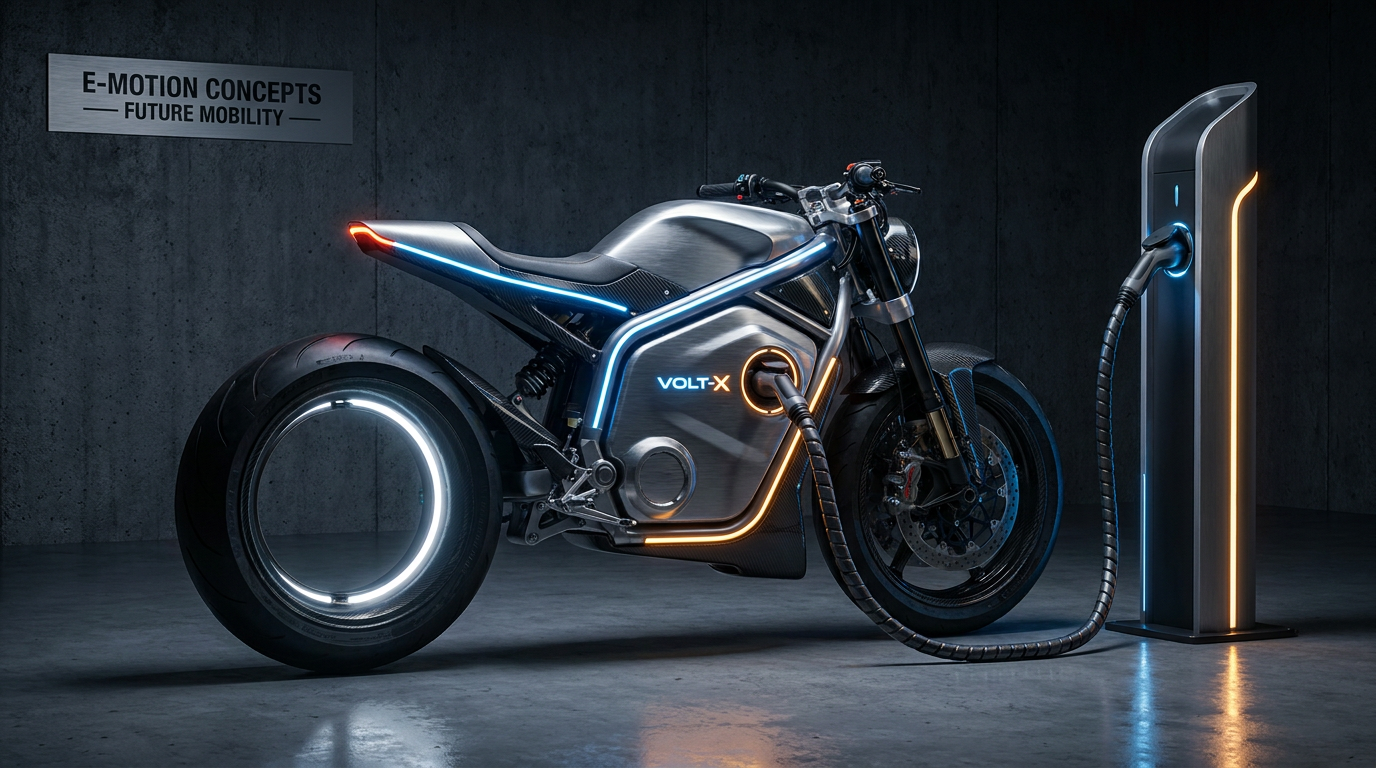
For motorcycles, where physical space and weight distribution are the most critical engineering constraints, overcoming these hurdles is transformative. Traditional electric motorcycles struggle to fit enough liquid-based lithium-ion cells into the frame without making the bike unrideably heavy. Verge’s design attempts to maximize this new efficiency by pairing it with their signature hubless rear-wheel motor. By moving the electric motor entirely into the rim of the rear wheel—eliminating the traditional chain, belt, and central motor housing—Verge freed up the entire central chassis to house the massive Donut Lab battery pack. The result is a bike that delivers 737 pound-feet of torque and accelerates from zero to sixty in 3.5 seconds, all while theoretically carrying enough energy to ride across entire states without stopping.[1][5]

However, extraordinary claims in the battery industry inevitably attract intense scrutiny, and the broader scientific community has begun to question the precise nature of the Donut Lab technology. When Verge first announced the TS Pro's specifications, industry analysts expressed immediate skepticism. They noted that major automotive conglomerates, armed with billions of dollars in research funding, have consistently pushed their own solid-state production timelines into the late 2020s. The idea that a relatively small boutique motorcycle manufacturer and its spin-off lab had quietly solved the complex manufacturing challenges of solid-state chemistry seemed highly improbable to veteran battery researchers.[4]
This initial skepticism recently crystallized into a formal investigation led by independent battery researcher Ryan Inis Hughes, known in the engineering community for his detailed technical analyses. Collaborating with a team of over twenty battery specialists, Hughes analyzed the electrochemical data emerging from the Donut Lab cells. By closely examining the voltage curves and the physical expansion data of the battery during its charging and discharging cycles, the research team arrived at a controversial conclusion. They presented evidence suggesting that the Donut Lab battery powering the Verge TS Pro is not actually utilizing a true solid-state sodium or lithium-metal chemistry as the industry understands the term.[3]
Instead, the independent analysis alleges that the Donut Lab power unit is a highly optimized, densely packaged iteration of existing lithium-ion technology. While the battery clearly achieves impressive energy density and rapid charging rates, the researchers argue that its internal electrochemical behavior perfectly matches the signature of a traditional liquid or semi-solid lithium-ion cell. This revelation has sparked a fierce debate within the electric vehicle community regarding marketing terminology and the precise definition of solid-state. While some semi-solid batteries use a gel-like substance that blurs the line between liquid and solid, critics argue that labeling a lithium-ion variant as a breakthrough solid-state cell is misleading to consumers and investors alike.[3]

Despite the mounting controversy over the exact chemical makeup of the cells, the physical performance of the Verge TS Pro Gen 2 remains a significant milestone for the electric motorcycle sector. The company has officially begun production, and early video demonstrations confirm that the bike is capable of pulling over 100 kilowatts from a fast charger, bringing the battery from a ten percent charge to eighty percent in roughly eleven minutes. Even if the underlying technology relies on advanced lithium-ion packaging rather than a pure solid-state breakthrough, achieving a 33.3 kilowatt-hour capacity and sub-fifteen-minute charging times in a two-wheeled chassis represents a massive leap forward in motorcycle engineering.[2][5]
The true test of Verge’s claims will occur in the coming months as the first production units are delivered to retail customers. Independent automotive journalists and teardown experts are already preparing to put the TS Pro through rigorous real-world range testing and physical battery analysis. If the bike can genuinely deliver over 300 miles of highway riding and recharge during a standard rest stop, it will fundamentally alter the calculus for riders who have previously dismissed electric motorcycles as impractical toys. The success or failure of the TS Pro will likely dictate the design strategies of legacy manufacturers like Ducati, BMW, and Harley-Davidson as they develop their own next-generation electric platforms.[2][4]
Ultimately, the saga of the Verge TS Pro serves as a fascinating case study in the rapid, sometimes chaotic evolution of modern battery technology. The intense pressure to overcome the physical limitations of electric vehicles is driving startups to push the absolute boundaries of both chemistry and marketing. Whether the Donut Lab battery is a true solid-state pioneer or simply a masterclass in lithium-ion optimization, it has successfully forced the industry to reevaluate what is physically possible within the tight confines of a motorcycle frame. As the technology continues to mature, the ultimate winners will be the riders, who stand to inherit a new generation of motorcycles that are cleaner, faster, and more capable than ever before.[3][5][7]
How we got here
2022
Verge Motorcycles introduces the original TS Pro, gaining notoriety for its unique hubless rear-wheel motor.
Jan 2026
Verge and Donut Lab unveil the TS Pro Gen 2 at CES, claiming it features the world's first production solid-state battery.
Mar 2026
Production officially begins on the TS Pro Gen 2, with the first units rolling off the assembly line.
Jun 2026
Independent researchers publish data suggesting the Donut Lab battery utilizes optimized lithium-ion chemistry rather than a true solid-state architecture.
Viewpoints in depth
Technology Developers
Verge and Donut Lab maintain they have achieved a historic breakthrough in battery chemistry.
The manufacturer argues that their proprietary Donut Lab cells have successfully commercialized solid-state technology years ahead of legacy automakers. They point to the TS Pro's unprecedented 33.3 kWh capacity and 10-minute fast-charging capabilities as proof that their architecture fundamentally outperforms traditional liquid electrolytes, enabling a new era of long-range electric motorcycling without the historic weight penalties.
Scientific Skeptics
Independent researchers argue the electrochemical data contradicts the solid-state claims.
Battery scientists and independent investigators point to voltage curves and cell expansion metrics that closely mirror traditional lithium-ion behavior. They argue that while the battery's packaging and thermal management are highly innovative, labeling it as a true 'solid-state' or sodium-ion cell is scientifically inaccurate, suggesting the company has optimized existing chemistry rather than commercializing a fundamentally new solid electrolyte.
Industry Analysts
Market observers focus on the real-world performance metrics over the chemical semantics.
For EV analysts, the debate over the exact chemical definition is secondary to the motorcycle's physical capabilities. They note that if the TS Pro can genuinely deliver 370 miles of range and accept a 200-kilowatt charge in real-world conditions, it solves the primary consumer hurdles of range anxiety and charge time, representing a massive leap forward for electric two-wheelers regardless of the internal separator material.
What we don't know
- Whether independent teardowns of customer-delivered motorcycles will definitively prove or disprove the presence of a solid electrolyte.
- How the Donut Lab battery pack will perform in terms of long-term degradation after thousands of rapid-charging cycles.
- Whether legacy motorcycle manufacturers will accelerate their own solid-state timelines in response to Verge's aggressive market entry.
Key terms
- Solid-State Electrolyte
- A rigid, non-flammable material (like ceramic or glass) that conducts ions between a battery's positive and negative electrodes, replacing liquid chemicals.
- Energy Density
- The amount of energy a battery can store relative to its physical size or weight.
- Lithium-Metal Anode
- An advanced negative electrode made of pure lithium, enabled by solid-state technology, which drastically increases a battery's capacity compared to traditional graphite.
- Dendrites
- Microscopic, needle-like structures of lithium that can grow inside a battery over time, potentially piercing the separator and causing a short circuit.
- Interfacial Resistance
- The physical resistance that occurs where a solid electrolyte meets a solid electrode, which can impede the flow of power if the materials do not maintain perfect contact.
Frequently asked
What is a solid-state battery?
A solid-state battery replaces the flammable liquid electrolyte found in traditional lithium-ion cells with a solid material, such as ceramics or glass. This allows for a denser, safer battery that can store more energy in the same amount of space.
How fast does the Verge TS Pro charge?
Verge claims the motorcycle can accept a 200-kilowatt fast charge, allowing it to add 186 miles of range in roughly ten minutes.
Why are researchers skeptical of Verge's battery?
Independent battery scientists have analyzed the voltage curves and expansion data of the Donut Lab cells, arguing that the electrochemical signatures match highly optimized lithium-ion technology rather than a true solid-state chemistry.
What is a hubless motor?
A hubless motor integrates the electric motor directly into the rim of the wheel, leaving the center empty. This eliminates the need for chains or belts and frees up space in the motorcycle's main chassis for a larger battery.
Sources
Source coverage
7 outlets
3 viewpoints surfaced







[1]Verge MotorcyclesTechnology Developers
The First Solid-State Battery in Motorcycling
Read on Verge Motorcycles →[2]New AtlasIndustry Analysts
Verge's first motorcycle with a solid-state battery rolls off the line
Read on New Atlas →[3]CNETScientific Skeptics & Researchers
Donut Lab's 'Solid-State' Battery Might Just Be Lithium-Ion
Read on CNET →[4]ElectrekIndustry Analysts
Verge unveils 370-mile electric motorcycle with solid state battery; sounds too good to be true?
Read on Electrek →[5]AutoEvolutionTechnology Developers
Verge TS Pro Gen 2 Enters Production With World-First Solid-State Battery
Read on AutoEvolution →[6]American Chemical SocietyScientific Skeptics & Researchers
Working Principle of Solid-State Batteries
Read on American Chemical Society →[7]Flash BatteryScientific Skeptics & Researchers
What are solid-state batteries and how do they work: differences with lithium batteries
Read on Flash Battery →

More in automotive
See all 6 stories →Hydrail Tech
How Hydrogen Trains Are Quietly Decarbonizing Rural Railways
8 sources

Air Taxis
The Electric Air Taxi Era Is Finally Here: How eVTOLs Are Clearing the FAA's Final Hurdles in 2026
8 sources

Marine Tech
How Hydrofoiling is Making Electric Boats Mainstream
8 sources

Synthetic Fuels
How Synthetic E-Fuels Are Keeping the Supercar Combustion Engine Alive
7 sources

Every angle. Every day.
Get automotive stories with full source coverage and perspective breakdowns delivered to your inbox.