
US and Iran Reach 14-Point Preliminary Agreement to End War and Reopen Strait of Hormuz
The US and Iran have agreed to a Memorandum of Understanding that halts military operations, immediately allows Iranian oil exports, and sets a 60-day window to negotiate a final nuclear settlement.
By Factlen Editorial Team
- Skeptics and Regional Allies
- Warns that the US has surrendered its primary economic leverage by allowing immediate oil sales before securing a final nuclear agreement.
- US Administration
- Argues the preliminary deal successfully ends the conflict and reopens vital shipping lanes while maintaining military leverage.
- Iranian Leadership
- Views the agreement as a diplomatic victory that provides immediate economic relief and ends the military threat to its infrastructure.
What's not represented
- · European Union negotiators
- · Global shipping companies
- · Lebanese civilians affected by the ceasefire
Why this matters
This preliminary agreement halts a major global conflict that has severely disrupted international shipping and energy markets. However, the immediate lifting of economic pressure on Iran before a final nuclear deal is reached raises significant questions about the long-term stability of the Middle East.
Key points
- The US and Iran have agreed to a 14-point MOU to end military operations and reopen the Strait of Hormuz.
- Iran is permitted to immediately resume oil exports, while the US will lift its naval blockade.
- The agreement establishes a 60-day window to negotiate a final, comprehensive nuclear settlement.
- President Trump warned that the US will resume military strikes if a final deal is not reached.
- Critics argue the immediate economic relief strips the US of crucial leverage before securing nuclear concessions.
The United States and Iran have reached a 14-point Memorandum of Understanding to end their months-long conflict, reopen the Strait of Hormuz, and establish a 60-day window to negotiate a comprehensive nuclear settlement. President Donald Trump announced the preliminary agreement, which is expected to be formally signed in Switzerland on Friday following mediation by Pakistan.[1][6]
The diplomatic breakthrough comes after more than three months of hostilities that severely disrupted global shipping and energy markets. Under the terms of the MOU, both nations declare an immediate and permanent termination of military operations on all fronts, explicitly including Lebanon. This provision effectively requires Iran to rein in Hezbollah, though US officials noted that Israel retains the right to defend itself against any proxy attacks.[5][7]
A central pillar of the agreement is the immediate lifting of the US naval blockade on Iranian ports and the reopening of the Strait of Hormuz. Iran has committed to ensuring toll-free passage for commercial vessels for at least 60 days and must restore maritime traffic to pre-war levels within 30 days. In response to the news, global oil markets saw an immediate reaction, with crude prices dropping by $4 a barrel even before the waterway officially reopened.[4][6][8]

However, the deal involves significant concessions that have drawn intense scrutiny in Washington and the Middle East. The MOU allows Iran to immediately resume exporting oil and fuel without restrictions, a major departure from previous US policy. Furthermore, the agreement outlines a plan for the US and regional partners to develop a $300 billion reconstruction and economic development fund for Iran, with the implementation mechanism to be finalized during the 60-day negotiation period.[5][7]
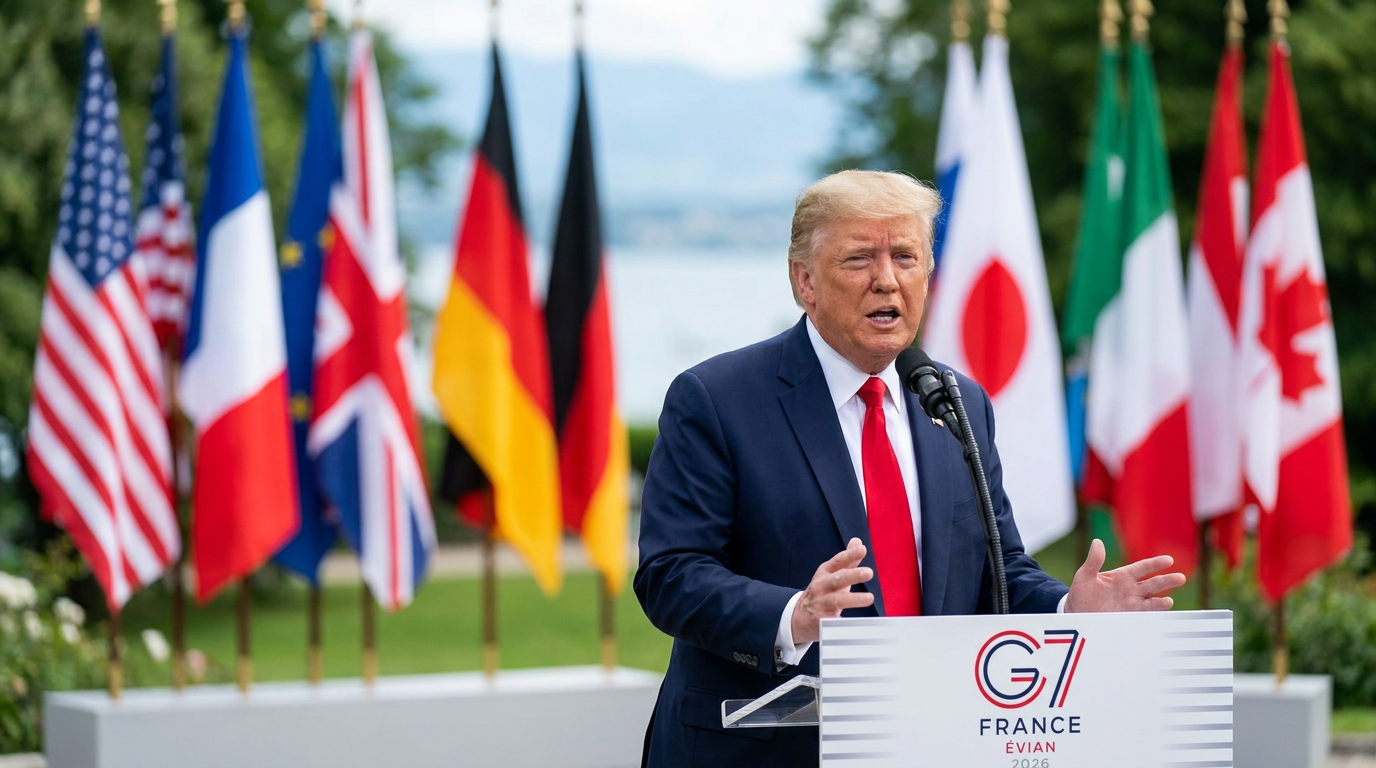
President Trump defended the agreement against critics who argue it gives away crucial leverage. Speaking at the G7 summit in France, Trump emphasized that the MOU is "not final" and warned that the US would resume military strikes if Iran fails to comply with the broader framework. "If it doesn't get done in 60 days, that's all right. We go back to bombing," the president told reporters, adding that the ultimate goal remains ensuring Iran never acquires a nuclear weapon.[1][5]
President Trump defended the agreement against critics who argue it gives away crucial leverage.
The immediate sanctions relief and the proposed $300 billion reconstruction plan have alarmed foreign policy hawks and regional allies. Critics point out that allowing Iran to sell oil freely before a final nuclear deal is reached strips Washington of its primary economic leverage. Senator Lindsey Graham expressed skepticism, noting that while he supports ending the conflict and reopening the strait, he reserves judgment on the long-term negotiations and whether Iran will negotiate in good faith.[2][8]

Other critics argue the terms are overly generous compared to the 2015 Joint Comprehensive Plan of Action (JCPOA), which Trump famously withdrew from during his first term, calling it the "worst deal ever." Israeli Prime Minister Benjamin Netanyahu's government, which launched the war alongside the US earlier this year, is reportedly viewing the preliminary accord as a major setback, particularly given the immediate economic lifelines extended to Tehran.[1][2][8]
On the nuclear front, the MOU links the permanent lifting of US sanctions directly to a final nuclear settlement. The text dictates that the US will terminate all types of sanctions on an agreed-upon schedule, but only if Iran complies with the nuclear provisions to be negotiated over the next two months. The two sides have agreed to resolve the disposition of Iran's stockpiled enriched uranium, which currently sits at levels close to weapons-grade.[4][5]

Iranian officials have framed the agreement as a victory for their resilience and diplomatic strategy. Iran's deputy foreign minister confirmed the permanent end to the war on all fronts and indicated that Tehran would begin fulfilling its commitments once the document is officially signed. Iranian leadership has consistently maintained that their nuclear program is peaceful, though they have yet to publicly commit to fully dismantling their enrichment capabilities.[7][8]
The path forward remains highly precarious. The 60-day negotiation window will test whether the two adversaries can bridge massive gaps on nuclear inspections, ballistic missiles, and regional proxy forces. As one senior US official noted, the fragility of the MOU cannot be understated, and either side can walk away at any time if the final talks collapse, potentially plunging the region back into war.[3][8]
How we got here
Feb 28, 2026
The US and Israel launch military operations against Iran, beginning a months-long conflict.
Mid-2026
The Strait of Hormuz is closed to commercial shipping, heavily disrupting global oil markets.
June 14, 2026
The US and Iran reach a 14-point Memorandum of Understanding to end the war.
June 17, 2026
President Trump publicly defends the preliminary deal at the G7 summit in France.
June 19, 2026
The formal signing ceremony for the MOU is scheduled to take place in Switzerland.
Viewpoints in depth
US Administration
The White House argues the preliminary deal successfully ends the conflict and reopens vital shipping lanes while maintaining military leverage.
President Trump and senior US officials emphasize that the Memorandum of Understanding is a necessary first step to stabilize the region and global markets. They point out that the immediate reopening of the Strait of Hormuz prevents further economic fallout. Crucially, the administration insists that the core objective—preventing Iran from acquiring a nuclear weapon—remains intact, as permanent sanctions relief is strictly contingent on a final, comprehensive nuclear settlement to be negotiated over the next 60 days. They maintain that the threat of resumed military action provides sufficient leverage to secure favorable terms.
Skeptics and Regional Allies
Critics warn that the US has surrendered its primary economic leverage by allowing immediate oil sales before securing a final nuclear agreement.
Foreign policy hawks, some Republican lawmakers, and the Israeli government view the preliminary accord as deeply flawed. They argue that granting Iran the immediate ability to export oil and promising a $300 billion reconstruction fund removes the economic pressure needed to force Tehran into dismantling its nuclear program. Critics compare the MOU unfavorably to the 2015 JCPOA, suggesting the current administration is giving up more upfront concessions for a temporary ceasefire. There is also profound skepticism that Iran will negotiate in good faith during the 60-day window once its immediate economic crises are alleviated.
Iranian Leadership
Tehran views the agreement as a diplomatic victory that provides immediate economic relief and ends the military threat to its infrastructure.
For the Iranian government, the MOU represents a successful culmination of their resistance strategy. By securing the immediate lifting of the US naval blockade and the right to resume oil exports, Tehran achieves its primary economic objectives without having to make upfront, irreversible concessions on its nuclear program. Iranian officials highlight the permanent end to military operations—including in Lebanon—as a key security guarantee. While they have committed to a 60-day negotiation period, Tehran maintains that its nuclear program is peaceful and will likely resist demands for total dismantlement, using their newly restored economic lifeline to bolster their negotiating position.
What we don't know
- Whether Iran will agree to fully dismantle its nuclear enrichment facilities during the 60-day negotiation window.
- How the proposed $300 billion reconstruction fund for Iran will be financed and administered.
- Whether Hezbollah and other Iranian proxy groups will fully comply with the ceasefire in Lebanon.
Key terms
- Memorandum of Understanding (MOU)
- A formal agreement between two or more parties that outlines the terms and details of a mutual understanding, often serving as the foundation for a final, binding treaty.
- Strait of Hormuz
- A crucial shipping chokepoint between the Persian Gulf and the Gulf of Oman through which a significant portion of the world's oil supply passes.
- Naval Blockade
- An act of war in which a country uses its naval forces to prevent vessels from entering or leaving the ports of an enemy nation.
- Sanctions Relief
- The reduction or removal of economic penalties imposed on a country, allowing it to resume international trade and financial transactions.
Frequently asked
Is the war between the US and Iran officially over?
The two nations have signed a Memorandum of Understanding declaring an immediate and permanent end to military operations, though President Trump warned the US could resume strikes if final negotiations fail.
Will Iran be allowed to sell oil again?
Yes. Under the preliminary agreement, the US will allow Iran to immediately resume exporting oil and fuel without restrictions.
What happens to Iran's nuclear program?
The current agreement pauses hostilities but leaves the final disposition of Iran's nuclear program to be negotiated over the next 60 days. Permanent sanctions relief is tied to a successful nuclear settlement.
Does the ceasefire include Hezbollah in Lebanon?
Yes. The MOU explicitly includes an immediate termination of military operations on all fronts, including Lebanon, effectively requiring Iran to rein in Hezbollah.
Sources
Source coverage
8 outlets
3 viewpoints surfaced








[1]The New York TimesUS Administration
Trump Defends Deal to End the War With Iran as Details Emerge
Read on The New York Times →[2]Fox NewsSkeptics and Regional Allies
Trump's Iran deal 'giving a lot more to get a lot less' than Obama's, senator says
Read on Fox News →[3]BBC NewsSkeptics and Regional Allies
Initial US-Iran agreement leaves many key issues to be negotiated
Read on BBC News →[4]AxiosUS Administration
What's in the Iran deal Trump says he's ready to sign
Read on Axios →[5]CBS NewsIranian Leadership
Read the 14 points of the agreement between Iran and the U.S.
Read on CBS News →[6]PBS NewsHourUS Administration
Deal is reached to end Iran war and Trump orders stop to U.S. naval blockade
Read on PBS NewsHour →[7]The GuardianIranian Leadership
US and Iran deal to end war allows Tehran to sell oil and fuel
Read on The Guardian →[8]Council on Foreign RelationsSkeptics and Regional Allies
Trump's Iran Deal: What We Know, What's Contested, and What Remains Unresolved
Read on Council on Foreign Relations →

More in news politics
See all 5 stories →U.S.-Iran Relations
U.S.-Iran Peace Deal Faces Conservative Backlash and Congressional Scrutiny
8 sources
US-Iran Relations
U.S.-Iran Deal to End War Draws Conservative Backlash Over $300 Billion Reconstruction Plan
7 sources
Election Security
The 2026 Deepfake Defense: How Election Officials and Tech Platforms Are Catching AI Forgeries
7 sources

Every angle. Every day.
Get news politics stories with full source coverage and perspective breakdowns delivered to your inbox.