
U.S.-Iran Peace Deal Faces Conservative Backlash and Congressional Scrutiny
The Trump administration has reached a preliminary peace agreement with Iran to end recent hostilities, sparking fierce criticism from hawkish Republicans and demands for briefings from congressional Democrats.
By Factlen Editorial Team
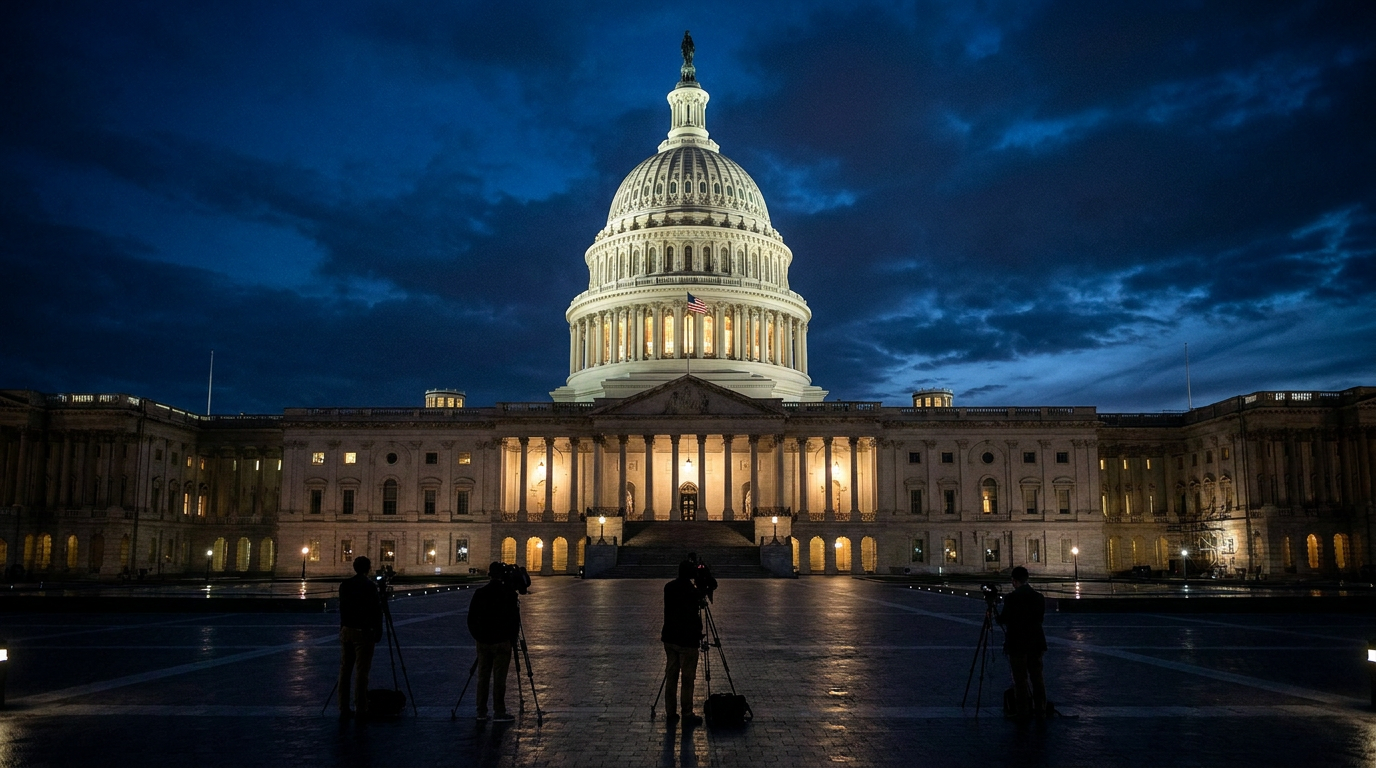
- Conservative Hawks
- Argue the deal is a humiliating capitulation that fails to neutralize the Iranian threat.
- The Administration
- Defends the agreement as a pragmatic diplomatic victory that avoids endless war.
- Congressional Democrats
- Welcome de-escalation but demand strict oversight and classified briefings on the terms.
What's not represented
- · The Iranian government's official framing of the memorandum.
- · U.S. allies in the Middle East, such as Israel and Gulf states, who are directly affected by the regional balance of power.
Why this matters
The preliminary agreement halts direct military hostilities between the U.S. and Iran, stabilizing global energy markets and shifting the geopolitical landscape of the Middle East. However, intense domestic opposition threatens the deal's long-term viability and sets up a major constitutional clash over foreign policy powers in Washington.
Key points
- The U.S. and Iran have reached a preliminary memorandum of understanding to halt recent military hostilities.
- Hawkish Republicans have fiercely criticized the deal, calling it a major foreign policy blunder.
- Vice President JD Vance defended the agreement, distinguishing it from the 2015 Obama-era nuclear deal.
- Top House Democrats are demanding an immediate briefing from Secretary of State Marco Rubio.
- A recent poll shows 64% of voters doubt the agreement will stop Iran from developing nuclear weapons.
The Trump administration has finalized a preliminary memorandum of understanding with Iran, aiming to halt recent military hostilities and reshape the geopolitical landscape of the Middle East. The last-minute agreement, which punts several of the most intractable issues to future negotiations, was reached after a frantic diplomatic scramble.[3]
While the White House is framing the deal as a pragmatic exit from an untenable conflict, the agreement has immediately ignited a political firestorm in Washington. The administration originally entered the conflict with maximalist objectives, including the complete elimination of Iran's nuclear and ballistic missile programs.[6]
The stark contrast between those initial ambitions and the final terms has provoked fierce backlash from the administration's own conservative allies. Hawkish Senate Republicans have sharply criticized the concessions made to Tehran, with Senator Bill Cassidy labeling the agreement "the worst foreign policy blunder in decades" and declaring that Ronald Reagan would be "rolling over in his grave."[1][8]

Conservative critics argue the deal represents a humiliating diplomatic retreat, pointing to billions of dollars in alleged concessions in exchange for what they view as flimsy commitments from the Iranian government. Several prominent conservative voices have even publicly urged the president to renege on the newly minted agreement.[7]
Several prominent conservative voices have even publicly urged the president to renege on the newly minted agreement.
In response to the growing conservative revolt, Vice President JD Vance has aggressively defended the administration's diplomatic maneuvering. Vance pushed back against comparisons to the 2015 Obama-era Joint Comprehensive Plan of Action (JCPOA), arguing that the current agreement fundamentally reverses the "carrot-and-stick" logic of previous negotiations and secures American interests without endless military entanglement.[2]
Across the aisle, Democratic lawmakers are approaching the memorandum with cautious skepticism rather than outright dismissal. Top Democrats on the House foreign affairs, defense, and intelligence committees have demanded an "immediate" briefing from Secretary of State Marco Rubio to review the classified details of the arrangement.[4]

Unlike the hawkish wing of the Republican party, these Democratic leaders have stated they welcome the administration's efforts to avoid a prolonged regional war. However, they insist that Congress must be allowed to exercise its oversight role to ensure the terms do not inadvertently empower Iranian regional proxies or accelerate nuclear proliferation.[4]
Public opinion appears to mirror the skepticism echoing through the halls of Congress. A newly released Fox News poll indicates that 64 percent of American voters doubt the new agreement will successfully prevent Iran from developing nuclear weapons, a level of public distrust that closely matches the skepticism surrounding the original 2015 nuclear accord.[5]

The administration now faces a two-front battle: implementing the fragile terms of the memorandum on the international stage while navigating a deeply fractured domestic political environment. With both conservative hawks and cautious Democrats demanding answers, the White House will need to expend significant political capital to keep the agreement intact through the upcoming election cycle.[3][8]
How we got here
2015
The U.S. and international partners sign the JCPOA, which the Trump administration later exited during its first term.
Early 2026
The U.S. enters direct conflict with Iran with maximalist goals to eliminate its nuclear and missile programs.
June 17, 2026
The administration finalizes a preliminary memorandum of understanding, halting hostilities.
Viewpoints in depth
Hawkish Conservatives
View the agreement as a dangerous capitulation that fails to dismantle Iran's nuclear capabilities.
Conservative critics and defense hawks argue that the administration abandoned its maximalist goals in exchange for superficial promises. They point to the alleged financial concessions as a repeat of past diplomatic failures, asserting that any deal leaving Iran's ballistic missile program intact is a fundamental threat to U.S. allies in the region. For this camp, military pressure remains the only reliable deterrent.
The Administration
Frames the deal as a pragmatic, necessary step to avoid an endless and costly Middle Eastern war.
The White House and its defenders, including Vice President JD Vance, maintain that the agreement is a realistic triumph of diplomacy over endless military entanglement. They argue the deal secures immediate de-escalation and establishes a new framework for containment that avoids the pitfalls of the Obama-era JCPOA, emphasizing that the U.S. retains significant leverage for future negotiations.
Congressional Democrats
Support the de-escalation of hostilities but demand rigorous oversight of the deal's specifics.
Democratic leadership is walking a fine line, welcoming the pivot away from direct armed conflict while expressing deep reservations about the administration's execution. They are demanding immediate briefings from the State Department to ensure the memorandum includes robust verification mechanisms and does not inadvertently provide Iran with resources to fund regional proxy groups.
What we don't know
- The exact financial and strategic concessions included in the classified portions of the memorandum.
- Whether Congress will attempt to pass legislation to block or alter the implementation of the deal.
- How Iran's regional proxies will respond to the formal cessation of direct U.S.-Iran hostilities.
Key terms
- Memorandum of Understanding (MOU)
- A formal agreement between two or more parties that outlines the terms and details of a mutual understanding, often serving as a precursor to a binding treaty.
- JCPOA
- The Joint Comprehensive Plan of Action, the 2015 nuclear agreement between Iran and several world powers that limited Iran's nuclear program in exchange for sanctions relief.
- Maximalist Goals
- An approach to negotiation or conflict that demands the absolute maximum outcome, such as the total dismantling of an adversary's military capabilities.
Frequently asked
What does the new U.S.-Iran deal actually do?
The preliminary memorandum of understanding halts direct military hostilities and establishes a framework for future negotiations, though many complex issues were punted to a later date.
Why are Republicans criticizing the agreement?
Hawkish conservatives argue the deal abandons the administration's initial goal of destroying Iran's nuclear program and offers billions in concessions for weak commitments.
How are Democrats responding to the news?
Top Democrats have not dismissed the deal outright, welcoming the end of hostilities, but are demanding immediate briefings from the State Department to review the details.
Sources
Source coverage
8 outlets
3 viewpoints surfaced




[1]The GuardianConservative Hawks
Top Republican decries Trump’s Iran deal: ‘Reagan is rolling over in his grave’
Read on The Guardian →[2]Fox NewsConservative Hawks
Vance rejects claims Trump-Iran deal echoes Obama-era logic as hawks raise alarm
Read on Fox News →[3]NYTThe Administration
How the U.S.-Iran Deal Came Down to the Wire
Read on NYT →[4]AxiosCongressional Democrats
Top House Democrats demand "immediate" Rubio briefing on U.S.-Iran deal
Read on Axios →Fox News Poll: Voters doubt new agreement will stop Iran from developing nukes
Read on Fox News →Trump’s Iran deal is result of unrealistic ambitions for an untenable war
Read on The Guardian →'Trump should renege': Iran deal faces backlash from conservative allies
Read on Fox News →Trump Escalates Tensions With Senate Republicans
Read on NYT →

More in news politics
See all 6 stories →Ranked Choice Voting
Fact Check: Does Ranked Choice Voting Actually Fix Political Polarization?
7 sources
US-Iran Deal
U.S. and Iran Sign Electronic Memorandum to Halt Conflict as Trump Faces Senate Republican Backlash
8 sources
US-Iran Relations
U.S. and Iran Sign Preliminary Peace Agreement as Trump Faces Republican Backlash
7 sources
Workplace Trends
Fact-Checking the Four-Day Workweek: What Global Trials Actually Reveal About Productivity and Health
8 sources

Every angle. Every day.
Get news politics stories with full source coverage and perspective breakdowns delivered to your inbox.