
US and Iran Agree to 14-Point Peace Plan, Reopening Strait of Hormuz
The United States and Iran have signed a Memorandum of Understanding to end regional hostilities and lift the US naval blockade. The agreement reopens the Strait of Hormuz and establishes a 60-day window to negotiate a comprehensive nuclear deal.
By Factlen Editorial Team
- US Administration & Market Optimists
- Supporters argue the deal was an economic necessity to prevent a global depression.
- Regional Security Skeptics
- Critics warn that the agreement rewards Tehran without neutralizing its core military threats.
- Iranian & Allied Leadership
- Tehran and its regional partners view the agreement as a successful defense of their sovereignty.
- Global Trade & Energy Sector
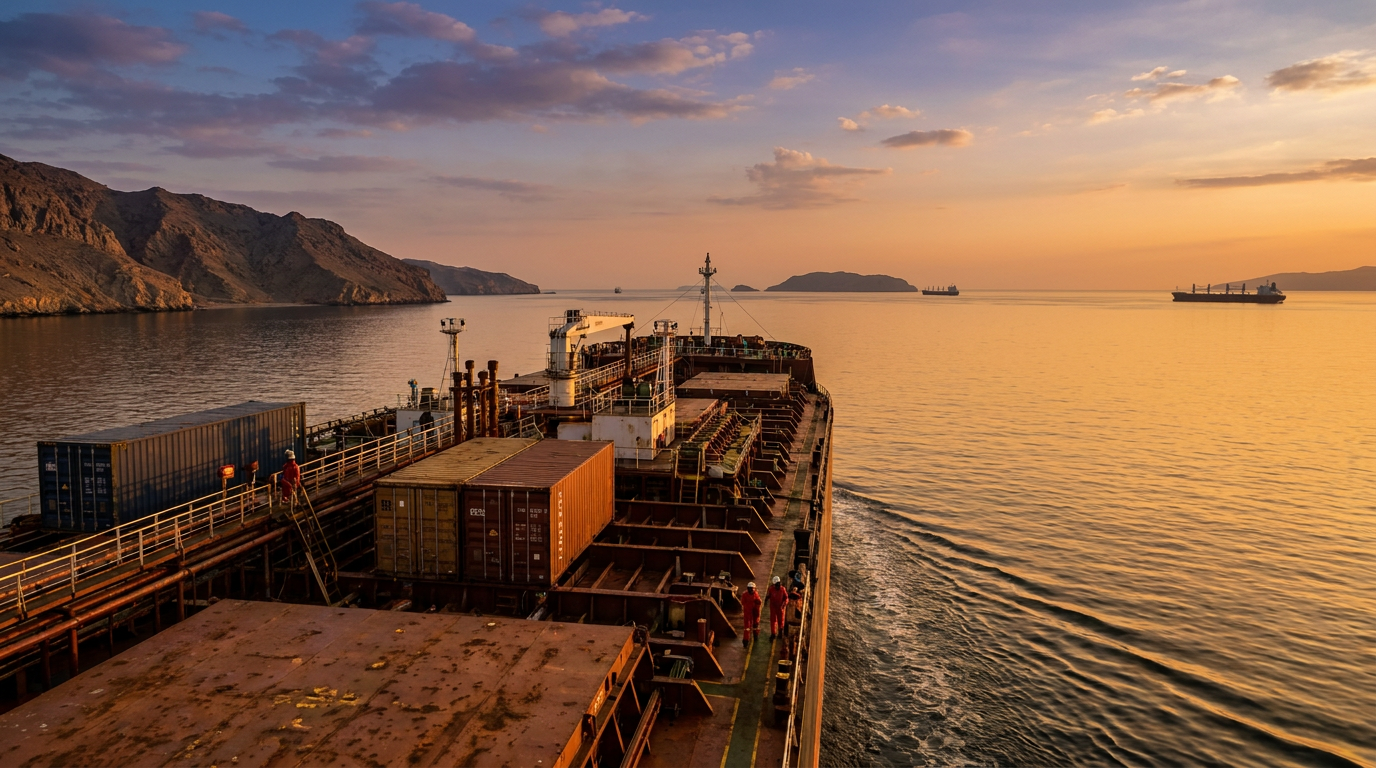
- The maritime industry is focused on the rapid de-mining and stabilization of the Persian Gulf.
What's not represented
- · Lebanese civilian leadership
- · Commercial maritime insurers
Why this matters
The reopening of the Strait of Hormuz immediately stabilizes global energy markets and lowers oil prices, averting a severe economic downturn. However, the agreement's deferral of nuclear restrictions leaves the long-term security of the Middle East highly uncertain.
Key points
- The US and Iran have agreed to a 14-point MOU to end regional hostilities.
- The agreement mandates the reopening of the Strait of Hormuz within 30 days.
- The US will immediately lift its naval blockade and issue waivers for Iranian oil exports.
- A 60-day negotiation window has been established to finalize a comprehensive nuclear deal.
- Critics warn the deal front-loads financial relief without dismantling Iran's nuclear infrastructure.
The United States and Iran have agreed to a 14-point Memorandum of Understanding (MOU) that establishes an immediate ceasefire and paves the way for the reopening of the Strait of Hormuz. The landmark agreement, released by the Trump administration on Wednesday, halts a conflict that had severely disrupted global energy markets and threatened to spiral into a broader regional war.[1][2]
Under the terms of the two-page document, both nations declare a permanent end to military operations on all fronts, explicitly including the ongoing hostilities in Lebanon. The immediate priority of the pact is the restoration of international shipping, with the US committing to lift its naval blockade and Iran pledging to neutralize maritime mines and technical obstacles within 30 days.[3][4]
President Donald Trump framed the agreement as a "major win" for the United States, arguing that the concessions made to Tehran were necessary to avert a "worldwide depression." Speaking to reporters, Trump emphasized that without the deal, the strategically vital Strait of Hormuz—through which roughly one-fifth of the world's oil supply passes—would have remained impassable to commercial vessels.[1][2]

The economic relief for Iran is substantial and immediate. The MOU stipulates that the US Treasury Department will issue waivers allowing Iran to resume exports of crude oil and petroleum products. Furthermore, the agreement lifts restrictions on associated services, granting Tehran renewed access to the global banking and insurance sectors that had been severed by unilateral sanctions.[3][4]
Global energy markets reacted swiftly to the de-escalation. Anticipation of the deal and the impending resumption of Iranian oil exports drove crude prices down to $80 per barrel, marking the lowest level since early March. Analysts note that the free flow of navigation in the Persian Gulf is critical to stabilizing the global economy, which had been battered by the prolonged closure.[1][8]
Anticipation of the deal and the impending resumption of Iranian oil exports drove crude prices down to $80 per barrel, marking the lowest level since early March.
However, the agreement leaves the most contentious issue—Iran's nuclear program—unresolved, deferring it to a 60-day negotiation window. While the MOU includes a reiterated pledge from Iran that it will never produce nuclear weapons, the specific mechanisms for dismantling its 440-kilogram stockpile of highly enriched uranium remain to be hammered out in future talks, likely to be held in Geneva or Islamabad.[2][5]
This phased approach has drawn fierce criticism from regional security analysts and US allies. Skeptics argue that front-loading financial concessions—including the potential unfreezing of an estimated $24 billion in Iranian assets held abroad—surrenders critical American leverage before a permanent, verifiable nuclear accord is secured.[6][7]

Israeli officials and hardline Republicans have voiced deep alarm over the terms, pointing out that the MOU does not address Iran's ballistic missile program or its funding of regional proxy groups. The fact that Hezbollah leadership publicly hailed the agreement as a "great victory" has only amplified concerns that Tehran emerges from the conflict emboldened and financially replenished.[1][8]
The inclusion of Lebanon in the ceasefire provisions adds another layer of complexity. While the US and Iran have agreed to halt operations, Israeli forces remain deeply entrenched in southern Lebanon. It remains unclear how the MOU's mandate for territorial sovereignty will be enforced without a separate, localized agreement between Israel and Hezbollah.[8]
To sweeten the deal and incentivize long-term compliance, the MOU outlines a comprehensive economic rehabilitation plan. Together with regional partners, the US has reportedly agreed to help facilitate massive financing to rebuild Iran's war-torn infrastructure, provided Tehran adheres to the upcoming nuclear restrictions.[3]

The logistical challenge of reopening the Strait of Hormuz will test the durability of the truce immediately. Iranian naval forces must safely clear a dense network of sea mines and wreckage, while commercial shipping companies will require ironclad assurances from international insurers before sending billion-dollar tankers back into the corridor.[4][5]
As the 60-day clock begins ticking, diplomatic teams are racing to transition the fragile MOU into a binding treaty. If the forthcoming nuclear talks collapse, the US retains the ability to snap sanctions back into place and reinstate the naval blockade, leaving the Middle East suspended in a precarious state of heavily armed diplomacy.[5][6]
How we got here
May 2026
Reports emerge of a draft 14-point proposal negotiated by US envoys and Iranian officials to end the escalating Gulf conflict.
Early June 2026
The US and Iran finalize the preliminary text of the MOU, though disagreements over the timing of sanctions relief delay the formal announcement.
June 16, 2026
Oil prices drop to $80 per barrel as markets anticipate the imminent reopening of the Strait of Hormuz.
June 17, 2026
The Trump administration officially releases the text of the 14-point agreement, declaring an immediate ceasefire and the lifting of the US naval blockade.
Viewpoints in depth
US Administration & Market Optimists
Supporters argue the deal was an economic necessity to prevent a global depression.
For the Trump administration and global market analysts, the immediate priority was ending the crippling closure of the Strait of Hormuz. Proponents argue that the economic devastation of a prolonged naval blockade would have triggered a worldwide depression, making the front-loaded sanctions relief a necessary price for global stability. They maintain that the 60-day window provides sufficient leverage to negotiate a permanent nuclear framework while energy markets recover.
Regional Security Skeptics
Critics warn that the agreement rewards Tehran without neutralizing its core military threats.
Security analysts, Israeli officials, and hardline US lawmakers view the MOU as a dangerous miscalculation. By immediately lifting the naval blockade and issuing Treasury waivers for oil exports, they argue the US has surrendered its primary economic leverage before securing a verifiable dismantling of Iran's highly enriched uranium stockpile. Furthermore, the lack of restrictions on Iran's ballistic missile program and regional proxy funding leaves allied nations exposed to future escalations.
Iranian & Allied Leadership
Tehran and its regional partners view the agreement as a successful defense of their sovereignty.
For Iran and allied groups like Hezbollah, the MOU is framed as a strategic victory that broke the US naval blockade without sacrificing their domestic nuclear infrastructure. The immediate unfreezing of assets and resumption of oil exports provides a critical lifeline to Iran's battered economy. Iranian officials emphasize that their pledge to never build a nuclear weapon is genuine, but they insist on maintaining their right to civilian nuclear enrichment and regional self-defense.
What we don't know
- How the 60-day nuclear negotiations will resolve the status of Iran's highly enriched uranium stockpile.
- Whether Israeli forces will comply with the MOU's mandate for a ceasefire in Lebanon.
- The exact timeline and mechanism for the release of an estimated $24 billion in frozen Iranian assets.
Key terms
- Memorandum of Understanding (MOU)
- A formal agreement between two or more parties that establishes a framework for future negotiations, though it is often not legally binding.
- Strait of Hormuz
- A narrow, strategically vital waterway between the Persian Gulf and the Gulf of Oman through which roughly one-fifth of the world's oil supply passes.
- Highly Enriched Uranium (HEU)
- Uranium that has been processed to contain a high concentration of the U-235 isotope, making it capable of being used in nuclear weapons.
- Treasury Waivers
- Official exemptions granted by the US government that allow foreign entities to conduct specific financial transactions with a sanctioned country without facing penalties.
Frequently asked
What does the 14-point MOU actually do?
It establishes an immediate ceasefire across all fronts, lifts the US naval blockade, reopens the Strait of Hormuz, and sets a 60-day window to negotiate a final nuclear agreement.
Will Iran be allowed to sell oil again?
Yes. The US has agreed to immediately issue Treasury waivers allowing Iran to export crude oil and access the global banking system.
How does this affect the war in Lebanon?
The agreement explicitly calls for the permanent termination of military operations on all fronts, including Lebanon, though the exact mechanism for Israeli withdrawal remains contested.
What happens to Iran's nuclear program?
The MOU freezes the current status quo and includes an Iranian pledge never to build a nuclear weapon, but the specifics of dismantling its enriched uranium stockpile will be negotiated over the next 60 days.
Sources
Source coverage
8 outlets
4 viewpoints surfaced








[1]The GuardianUS Administration & Market Optimists
US releases text of Iran peace plan as Trump says deal averts 'worldwide depression'
Read on The Guardian →[2]The New York TimesUS Administration & Market Optimists
U.S. Official Releases Text of Agreement With Iran
Read on The New York Times →[3]i24NEWSRegional Security Skeptics
Final deal on nuclear will be negotiated within 60 days, and also include lifting of oil sale restrictions
Read on i24NEWS →[4]The HinduGlobal Trade & Energy Sector
What the 14-point MoU between Iran and the U.S. means for shipping
Read on The Hindu →[5]Anadolu AgencyIranian & Allied Leadership
US, Iran getting close to one-page agreement to end war: Report
Read on Anadolu Agency →[6]The Soufan CenterRegional Security Skeptics
IntelBrief: U.S. and Iran Finalize Preliminary Memorandum of Understanding
Read on The Soufan Center →[7]Gulf NewsIranian & Allied Leadership
What we know: '14-point' US proposal to Iran aimed at ending Gulf conflict
Read on Gulf News →[8]Stimson CenterGlobal Trade & Energy Sector
The US-Iran MOU: Regional Realignments and Lebanon’s Precarious Position
Read on Stimson Center →
More in news politics
See all 5 stories →
Every angle. Every day.
Get news politics stories with full source coverage and perspective breakdowns delivered to your inbox.