
The Local-First Revolution: How Matter and Home Assistant Fixed the Smart Home
After a decade of cloud-dependent devices that suffered from lag and server shutdowns, the smart home industry has pivoted to local control. Driven by the Matter standard and open-source platforms, the 2026 smart home prioritizes speed, privacy, and ownership.
By Factlen Editorial Team
- Open-Source Advocates
- Argue that users must own their hardware and data, prioritizing absolute local control and privacy over cloud convenience.
- Commercial Ecosystems
- Support interoperability through Matter but still favor cloud integrations for advanced AI features and seamless consumer onboarding.
- Hardware Integrators
- Navigating the transition from proprietary, subscription-based models to open standards, balancing interoperability with brand retention.
What's not represented
- · Internet Service Providers
- · Cybersecurity Auditors
Why this matters
For years, smart home devices were fragile investments that could be bricked by a server outage or a company bankruptcy. The shift to local-first architecture means your home's infrastructure is finally as reliable, private, and permanent as the electrical wiring behind your walls.
Key points
- The smart home industry is shifting away from cloud-dependent architecture toward local-first processing.
- Matter 1.5 and Thread provide a universal, low-latency language and mesh network for devices to communicate directly.
- Open-source platform Home Assistant has surged to over 600,000 installations by offering subscription-free, local control.
- Local processing ensures smart home devices continue to function seamlessly during internet outages.
- New hardware enables voice commands to be processed entirely on-device, protecting household privacy.
For the better part of a decade, building a smart home meant signing a Faustian bargain. Consumers bought light bulbs, thermostats, and door locks, only to discover they were essentially renting the software that made them work. When a manufacturer's cloud server went offline, the living room lights stopped responding. When a company went bankrupt, expensive hardware was permanently bricked.[1]
By 2026, that fragile, cloud-dependent architecture is being rapidly dismantled. A quiet but profound revolution has swept the consumer electronics industry, replacing remote servers with local control. The new paradigm ensures that smart home commands—like turning on a hallway light when a motion sensor is triggered—are processed entirely within the physical walls of the house.[1]
This shift is not merely a preference of privacy advocates; it has become the baseline standard for the industry. The transition is being driven by two distinct but complementary forces: the maturation of the Matter interoperability standard and the explosive mainstream adoption of open-source control platforms, most notably Home Assistant. Together, they are transforming the smart home from a fragmented web of subscriptions into a unified, resilient infrastructure.[1][3][4]
To understand how the local-first home operates, one must look at the foundational networking layer. For years, devices relied heavily on Wi-Fi, which is power-hungry and prone to congestion when dozens of sensors are connected to a single router. Alternatively, they used proprietary hubs that locked users into specific brands.[2][8]

The solution that has taken over the market is Thread, a low-power, IPv6-based mesh networking protocol. Unlike traditional Wi-Fi, where every device must communicate directly with a central router, Thread allows devices to talk directly to one another. If a smart plug is too far from the main hub, it simply passes its signal through a nearby smart bulb, creating a self-healing mesh that grows stronger and more reliable as more devices are added.[2]
Because Thread is IP-addressable, devices do not need proprietary translation gateways to speak to the home network. They are native citizens of the local network, capable of running for years on a single battery due to their ultra-low energy footprint. This local routing eliminates the need for a command to travel to a data center hundreds of miles away just to unlock a front door, resulting in sub-200-millisecond response times.[2][8]
Riding on top of this Thread network is Matter, the universal application layer that serves as the shared language for these devices. Backed by the Connectivity Standards Alliance—a consortium that includes Apple, Google, Amazon, and Samsung—Matter ensures that a smart lock manufactured by one company can seamlessly communicate with a thermostat made by another.[3]
As of early 2026, Matter has reached version 1.5, expanding beyond basic plugs and lights to encompass complex appliances, energy management systems, and security cameras. The protocol mandates local operation by design. A Matter-certified device does not require a cloud connection to function, severing the tether that previously allowed manufacturers to disable hardware remotely.[3]

A Matter-certified device does not require a cloud connection to function, severing the tether that previously allowed manufacturers to disable hardware remotely.
While Matter and Thread provide the language and the medium, the smart home still requires a brain to coordinate complex automations. Historically, consumers relied on cloud-tethered hubs from major tech giants. However, the demand for absolute local control has propelled Home Assistant from a niche project for software engineers into the dominant open-source platform of the decade.[4][5]
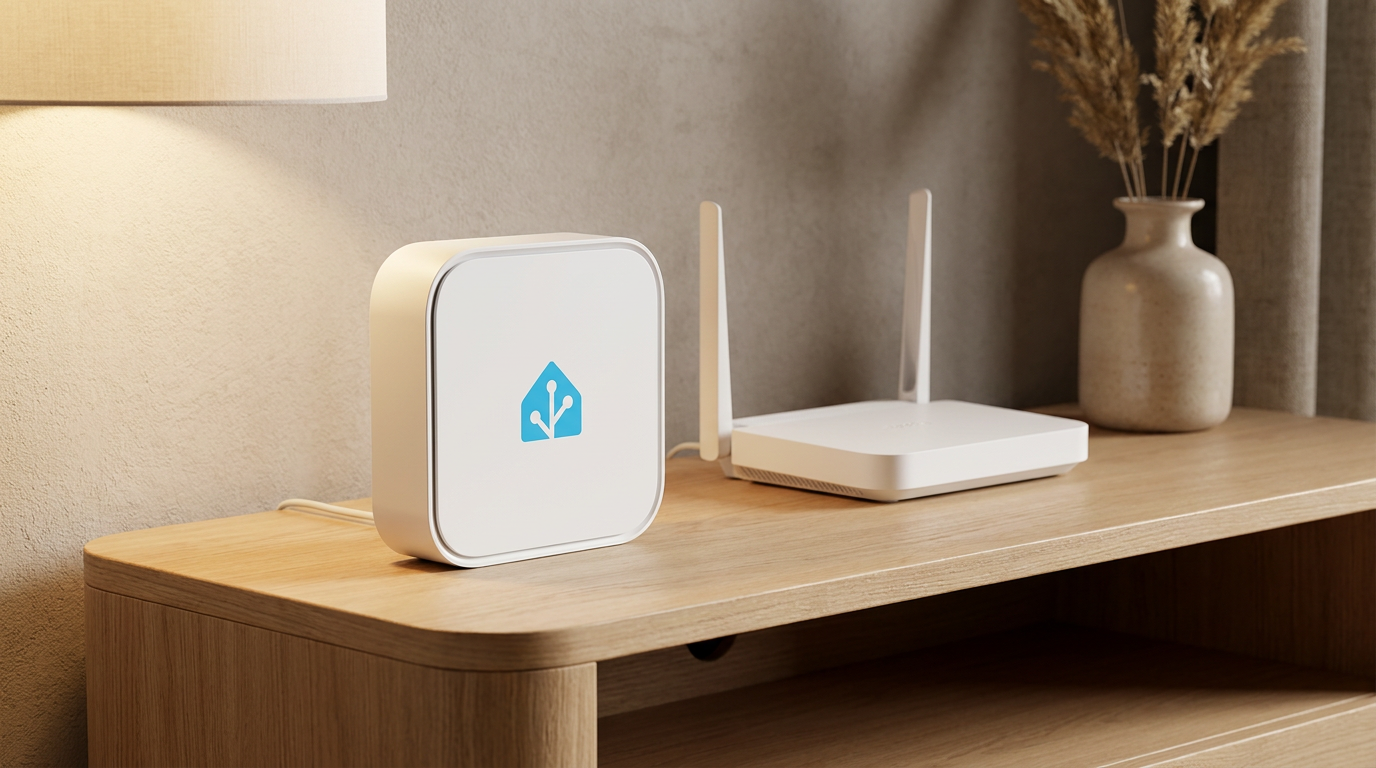
Originally launched in 2013, Home Assistant now boasts over 600,000 active installations worldwide. Unlike commercial alternatives, it runs entirely on local hardware—such as a Raspberry Pi or the plug-and-play Home Assistant Green hub—and processes every automation locally. Data never leaves the user's network, and there are no mandatory subscription fees.[4][5][6]
The platform's appeal lies in its unparalleled integration capabilities. It can connect to over 3,000 different device ecosystems, bridging the gap between legacy Zigbee or Z-Wave sensors and modern Matter-certified hardware. Users can build complex logic—such as adjusting HVAC systems based on real-time solar panel output—without writing a single line of code, all executed with zero latency.[5][6]
The push for local control has also reached the final frontier of the smart home: voice commands. For years, voice assistants were the ultimate cloud dependency, recording audio and sending it to remote servers for natural language processing. This raised significant privacy concerns and introduced frustrating delays.[7]

In response, the local-first movement has developed hardware capable of processing voice commands entirely on-device. Systems like the Home Assistant Voice Preview Edition utilize localized processing to parse commands like 'turn off the kitchen lights' without ever connecting to the internet. This ensures that intimate household conversations remain strictly within the home.[7]
Contrast this with the commercial sector, where some major tech companies have actually doubled down on cloud processing to integrate large language models into their voice assistants. This divergence has created a clear choice for consumers in 2026: the conversational fluidity of cloud-based AI, or the instantaneous, private reliability of local voice control.[1][7]
Despite the massive progress, the local-first utopia is not without its friction points. The transition to Thread has introduced a new challenge known as border router fragmentation. Because Thread networks require a 'border router' to connect to the home's main Wi-Fi, households mixing Apple and Google hubs can inadvertently create parallel, isolated Thread networks that struggle to share devices.[8]

Furthermore, while Matter promises universal compatibility, some hardware manufacturers have been slow to update their hubs to the latest Matter versions. This version mismatch can occasionally force users to fall back on proprietary apps for advanced features, temporarily defeating the purpose of a unified local standard.[3][8]
Nevertheless, the trajectory of the industry is unmistakable. The era of the smart home as a subscription service is ending. Consumers have realized that foundational home infrastructure—lighting, climate, and security—must be as reliable as the electrical wiring hidden behind the drywall.[1]
By combining the universal interoperability of Matter, the resilient mesh of Thread, and the uncompromising local processing of platforms like Home Assistant, the 2026 smart home has finally delivered on its original promise. It is a system that works instantly, respects privacy, and, most importantly, belongs entirely to the homeowner.[1][4]
How we got here
2013
Paulus Schoutsen releases the first version of Home Assistant as a Python script.
2014
The Thread Group is formed to build a low-power IPv6 mesh network for IoT devices.
Oct 2022
Matter 1.0 is officially released by the Connectivity Standards Alliance, establishing a universal standard.
Oct 2023
Matter 1.2 expands support to major household appliances like refrigerators and washing machines.
Early 2026
Home Assistant surpasses 600,000 active installations as local-first architecture becomes the industry baseline.
Viewpoints in depth
Open-Source Advocates
Prioritize absolute local control and privacy over cloud convenience.
For the open-source community, the shift to local control is fundamentally about ownership. They argue that if a device requires a remote server to turn on a light bulb, the consumer does not truly own the hardware. Platforms like Home Assistant were built to sever this dependency, ensuring that smart homes remain functional during internet outages and protecting intimate household data from being monetized by advertising companies.
Commercial Ecosystems
Support interoperability but favor cloud integrations for advanced AI features.
Major tech conglomerates view Matter and Thread as necessary evolutions to reduce consumer frustration and lower the barrier to entry for smart home adoption. However, they maintain that cloud processing is still essential for delivering next-generation features, particularly the integration of Large Language Models into voice assistants. They argue that the average consumer values conversational fluidity and zero-configuration setups over strict local isolation.
Hardware Integrators
Navigating the transition from proprietary models to open standards.
Device manufacturers are caught in a transitional phase. While adopting Matter and Thread expands their potential customer base by ensuring compatibility across all major hubs, it also commoditizes their hardware. Without proprietary apps and cloud subscriptions, manufacturers are losing recurring revenue streams, forcing them to compete purely on hardware quality, battery life, and aesthetic design.
What we don't know
- Whether major tech companies will fully resolve the 'border router fragmentation' that currently creates parallel, isolated Thread networks in mixed-brand homes.
- How quickly legacy device manufacturers will push over-the-air updates to make older hardware Matter-compatible.
- If local voice processing models can evolve to match the conversational fluidity of cloud-based Large Language Models without sacrificing privacy.
Key terms
- Matter
- A universal, open-source application layer that allows smart devices from different brands to communicate with each other.
- Thread
- A low-power, IPv6-based wireless mesh network designed specifically for smart home devices to communicate locally.
- Border Router
- A device that bridges a Thread mesh network to a standard home Wi-Fi or Ethernet network.
- Home Assistant
- An open-source, local-first home automation platform that serves as the central brain for a smart home.
- Mesh Network
- A network topology where each node relays data for the network, meaning the network gets stronger and more reliable as more devices are added.
Frequently asked
Do I need internet for a local smart home to work?
No. Once configured, a local-first system processes all automations and commands on your home network, meaning lights and locks work even during an internet outage.
Will my older Zigbee or Z-Wave devices work with Matter?
Yes, but they require a 'bridge' device. Many modern hubs can translate older Zigbee or Z-Wave signals into the Matter standard so they appear in your unified dashboard.
Can I still use voice control without the cloud?
Yes. Platforms like Home Assistant now offer local voice processing hardware that parses commands entirely on-device, ensuring audio is never sent to remote servers.
Sources
Source coverage
8 outlets
3 viewpoints surfaced







[1]Factlen Editorial TeamOpen-Source Advocates
Synthesis by Factlen editorial team
Read on Factlen Editorial Team →[2]Thread GroupHardware Integrators
Built for the Internet of Things: Smart Home Connectivity with Thread
Read on Thread Group →[3]Connectivity Standards AllianceCommercial Ecosystems
Matter: The Foundation for Connected Things
Read on Connectivity Standards Alliance →[4]Nabu CasaOpen-Source Advocates
Awaken your home: Open source home automation that puts local control and privacy first
Read on Nabu Casa →[5]Everyday Home ComfortHardware Integrators
The 7 Best Smart Home Hubs in 2026
Read on Everyday Home Comfort →[6]Leios ConsultingOpen-Source Advocates
What Is Home Assistant? The 2026 Guide
Read on Leios Consulting →[7]Mostly ChrisOpen-Source Advocates
Home Assistant Voice PE and Local Control
Read on Mostly Chris →[8]Pixie PartnersHardware Integrators
Thread: a low-power IPv6 mesh for the Matter era
Read on Pixie Partners →

Every angle. Every day.
Get home stories with full source coverage and perspective breakdowns delivered to your inbox.