
Federal Reserve Holds Rates Steady as Warsh Signals Potential Hikes Amid Inflation Surge
In his first meeting as chair, Kevin Warsh led the Federal Reserve in holding interest rates at 3.50% to 3.75% while overhauling the central bank's communication style. Driven by an energy-induced inflation spike, half of Fed officials now project a rate hike before the end of the year.
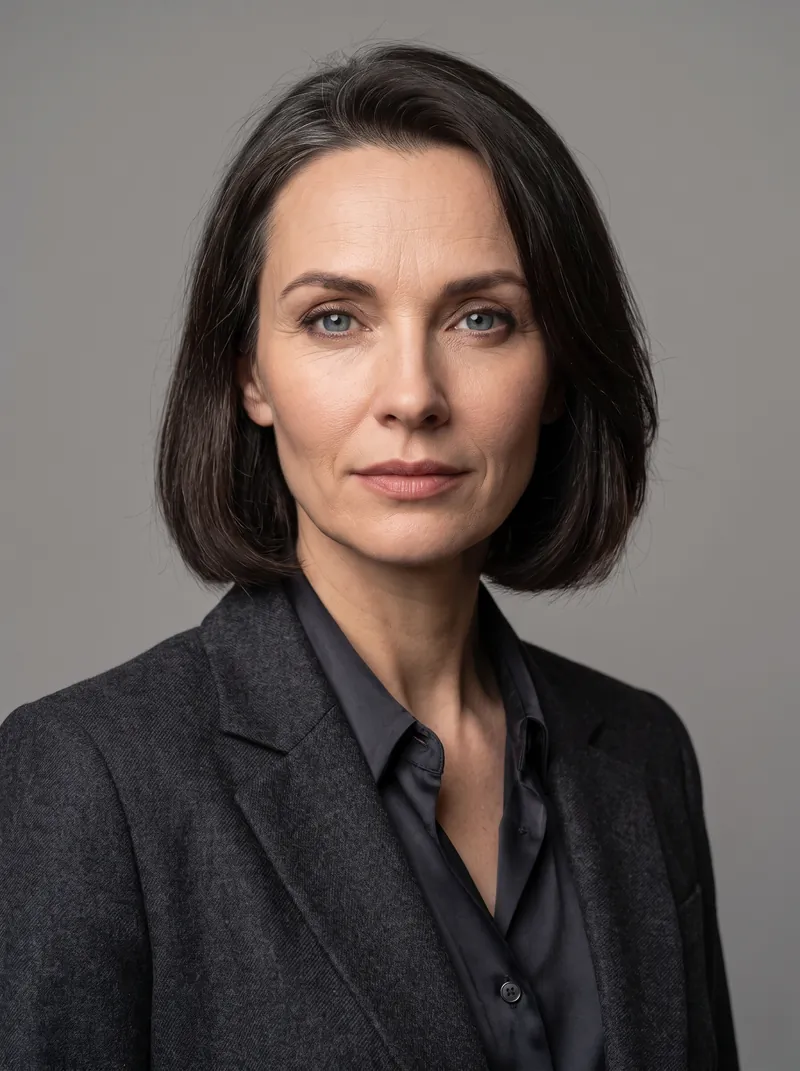
The US Federal Reserve held its benchmark interest rate steady at a range of 3.50% to 3.75% on Wednesday, marking the fourth consecutive meeting without a change to borrowing costs.[3][4]
The decision capped a highly anticipated two-day policy session—the first under the leadership of newly appointed Chair Kevin Warsh, who took the reins of the central bank last month.[1][4]
While the rate hold was widely expected by financial markets, the central bank delivered a hawkish surprise regarding its future path, effectively closing the door on near-term relief for borrowers.[6]
Updated quarterly projections, known as the "dot plot," revealed that nine of the 18 Federal Open Market Committee (FOMC) officials now anticipate at least one rate hike before the end of 2026.[5][7]
This marks a drastic reversal from December 2025, when the consensus heavily favored multiple rate cuts throughout the coming year, and underscores how rapidly the economic landscape has shifted.[6]
The primary culprit for the shifting calculus is a renewed surge in inflation, driven almost entirely by geopolitical instability rather than domestic demand.[2]
The ongoing US-Israel war with Iran, and the resulting blockade of the Strait of Hormuz, has triggered a global energy shock that is rippling through the American economy.[2]
Consequently, the US Consumer Price Index jumped to an annual rate of 4.2% in May, the highest level recorded since April 2023, forcing the Fed to abandon its easing posture.[4][6]
Beyond the economic data, Warsh used his inaugural meeting to fundamentally overhaul how the Federal Reserve communicates with the public and financial markets.[1]
The traditional post-meeting policy statement was aggressively pared down to just 130 words, a more than 60% reduction from the 341-word missives favored by his predecessor, Jerome Powell.[5]
In an early sign of Warsh's influence, the committee completely removed its forward guidance, eliminating language that previously signaled a bias toward reducing borrowing costs.[4][7]
The revised, ultra-brief format simply stated the rate decision, reaffirmed the intent to keep ample banking reserves, and noted that the committee "will deliver price stability."[4][7]
Analysts noted the new communication style closely mirrors the terse, minimalist approach utilized by former Fed Chairman Alan Greenspan, designed to reduce market volatility caused by over-analyzing central bank language.[7]
The statement also highlighted themes Warsh has frequently championed, specifically noting that "productivity growth and capital investment are strong," hinting at his focus on structural economic health over short-term demand management.[3][7]
Warsh assumes control of the central bank amid a complex political backdrop. He was appointed by President Donald Trump, who has historically pressured the Fed for cheaper borrowing costs.[3][4]
However, Trump has recently moderated his tone regarding monetary policy. Following Warsh's swearing-in, the president stated he would let the new chair "do what he wants to do," though he cautioned against the necessity of rate hikes.[4][5]
Looking ahead, economists warn that the balance of risks has definitively shifted toward entrenched inflation rather than a slowing labor market.[6]
If the Strait of Hormuz remains disrupted through the summer, the energy shock is expected to bleed into additional sectors, further complicating the Fed's mandate and potentially forcing a rate hike.
For American consumers, the pivot away from rate cuts means that elevated borrowing costs for mortgages, auto loans, and credit cards are likely locked in for the remainder of the year.[6]
Perspectives explored
Inflation Hawks
Economists arguing that the energy shock requires the Fed to abandon rate cuts and potentially hike borrowing costs.
This camp emphasizes that the May CPI reading of 4.2% cannot be ignored, even if it is primarily driven by external supply shocks rather than domestic demand. They argue that allowing energy prices to bleed into broader core inflation would repeat the mistakes of the 1970s. For these analysts, the fact that half the FOMC is now projecting a rate hike is a necessary and overdue acknowledgment of reality.
Institutional Analysts
Market watchers focused on Kevin Warsh's structural overhaul of central bank communications.
These observers are less focused on the immediate rate decision and more interested in the return to Greenspan-era brevity. By slashing the policy statement to 130 words and removing forward guidance, they argue Warsh is attempting to reduce market volatility caused by over-analyzing Fed language. They view the removal of the "bias toward rate cuts" as a masterclass in resetting expectations without triggering a market panic.
Geopolitical Observers
Analysts highlighting how Middle Eastern conflicts are dictating American monetary policy.
This perspective points out the irony of the Federal Reserve's domestic mandate being held hostage by international waters. They note that no amount of domestic rate manipulation can reopen the Strait of Hormuz or end the US-Israel war with Iran. From this view, the Fed is effectively paralyzed—unable to cut rates to help consumers because of imported inflation, but hesitant to hike rates because the underlying US economy isn't the source of the price spikes.
Key points
- The Federal Reserve held its benchmark interest rate steady at 3.50% to 3.75% during Kevin Warsh's first meeting as chair.
- Nine of 18 Fed officials now project at least one rate hike by the end of 2026, a sharp reversal from previous expectations of cuts.
- US inflation surged to 4.2% in May, driven primarily by an energy shock stemming from the US-Israel war with Iran.
- Warsh drastically altered Fed communications, shrinking the policy statement to 130 words and removing forward guidance.
Open questions
- Whether the Federal Reserve will actually execute a rate hike before the end of 2026, or if the nine officials projecting one will revise their forecasts.
- How long the Strait of Hormuz blockade will last, and whether the resulting energy shock will bleed into core inflation.
- How financial markets will adapt long-term to Kevin Warsh's minimalist communication style and lack of forward guidance.
Timeline
Dec 2025
The Federal Reserve executes its last rate cut, with markets pricing in multiple cuts for 2026.
Feb 2026
The US-Israel war with Iran escalates, leading to disruptions in the Strait of Hormuz and a spike in global energy prices.
May 2026
US inflation jumps to 4.2%, the highest level in three years, driven by the energy shock.
May 2026
Kevin Warsh is sworn in as the new Chairman of the Federal Reserve, appointed by President Donald Trump.
Jun 17, 2026
Warsh presides over his first FOMC meeting, holding rates steady and signaling a potential hike.
- Institutional Analysts
- Market watchers focused on Kevin Warsh's structural overhaul of central bank communications.
- Inflation Hawks
- Economists arguing that the energy shock requires the Fed to abandon rate cuts and potentially hike borrowing costs.
- Geopolitical Observers
- Analysts highlighting how Middle Eastern conflicts are dictating American monetary policy.
Perspectives this story doesn't cover
- American Consumers
- Energy Sector Executives
Sources
Source coverage
7 outlets
3 viewpoints surfaced







- [1]NYTInstitutional Analysts
See how the first Fed statement under Warsh evolved.
Read on NYT → - [2]Al JazeeraGeopolitical Observers
US Federal Reserve holds rates steady under new chair Warsh
Read on Al Jazeera → - [3]The GuardianGeopolitical Observers
Federal Reserve holds interest rates steady for fourth time this year
Read on The Guardian → - [4]The Washington PostGeopolitical Observers
Fed holds rates steady amid elevated inflation
Read on The Washington Post → - [5]ForbesInstitutional Analysts
Fed Holds Interest Rates Unchanged In Kevin Warsh’s First Meeting—But Higher Rates Are Expected
Read on Forbes → - [6]CBS NewsInflation Hawks
What will the Fed do with interest rates?
Read on CBS News → - [7]BNN BloombergInstitutional Analysts
Warsh-led Fed expected to leave U.S. interest rates unchanged
Read on BNN Bloomberg →
More in News & Politics
See all →Dual Sovereignty
The Dual Sovereignty Doctrine: Why the Double Jeopardy Clause Allows Two Trials for One Crime
6 sources
Climate Liability
Supreme Court Hears Landmark Arguments on Whether Cities Can Sue Big Oil Over Climate Damages
4 sources
Executive Power
Trump Directs $2 Billion From Medicare Fund for $90 Senior Rebates Ahead of Midterms
7 sources
Federal Savings Programs
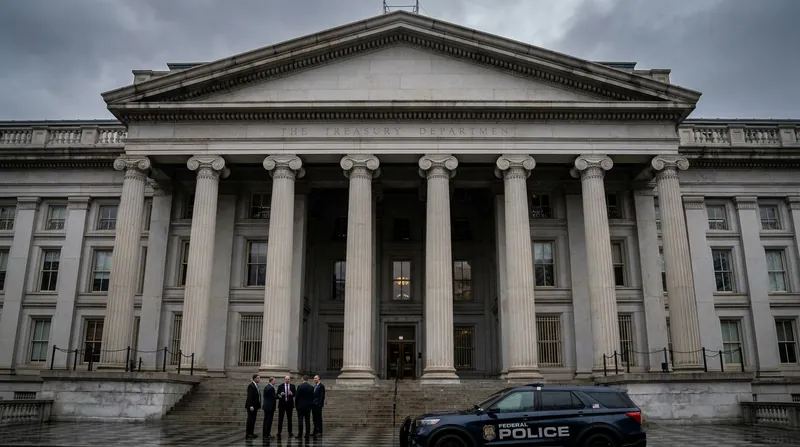
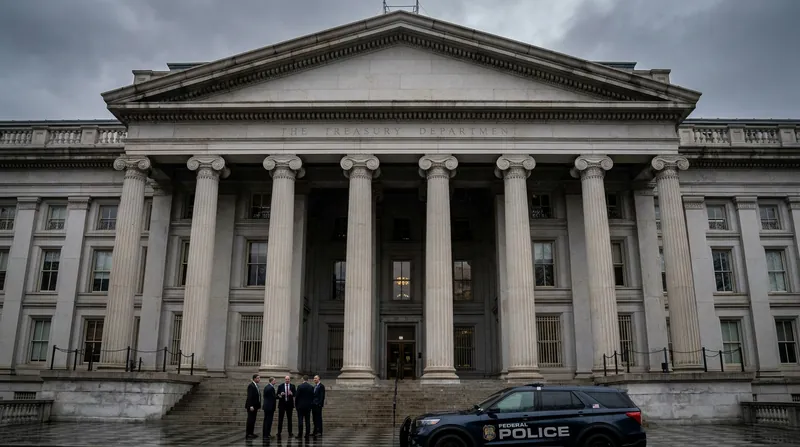
Treasury Department Completes Automatic Enrollment of 60 Million Children in Trump Accounts
8 sources
Comments
Every angle. Every day.
Get News & Politics stories with full source coverage and perspective breakdowns, free every day.