
The End of the Black Box: How Social Media is Handing Algorithm Control Back to Users
Major platforms like Instagram and Threads are rolling out tools that let users directly edit their recommendation algorithms, marking a fundamental shift in how social feeds are curated.
By Factlen Editorial Team
- Platform Executives
- Tech leaders argue that giving users agency over their feeds is essential for long-term retention.
- User Experience Advocates
- Critics and advocates welcome the transparency but question if it goes far enough.
- Digital Creators
- Independent artists and creators see a shift from viral lottery to intentional community building.
What's not represented
- · Advertisers adjusting to user-curated feeds
- · Teen safety advocates evaluating the new controls
Why this matters
For years, social media feeds have been dictated by opaque systems that prioritize engagement over user preference. This shift restores individual agency, allowing users to actively curate their digital diets and reduce algorithmic fatigue.
Key points
- Major social media platforms are introducing tools that allow users to directly edit their recommendation algorithms.
- Instagram has expanded its 'Your Algorithm' feature to the main feed, letting users add or remove specific content topics.
- The system uses large language models to translate complex ranking data into easy-to-understand categories.
- The shift aims to restore user agency and combat the fatigue associated with opaque, engagement-driven feeds.
- While users can control topics, the tools do not currently allow users to prioritize posts from specific accounts they follow.
The social media feed is starting to behave less like a black box and more like a conversation. For the better part of a decade, the digital experience has been dictated by opaque recommendation engines that prioritize engagement over explicit user preference.
Users have historically been given blunt tools to shape their experience—a "like" here, a "not interested" tap there—but the real decision-making sat with algorithms interpreting those passive signals at scale. Now, that one-sided dynamic is fracturing.
A wave of updates across major platforms is handing the steering wheel back to the user. As reported by TechCrunch, social media's next evolution is the "user-controlled algorithm," a fundamental shift where platforms explicitly ask users what they want to see, rather than just guessing based on their scrolling habits.[1]
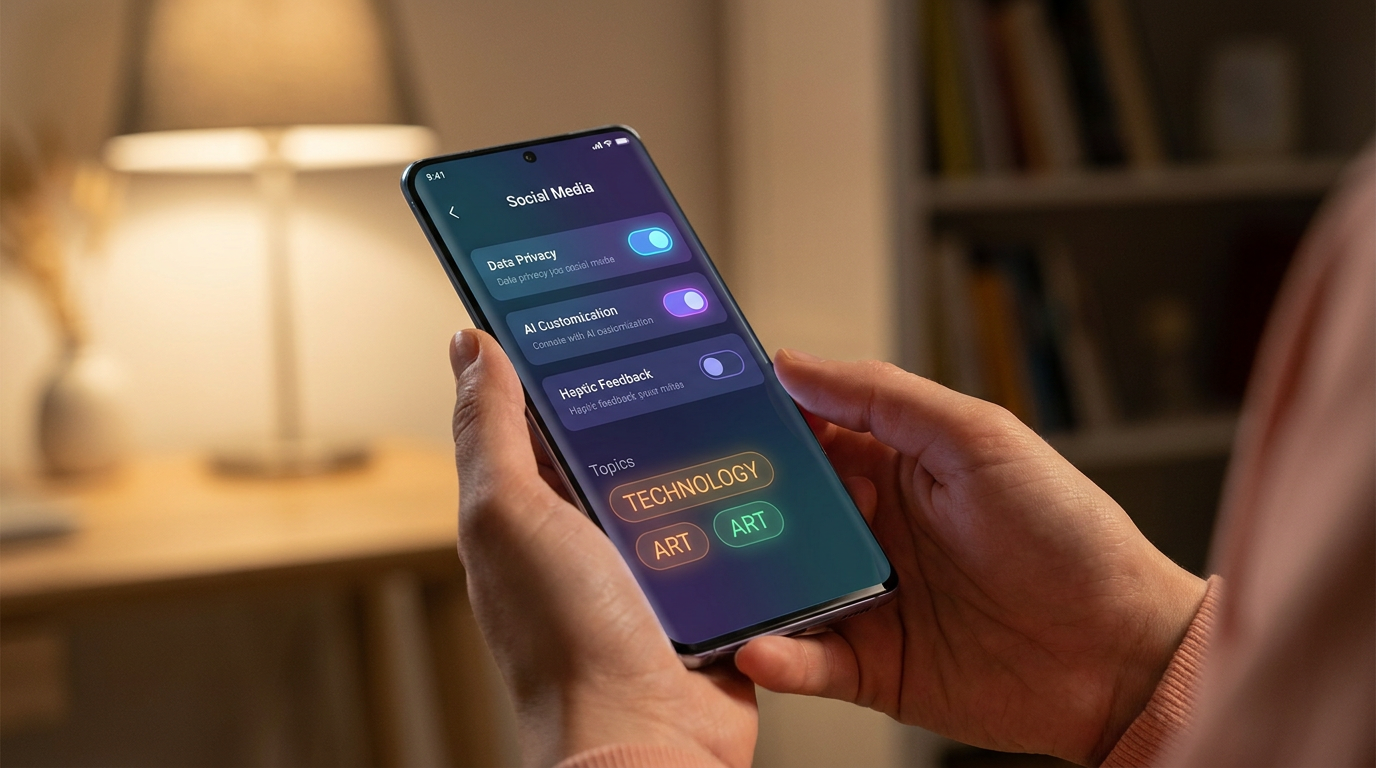
The most prominent example arrived this week when Instagram expanded its "Your Algorithm" feature directly to the main feed. Previously restricted to Reels and the Explore page since its initial debut, the tool grants users direct control over the specific content suggested as they scroll.[2][3][4]

The mechanism behind this transparency is surprisingly complex. According to Instagram head Adam Mosseri, this technical shift relies heavily on the integration of large language models.[4]
These AI systems act as real-time translators. They take visually complex, mathematical ranking data and cluster it into legible text categories—like "rescue dogs," "baking," or "parenting humor"—that make sense to the average person.[3][4]
Users can review the list of topics the system has associated with their account, actively add subjects they want to see more of, and remove those they want to see less of. Any changes made are immediately applied to the ranking model going forward, reshaping their daily viewing experience.[5]
Any changes made are immediately applied to the ranking model going forward, reshaping their daily viewing experience.
Threads, Meta's text-based platform, is experimenting with similar agency. The platform recently introduced features allowing users to explicitly request more or less of certain topics for set durations, treating interests as temporary moods rather than permanent identity markers.[1]
Why the sudden pivot to transparency? Mosseri noted that the tech industry has failed to properly reckon with the cost that algorithmic recommendations exact on individual agency. As feeds shifted away from chronological posts by friends, users began to feel that the app experience was happening to them, rather than being shaped by them.[4][5]

There are also significant external pressures driving this change. The European Union's Digital Services Act now mandates that large platforms provide users with clear options to modify or opt out of algorithmic profiling, forcing a baseline of transparency.[1]
Furthermore, decentralized competitors like Bluesky and Mastodon have made customizable, user-controlled feeds a core selling point. This has forced legacy incumbents to adapt their walled gardens or risk losing their most engaged power users to open-source alternatives.[1]
For creators, musicians, and independent artists, this shift fundamentally alters the growth playbook. Instead of chasing broad, unpredictable viral moments, discovery may become about connecting with highly relevant audiences who have explicitly opted into specific niches.[6]
However, the new tools have notable limitations. As Engadget points out, the "agency" offered by Instagram's update applies strictly to interest-based topics, not to the people users actually follow.[3]
When users attempt to request "posts from people I follow" through the new prompt, the system returns an error message stating no results were found.[3]

Mosseri acknowledged this specific frustration, explaining that because users rarely post polished moments to their main feeds anymore—preferring Stories and direct messages—algorithmic recommendations became an "inevitability" to keep the main feed active and interesting.[3]
Still, the current iteration of user-controlled algorithms is likely just a stepping stone. Engineering teams are actively working on supporting requests for specific creators, distinct moods, and various content formats.[4][5]
Looking further ahead, Mosseri envisions a future where AI generates entire bespoke experiences on the fly. In this scenario, not just the ranking, but the structure of the app itself could be tailored to an individual in real time, marking the ultimate end of the one-size-fits-all social network.[2][5]
How we got here
2016
Instagram abandons the chronological feed in favor of algorithmic ranking.
October 2025
Instagram launches the first test of 'Your Algorithm' exclusively for Reels.
April 2026
The 'Your Algorithm' feature expands to the Explore page.
June 2026
Instagram rolls out algorithm controls to the main feed, alongside similar features from Threads and TikTok.
Viewpoints in depth
Platform Executives
Tech leaders argue that giving users agency over their feeds is essential for long-term retention.
Executives like Instagram's Adam Mosseri contend that as social media shifted away from chronological updates by friends, users lost their primary tool for shaping their experience. By using AI to translate complex ranking signals into legible topics, platforms hope to restore a sense of ownership. They view this not as a retreat from algorithmic curation, but as an evolution that makes recommendations more accurate and less frustrating for the end user.
User Experience Advocates
Critics and advocates welcome the transparency but question if it goes far enough.
While acknowledging the step forward, user advocates point out that these tools still operate within the platform's walled garden. Users can tweak topics, but they cannot easily override the system to simply see more posts from their actual friends. Advocates argue that true agency would involve chronological options or the ability to completely disable algorithmic insertion, rather than just steering it.
Digital Creators
Independent artists and creators see a shift from viral lottery to intentional community building.
For years, creators have had to reverse-engineer opaque algorithms, often resorting to engagement bait to achieve reach. With users now explicitly declaring their interests, creators anticipate a landscape where content reaches smaller, but highly engaged and relevant audiences. This shift favors niche expertise and authentic community building over broad, algorithm-pleasing trends.
What we don't know
- How widely average users will actually adopt and regularly update these manual algorithm controls.
- Whether these tools will meaningfully reduce the spread of outrage-bait and engagement-driven content.
- How the shift to user-defined niches will impact the overall advertising revenue models of major platforms.
Key terms
- Large Language Model (LLM)
- AI systems used to translate complex, mathematical ranking data into plain-text topics users can understand.
- Black Box Algorithm
- A recommendation system where the inputs and decision-making processes are hidden from the user.
- Digital Services Act (DSA)
- European Union legislation that requires large tech platforms to offer users more transparency and choice over algorithmic recommendations.
Frequently asked
Can I set my feed to only show people I follow?
While Instagram offers a dedicated 'Following' feed, the new algorithm controls only apply to recommended topics, not specific accounts you follow.
How do I access the 'Your Algorithm' feature?
Users can access it through the feed settings or by tapping the preferences icon in Reels or Explore, which brings up a list of inferred interests to edit.
Why are platforms making this change now?
A combination of user fatigue with algorithmic feeds, regulatory pressure from laws like the EU's Digital Services Act, and competition from customizable platforms like Bluesky.
Sources
Source coverage
6 outlets
3 viewpoints surfaced






[1]TechCrunchDigital Creators
Social media’s next evolution: user-controlled algorithms
Read on TechCrunch →[2]Social Media TodayPlatform Executives
Instagram extends Your Algorithm to the main feed
Read on Social Media Today →[3]EngadgetUser Experience Advocates
Instagram just made it a whole lot easier to control what you see in your main feed
Read on Engadget →[4]HypebeastPlatform Executives
Instagram Now Lets You Tell the Algorithm What You Actually Want
Read on Hypebeast →[5]GhacksUser Experience Advocates
Instagram Expands Your Algorithm Controls to Main Feed
Read on Ghacks →[6]RouteNoteDigital Creators
Instagram's “Your Algorithm” tool is coming to the main feed
Read on RouteNote →

More in technology
See all 5 stories →Battery Tech
Silicon-Carbon Batteries Bring 6,000mAh Capacities to Ultra-Thin Smartphones
7 sources

Quantum Error Correction
Quantum Computing Enters the Fault-Tolerant Era as Error Correction Breakthroughs Scale
7 sources

Game Engine Tech
Epic Games Details Unreal Engine 6: A Push for Generative AI and an Interoperable Metaverse
8 sources

Every angle. Every day.
Get technology stories with full source coverage and perspective breakdowns delivered to your inbox.