
OLED vs. Mini-LED TVs: The 2026 Buyer's Guide
In 2026, the gap between OLED and Mini-LED has never been narrower, but choosing the right television still comes down to your room's lighting and viewing habits.
By Factlen Editorial Team
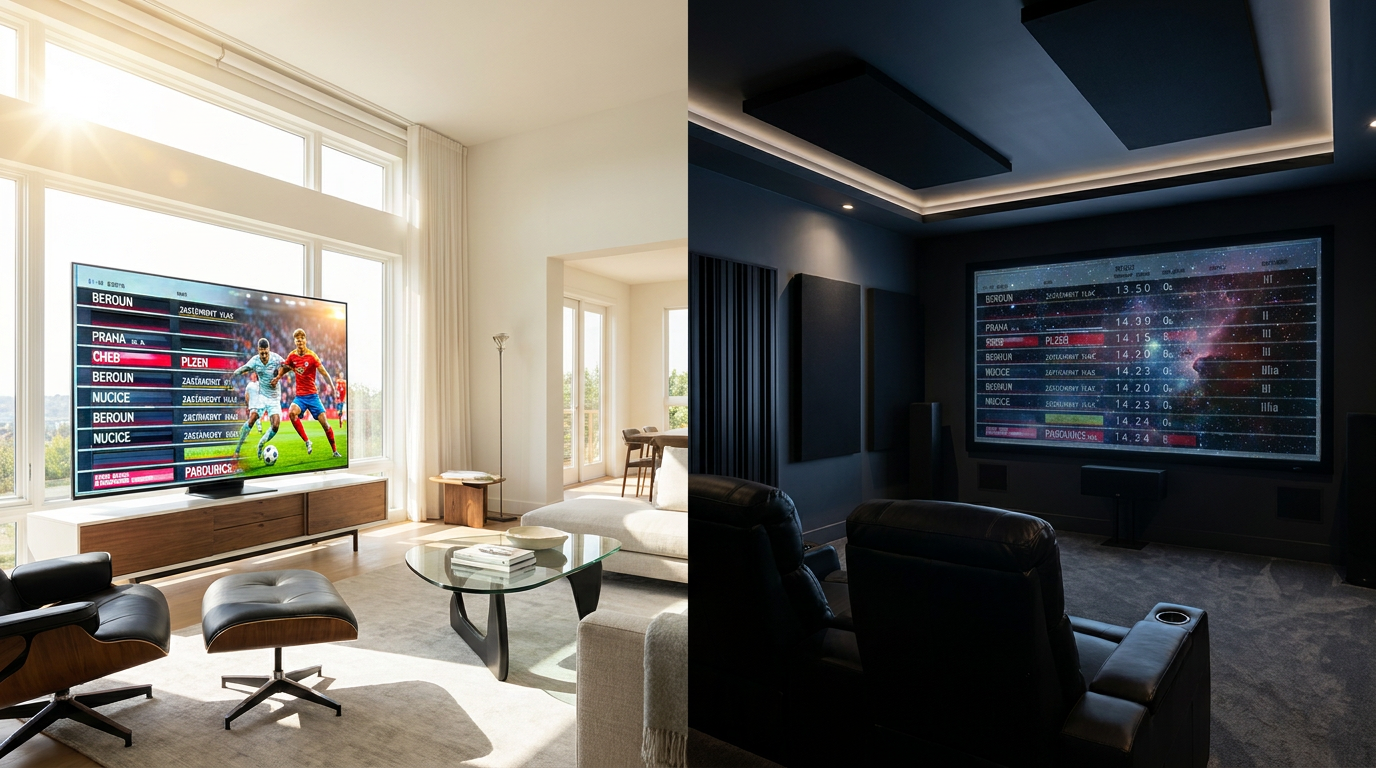
- Home Cinema Purists
- Viewers who prioritize absolute picture perfection in controlled lighting environments.
- Bright-Room Viewers
- Consumers placing televisions in living spaces with abundant natural light.
- Large-Format Value Buyers
- Shoppers looking to maximize screen real estate without spending luxury car prices.
What's not represented
- · Casual Viewers
- · PC Monitor Users
Why this matters
A premium television is a multi-year investment that dictates how you experience entertainment, gaming, and news. Understanding the specific trade-offs between these two mature technologies prevents buyers from overspending on the wrong panel for their living space.
Key points
- OLEDs offer perfect black levels and infinite contrast, making them ideal for dark home theaters.
- Mini-LEDs can reach over 2,500 nits of brightness, dominating in sun-drenched living rooms.
- New Tandem OLED and QD-OLED technologies have pushed OLED brightness past 2,000 nits in 2026.
- Mini-LEDs completely avoid the risk of permanent burn-in, making them safer for static content.
- Mini-LED dominates the ultra-large screen market, offering 100-inch displays for a fraction of the cost of OLED.
The 2026 premium television market is defined by a fierce and rapidly accelerating technological convergence between OLED and Mini-LED displays. For the better part of a decade, the advice given to consumers was relatively straightforward: buy an OLED if you want perfect black levels, and buy an LED if you need a bright screen for a sunny room. However, the battle between the two formats has reached a fever pitch this year, with both technologies successfully stealing engineering tricks from each other to close their respective performance gaps and win over a broader base of consumers. As manufacturers push the boundaries of what these panels can achieve, the traditional dividing lines have blurred, making the purchasing decision more nuanced than ever before. Buyers are no longer forced to accept massive compromises, but rather must navigate a landscape where both options offer spectacular, albeit slightly different, visual experiences.[1][6]
Despite the narrowing performance gap, the fundamental architectural divide between the two technologies remains completely unchanged. OLED, which stands for Organic Light-Emitting Diode, features millions of self-illuminating pixels that can turn off completely, generating their own light and color entirely independently of one another. This means there is no backlight whatsoever. Conversely, Mini-LED relies on a traditional LCD panel that is illuminated from behind by thousands of miniaturized LED backlight zones. These microscopic lights are grouped into clusters that dim and brighten dynamically based on the content being displayed on the screen. While Mini-LED algorithms have become incredibly sophisticated at managing these zones to mimic the precision of OLED, the physical reality of shining a light through an LCD layer fundamentally dictates how the television handles extreme contrast, viewing angles, and overall luminance.[3][5]
For years, the primary argument against OLED technology was its relative lack of peak brightness, but the 2026 hardware cycle has aggressively rewritten that narrative. LG’s introduction of Tandem OLED architecture in its flagship G5 series, alongside Samsung’s highly refined QD-OLED panels, has pushed peak HDR highlights well past the 2,000-nit barrier. By stacking multiple light-emitting layers or utilizing quantum dots to boost color luminance, these modern OLEDs can deliver a forceful, dynamic image that finally holds its own in moderately lit living rooms. This breakthrough eliminates the old caveat that OLEDs were strictly reserved for pitch-black basement theaters, allowing the technology to punch through ambient light while maintaining the rich, saturated colors that made the format famous in the first place.[1][4]
Despite OLED’s impressive and highly publicized gains in luminance, Mini-LED remains the undisputed champion of sheer, unadulterated light output. Flagship models hitting the market in 2026, such as the Sony Bravia 9 and the Hisense UR9, are now capable of pushing 2,500 to well over 3,000 nits of peak brightness. More importantly, these televisions can sustain incredibly high full-screen brightness levels without triggering the aggressive auto-dimming limiters that OLED panels must use to protect their organic materials from overheating. This massive light output provides the core evidence for Mini-LED’s continued dominance in challenging viewing environments, ensuring that the picture remains vivid and impactful no matter how much ambient light is flooding the room.[2][5]

This overwhelming brightness makes Mini-LED the superior choice for sun-drenched living rooms and open-concept homes with large, uncovered windows. When battling daytime glare or bright overhead lighting, the sustained full-screen brightness of a Mini-LED prevents the image from washing out, maintaining vibrant colors and clear visibility for daytime sports broadcasts or afternoon gaming sessions. Furthermore, advanced anti-reflective coatings paired with this immense backlight power mean that reflections from lamps or windows are effectively overpowered by the television itself. For households where the television serves as the central hub of a brightly lit, multi-use family space, the sheer horsepower of a premium Mini-LED provides a viewing experience that requires zero compromises regarding room lighting.[2][4]
Conversely, OLED maintains its absolute and unquestioned supremacy in dark-room environments and dedicated home theaters. Because each of its eight million pixels operates entirely independently, an OLED panel delivers an infinite contrast ratio with perfect, inky blacks. When a scene calls for absolute darkness—such as a shot of deep space or a shadowy cinematic thriller—the pixels simply turn off, emitting zero light. This creates a profound sense of three-dimensional depth and image purity that backlit televisions simply cannot replicate, no matter how many dimming zones they employ. For videophiles who watch movies with the lights off, this pixel-level precision remains the holy grail of picture quality.[1][5]
Mini-LED manufacturers have aggressively increased their local dimming zone counts—often numbering in the thousands—to mimic this perfect contrast, but the laws of physics still apply. Even the most advanced Mini-LED algorithms, powered by cutting-edge AI processors, struggle slightly with a phenomenon known as "blooming." This occurs when a faint halo of light bleeds around bright objects placed against dark backgrounds, such as white subtitles over a black cinematic letterbox or a bright streetlamp in a dark alleyway. While 2026 Mini-LEDs have reduced blooming to a level that most casual viewers will never notice, critical viewers in pitch-black rooms will still spot the subtle glow that betrays the presence of a backlight.[1][5]

When evaluating the evidence for gaming performance, OLED holds a distinct mechanical advantage that makes it the darling of the competitive gaming community. The technology boasts near-instantaneous pixel response times, often measuring under 0.1 milliseconds, which entirely eliminates motion blur and ghosting during fast-paced action. Whether tracking an opponent in a first-person shooter or navigating a high-speed racing simulator, the image remains razor-sharp in motion. Combined with native 144Hz or 165Hz refresh rates on modern panels, OLED provides a level of motion clarity and input responsiveness that LCD-based Mini-LEDs, which rely on physically twisting liquid crystals, simply cannot match.[1][4][5]
When evaluating the evidence for gaming performance, OLED holds a distinct mechanical advantage that makes it the darling of the competitive gaming community.
However, the primary argument against OLED for heavy gamers, PC users, or news junkies remains the lingering risk of permanent image retention, commonly known as burn-in. While modern panels use advanced pixel-shifting algorithms, logo-dimming software, and physical cooling heatsinks to mitigate the danger, static elements displayed for thousands of hours can still degrade the organic material over time. Users who play a single game with a static heads-up display for eight hours a day, or households that leave a 24-hour news network with a scrolling ticker running unattended, must still exercise a degree of caution that simply isn't required with other display technologies.[1][5]
Mini-LED completely sidesteps the burn-in issue, making it a zero-anxiety investment for households with heavy, unpredictable viewing habits. Because the backlight relies on inorganic LEDs, the screen is entirely immune to permanent image retention, regardless of what is displayed on it. This makes Mini-LED the "lower-regret" choice for consumers who want to use their television as a massive productivity monitor, leave sports networks running all weekend, or allow children to pause video games for hours without worrying about damaging a premium investment. The peace of mind that comes with a bulletproof panel is a significant factor for many buyers.[6]
Perhaps the most dramatic divergence between the two technologies in 2026 is found in the rapidly expanding ultra-large screen market. As consumers increasingly demand cinematic proportions for their living rooms, the cost-to-scale ratio heavily favors LED backlighting. Manufacturing flawless sheets of organic OLED material becomes exponentially more difficult and expensive as the screen size increases past 83 inches. In contrast, scaling up an LCD panel with Mini-LED backlighting is a highly efficient and mature manufacturing process, allowing companies like TCL and Hisense to flood the market with massive, high-quality displays at remarkably aggressive price points.[2][6]
This economic reality means that buyers can currently secure a massive 100-inch premium Mini-LED television for roughly $3,000, delivering a truly immersive, projector-like experience with searing HDR brightness. In stark contrast, scaling an OLED panel to 97 inches pushes the retail price well past the $20,000 mark, relegating giant OLEDs to the ultra-luxury niche. For anyone looking to fill a massive wall without taking out a second mortgage, Mini-LED is not just the better option—it is effectively the only viable option in the consumer marketplace.[2]

Ultimately, the decision between these two stellar technologies requires an honest assessment of your specific viewing habits and room architecture, rather than a simple spec-sheet comparison. OLED fits perfectly when you are outfitting a light-controlled home theater, prioritizing moody, cinematic HDR movies, or seeking the ultimate motion clarity for competitive console and PC gaming. It is the definitive choice for the uncompromising videophile who demands absolute pixel-perfect black levels and is willing to manage the room's lighting to achieve the best possible picture.[4][6]
Conversely, OLED does not fit well in rooms flooded with natural daylight, where its glossy screen and lower full-screen brightness can lead to distracting reflections and a washed-out image during daytime viewing. It is also not the ideal choice for users who habitually leave static content running unattended for hours on end, such as news tickers or paused video games, as the lingering anxiety over potential burn-in can detract from the carefree enjoyment of a premium home entertainment purchase.[5]
Mini-LED fits exceptionally well when the television serves as the centerpiece of a bright, multi-use family room, for hosting daytime sports watch parties, or when maximizing screen size per dollar is the primary goal. It offers a zero-maintenance, highly durable viewing experience that can overpower the sunniest of rooms while still delivering spectacular HDR highlights and deep, satisfying contrast for evening movie nights.[2][6]
Mini-LED does not fit well for uncompromising videophiles who watch low-light cinema in pitch-black rooms and find themselves distracted by minor backlight blooming around subtitles or starfields. However, in 2026, the industry has effectively eliminated the concept of a bad premium television. Both OLED and Mini-LED have matured into spectacular display technologies, leaving consumers with the enviable task of simply matching the right panel to their specific lifestyle and living space.[1]
How we got here
2013
First commercial OLED TVs launch, offering perfect blacks but low brightness and high burn-in risk.
2019
Mini-LED technology enters the consumer market, dramatically increasing the number of dimming zones for LCD TVs.
2022
QD-OLED panels are introduced, combining quantum dots with OLED for improved color volume and brightness.
2024
Mini-LED TVs breach the 100-inch barrier at consumer-friendly price points.
2026
Tandem OLED architecture reaches the consumer market, pushing OLED peak brightness past 2,000 nits.
Viewpoints in depth
Home Cinema Purists
Viewers who prioritize absolute picture perfection in controlled lighting environments.
This camp argues that nothing surpasses the pixel-level precision of OLED. They point to the infinite contrast ratio and the complete absence of blooming as non-negotiable features for watching 4K HDR movies. For these viewers, the slightly lower peak brightness is a worthwhile trade-off for the inky blacks and three-dimensional depth that OLED provides in a dark room.
Bright-Room Viewers
Consumers placing televisions in living spaces with abundant natural light.
This perspective values sheer luminance and glare reduction above all else. They argue that perfect black levels are irrelevant if the screen is washed out by afternoon sun. Mini-LED's ability to sustain 2,500+ nits of full-screen brightness ensures that sports, news, and daytime television remain vibrant and punchy, regardless of the room's ambient lighting.
Large-Format Value Buyers
Shoppers looking to maximize screen real estate without spending luxury car prices.
This camp focuses on the economics of scale. They highlight that while OLED is spectacular at 65 inches, the technology becomes prohibitively expensive at 85 inches and beyond. For these buyers, securing a 100-inch Mini-LED for under $3,000 provides a far more immersive and impactful viewing experience than a smaller OLED at the same price point.
What we don't know
- Whether Micro-LED technology will eventually drop in price enough to replace both OLED and Mini-LED.
- Exactly how long the new Tandem OLED panels will last before showing signs of degradation under heavy use.
Key terms
- Mini-LED
- A display technology that uses thousands of tiny LED lights behind an LCD screen, grouped into dimming zones to control brightness and contrast.
- OLED
- Organic Light-Emitting Diode, a display technology where each individual pixel generates its own light and can turn off completely for perfect black levels.
- Blooming
- A visual artifact where light bleeds from a bright object into surrounding dark areas of the screen, common on backlit TVs.
- Nits
- A unit of measurement for the brightness of a display; higher numbers mean a brighter screen.
- Local Dimming Zones
- Specific areas of a TV's backlight that can dim or brighten independently to improve contrast.
- Tandem OLED
- A new panel architecture that stacks multiple light-emitting layers to increase brightness and lifespan.
Frequently asked
Does OLED still suffer from burn-in in 2026?
Modern OLEDs use pixel-shifting and advanced cooling to mitigate burn-in, but the risk remains for static elements like news tickers or gaming HUDs played for thousands of hours.
What is Tandem OLED?
It is a new panel architecture that stacks multiple light-emitting layers, allowing 2026 OLEDs to reach much higher brightness levels without destroying the organic materials.
Why are large OLEDs so much more expensive than Mini-LEDs?
Manufacturing flawless sheets of organic material becomes exponentially more difficult and expensive at sizes above 83 inches, whereas LCD fabrication scales cheaply.
Sources
Source coverage
6 outlets
3 viewpoints surfaced






[1]RTINGSHome Cinema Purists
OLED vs Mini LED: Which TV Technology is Better in 2026?
Read on RTINGS →[2]TechRadarLarge-Format Value Buyers
The arrival of RGB Mini-LED and 100-inch screens
Read on TechRadar →[3]What Hi-Fi?Home Cinema Purists
Best TVs 2026: OLED and Mini-LED picks
Read on What Hi-Fi? →[4]Data Wire SolutionsBright-Room Viewers
Best TVs for 2026: 10 OLED and Mini-LED Picks by Room
Read on Data Wire Solutions →[5]EcoPicksGoBright-Room Viewers
OLED vs Mini LED TVs: 2026 Buyer's Guide
Read on EcoPicksGo →[6]Alibaba Market InsightsLarge-Format Value Buyers
OLED vs Mini LED TV: 2026 Market Insights and Product Trends
Read on Alibaba Market Insights →

Every angle. Every day.
Get shopping stories with full source coverage and perspective breakdowns delivered to your inbox.