
The Evidence for Adaptive Reuse: Why Office-to-Apartment Conversions Are Surging
With over 90,000 office-to-residential units in the U.S. pipeline, developers are increasingly turning to adaptive reuse to solve downtown vacancies. Evidence shows these conversions drastically cut carbon emissions, though physical and financial constraints mean they require targeted execution.
By Factlen Editorial Team
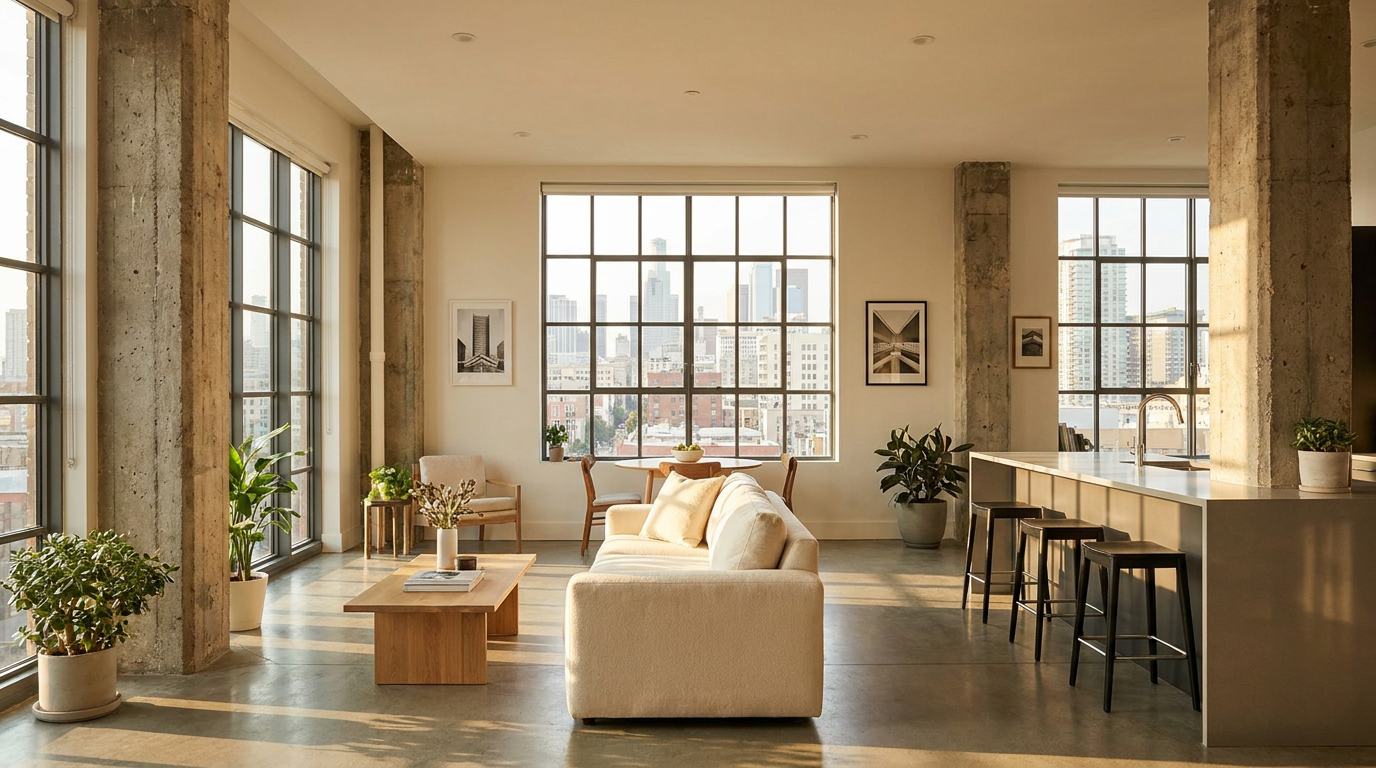
- Urban Planners & Developers
- Argue that converting vacant offices is essential for revitalizing downtowns and requires strong municipal incentives to overcome high upfront costs.
- Environmental Advocates
- Emphasize that preserving existing structures is crucial for climate goals, as it drastically reduces the embodied carbon emissions of new construction.
- Real Estate Skeptics
- Caution that physical constraints and high costs mean conversions will only ever represent a small fraction of the total housing supply needed.
What's not represented
- · Low-Income Housing Advocates
- · Commercial Office Tenants
Why this matters
Adaptive reuse offers a rare double-win for cities: it creates much-needed housing supply while drastically reducing the carbon footprint of new construction. Understanding the evidence behind these conversions reveals how urban centers are evolving to survive the post-pandemic economy.
Key points
- The U.S. pipeline for office-to-residential conversions reached 90,300 units in early 2026, a 28% year-over-year increase.
- Adaptive reuse projects can reduce embodied carbon emissions by up to 77% compared to new construction.
- Only about 11% of downtown office buildings are physically suitable for conversion, largely due to floor plate depth.
- Financial viability heavily depends on municipal incentives, with upfront capital grants proving more effective than long-term tax abatements.
The persistent shift toward hybrid work has left North American downtowns grappling with elevated office vacancy rates and hollowed-out commercial corridors. Simultaneously, a severe national housing shortage continues to drive up residential rents, locking millions out of affordable urban living. This dual crisis has forced city planners and real estate developers to rethink the fundamental purpose of the central business district.[7]
To bridge this gap, developers are rapidly accelerating "adaptive reuse"—the conversion of obsolete commercial buildings into residential apartments. According to early 2026 data from Yardi Matrix and RentCafe, there are currently 90,300 office-to-rental units actively in the United States development pipeline.[1]
This represents a 28% year-over-year increase and is nearly four times the conversion volume recorded in 2022. Office conversions now account for 47% of all adaptive reuse projects nationwide, moving well past historic hotel and factory conversions. New York City, Washington, D.C., and Chicago currently lead the transition, though secondary markets like Denver and St. Louis are seeing their pipelines double.[1]

Beyond urban revitalization, the strongest evidence supporting adaptive reuse lies in climate science. The global construction industry is responsible for nearly 40% of annual carbon dioxide emissions. A significant portion of this stems from "embodied carbon"—the massive greenhouse gas emissions generated by manufacturing, transporting, and assembling heavy materials like steel, concrete, and masonry.[2]
A 2026 report by the Rocky Mountain Institute (RMI) demonstrates that preserving a building's primary structure and exterior shell eliminates the most resource-heavy phases of real estate development. In documented case studies, adaptive reuse achieved a remarkable 77% reduction in cradle-to-gate embodied carbon emissions compared to demolishing a site and building a comparable structure from scratch.[2]
The financial implications of this material preservation are also substantial. The RMI analysis found that reusing structural elements, alongside salvageable plumbing and electrical infrastructure, can reduce overall project budgets by up to 46% compared to ground-up construction. This dynamic effectively aligns aggressive carbon reduction directly with developer cost savings.[2]

Despite these dual benefits, the evidence shows that not every empty office tower can seamlessly become housing. A landmark working paper by the National Bureau of Economic Research (NBER) evaluated the physical feasibility of conversions across the 105 largest U.S. cities to separate the hype from architectural reality.[3]
Despite these dual benefits, the evidence shows that not every empty office tower can seamlessly become housing.
The NBER researchers found that only about 11% of downtown office buildings are physically suitable for residential conversion. The primary barrier is the "floor plate." Modern office buildings constructed after the 1960s are often too deep, making it impossible to provide natural light and exterior windows for every residential bedroom without carving out expensive, structurally complex central atriums.[3]
However, capturing even that 11% would be transformative for the housing market. The NBER estimates that converting the physically suitable Class B and C office buildings could add roughly 400,000 apartments to the existing national housing stock. Because these buildings are heavily concentrated in transit-rich downtown corridors, they offer highly efficient, walkable housing.[3]

For the buildings that are physically viable, the next hurdle is financial feasibility. A July 2025 study by Econsult Solutions analyzed conversion initiatives across major North American cities to determine which government incentives actually work to bridge the funding gap for developers taking on these complex retrofits.[4]
The study revealed a stark divide in policy effectiveness. Programs offering substantial upfront capital—such as Chicago's Tax Increment Financing (TIF) and Calgary's direct grant program—successfully pushed projected Internal Rates of Return (IRR) above the 15–20% threshold required to spur private investment.[4]
In contrast, long-term tax abatement programs often failed to offset high upfront construction costs, leaving projected IRRs below 8%. To counter this, New York City recently implemented the 467-m property tax exemption, which mandates that 25% of the new apartments be income-restricted. This aggressive policy is currently sustaining the city's nation-leading pipeline of over 16,000 units.[4][6]

Still, real estate analysts caution against viewing adaptive reuse as a panacea for the broader housing crisis. Historically, office-to-multifamily conversions have made up only about 1% of total multifamily deliveries over the past two decades, constrained by high interest rates, strict zoning laws, and the bespoke nature of every project.[5]
Furthermore, the current vacancy differential between multifamily and office space does not always cover the cost of conversion for an average building. Success requires a perfect alignment of low acquisition costs, suitable mid-century architecture, and aggressive municipal support to make the math work.[5]
While adaptive reuse cannot single-handedly solve the national housing shortage, the evidence is clear: when targeted at the right buildings with the right upfront incentives, it is a highly effective tool. It simultaneously rescues distressed commercial assets, injects 24/7 vitality into hollowed-out downtowns, and offers one of the most carbon-efficient methods of building new homes.[7]
How we got here
2020–2021
The COVID-19 pandemic triggers a massive shift to remote work, emptying downtown office buildings across North America.
2022
Office-to-residential conversions begin to gain traction, but represent only a small fraction of total multifamily construction.
August 2023
The NBER publishes a landmark study identifying that 11% of downtown offices are physically suitable for residential conversion.
May 2024
New York State enacts the 467-m property tax exemption to incentivize conversions that include affordable housing.
Early 2026
The U.S. conversion pipeline surges to over 90,000 units, representing 47% of all planned adaptive reuse projects.
Viewpoints in depth
Urban Planners & Developers
Focuses on the economic revitalization of hollowed-out city centers.
For municipal leaders and developers, the primary goal of adaptive reuse is to rescue the tax base of downtown districts that have suffered from the shift to remote work. By converting empty Class B and C office spaces into residential units, cities can generate 24/7 foot traffic, supporting local retail and transit. However, this camp stresses that because acquisition and renovation costs are so high, these projects rarely pencil out without aggressive government intervention, such as upfront capital grants or fast-tracked zoning approvals.
Environmental Advocates
Focuses on the massive carbon savings of preserving existing building materials.
Climate researchers view adaptive reuse as a critical strategy for decarbonizing the built environment. Because manufacturing steel and concrete generates massive amounts of greenhouse gases, the 'embodied carbon' of a new building is a major climate liability. By saving the structural skeleton of an office tower, developers can avoid up to 77% of these upfront emissions. Advocates argue that municipal building codes should heavily penalize demolition to force more developers toward this low-carbon alternative.
Real Estate Skeptics
Focuses on the physical and financial limitations that prevent widespread adoption.
Industry analysts point out the harsh physical realities of modern office architecture. Buildings constructed after the 1960s often feature massive, deep floor plates designed for cubicles, making it impossible to run natural light into residential bedrooms without cutting expensive light wells through the center of the structure. Combined with the need to completely replace plumbing and HVAC systems, skeptics argue that conversions are often more expensive than ground-up construction, meaning they will remain a niche product rather than a macro solution to the housing shortage.
What we don't know
- Whether secondary and suburban markets will adopt the aggressive upfront capital incentives required to make conversions viable outside of major coastal cities.
- How the long-term maintenance costs of retrofitted mid-century office buildings will compare to purpose-built modern apartment complexes.
- The exact impact these conversions will have on neighborhood-level affordability once the 90,000 pipeline units actually hit the market.
Key terms
- Adaptive reuse
- The process of repurposing an existing building for a use other than what it was originally designed for, such as turning an office into apartments.
- Embodied carbon
- The total greenhouse gas emissions generated by the manufacturing, transportation, and assembly of building materials like steel and concrete.
- Floor plate
- The total leasable square footage of a single floor in a building, which dictates how far interior spaces are from exterior windows.
- Internal Rate of Return (IRR)
- A metric used in real estate to estimate the profitability of potential investments; higher IRRs indicate more financially viable projects.
- Class B and C offices
- Older, less modern commercial buildings that lack the premium amenities of newer 'Class A' spaces, making them prime candidates for conversion.
Frequently asked
What is an office-to-residential conversion?
It is a form of adaptive reuse where an obsolete or vacant commercial office building is gutted and rebuilt internally to serve as residential apartments or condominiums.
Why are so many office buildings being converted now?
The shift to hybrid work has left many older office buildings vacant, while a national housing shortage has driven up demand for apartments, creating a financial incentive to repurpose the space.
Are these conversions good for the environment?
Yes. By reusing the existing concrete and steel structure, developers can reduce the 'embodied carbon' emissions of the project by up to 77% compared to demolishing and building from scratch.
Why can't every empty office be turned into housing?
Many modern office buildings have 'deep floor plates,' meaning the interior spaces are too far from the windows. Residential building codes require bedrooms to have natural light and exterior egress, making deep buildings physically unsuitable.
Sources
Source coverage
7 outlets
3 viewpoints surfaced







[1]CRE DailyUrban Planners & Developers
Office conversions hit 90K units in 2026, led by New York
Read on CRE Daily →[2]Rocky Mountain InstituteEnvironmental Advocates
The State of Play on Embodied Carbon and Adaptive Reuse
Read on Rocky Mountain Institute →[3]National Bureau of Economic ResearchReal Estate Skeptics
Converting Brown Offices to Green Apartments
Read on National Bureau of Economic Research →[4]Econsult SolutionsUrban Planners & Developers
Which Incentives Move the Needle? A Study of Office-to-Residential Conversions
Read on Econsult Solutions →[5]CBRE ResearchReal Estate Skeptics
Office-to-Multifamily Conversions: Rare and Unlikely to Impact the Bottom Line
Read on CBRE Research →[6]New York City GovernmentUrban Planners & Developers
The Pipeline of Office-to-Residential Conversions in NYC
Read on New York City Government →[7]Factlen Editorial Team
Synthesis by Factlen editorial team
Read on Factlen Editorial Team →
Every angle. Every day.
Get real estate stories with full source coverage and perspective breakdowns delivered to your inbox.