
Office-to-Apartment Conversions Hit Record 90,000 Units as Cities Reimagine Empty Downtowns
Driven by remote work and housing shortages, developers are transforming aging office buildings into residential apartments at a record pace. The adaptive reuse trend now accounts for nearly half of all conversion projects nationwide.
By Factlen Editorial Team
- Real Estate Developers
- Focus on the financial viability, market demand, and the necessity of tax incentives to make conversions profitable.
- Municipalities & Urban Planners
- Focus on revitalizing downtowns, replacing lost commercial tax revenue, and adding housing supply.
- Architects & Engineers
- Focus on the physical constraints, structural feasibility, and design solutions required for adaptive reuse.
What's not represented
- · Affordable Housing Advocates
- · Commercial Office Tenants
Why this matters
As remote work permanently alters the commercial landscape, adaptive reuse offers a tangible solution to two of America's biggest urban crises: hollowed-out downtowns and a severe shortage of housing. For renters, this trend promises an influx of new apartments in highly walkable, transit-rich neighborhoods.
Key points
- A record 90,300 office-to-apartment conversion units are currently in the U.S. pipeline for 2026.
- Office conversions now account for 47 percent of all adaptive reuse projects nationwide, surpassing hotels and industrial spaces.
- New York City leads the nation with over 16,300 planned units, followed by Washington, D.C., and Chicago.
- Structural constraints, such as deep floor plates and commercial HVAC systems, mean only about 30 percent of existing offices are viable for conversion.
- Cities are increasingly offering aggressive property tax abatements to help developers offset the massive capital costs of retrofitting commercial buildings.
The dual crisis of the mid-2020s left American cities with a glaring contradiction: downtown commercial districts were hollowed out by the permanent shift to remote work, while a severe national housing shortage drove residential rents to historic highs. To the casual observer, the solution seemed incredibly obvious—simply move the people who desperately needed homes into the office buildings that no longer had workers. Yet, executing that vision required overcoming decades of zoning laws, financial hurdles, and complex architectural constraints.[6]
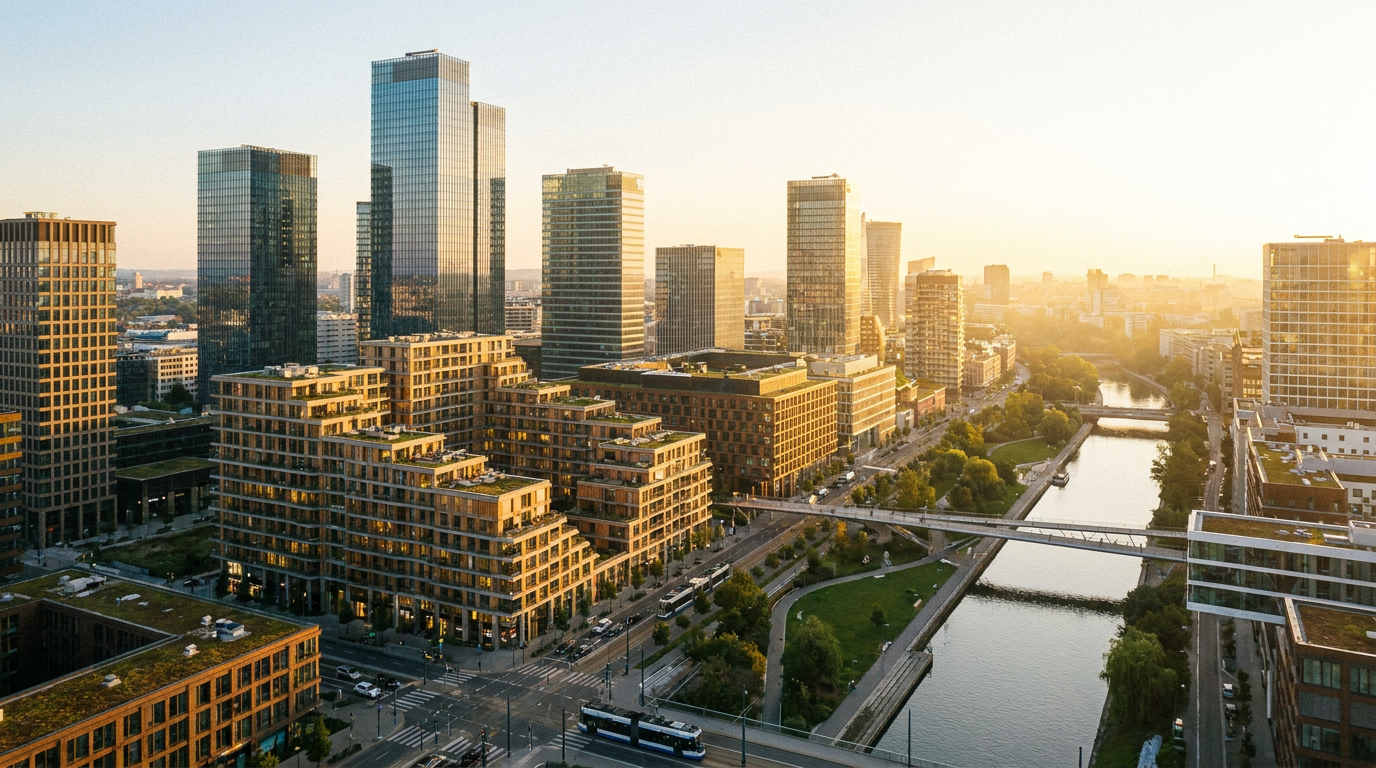
What began as a pandemic-era thought experiment has rapidly matured into a booming, highly specialized sector of the commercial real estate industry. By 2026, the concept of adaptive reuse has definitively moved from a niche architectural novelty to a mainstream pillar of urban redevelopment. Developers, architects, and city planners have spent the last few years refining the process, turning the theoretical promise of office conversions into a scalable reality that is fundamentally reshaping the skylines and streetscapes of major metropolitan areas.[1][4]
The sheer scale of the transformation is now visible in the data. As of early 2026, developers have a record-breaking 90,300 office-to-apartment conversion units in the active pipeline across the United States. This represents a massive acceleration in the market, marking a 28 percent year-over-year jump and a staggering 291 percent increase compared to the conversion pipeline tracked in 2022. The momentum is so strong that office conversions now account for 47 percent of all future adaptive reuse projects nationwide, easily eclipsing the conversion of hotels, warehouses, and industrial properties.[1][2][4]

New York City has emerged as the undisputed epicenter of this architectural movement, boasting an active pipeline of more than 16,300 planned conversion units. The city's unique combination of aging commercial stock, sky-high residential demand, and aggressive new municipal incentives has created the perfect laboratory for adaptive reuse. Washington, D.C., and Chicago follow closely behind, with roughly 8,400 and 4,300 units in development respectively, driven by their own urgent needs to revitalize downtown corridors that have struggled to recover pre-pandemic foot traffic.[1][2]
However, the trend is no longer confined to coastal gateway cities and traditional financial hubs. Mid-sized markets are increasingly embracing the strategy, proving that the economics of conversion can work outside of the most expensive real estate markets. Cities like Philadelphia, Denver, and St. Louis have more than doubled their conversion pipelines over the past year. Local developers in these regions are leveraging the strategy to reinvigorate their own urban cores, transforming obsolete Class B and Class C office parks into vibrant, mixed-use residential communities.[1][2]
Despite the booming numbers and widespread enthusiasm, transforming a sprawling cubicle farm into a livable, code-compliant apartment building is not as simple as erecting a few drywall partitions. The physical anatomy of commercial buildings presents massive engineering hurdles that dictate which properties can actually be saved and which are destined for the wrecking ball. The most notorious obstacle facing architects and developers is the "floor plate"—the total square footage and geometric shape of a single floor within the building.[5][7]
Modern office buildings, particularly those built during the commercial real estate booms of the late 20th century, were designed with massive, deep rectangular footprints. The goal was to maximize interior desk space and minimize exterior construction costs. But this deep-core geometry creates a severe problem for residential developers. Residential building codes—and basic human psychology—require natural light and operable windows in bedrooms and primary living spaces.[5][7]

The goal was to maximize interior desk space and minimize exterior construction costs.
In a deep office building, placing apartments along the perimeter leaves a massive, windowless "dark core" in the center of the building that is legally uninhabitable as living space. As a result, older, narrower office buildings constructed before the advent of modern centralized air conditioning are often the best candidates. These pre-war structures frequently feature U-shaped, H-shaped, or narrow rectangular designs that naturally maximize perimeter window space, allowing developers to easily carve out well-lit residential units without wasting central square footage.[5][7]
Beyond the geometry of the floor plate, engineers must contend with the vastly different infrastructure requirements of commercial versus residential living. An office floor designed to accommodate 100 daytime workers might feature just two centralized bathrooms near the elevator bank and a single, massive air conditioning zone. The electrical grid is designed for computers and overhead fluorescent lights, not dozens of individual electric ranges, washers, and dryers operating simultaneously.[5]
Converting that exact same floor into ten individual apartments requires a complete gutting of the mechanical systems. Construction crews must core through thick concrete slabs to install dozens of new water lines, sewer drains, and individual climate control zones. Furthermore, residential tenants generate significantly more humidity through showering, cooking, and laundry than office workers do. This requires entirely new exhaust and ventilation systems to prevent mold growth and structural damage, adding millions of dollars to the conversion budget.[5]
Because of these rigid structural realities, architectural experts estimate that only a fraction of the nation's empty office stock is actually viable for a residential pivot. Global design firm Gensler, which has evaluated thousands of buildings across the country using a proprietary scoring system, estimates that only about 30 percent of existing office buildings possess the right combination of physical characteristics and financial metrics to make a conversion pencil out. In some specific regional markets, analysts estimate that fewer than one percent of buildings qualify as ideal candidates.[8]

When a building does fit the precise physical profile, however, the timeline advantages over traditional development are immense. Because the foundation, structural shell, and elevator cores already exist, adaptive reuse projects bypass the most time-consuming and disruptive phases of urban construction. Developers can often complete an office-to-residential conversion in 50 percent less time than a comparable ground-up residential tower. A well-executed conversion can move from the drawing board to welcoming its first tenants in just 8 to 16 months.[8]
To bridge the financial gap for these expensive interior retrofits, local governments are increasingly stepping in with aggressive policy incentives, realizing that the survival of their downtown tax bases depends on it. In New York, the recently implemented 467-m tax incentive program offers developers significant property tax abatements if they dedicate 25 percent of the newly converted units to affordable housing. Similar programs in Boston offer property tax abatements for up to 29 years, effectively shifting the financial calculus for hesitant investors.[3][6]
This public-private synergy is yielding massive, high-profile successes that serve as blueprints for the rest of the industry. In Manhattan, the historic 25-story Candler Building near Times Square recently secured $203 million in financing to transform its aging office space into 176 market-rate and affordable apartments. Similarly, the Gensler-designed Pearl House in New York's Financial District successfully converted a massive, underutilized 1970s office tower into a premier residential community, proving that even mid-century commercial assets can be salvaged.[3][8]

Urban policy experts note that this wave of conversions represents a fundamental rewiring of the municipal business model. For decades, American cities relied heavily on taxing the economic activity generated by daytime office commuters. By actively subsidizing the creation of residential neighborhoods in former commercial districts, cities are attempting to replace lost office revenue with a stabilized residential tax base, fostering resilient neighborhoods that remain active and economically productive long after the traditional five o'clock whistle.[6]
How we got here
March 2020
The onset of the COVID-19 pandemic triggers a massive shift to remote work, emptying downtown office buildings across the country.
2022
Early adaptive reuse projects begin to gain traction, with roughly 23,000 office-to-apartment conversion units entering the national pipeline.
July 2023
Cities like Boston launch pilot programs offering financial incentives and tax abatements to developers willing to convert vacant offices into housing.
March 2026
The national conversion pipeline hits a record 90,300 units, with office conversions accounting for nearly half of all adaptive reuse projects in the U.S.
Viewpoints in depth
Municipalities & Urban Planners
City officials view conversions as a vital tool to replace lost commercial tax revenue and revitalize hollowed-out downtowns.
For urban planners, the remote work era presented an existential threat to the municipal business model, which relied heavily on taxing daytime commercial activity. By offering tax abatements and zoning relief for conversions, cities are attempting to engineer a soft landing. They argue that subsidizing these expensive retrofits is necessary to create vibrant, 24/7 residential neighborhoods that will generate long-term property taxes and support local retail, replacing the lost economic engine of the daily commuter.
Real Estate Developers
Developers see massive potential in adaptive reuse but stress that the financial math requires significant public subsidies.
While developers are eager to offload distressed office assets and capitalize on high residential rents, they emphasize that conversions are not a cheap silver bullet. The sheer cost of gutting commercial HVAC systems, coring through concrete for new plumbing, and navigating complex zoning codes often makes these projects financially unviable on their own. Developers argue that without aggressive municipal tax incentives—like New York's 467-m program—the high capital expenditures required to meet residential building codes would prevent most of these projects from ever breaking ground.
Architects & Engineers
Design professionals focus on the rigid physical constraints that dictate which buildings can actually be saved.
Architects and structural engineers serve as the reality check on the conversion boom. They point out that despite the millions of square feet of empty office space, only about 30 percent of buildings possess the right 'bones' for residential living. They advocate for targeted, data-driven approaches to identify older, narrower buildings with favorable floor plates, warning that attempting to force residential layouts into deep, mid-century commercial monoliths will result in substandard housing with uninhabitable 'dark cores.'
What we don't know
- Whether the influx of converted luxury apartments will significantly lower overall rent prices in major metropolitan areas.
- How the long-term property tax revenues from these new residential buildings will compare to the commercial taxes they are replacing.
- If mid-sized cities can sustain the current pace of conversions without the massive financial subsidies offered by larger coastal hubs.
Key terms
- Adaptive Reuse
- The process of repurposing an existing building for a use other than what it was originally designed for, such as turning an office into apartments.
- Floor Plate
- The total square footage and geometric shape of a single floor within a commercial building.
- Dark Core
- The central, windowless area of a deep office building that is too far from the perimeter to receive natural light, making it legally uninhabitable as residential space.
- HVAC Zoning
- The division of a building's heating and cooling system into separate, independently controlled areas, which must be drastically increased when converting a single office floor into multiple apartments.
- 467-m Tax Incentive
- A New York City program that provides property tax abatements to developers who convert commercial buildings into residential properties, provided a portion of the units are affordable.
Frequently asked
Why can't all empty offices become apartments?
Many modern office buildings have massive, deep floor plates that make it impossible to provide natural light to all units, leaving a large, uninhabitable 'dark core' in the center.
Is it cheaper to convert an office or build from scratch?
While conversions save money on the foundation and structural shell, the extensive plumbing, electrical, and HVAC retrofits required can make them nearly as expensive as ground-up construction, though they are often completed 50% faster.
Do converted apartments have operable windows?
Yes. Residential building codes require natural light and ventilation in living spaces, which is why older, narrower buildings with more perimeter window space are the best candidates for conversion.
How are cities encouraging these conversions?
Many municipalities are offering significant property tax abatements, streamlined zoning approvals, and direct subsidies to developers, often in exchange for dedicating a percentage of the new units to affordable housing.
Sources
Source coverage
8 outlets
3 viewpoints surfaced








[1]CRE DailyReal Estate Developers
Office conversions hit 90K units in 2026, led by New York, and now account for 47% of all adaptive reuse activity nationwide
Read on CRE Daily →[2]The Real DealReal Estate Developers
U.S. office-to-apartment conversions hits new high
Read on The Real Deal →[3]Multi-Housing NewsReal Estate Developers
Yellowstone Secures $203M for Manhattan Office Conversion
Read on Multi-Housing News →[4]ConstructConnectMunicipalities & Urban Planners
Adaptive Reuse Surge: Office-to-Residential Projects Nearly Quadruple Since 2022
Read on ConstructConnect →[5]PBSArchitects & Engineers
Cities look to revive downtowns by converting offices to housing
Read on PBS →[6]Brookings InstitutionMunicipalities & Urban Planners
A case study approach to office-to-residential conversions
Read on Brookings Institution →[7]JPMorgan ChaseArchitects & Engineers
What to know about office-to-residential conversion
Read on JPMorgan Chase →[8]GenslerArchitects & Engineers
Office-to-Residential Conversion Success Stories
Read on Gensler →
Every angle. Every day.
Get real estate stories with full source coverage and perspective breakdowns delivered to your inbox.