
US and Iran Agree to 60-Day Ceasefire and Memorandum of Understanding to End War
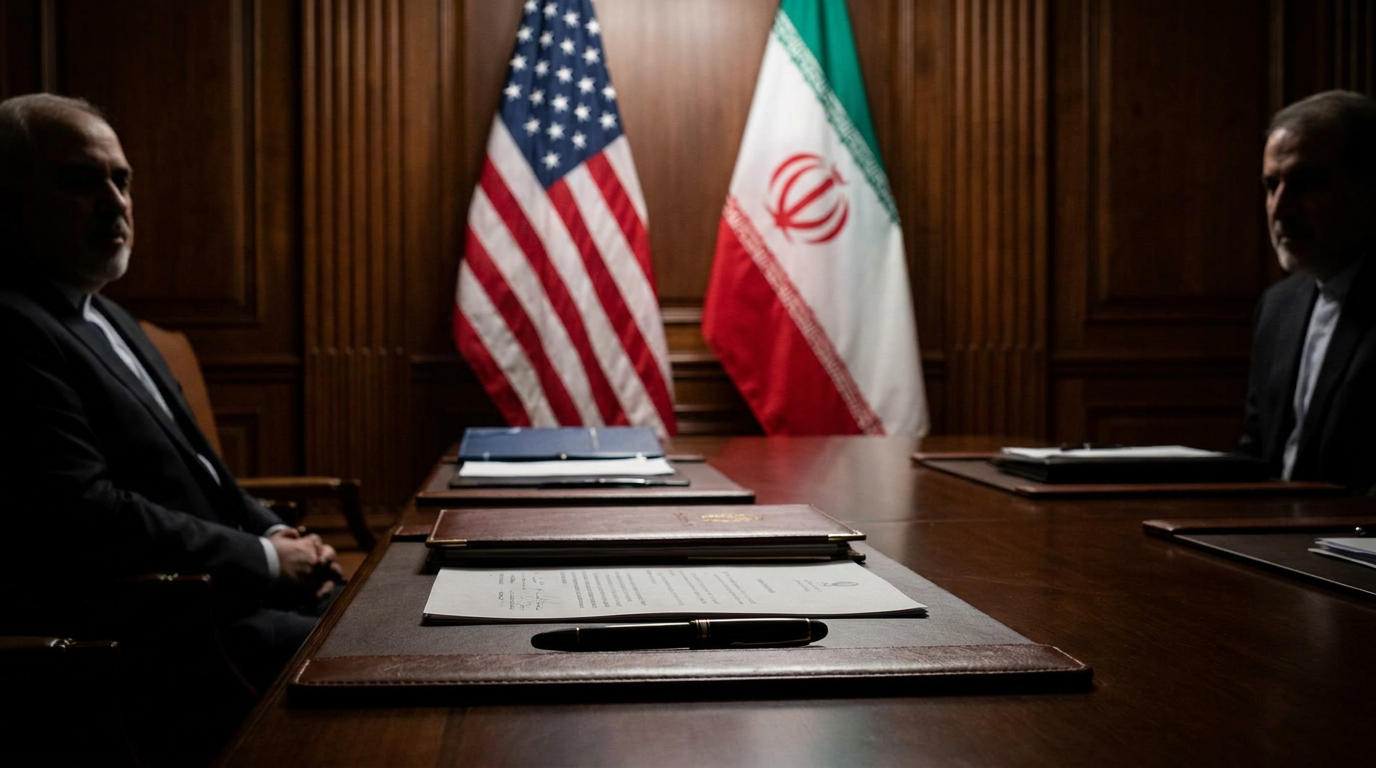
The United States and Iran have digitally signed a Memorandum of Understanding to end their months-long conflict, reopen the Strait of Hormuz, and begin 60 days of negotiations on Tehran's nuclear program.
By Factlen Editorial Team
- US Administration & European Allies
- The deal is a necessary step to stabilize the global economy and open a pathway to permanently dismantling Iran's nuclear ambitions.
- US Domestic Critics
- The war was a costly failure that ultimately achieved less than previous diplomatic agreements.
- Israeli Government & Security Hawks
- The ceasefire prematurely relieves pressure on Iran and leaves its nuclear and proxy infrastructure intact.
- Iranian Hardliners
- The agreement is a Western trap designed to strip Iran of its sovereignty and defensive capabilities.
What's not represented
- · Lebanese Civilians
- · Global Shipping Companies
Why this matters
The reopening of the Strait of Hormuz is expected to immediately lower global energy prices and ease inflation, which recently hit a three-year high in the US. However, the deferral of a final nuclear settlement leaves the long-term security of the Middle East uncertain.
Key points
- The US and Iran have digitally signed a 14-point Memorandum of Understanding to end their recent conflict.
- The agreement establishes a 60-day ceasefire across all fronts, including the conflict in Lebanon.
- The US will lift its naval blockade, allowing commercial shipping to resume in the Strait of Hormuz within 30 days.
- Negotiations over Iran's enriched uranium stockpile and a proposed $300 billion reconstruction fund will occur during the ceasefire.
- The framework faces intense skepticism from Israeli officials, US domestic critics, and Iranian hardliners.
The United States and Iran have reached a landmark Memorandum of Understanding (MOU) to end a devastating months-long war, establishing a 60-day ceasefire and reopening the critical Strait of Hormuz to global shipping. The agreement was digitally signed over the weekend by US President Donald Trump, Vice President JD Vance, and Iranian Parliament Speaker Mohammad Bagher Ghalibaf, signaling a sudden diplomatic breakthrough in a conflict that had threatened to engulf the entire Middle East. A formal, in-person signing ceremony is scheduled to take place on Friday in Geneva, Switzerland, where international mediators hope to cement the framework. The announcement marks a pivotal shift from military confrontation to high-stakes diplomacy, though the path to a permanent treaty remains fraught with geopolitical hurdles.[1][2][4]
The conflict, which erupted in late February 2026 and quickly drew in Israeli forces against Hezbollah militants in Lebanon, has exacted a heavy human and economic toll. Conservative estimates suggest the violence has claimed over 7,000 lives across the region, including the deaths of 13 American service members and hundreds of civilians caught in the crossfire. The newly signed MOU mandates an immediate and permanent cessation of hostilities across all active fronts. Operationally, this requires the United States to immediately halt its naval blockade of Iranian ports, while Tehran must cease its retaliatory closure of the Strait of Hormuz and guarantee safe passage for international maritime traffic.[4][8]
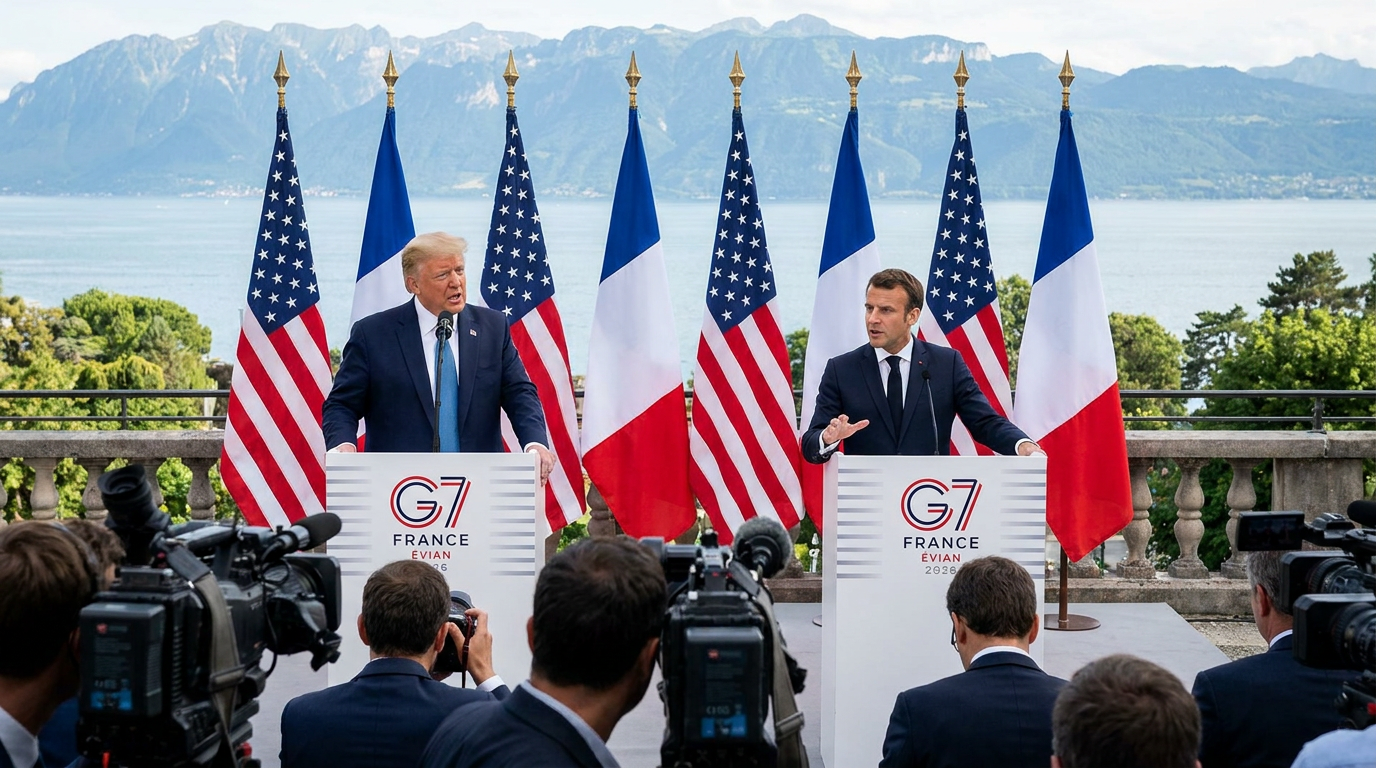
President Trump officially presented the framework to allied leaders at the G7 summit in Évian-les-Bains, France, confidently declaring to the press that the vital waterway would be "completely open" by Friday. European leaders, who had grown increasingly alarmed by the war's cascading economic impacts, warmly welcomed the diplomatic breakthrough. French President Emmanuel Macron and other G7 heads of state issued a joint statement praising the MOU as a vital opportunity to restore regional stability and stabilize a global economy battered by unprecedented energy shocks. They pledged international support for the upcoming negotiations, emphasizing that freedom of navigation is a non-negotiable pillar of global trade.[4][7]

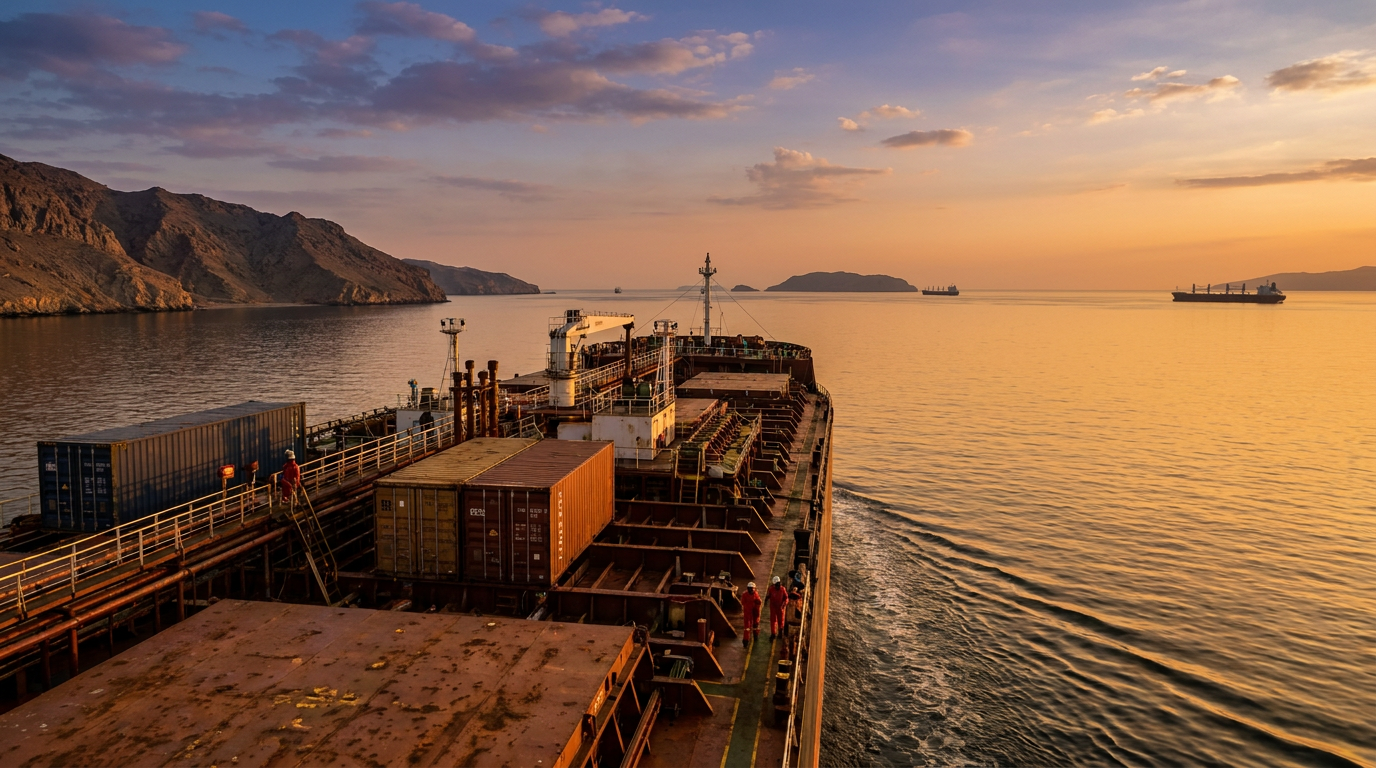
The economic stakes of the ceasefire are massive and immediate. The months-long closure of the Strait of Hormuz—a maritime chokepoint through which a significant fraction of the world's oil supply flows—had severely disrupted global energy markets, pushing US inflation to a three-year high and forcing the Federal Reserve to hold interest rates steady under its new chair, Kevin Warsh. Under the terms of the MOU, commercial traffic is expected to resume at pre-war volumes within a maximum of 30 days. Trump argued forcefully at the summit that securing this reopening was essential to prevent a "worldwide depression," noting that energy markets have already begun to stabilize in anticipation of the blockade's end.[1][3][4]
Despite the economic relief, the core geopolitical issue of Iran's nuclear program remains entirely unresolved. The 14-point MOU, which was leaked in full by regional media outlets including Saudi Arabia's Al Arabiya, explicitly stipulates that Iran will maintain the status quo on its nuclear development during the 60-day ceasefire period. In exchange for this pause, the United States has agreed not to impose any new economic sanctions or reinforce its military presence in the region. Negotiators will use this two-month window to attempt to hammer out a permanent, verifiable accord regarding the fate of Tehran's highly enriched uranium stockpile and its civilian nuclear infrastructure.[1][5]
Despite the economic relief, the core geopolitical issue of Iran's nuclear program remains entirely unresolved.
The deferral of the nuclear question has provoked fierce and immediate backlash from Israeli officials, who view the framework with deep suspicion. Prime Minister Benjamin Netanyahu reportedly expressed intense opposition to the deal during a phone call with President Trump, particularly criticizing its application to the Lebanon front and the fact that it leaves Iran's nuclear infrastructure physically intact for the time being. Israeli defense officials fear the 60-day ceasefire will simply provide Hezbollah and other Iranian proxy forces the breathing room they need to rearm and regroup, while international pressure on Tehran inevitably dissipates as global markets normalize.[5]

Domestically, the Trump administration faces sharp criticism from political opponents and foreign policy analysts who argue the war was a costly strategic failure. Critics point out that the conflict cost thousands of lives and billions of dollars, only to result in an MOU that essentially returns the region to the pre-war status quo—or arguably a weaker position for the US. They note that the agreement lacks the immediate, stringent nuclear constraints that characterized previous diplomatic efforts, effectively rewarding Iran with sweeping sanctions relief and international legitimacy without securing the immediate dismantlement of its nuclear capabilities that the administration initially demanded.[4][8]
In Tehran, the agreement has exposed deep and volatile rifts within the political establishment. While some segments of the Iranian public expressed profound relief at the prospect of sanctions relief and an end to the devastating fighting, hardline factions aligned with the Paydari Front have erupted in public protest. These groups view the MOU as a dangerous capitulation to Western pressure, warning that the ultimate US goal is to systematically strip Iran of its uranium reserves and leave the country militarily defenseless. Hardline lawmakers have publicly cautioned that surrendering their nuclear leverage will only invite future American aggression once Iran's primary deterrent is neutralized.[6]

The leaked text of the agreement also reportedly includes highly controversial provisions for a $300 billion international reconstruction and economic development fund for Iran. This massive financial package, which would purportedly draw contributions from regional partners and Asian economies, is strictly contingent upon the successful conclusion and implementation of a final nuclear deal. In tandem with this fund, the United States would commit to lifting all unilateral and United Nations sanctions currently facing Iran, while the Iranian government would formally reiterate its binding pledge never to produce or acquire a nuclear weapon.[1][5]
As technical discussions led by Vice President Vance begin this week, the extreme fragility of the MOU is apparent to all parties involved. President Trump has publicly warned that the United States is fully prepared to resume devastating military strikes if Iran violates any terms of the agreement or attempts to stall the nuclear negotiations. Conversely, Iranian officials insist the entire deal is strictly contingent on Israel completely observing the ceasefire in Lebanon. The next 60 days will serve as a high-wire diplomatic test, determining whether the framework collapses back into a catastrophic regional war or solidifies into a lasting, historic settlement.[2][4]
How we got here
February 2026
The United States and Israel launch military operations against Iran and its proxy forces, leading to the closure of the Strait of Hormuz.
April 2026
An initial, fragile ceasefire is implemented as back-channel diplomatic negotiations begin.
June 15, 2026
US and Iranian officials digitally sign the Memorandum of Understanding, establishing a 60-day framework for peace.
June 17, 2026
President Trump presents the deal to allied leaders at the G7 summit in France, while leaked texts reveal the agreement's specific terms.
June 19, 2026
A formal, in-person signing ceremony for the MOU is scheduled to take place in Geneva, Switzerland.
Viewpoints in depth
US Administration & European Allies
The deal is a necessary step to stabilize the global economy and open a pathway to permanently dismantling Iran's nuclear ambitions.
Proponents of the MOU, led by the Trump administration and backed by G7 leaders, argue that the immediate reopening of the Strait of Hormuz was an economic imperative to prevent a global recession. They view the 60-day ceasefire not as a concession, but as a structured window to negotiate a permanent, verifiable end to Iran's nuclear program while maintaining the leverage of potential military action if Tehran reneges.
Israeli Government & Security Hawks
The ceasefire prematurely relieves pressure on Iran and leaves its nuclear and proxy infrastructure intact.
Israeli officials and regional security analysts express deep alarm over the framework, arguing it amounts to a strategic victory for Tehran. By halting military operations without securing the immediate destruction of Iran's enriched uranium stockpile, they contend the deal allows Iran and its proxy forces, particularly Hezbollah in Lebanon, time to rearm and regroup under the protection of a ceasefire.
US Domestic Critics
The war was a costly failure that ultimately achieved less than previous diplomatic agreements.
Critics within the United States point out that the conflict cost thousands of lives and billions of dollars, only to result in an agreement that largely restores the pre-war status quo. They argue the MOU lacks the immediate, stringent nuclear constraints of previous accords, effectively rewarding Iran with sanctions relief and a massive reconstruction fund without guaranteeing long-term security.
Iranian Hardliners
The agreement is a Western trap designed to strip Iran of its sovereignty and defensive capabilities.
Within Iran, hardline factions fiercely oppose the MOU, viewing the negotiations as a capitulation to US pressure. They argue that surrendering or diluting Iran's enriched uranium stockpile removes the country's primary deterrent against future attacks, warning that the US will inevitably violate the terms once Iran's defensive leverage is neutralized.
What we don't know
- Whether Iran will agree to permanently dismantle or surrender its enriched uranium stockpile during the 60-day negotiation window.
- How strictly the ceasefire will be observed in Lebanon, given Israel's strong opposition to the current terms.
- The exact mechanisms and international contributors for the proposed $300 billion Iranian reconstruction fund.
Key terms
- Memorandum of Understanding (MOU)
- A formal agreement between two or more parties that outlines the terms and details of a mutual understanding, often serving as the foundation for a final, binding treaty.
- Strait of Hormuz
- A narrow, strategically critical waterway between the Persian Gulf and the Gulf of Oman through which a significant portion of the world's oil supply passes.
- Enriched Uranium
- Uranium that has been processed to increase the concentration of the U-235 isotope, which can be used for civilian nuclear power or, at higher enrichment levels, nuclear weapons.
- G7 Summit
- An annual meeting of leaders from seven of the world's advanced economies (Canada, France, Germany, Italy, Japan, the UK, and the US) to coordinate global policy.
Frequently asked
What does the US-Iran Memorandum of Understanding actually do?
The MOU establishes an immediate 60-day ceasefire across all fronts, lifts the US naval blockade on Iran, and reopens the Strait of Hormuz to commercial shipping. It also sets a framework for detailed negotiations regarding Iran's nuclear program.
Will Iran receive a $300 billion reconstruction fund?
Leaked drafts of the agreement indicate a $300 billion international reconstruction fund for Iran is planned, but it is strictly contingent upon the successful negotiation and implementation of a final, permanent nuclear accord.
How does this affect the war in Lebanon?
The ceasefire applies to all fronts, including the conflict between Israel and Hezbollah in Lebanon. However, Israeli officials have expressed strong opposition to this clause, fearing it allows Hezbollah to rearm.
Is the Strait of Hormuz open now?
The agreement mandates the immediate lifting of blockades, with commercial traffic expected to return to pre-war volumes within 30 days. Energy markets have already begun to react to the anticipated reopening.
Sources
Source coverage
8 outlets
4 viewpoints surfaced








[1]AxiosUS Domestic Critics
READ: Full U.S.-Iran memorandum of understanding
Read on Axios →[2]Fox NewsUS Administration & European Allies
Trump vows 'ultimate consequences' for Iran violations for reneging on ending nuclear aspirations
Read on Fox News →[3]Al JazeeraUS Domestic Critics
Trump: World will 'find out pretty soon' if Iran MOU signing will happen
Read on Al Jazeera →[4]The GuardianUS Domestic Critics
US president says strait of Hormuz will be open from Friday but questions remain
Read on The Guardian →[5]Times of IsraelIsraeli Government & Security Hawks
Multiple reports say agreement includes $300 billion fund for investment and reconstruction in Iran
Read on Times of Israel →[6]Iran InternationalIranian Hardliners
Iran hardliners rage over US deal, but experts say regime is closing ranks
Read on Iran International →[7]French Ministry for Europe and Foreign AffairsUS Administration & European Allies
France, UK and partners welcome announcement of US-Iran memorandum of understanding
Read on French Ministry for Europe and Foreign Affairs →[8]Center for American ProgressUS Domestic Critics
STATEMENT: Iran MOU Confirms Iran War Was Failure of Historic Proportions
Read on Center for American Progress →
More in news politics
See all 6 stories →US-Iran Deal
US Releases Text of 14-Point Agreement With Iran, Reopening Strait of Hormuz
8 sources
Birthright Citizenship
Supreme Court Upholds Trump Administration Directive Restricting Birthright Citizenship
8 sources
US-Iran Diplomacy
U.S. Releases Text of Iran Agreement Framework, Opening 60-Day Window on Nuclear Program
8 sources
Redistricting Fight
Georgia Republicans Decline to Redraw Election Maps in Special Session Following Supreme Court Ruling
7 sources
Every angle. Every day.
Get news politics stories with full source coverage and perspective breakdowns delivered to your inbox.