
Supreme Court Upholds Trump Administration Directive Restricting Birthright Citizenship
The Supreme Court ruled 5-4 to uphold a presidential directive denying birthright citizenship to children of undocumented immigrants, fundamentally altering the 14th Amendment and ending over 150 years of established precedent.
By Factlen Editorial Team
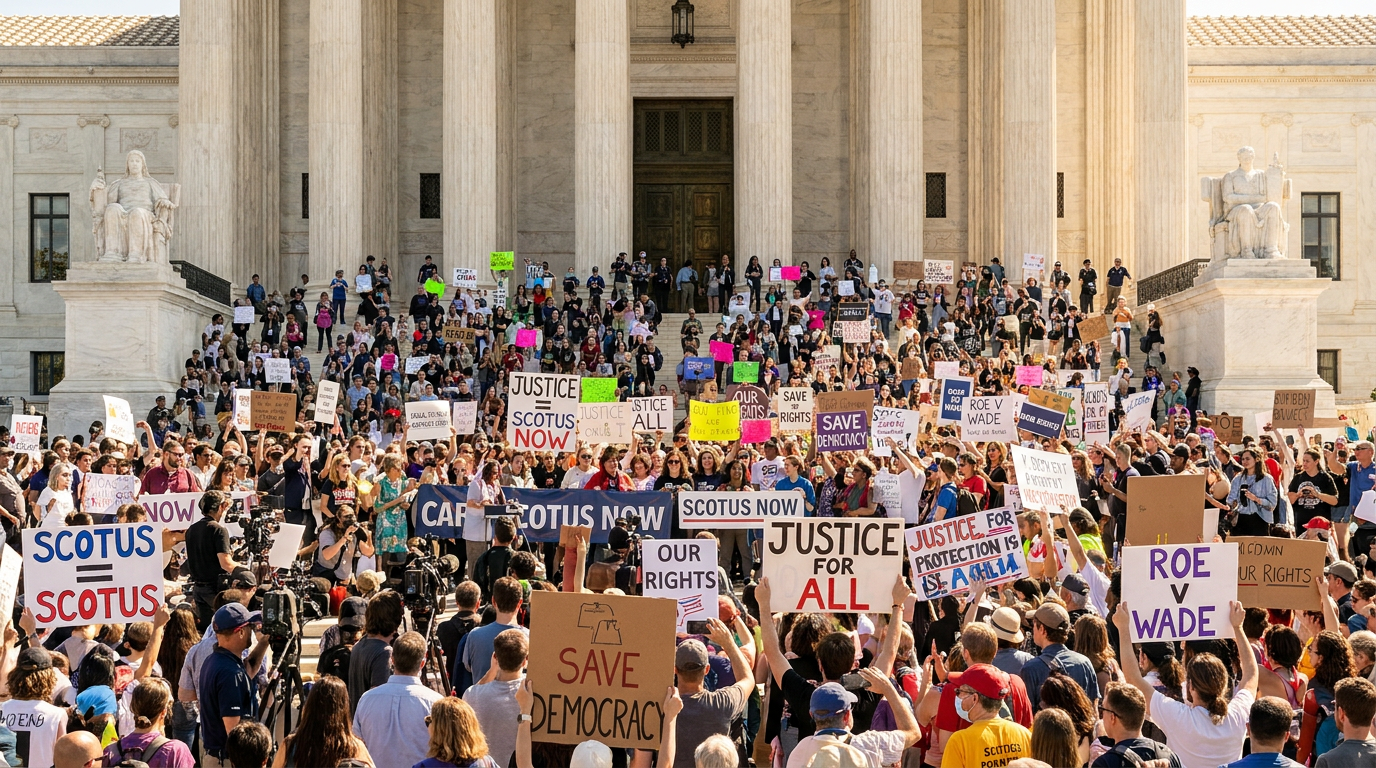
- Civil Rights & Legal Critics
- Warn the decision creates a stateless underclass and violates over a century of established constitutional precedent.
- Administration & Conservative Allies
- Argue the ruling correctly interprets the 14th Amendment and removes incentives for unauthorized border crossings.
- Economic & Demographic Analysts
- Focus on the long-term demographic and economic consequences, including labor shortages and integration challenges.
- International Observers
- Highlight the global implications and the U.S. departure from international norms regarding statelessness.
What's not represented
- · Undocumented Parents
- · Hospital Administrators
Why this matters
This landmark ruling ends over 150 years of automatic citizenship for anyone born on U.S. soil, immediately stripping citizenship rights from hundreds of thousands of children born annually to undocumented parents. The decision will fundamentally reshape American demographics, labor markets, and the legal rights of mixed-status families for generations.
Key points
- The Supreme Court ruled 5-4 to uphold a presidential directive denying birthright citizenship to children of undocumented immigrants.
- The conservative majority determined that the 14th Amendment's 'subject to the jurisdiction thereof' clause excludes those unlawfully present in the U.S.
- Dissenting justices and civil rights groups warn the decision overturns the 1898 Wong Kim Ark precedent and risks creating a stateless underclass.
- The ruling affects an estimated 300,000 to 400,000 children born annually in the United States.
- Democratic-led states are preparing to issue state-level citizenship documents, setting up a massive federalism clash.
The Supreme Court handed down a historic 5-4 decision on Wednesday in Trump v. Barbara, upholding a presidential directive that restricts birthright citizenship for children born in the United States to undocumented parents.[1][2]
The ruling fundamentally alters the modern interpretation of the 14th Amendment's Citizenship Clause, which has guaranteed automatic citizenship to nearly anyone born on U.S. soil for more than a century and a half.[3][4]
Writing for the conservative majority, the Court argued that the phrase "subject to the jurisdiction thereof" in the 14th Amendment excludes individuals whose parents are foreign nationals unlawfully present in the United States.[1][2]
The decision marks the culmination of a decades-long conservative legal push and delivers a monumental policy victory for the Trump administration, which issued the directive shortly after returning to office.[2][5]

The immediate practical impact affects an estimated 300,000 to 400,000 children born annually to undocumented parents in the U.S., who will now be classified as foreign nationals rather than American citizens.[6][8]
Dissenting justices warned that the ruling creates a permanent, multi-generational underclass of stateless residents and overturns decades of settled precedent, specifically the 1898 United States v. Wong Kim Ark decision.[1][3]
The administration and its allies celebrated the ruling as a necessary correction to what they describe as a "loophole" that incentivized unauthorized migration across the southern border.[2]
The ruling immediately complicates the legal status of millions of mixed-status families. While the Court did not explicitly make the ruling retroactive, legal experts warn that the administration may attempt to apply the new standard to children born since the directive was initially signed.[3][8]
The ruling immediately complicates the legal status of millions of mixed-status families.
Hospitals and state vital records offices are now thrust into the center of federal immigration enforcement, facing unprecedented logistical challenges in determining the immigration status of parents before issuing birth certificates.[1][6]

Policy researchers note that this shift will likely exacerbate labor shortages in the long term, as the U.S. has historically relied on the children of immigrants to offset declining domestic birth rates and support an aging workforce.[6][7]
Meanwhile, international observers and human rights organizations have condemned the decision, warning that it violates international conventions on the reduction of statelessness, though the U.S. is not a signatory to the primary UN treaties on the matter.[4][5]
Analysts highlight the profound economic and social integration challenges this will create, pointing to previous state-level attempts to restrict public education access, such as the Plyler v. Doe era, which will likely see renewed legal challenges.[7]
The ruling also intersects with other aggressive immigration measures currently before the Court, including a pending case on the indefinite detention of green card holders with criminal records, signaling a sweeping judicial realignment on immigration law.[3][8]

State governments are already fracturing in their response. Several Democratic-led states, including California and New York, have announced plans to issue state-level citizenship documents, setting up a massive constitutional clash over federalism.[1][3]
How we got here
1868
The 14th Amendment is ratified following the Civil War, guaranteeing citizenship to 'all persons born or naturalized in the United States.'
1898
The Supreme Court rules in United States v. Wong Kim Ark that children born in the U.S. to foreign citizens are automatically U.S. citizens.
2025
The Trump administration issues an executive directive instructing federal agencies to cease recognizing the citizenship of children born to undocumented parents.
May 2026
The Supreme Court hears emergency oral arguments in Trump v. Barbara regarding the directive's constitutionality.
June 17, 2026
The Supreme Court rules 5-4 to uphold the directive, fundamentally altering U.S. citizenship law.
Viewpoints in depth
Administration Allies
Supporters argue the ruling correctly interprets the Constitution and removes a major incentive for illegal immigration.
Conservative legal scholars and administration officials have long argued that the framers of the 14th Amendment never intended to grant citizenship to the children of foreign nationals who defied U.S. law to enter the country. By interpreting 'subject to the jurisdiction' as requiring political allegiance rather than mere territorial presence, this camp believes the Court has restored the original meaning of the Citizenship Clause. They argue this will significantly reduce the pull factors driving unauthorized border crossings.
Immigrant Rights Advocates
Civil rights groups warn the decision creates a permanent underclass and violates over a century of established law.
Advocates point to the 1898 Wong Kim Ark decision as settled law that clearly established birthright citizenship regardless of the parents' status. They warn that the Trump v. Barbara ruling will create a multi-generational caste of stateless individuals within the United States, denied the right to vote, work legally, or access federal benefits. Organizations argue the decision is a politically motivated misreading of the 14th Amendment that will lead to widespread racial profiling.
Economic & Policy Analysts
Researchers focus on the long-term demographic and economic consequences of shrinking the recognized citizen population.
Think tanks highlight that the U.S. economy relies heavily on the demographic boost provided by the children of immigrants to offset declining domestic birth rates and an aging workforce. By stripping citizenship from hundreds of thousands of future workers annually, analysts warn the U.S. is exacerbating long-term labor shortages and creating massive integration challenges. They also point to the immense bureaucratic burden now placed on hospitals to verify parental immigration status at birth.
What we don't know
- Retroactive Application: It remains unclear if the administration will attempt to revoke the citizenship of children born between the signing of the directive and the Supreme Court's ruling.
- Visa Holders: Legal scholars are debating whether the Court's rationale could eventually be expanded to deny citizenship to children of temporary visa holders or legal permanent residents.
- State-Level Defiance: It is unknown how the federal government will respond to states like California and New York that plan to issue their own state-level citizenship documents.
Key terms
- 14th Amendment Citizenship Clause
- The constitutional provision stating that all persons born or naturalized in the United States, and subject to the jurisdiction thereof, are citizens of the United States.
- Subject to the jurisdiction thereof
- The specific constitutional phrase at the center of the legal debate, which the Court has now interpreted to exclude undocumented immigrants.
- Statelessness
- The condition of not being recognized as a citizen by any country, which advocates warn could affect children whose parents' home countries do not automatically grant citizenship by descent.
- Trump v. Barbara
- The 2026 landmark Supreme Court case that upheld the executive branch's authority to restrict birthright citizenship.
Frequently asked
Does this ruling apply retroactively?
The Court's ruling focused on the administration's recent directive, but legal experts warn the administration may attempt to apply the new standard to anyone born after the directive was signed.
What happens to children born to undocumented parents now?
Under the new interpretation, they will assume the nationality of their parents rather than automatically receiving U.S. citizenship, potentially leaving some stateless.
Does this affect children of legal permanent residents?
The specific directive upheld in Trump v. Barbara targets children of parents who are unlawfully present, though legal analysts are debating if the rationale could eventually be expanded.
Sources
Source coverage
8 outlets
4 viewpoints surfaced








[1]The New York TimesCivil Rights & Legal Critics
Supreme Court Upholds Trump Directive Restricting Birthright Citizenship
Read on The New York Times →[2]Fox NewsAdministration & Conservative Allies
Supreme Court ends birthright citizenship loophole in historic 5-4 ruling
Read on Fox News →[3]Los Angeles TimesCivil Rights & Legal Critics
Supreme Court guts 14th Amendment protections in landmark birthright citizenship ruling
Read on Los Angeles Times →[4]The GuardianInternational Observers
US Supreme Court ends automatic citizenship for children of undocumented migrants
Read on The Guardian →[5]Al JazeeraInternational Observers
US Supreme Court restricts birthright citizenship in major win for Trump
Read on Al Jazeera →[6]Brookings InstitutionEconomic & Demographic Analysts
What the end of birthright citizenship means for US migration policy
Read on Brookings Institution →[7]George W. Bush Presidential CenterEconomic & Demographic Analysts
Monthly immigration update: The implications of Trump v. Barbara
Read on George W. Bush Presidential Center →[8]National Immigration ForumCivil Rights & Legal Critics
Policy Bulletin: Supreme Court ruling on birthright citizenship
Read on National Immigration Forum →
More in news politics
See all 5 stories →
Every angle. Every day.
Get news politics stories with full source coverage and perspective breakdowns delivered to your inbox.