
How the Science of Neuroaesthetics is Transforming Interior Design for Mental Health
Emerging research at the intersection of neuroscience and architecture reveals how spatial design, lighting, and textures measurably lower stress hormones and improve cognitive well-being.
By Factlen Editorial Team
- Evidence-Based Designers
- Focuses on translating clinical data into practical, functional architecture for homes and offices.
- Neuroscientists & Researchers
- Focuses on the empirical, biological mechanisms of how the brain processes spatial environments.
- Holistic Wellness Advocates
- Focuses on the emotional, psychological, and spiritual benefits of living in harmonious spaces.
What's not represented
- · Low-income housing developers balancing wellness with strict budget constraints
- · Renters who lack the structural agency to alter their built environments
Why this matters
Because humans spend roughly 90% of their lives indoors, the physical environments we inhabit dictate our baseline stress levels. Understanding how the brain responds to spatial cues allows anyone to make simple, evidence-based changes to their home that actively support emotional regulation and mental health.
Key points
- Neuroaesthetics uses brain imaging to measure how interior design affects human biology.
- Curvilinear shapes and natural materials activate the brain's pleasure centers and signal safety.
- Thoughtfully designed spaces can reduce stress hormones like cortisol by up to 20 percent.
- Layering textures provides acoustic dampening, which lowers auditory stress and cognitive fatigue.
- Simple adjustments to lighting and clutter can immediately improve a home's emotional impact.
For most of human history, interior design was treated as a purely aesthetic pursuit—a matter of matching colors, arranging furniture, and following stylistic trends. Yet, modern humans spend roughly 90 percent of their lives indoors, enclosed within constructed environments that silently dictate their physiological states. A growing body of scientific research is now proving what many have long intuitively felt: our homes are not just passive containers, but active ecosystems that shape our nervous systems. This realization has given rise to neuroaesthetics, an interdisciplinary field at the intersection of neuroscience, biology, and architecture that measures exactly how beauty and spatial design affect the human brain.[1][6]
Neuroaesthetics moves the conversation about interior design from subjective taste to objective biology. In the 1990s, neurobiologist Semir Zeki pioneered the study of how the brain perceives art, discovering that encountering beauty reliably activates specific neural pathways. Today, researchers use functional magnetic resonance imaging (fMRI) and electroencephalography (EEG) to track how the built environment triggers those same pathways. The data reveals that spatial decisions—from the height of a ceiling to the texture of a rug—can either calm the nervous system or quietly elevate stress hormones.[2][4][6]
The underlying mechanism of how we experience a room is remarkably complex. When a person steps into a space, their brain does not merely take a photograph; it processes the environment through three distinct neural networks. The sensory-motor system maps the physical dimensions and tactile qualities of the room. The knowledge-meaning network interprets the cultural and personal significance of the objects within it. Finally, the emotion-valuation network—centered in the orbitofrontal cortex, a region linked to decision-making and emotional regulation—determines whether the space feels safe, beautiful, or threatening.[5][6]
When these three networks align harmoniously, the biological response is measurable and profound. Clinical studies have documented that thoughtfully designed spaces can trigger a 15 to 20 percent reduction in stress hormones like cortisol. Heart rates slow, blood pressure drops, and the brain increases its production of serotonin. Conversely, environments with harsh lighting, chaotic layouts, or excessive visual noise keep the nervous system in a subtle, continuous state of alert, leading to cognitive fatigue and irritability.[2][3][4]

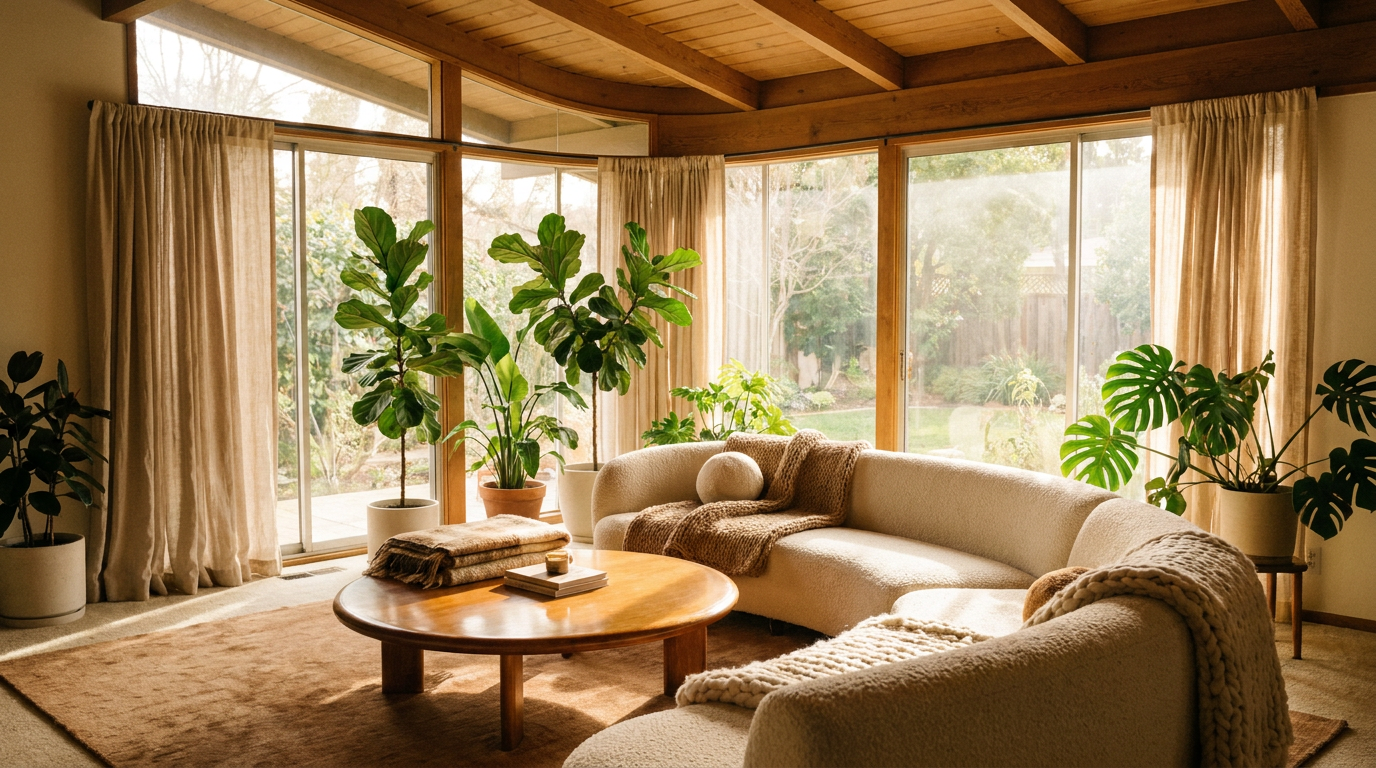
One of the most robust findings in neuroarchitectural research involves the geometry of a room. Evolutionary biology suggests that human brains are hardwired to scan environments for potential threats. Sharp, angular furniture and harsh corners can unconsciously signal danger, activating the amygdala. In contrast, fMRI studies show that curvilinear spaces and rounded furniture activate the brain's pleasure and reward centers. These organic shapes mimic the natural world, signaling safety and encouraging the mind to relax.[1][2][6]
This evolutionary preference extends heavily into biophilic design, a core pillar of neuroaesthetics that emphasizes human connection to nature. Incorporating natural elements is not merely a decorative choice; it is a biological imperative. Visual access to greenery, the presence of indoor plants, and the use of natural materials like wood and stone remind the brain of evolutionary safe havens. Research indicates that employees working in biophilic environments report a 15 percent increase in productivity and significantly lower fatigue, while patients in hospitals with views of nature heal faster and require less pain medication.[2][3][4]
Light is another critical variable that neuroaesthetics has quantified. The human circadian rhythm is deeply tethered to the shifting color temperature of the sun. Environments bathed in dynamic, natural daylight enhance concentration and emotional stability by keeping cortisol and melatonin production in their proper cycles. When natural light is unavailable, neuroaesthetic design advocates for layered, adjustable artificial lighting. Low, warm lighting in the evening signals to the body that it is time to unwind, whereas harsh, overhead fluorescent glare disrupts sleep patterns and elevates anxiety.[1][3][4]
Light is another critical variable that neuroaesthetics has quantified.
Beyond what we see, neuroaesthetics places immense importance on what we hear and feel. The field of psychoacoustics—the study of how sound affects the nervous system—demonstrates that unpredictable, echoing noise elevates stress. Designers are increasingly utilizing soft, layered textures not just for visual warmth, but for acoustic dampening. Plush rugs, acoustic panels, and heavy drapery absorb reverberations, creating a quiet auditory environment that allows the brain to focus and rest.[2][3][4]

Tactility also plays a surprisingly large role in emotional regulation. The brain registers texture instantly, interpreting smooth, cold surfaces as functional and sterile, while soft, varied textures signal comfort and warmth. By layering different materials—such as pairing a smooth wooden table with a nubby wool throw—designers create sensory-rich environments that engage the brain without overwhelming it. This tactile engagement grounds individuals in the present moment, acting as a subtle form of mindfulness.[2][4][6]
As these scientific principles migrate from laboratories into residential design, the concept of the home is being fundamentally reimagined. The goal is no longer to create a magazine-perfect showroom, but to craft an emotionally intelligent environment. Architects and interior designers are prioritizing spaces that offer a choice of stimulation levels. This includes creating dedicated calm zones free from digital distractions, where the sensory input is intentionally lowered to help families decompress after overstimulating days.[2][3][5]
The application of neuroaesthetics is also transforming commercial and public spaces. Forward-thinking companies are redesigning offices to include varied textures, biophilic elements, and circadian lighting to combat burnout and foster creativity. In education, classrooms designed with neuroaesthetic principles—utilizing warm colors, natural light, and flexible layouts—have been shown to improve student focus and emotional stability. The science proves that beauty and functionality are not mutually exclusive; they are deeply interdependent.[1][2][4]

Despite the robust data, researchers acknowledge areas of uncertainty within the field. A primary question is how subjective cultural backgrounds and personal memories influence the knowledge-meaning neural network. While biological responses to natural light and organic shapes appear universal, the emotional resonance of specific colors or architectural styles can vary wildly between individuals. A minimalist environment might soothe one person's nervous system while feeling cold and isolating to another.[1][5][6]
Furthermore, much of the current fMRI data relies on short-term laboratory exposure to aesthetic stimuli. Scientists are still working to understand the longitudinal effects of living in a neuroaesthetically optimized home over decades. Does the brain eventually habituate to the calming effects of a biophilic living room, or does the baseline of mental health permanently elevate? Long-term studies are currently underway to map these extended neurological outcomes.[1][5][6]
What remains undeniable is the empowering nature of this research. By understanding the biological impact of our surroundings, individuals gain agency over their mental health. Optimizing a home does not necessarily require a massive architectural overhaul; it can begin with simple, evidence-based adjustments. Swapping a harsh lightbulb for a warm, dimmable one, adding a textured rug to absorb sound, or introducing a few plants can immediately alter the sensory diet of a room.[3][4]

Ultimately, neuroaesthetics validates the profound human desire for beauty and comfort. It proves that our craving for a harmonious home is not a frivolous luxury, but a deeply rooted biological need. As the fields of neuroscience and interior design continue to merge, the spaces we inhabit will increasingly become allies in our well-being, actively supporting our cognitive health and emotional resilience in an increasingly chaotic world.[2][4][5][6]
How we got here
1990s
Neurobiologist Semir Zeki pioneers the study of how the brain perceives visual art, laying the groundwork for neuroaesthetics.
2003
The Academy of Neuroscience for Architecture (ANFA) is founded to bridge the gap between scientific research and architectural practice.
2015
Landmark studies quantify the impact of biophilic design, showing measurable increases in productivity and reductions in fatigue.
2021
Researchers publish comprehensive models detailing the specific neural networks involved in human-building interactions.
2026
Neuroaesthetic principles transition from luxury commercial projects into mainstream residential interior design, driven by a growing focus on mental health.
Viewpoints in depth
Neuroscientists & Researchers
Focuses on the empirical, biological mechanisms of how the brain processes spatial environments.
This camp relies on fMRI and EEG data to prove that aesthetic experiences are not purely subjective. They emphasize that the orbitofrontal cortex and amygdala react predictably to specific spatial geometries and lighting conditions, arguing that interior design should be treated as a measurable variable in public health and cognitive longevity.
Evidence-Based Designers
Focuses on translating clinical data into practical, functional architecture for homes and offices.
Architects and interior designers in this camp prioritize actionable interventions, such as acoustic dampening, circadian lighting, and biophilic materials. They argue that while the neuroscience is complex, the application can be straightforward, advocating for building codes and design standards that prioritize human well-being over mere cost-efficiency or visual trends.
Holistic Wellness Advocates
Focuses on the emotional, psychological, and spiritual benefits of living in harmonious spaces.
While appreciating the clinical data, this perspective emphasizes the lived experience of a home as a sanctuary. They argue that neuroaesthetics validates ancient design philosophies like Feng Shui or Vastu Shastra, highlighting how intentional, mindful curation of our personal spaces fosters deeper familial connections and emotional resilience.
What we don't know
- How subjective cultural backgrounds and personal memories alter baseline neuroaesthetic responses.
- The long-term, longitudinal effects of living in a neuroaesthetically optimized home over decades.
- Whether the brain eventually habituates to the calming effects of biophilic design, requiring novel stimuli over time.
Key terms
- Neuroaesthetics
- The interdisciplinary study of the neural basis for the perception of beauty, art, and spatial design.
- Orbitofrontal Cortex
- A region of the brain involved in cognitive processing, decision-making, and emotional regulation, heavily activated by aesthetically pleasing environments.
- Biophilic Design
- An architectural framework that seeks to connect building occupants more closely to nature through direct and indirect natural elements.
- Circadian Lighting
- Lighting systems designed to mimic the natural progression of sunlight throughout the day, supporting the body's internal clock and sleep-wake cycles.
- Psychoacoustics
- The scientific study of sound perception and how auditory stimuli affect the human nervous system and psychological state.
Frequently asked
What is neuroaesthetics?
It is the scientific study of how the brain and nervous system respond to beauty, art, and spatial environments, using tools like brain imaging to measure physiological reactions.
How does biophilic design affect the brain?
Incorporating natural elements like wood, plants, and sunlight mimics evolutionary safe havens, which has been shown to lower cortisol levels and reduce anxiety.
Can I apply neuroaesthetics on a budget?
Yes. Simple changes like swapping harsh bulbs for warm, dimmable lighting, decluttering to reduce visual noise, and adding soft textures for acoustic dampening can significantly improve a room's emotional impact.
Why are curved lines better than sharp angles?
Evolutionary biology suggests our brains associate sharp, angular objects with potential threats, while curvilinear shapes activate the brain's pleasure and reward centers, signaling safety.
Sources
Source coverage
6 outlets
3 viewpoints surfaced






[1]Academy of Neuroscience for ArchitectureNeuroscientists & Researchers
The Intersection of Neuroscience and the Built Environment
Read on Academy of Neuroscience for Architecture →[2]Design PatakiHolistic Wellness Advocates
The Discreet Alchemy of Neuroaesthetics in Interior Design
Read on Design Pataki →[3]HouzzEvidence-Based Designers
How to Design a Home That Boosts Well-Being
Read on Houzz →[4]Science in DesignEvidence-Based Designers
Neuroaesthetics: Where Art Meets Biology
Read on Science in Design →[5]Journal of Cognitive NeuroscienceNeuroscientists & Researchers
The Neuroaesthetics of Architectural Spaces
Read on Journal of Cognitive Neuroscience →[6]Factlen Editorial TeamHolistic Wellness Advocates
Synthesis by Factlen editorial team
Read on Factlen Editorial Team →


Every angle. Every day.
Get home stories with full source coverage and perspective breakdowns delivered to your inbox.