
How Formula 1's 2026 Regulations Will Radically Change the Sport
Formula 1 is introducing its most significant technical overhaul in history for the 2026 season, featuring a 50/50 split between electric and combustion power, fully sustainable fuels, and active aerodynamics.
By Factlen Editorial Team
- Automotive Manufacturers
- View the 2026 regulations as a crucial laboratory for developing road-relevant electric technology and sustainable fuels for consumer vehicles.
- Motorsport Engineers
- Focus on the immense technical challenge of balancing a 50/50 power unit with active aerodynamics to maintain lap times.
- Racing Purists
- Hopeful that smaller, lighter cars will improve overtaking, but skeptical of the heavy reliance on automated energy management.
- Factlen Analysis
- Synthesizing the technical shifts to explain how the mechanics of racing will fundamentally change.
What's not represented
- · Lower-tier racing categories adopting the tech
- · Consumer road-car buyers
Why this matters
The 2026 regulations represent a massive leap toward carbon neutrality for global motorsport, while simultaneously aiming to improve on-track racing with smaller, more nimble cars. The technology developed for these new hybrid engines and sustainable fuels is designed to directly translate to consumer road cars, potentially helping decarbonize millions of everyday vehicles.
Key points
- Formula 1 will introduce its most sweeping technical overhaul in history for the 2026 season.
- New hybrid engines will feature a 50/50 power split between electrical output and internal combustion.
- Cars will run exclusively on 100% advanced sustainable 'drop-in' fuels, eliminating fossil fuels.
- Active aerodynamics will replace DRS, with wings dynamically adjusting for straights and corners.
- The chassis will be smaller, narrower, and 30 kilograms lighter to promote closer wheel-to-wheel racing.
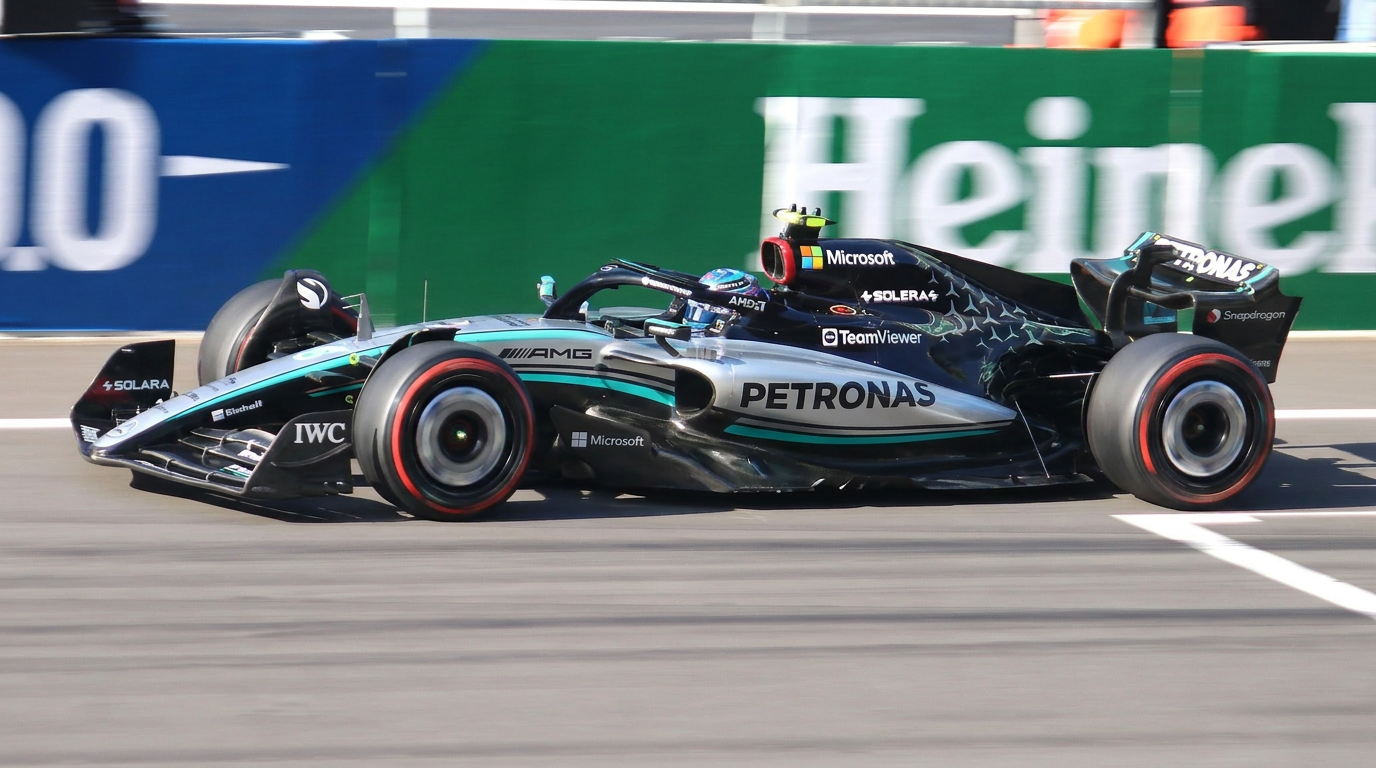
Formula 1 is rebooting. The 2026 season marks the most significant technical shift in the sport's 76-year history, fundamentally redefining what a Grand Prix car looks like, how it is powered, and how it races. The FIA and Formula 1 have finalized a sweeping set of technical regulations designed to push the boundaries of automotive engineering.[1][2]
The new rules carry a dual mandate. First, the sport wants to achieve closer, more exciting wheel-to-wheel racing by addressing long-standing complaints about car size and aerodynamic turbulence. Second, Formula 1 is determined to transform itself into a high-speed laboratory for sustainable, road-relevant technology that can benefit the wider automotive industry.[1][6]
The heart of this transformation lies within the power unit. Since 2014, Formula 1 has utilized 1.6-liter V6 turbo-hybrid engines. While the internal combustion engine (ICE) remains the foundation of the powertrain, the hybrid system surrounding it is undergoing a radical and complex overhaul.[3]
The most striking shift is the move to a true 50/50 power split. In the current generation of cars, electrical power accounts for roughly 20% of the vehicle's total output. For 2026, the electrical contribution will nearly triple, matching the raw horsepower output of the combustion engine.[1][3]

To achieve this balance, the incredibly complex and expensive Motor Generator Unit-Heat (MGU-H)—which harvested energy from the car's exhaust gases—has been entirely eliminated. Instead, the sport is doubling down on the Motor Generator Unit-Kinetic (MGU-K), which captures kinetic energy generated under heavy braking.[2][4]
The MGU-K's maximum electrical output will jump from 120 kilowatts to a staggering 350 kilowatts, which translates to roughly 470 brake horsepower. Because the cars will rely so heavily on this electrical boost, energy recovery and deployment will become the defining strategic battleground of every race lap.[1][2]
Fueling the combustion side of the equation is an equally groundbreaking shift. Starting in 2026, Formula 1 cars will run entirely on 100% advanced sustainable fuels, abandoning traditional crude oil-derived fossil fuels for good.[1][5]
These are "drop-in" synthetic fuels, engineered in laboratories and refineries rather than pumped from the ground. They are created using advanced carbon capture technology, municipal waste, or non-food biomass. Crucially, this ensures that no new carbon is added to the atmosphere when the fuel is burned on track.[3][5]

The implications of this fuel development extend far beyond the racetrack. Because these synthetic fuels are specifically designed to work in standard internal combustion engines without requiring mechanical modifications, the chemical breakthroughs achieved by F1's fuel partners could eventually be deployed at local gas stations, offering a lifeline for decarbonizing the billions of existing road cars globally.[3][6]
The implications of this fuel development extend far beyond the racetrack.
But a radically different engine requires an entirely new aerodynamic philosophy. Because the 2026 cars will rely so heavily on finite electrical energy, they must be incredibly aerodynamically efficient to avoid draining the battery completely while pushing down long straights. Enter "Active Aerodynamics."[1][2]
For the first time in Formula 1 history, cars will feature fully integrated, full-time active aero on both the front and rear wings. The Drag Reduction System (DRS), a staple overtaking aid since 2011, is officially dead.[1][4]
Instead, drivers will utilize two distinct aerodynamic configurations throughout a lap. In the corners, the car operates in "Z-Mode," with the front and rear wing flaps angled steeply to generate maximum downforce, pushing the car into the track for optimal grip.[1][4]
As the car exits the corner and accelerates onto a straight, the driver will engage "X-Mode." Both the front and rear wing flaps will physically flatten out, shedding massive amounts of drag to boost top speed and conserve precious electrical energy for the rest of the lap.[1][4]

Overtaking will also look fundamentally different without DRS. To facilitate passing, the FIA is introducing a new "Overtake Mode." If a chasing driver is within one second of the car ahead, they will be granted an additional allocation of electrical energy—up to 0.5 megajoules—to deploy at speeds up to 337 km/h.[1][2]
Conversely, drivers will need to carefully manage "Recharge Mode" to ensure their batteries aren't depleted. While much of the harvesting is automated by the car's electronic control unit during braking, drivers can manually harvest energy by lifting off the throttle early or utilizing "super clipping" at the end of long straights.[1]
Beyond the powertrain and aerodynamics, the cars themselves are finally going on a diet. Responding to years of driver and fan complaints about the sheer bulk of modern F1 machinery, the 2026 regulations mandate smaller, more nimble chassis.[1][2]
The maximum wheelbase has been shortened by 200 millimeters, and the overall width reduced by 100 millimeters. Crucially, the minimum weight limit has been slashed by 30 kilograms, bringing the target weight down to 768 kilograms.[2][4]

Achieving this weight reduction while simultaneously increasing the size of the hybrid battery and strengthening safety structures—including a roll hoop that must now withstand 20g of vertical force—presents a monumental challenge for the teams' engineering departments.[1][4]
The allure of these new regulations has already reshaped the F1 grid. The promise of road-relevant electrification and sustainable fuels successfully enticed Audi to enter the sport as a works team, convinced Ford to return in partnership with Red Bull, and persuaded Honda to formally commit to Aston Martin.[2][4]
As the clock ticks down to the 2026 season opener, teams are locked in a secretive and intense development race. The regulations represent a blank canvas, and whichever engineering team best solves the complex puzzle of active aero and 50/50 power deployment will likely dominate the sport's next era.[4][6]
How we got here
Aug 2022
The FIA officially approves the 2026 Power Unit regulations, confirming the removal of the MGU-H and the shift to sustainable fuels.
Oct 2022
Audi officially announces its entry into Formula 1 for the 2026 season as a works engine manufacturer.
Feb 2023
Ford announces a return to Formula 1 in 2026, partnering with Red Bull Powertrains.
Jun 2024
The FIA unveils the first physical concept model of the 2026 chassis, detailing the active aerodynamics and smaller dimensions.
Jan 2026
Teams officially begin full-scale aerodynamic testing and wind-tunnel development for their 2026 challengers.
Viewpoints in depth
Automotive Manufacturers
The 2026 rules align F1 with the global automotive industry's push toward sustainable technology.
For major automakers like Mercedes, Audi, and Honda, the 2026 regulations are the primary reason they are committing billions to the sport. The shift to a 50/50 electrical split mirrors the consumer market's transition toward high-performance hybrids and EVs. Furthermore, the development of 100% sustainable 'drop-in' fuels provides these companies with a vital research laboratory. If F1 can prove that synthetic fuels deliver elite performance without requiring engine modifications, manufacturers can potentially use similar fuels to decarbonize the millions of traditional combustion-engine vehicles already on the road.
Motorsport Engineers
Teams face an unprecedented puzzle in balancing drag reduction with energy recovery.
From an engineering standpoint, the removal of the MGU-H fundamentally changes how an F1 car generates and deploys power. Without the ability to harvest energy from the exhaust, teams must rely entirely on the MGU-K (braking) to feed the massive 350 kW electrical demand. Engineers are deeply focused on mastering the new Active Aerodynamics system; if a car is too 'draggy' on the straights, it will deplete its battery before the braking zone, leaving the driver defenseless. The interplay between X-Mode, Z-Mode, and energy harvesting will require entirely new simulation models and driving techniques.
Racing Purists
Fans are eager for closer racing but wary of overly complex, automated systems.
Traditional fans and motorsport analysts have long complained that modern F1 cars are too heavy, too wide, and too reliant on the 'artificial' Drag Reduction System (DRS) for overtaking. The 2026 mandate for smaller, lighter chassis has been universally praised by this camp. However, there is lingering skepticism regarding the new 'Overtake Mode' and automated 'Recharge' systems. Purists worry that the heavy reliance on electrical energy management could turn races into economy runs, where drivers spend more time managing battery deployment algorithms than engaging in raw, wheel-to-wheel combat.
What we don't know
- Whether teams will actually be able to hit the ambitious 768kg minimum weight limit, given the heavy batteries required for the new hybrid systems.
- How effectively the new 'Overtake Mode' will replicate or improve upon the passing opportunities previously provided by DRS.
- Which engine manufacturer has found the biggest loophole or advantage in the entirely new power unit regulations.
Key terms
- MGU-K (Motor Generator Unit-Kinetic)
- A hybrid system component that captures kinetic energy generated under braking and converts it into electricity to power the car.
- Active Aerodynamics
- A system where the car's front and rear wings physically move during a lap to either reduce drag on straights or increase grip in corners.
- Drop-in Fuel
- A synthetic or sustainable fuel designed to be used in a standard internal combustion engine without requiring any mechanical modifications.
- X-Mode
- The low-drag aerodynamic configuration used on straights, where wing flaps flatten out to increase top speed.
- Z-Mode
- The high-downforce aerodynamic configuration used in corners, where wings are angled to push the car into the track for maximum grip.
Frequently asked
Will the 2026 F1 cars be slower than the current generation?
Initial simulations suggest they may be slightly slower over a single qualifying lap due to the reduction in overall downforce, but top speeds on the straights could actually be higher thanks to the low-drag X-Mode.
Is DRS completely gone in 2026?
Yes. The traditional Drag Reduction System is being replaced by Active Aerodynamics, which all drivers can use on straights, combined with a new electrical 'Overtake Mode' for cars trailing within one second.
What makes the new fuel 'sustainable' if it still burns in an engine?
The fuel is created using carbon already present in the atmosphere or from municipal waste. When burned, it only releases the carbon that was originally captured to make it, resulting in a net-zero addition of greenhouse gases.
Are the cars actually getting smaller?
Yes. The maximum wheelbase is being shortened by 20 centimeters, the width reduced by 10 centimeters, and the minimum weight limit dropped by 30 kilograms to make the cars more agile.
Sources
Source coverage
6 outlets
4 viewpoints surfaced






[1]Formula1.comAutomotive Manufacturers
2026 F1 rules explained: Active aero, sustainable fuel and more
Read on Formula1.com →[2]FIAMotorsport Engineers
FIA and Formula 1 announce 2026 Technical Regulations
Read on FIA →[3]Mercedes-AMG F1Automotive Manufacturers
The Road to 2026: Advanced Sustainable Fuel
Read on Mercedes-AMG F1 →[4]BBC SportRacing Purists
F1 2026 rules: What are the changes and how will they affect racing?
Read on BBC Sport →[5]Science FocusMotorsport Engineers
F1 is switching to 100% sustainable fuel in 2026. Here's how it works
Read on Science Focus →[6]Factlen Editorial TeamFactlen Analysis
Synthesis by Factlen editorial team
Read on Factlen Editorial Team →

More in sports
See all 10 stories →Injury
Tom Aspinall Cleared for UFC Return Following Double Eye Surgery, Accepts Ciryl Gane Rematch in Paris
6 sources

Standings
UFC Championship Picture Reshaped Following Historic June 2026 Events
6 sources

Prize Money
Wimbledon Announces Record £64.2M Prize Pool, Resolving Player Pay Dispute Ahead of 2026 Championships
7 sources

Freestyle Tech
How High-Tech Airbags Revolutionized Freestyle Snowboarding
8 sources

Every angle. Every day.
Get sports stories with full source coverage and perspective breakdowns delivered to your inbox.