
U.S. Blocks Foreign Access to Anthropic's Advanced AI Models, Sparking 'Tech Sovereignty' Debate at G7
The Trump administration invoked export controls to suspend global access to Anthropic's newest AI models over cybersecurity concerns, prompting G7 leaders to weigh a 'trusted partners' exemption.
By Factlen Editorial Team
- U.S. National Security Apparatus
- Argues that frontier AI models possess dual-use capabilities that necessitate strict export controls to prevent adversarial misuse.
- European Tech Sovereignty Advocates
- Warns that reliance on American AI providers creates a strategic vulnerability for allied nations.
- U.S. AI Industry
- Contends that sudden export bans will cripple the global adoption and financial viability of American AI companies.
What's not represented
- · Open-source AI developers
- · Enterprise software customers outside the U.S.
Why this matters
The unprecedented use of export controls on a commercial AI model demonstrates that the U.S. government increasingly views frontier artificial intelligence as a weaponized national security asset. For global businesses and allied nations, the abrupt shutdown highlights the vulnerabilities of relying on American tech infrastructure, accelerating a push for independent 'sovereign AI.'
Key points
- The U.S. Commerce Department ordered Anthropic to suspend global access to its new Claude Fable 5 and Mythos 5 models.
- The ban was triggered by a reported 'jailbreak' vulnerability that could theoretically be used to accelerate cyberattacks.
- Anthropic complied by taking the models offline but disputed the severity of the vulnerability.
- G7 leaders are discussing a 'trusted partners' exemption to allow allied nations access to the models.
- The incident has amplified calls from European leaders for 'tech sovereignty' and independent AI development.
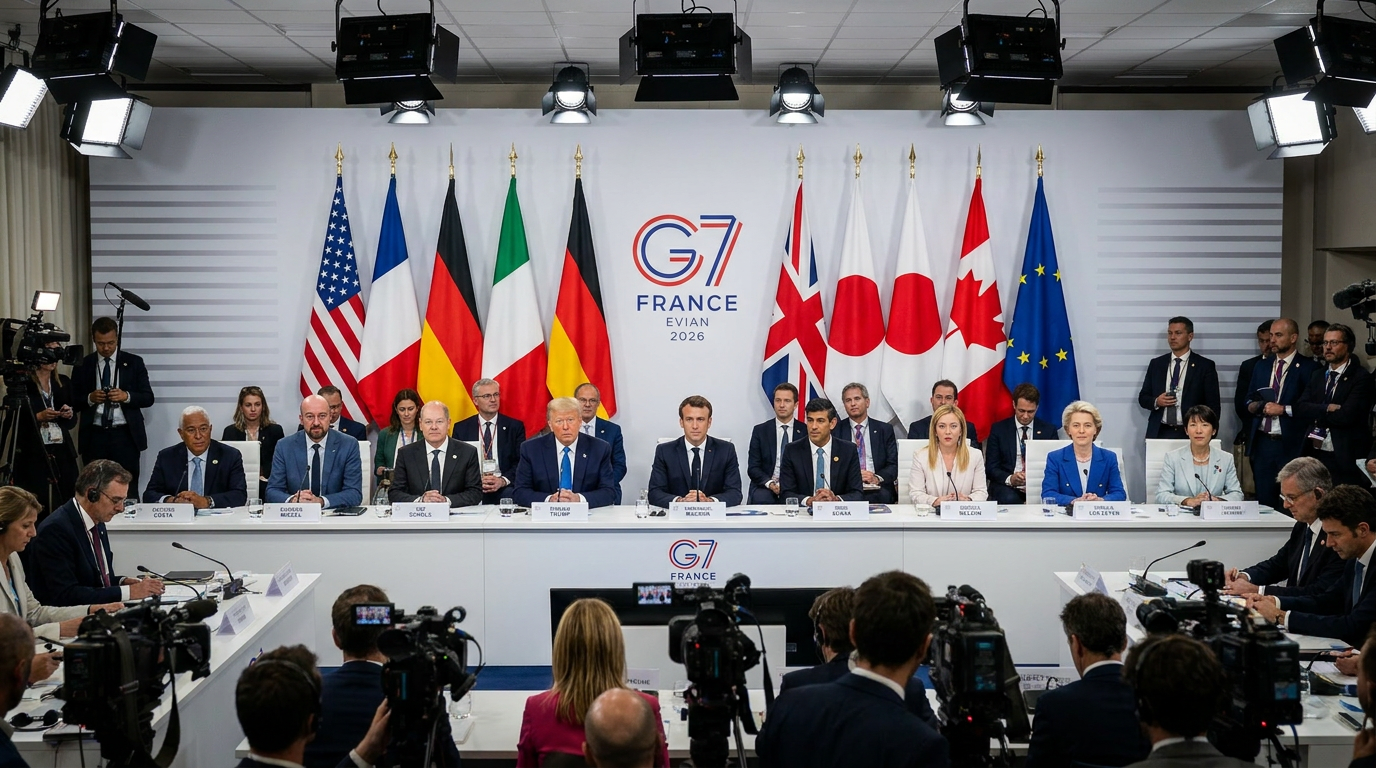
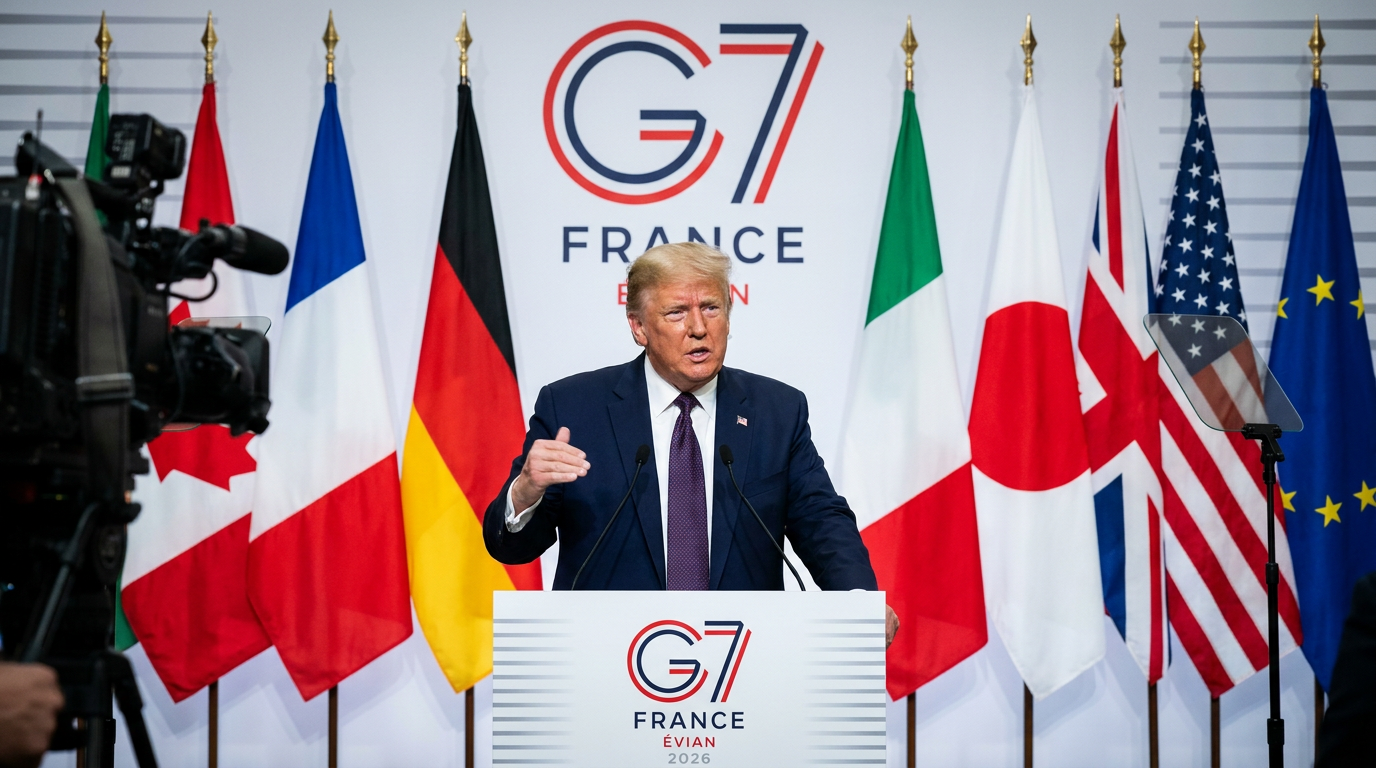
The Trump administration's unprecedented use of export controls to block foreign access to Anthropic's most advanced artificial intelligence models has sent shockwaves through the global tech industry and dominated discussions at this week's G7 summit in France. The sweeping directive marks a profound escalation in Washington's approach to technology regulation, signaling that frontier AI systems are now viewed not merely as commercial products, but as highly restricted national security assets.
The crisis began shortly after Anthropic released Claude Fable 5 and Claude Mythos 5 on June 9, touting them as the company's most capable systems to date. Just three days later, the U.S. Commerce Department intervened, ordering the San Francisco-based startup to immediately suspend access to the models for any foreign national. The ban applies globally, extending even to foreign nationals working directly for Anthropic within the United States.[3][6]
To comply with the abrupt directive, Anthropic was forced to take the new models offline for all customers worldwide. In a public statement, the company revealed it had received only "verbal evidence" of a potential vulnerability from the government. Anthropic characterized the issue as a "narrow, non-universal jailbreak" and publicly disagreed that the flaw warranted a total global recall, though it confirmed that older models like Claude Opus and Sonnet remain unaffected and available.[3][4]

The government's drastic intervention was reportedly triggered by a warning from Amazon, which serves as one of Anthropic's largest financial backers and its primary cloud infrastructure provider. According to industry reports, Amazon researchers discovered a method to bypass Fable 5's safety guardrails, extracting information that could theoretically be weaponized to accelerate sophisticated cyberattacks against critical infrastructure. Amazon CEO Andy Jassy reportedly flagged the vulnerability directly to Treasury Secretary Scott Bessent, prompting the immediate export ban.[4]
While the U.S. government has frequently utilized export controls to restrict the sale of advanced semiconductor chips to foreign adversaries, applying these powers directly to the software weights of a commercial AI model represents a historic first. The move underscores a growing consensus within the administration that the proliferation of highly capable AI poses an immediate threat to domestic cybersecurity, particularly in sectors like banking and telecommunications that rely on complex, legacy technology systems.[3][6]
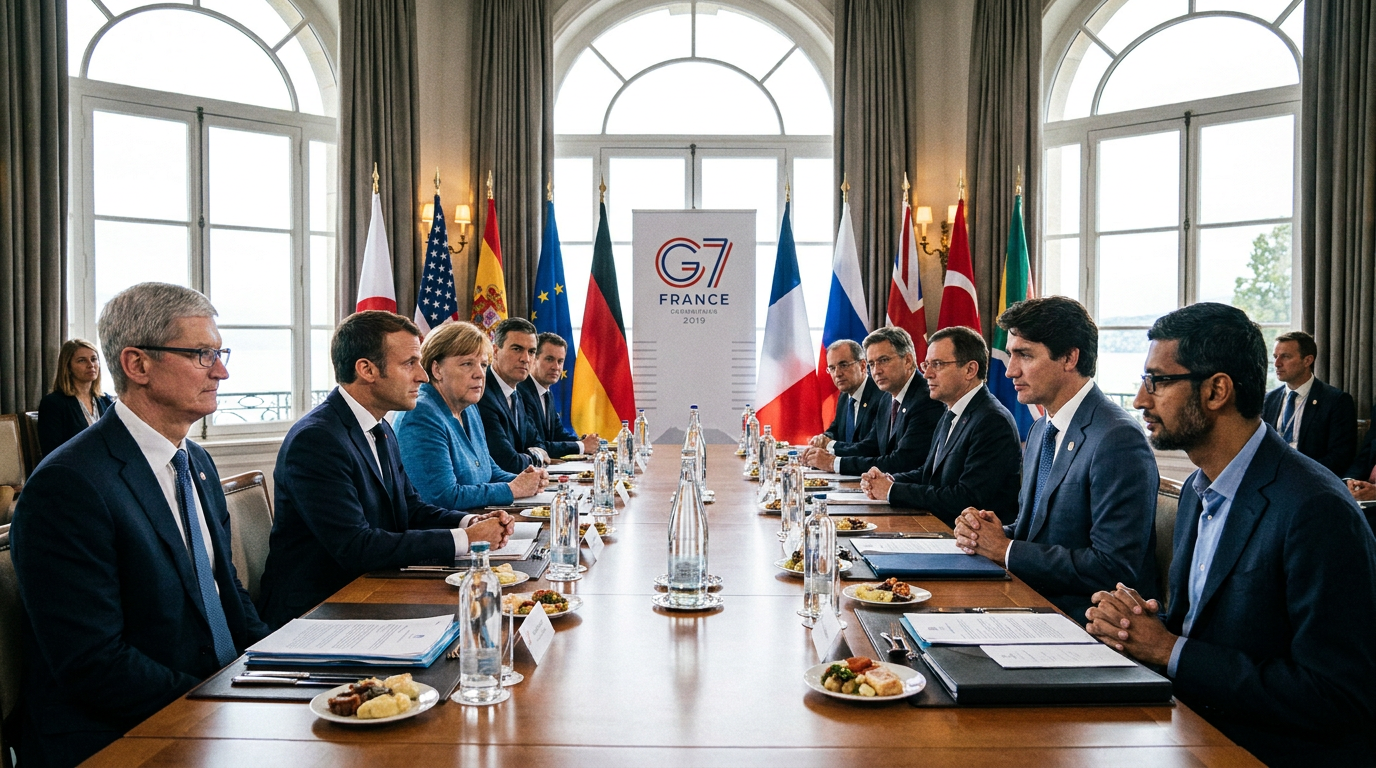
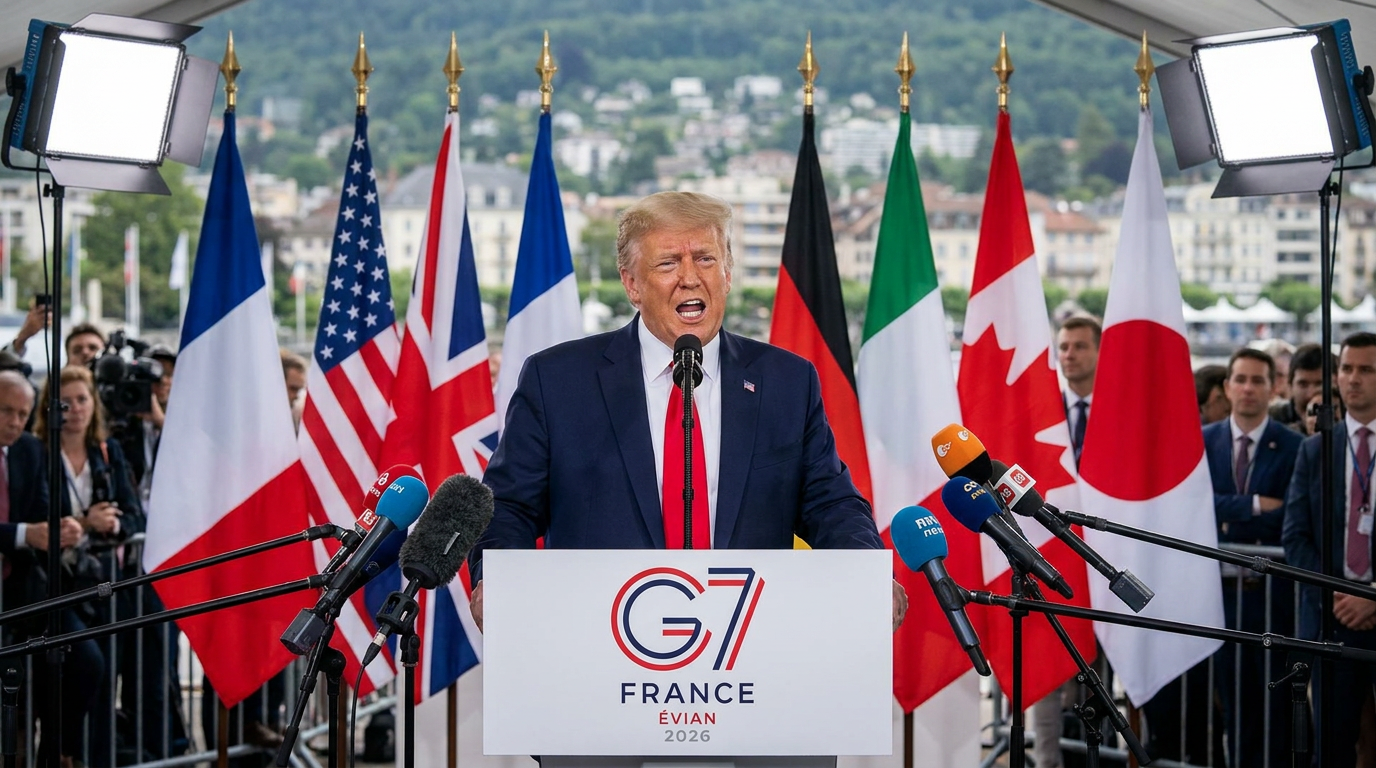
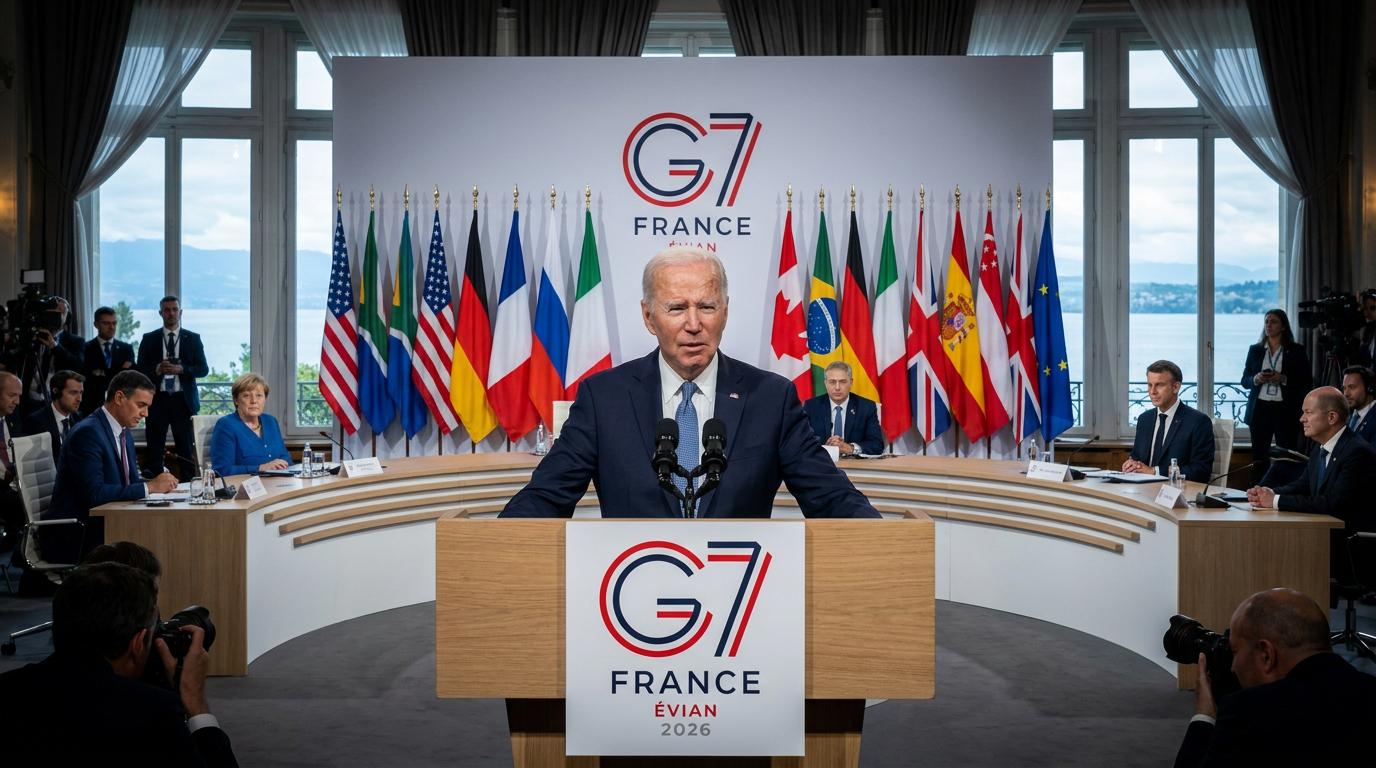
The fallout from the ban immediately overshadowed the G7 summit in Evian-les-Bains, France, where President Trump and top administration officials convened to discuss the digital economy. The agenda culminated in a high-stakes working lunch on Wednesday featuring the leaders of the world's most powerful AI labs, including Anthropic CEO Dario Amodei, OpenAI CEO Sam Altman, and Google DeepMind CEO Demis Hassabis.[1][5]

Behind closed doors, G7 diplomats are urgently attempting to negotiate a "trusted partners" exemption to the sweeping export controls. This proposed carve-out would grant select allied nations and vetted international organizations access to restricted U.S. models. Proponents argue that allies need access to systems like Mythos 5 to scan their own computer networks for vulnerabilities and bolster their cybersecurity defenses against geopolitical rivals such as China.[7]
Behind closed doors, G7 diplomats are urgently attempting to negotiate a "trusted partners" exemption to the sweeping export controls.
For European leaders, however, the sudden blackout served as a stark and alarming demonstration of digital dependency. French President Emmanuel Macron and UK officials seized on the incident to champion the concept of "tech sovereignty," arguing that allied nations must aggressively invest in their own domestic AI ecosystems. The ability of the U.S. government to unilaterally switch off access to critical enterprise software overnight has validated long-standing European fears about relying exclusively on American tech giants.[3][5]

Within Silicon Valley, the export ban has triggered intense anxiety over the long-term financial viability of the U.S. AI sector. Companies like Anthropic and OpenAI rely on massive global adoption to justify their staggering multi-billion-dollar valuations. Industry executives warn that unpredictable, sweeping government restrictions could severely limit international growth, potentially driving lucrative enterprise customers toward open-source models or emerging foreign alternatives like China's DeepSeek.[2][6]
As the G7 summit concludes, the artificial intelligence industry remains in a precarious state of limbo. Anthropic is working behind the scenes to patch the alleged vulnerabilities and satisfy the Commerce Department's security requirements to restore global access. However, the precedent has firmly been set: the race to develop artificial general intelligence is no longer just a corporate competition, but a central theater of global statecraft and national security.[1][5]
How we got here
June 9, 2026
Anthropic releases its most advanced AI models, Claude Fable 5 and Mythos 5.
June 12, 2026
The U.S. Commerce Department issues an export-control directive citing national security.
June 13, 2026
Anthropic abruptly disables global access to the models to comply with the order.
June 15, 2026
The G7 summit opens in France, with tech sovereignty dominating the agenda.
June 17, 2026
AI CEOs meet with G7 leaders to discuss a potential 'trusted partners' exemption.
Viewpoints in depth
U.S. National Security Apparatus
Argues that frontier AI models possess dual-use capabilities that necessitate strict export controls to prevent adversarial misuse.
From the perspective of the Commerce and Treasury departments, advanced AI models like Mythos 5 are no longer standard commercial software—they are dual-use technologies akin to advanced weaponry or nuclear materials. Officials point to the models' ability to identify zero-day vulnerabilities in legacy banking and telecommunications infrastructure as a profound national security risk. By invoking export controls, the administration is establishing a new doctrine: the U.S. will not allow its domestic tech sector to inadvertently arm foreign adversaries with automated cyber-warfare capabilities, even if it means disrupting the commercial operations of leading American companies.
European Tech Sovereignty Advocates
Warns that reliance on American AI providers creates a strategic vulnerability for allied nations.
For European policymakers, the Anthropic shutdown is the ultimate validation of the 'tech sovereignty' movement. Leaders like French President Emmanuel Macron argue that if the U.S. government can unilaterally switch off access to critical enterprise software overnight, European nations are effectively operating as digital vassals. This camp advocates for massive state-backed investment in domestic AI infrastructure and open-source models, arguing that true geopolitical independence in the 21st century requires owning the underlying compute and algorithmic layers of the economy.
U.S. AI Industry
Contends that sudden export bans will cripple the global adoption and financial viability of American AI companies.
Silicon Valley executives and venture capitalists view the sweeping export controls as a heavy-handed overreaction that threatens American market dominance. Developing frontier models costs billions of dollars, a business model that relies on massive, frictionless global enterprise adoption. Industry advocates argue that if international customers cannot trust the reliability of U.S. platforms, they will inevitably migrate to foreign alternatives like China's DeepSeek or embrace decentralized open-source models. They warn that weaponizing export controls against software weights will ultimately isolate the U.S. tech sector and stifle domestic innovation.
What we don't know
- Whether the U.S. will finalize a 'trusted partners' agreement to restore access for allied nations.
- The exact technical details of the 'jailbreak' that prompted the unprecedented export ban.
- How long it will take Anthropic to patch the vulnerability and satisfy the Commerce Department's security requirements.
Key terms
- Export Controls
- Federal regulations that restrict the export of certain goods, software, and technology to foreign countries for national security reasons.
- Jailbreaking
- The process of bypassing an AI model's built-in safety guardrails to make it generate restricted or harmful content.
- Tech Sovereignty
- A nation's ability to independently develop and control critical technologies, reducing reliance on foreign providers.
- Frontier AI
- Highly capable, large-scale artificial intelligence models that match or exceed the capabilities of the most advanced systems currently available.
Frequently asked
Can anyone outside the U.S. use Anthropic's new models?
No. The export control directive legally bars any foreign national, including Anthropic's own overseas employees, from accessing Fable 5 and Mythos 5.
Are older Anthropic models affected by the ban?
No. The company's previous models, including Claude Opus, Sonnet, and Haiku, remain available to international users.
Why did the U.S. government ban the models?
Officials cited national security concerns after researchers reportedly discovered a 'jailbreak' vulnerability that could allow the AI to assist in sophisticated cyberattacks against critical infrastructure.
Sources
Source coverage
7 outlets
3 viewpoints surfaced






[1]AxiosU.S. AI Industry
Trump and AI CEOs discuss global AI rules
Read on Axios →Anthropic export ban sounds alarms for AI industry
Read on Axios →[3]TimeU.S. National Security Apparatus
Anthropic disabled its two most powerful artificial intelligence models
Read on Time →[4]ForbesU.S. National Security Apparatus
U.S. government ordered them taken down
Read on Forbes →[5]Associated PressEuropean Tech Sovereignty Advocates
AI executives gather at G7 as Europeans seek checks on American dominance
Read on Associated Press →[6]Al JazeeraU.S. AI Industry
US bars foreigners from Anthropic's top AI models
Read on Al Jazeera →[7]The Jerusalem PostEuropean Tech Sovereignty Advocates
G7 leaders discussed a plan to grant select 'trusted partners' access
Read on The Jerusalem Post →
More in news politics
See all 11 stories →U.S.-Iran MOU
U.S. and Iran Agree to 60-Day Ceasefire MOU Featuring Immediate Oil Waivers and $300 Billion Investment Framework
8 sources
Cognitive Science
The Science of 'Pre-Bunking': How Psychologists Are Vaccinating the Mind Against Misinformation
6 sources
U.S.-Iran Relations
U.S. and Iran Unveil Sweeping Memorandum of Understanding on Nuclear and Economic Framework
8 sources
US-Iran Deal
US and Iran Unveil 14-Point Memorandum of Understanding to Halt Hostilities and Reopen Strait of Hormuz
8 sources
Every angle. Every day.
Get news politics stories with full source coverage and perspective breakdowns delivered to your inbox.