
U.S. and Iran Release 14-Point Memorandum to End War and Reopen Strait of Hormuz
The Trump administration and Iranian officials have unveiled the text of a sweeping 14-point agreement that establishes a 60-day ceasefire, reopens the Strait of Hormuz, and offers Tehran immediate oil sanctions waivers in exchange for nuclear concessions.
By Factlen Editorial Team
- U.S. Administration & Negotiators
- Focuses on the nuclear cap, the reopening of the Strait, and the diplomatic victory.
- Israeli Security Establishment
- Skeptical of the deal, concerned about Hezbollah and premature sanctions relief.
- Iranian & Regional Voices
- Focuses on the $300B fund, sanctions relief, and the preservation of sovereignty.
- International Observers
- Focuses on the fragility of the ceasefire, global market impacts, and implementation hurdles.
What's not represented
- · Lebanese civilians
- · European shipping companies
Why this matters
This preliminary agreement pauses a conflict that has severely disrupted global shipping and energy markets, but its ultimate success hinges on complex nuclear negotiations and whether regional allies like Israel will adhere to the ceasefire terms.
Key points
- The U.S. and Iran have released a 14-point memorandum establishing a 60-day ceasefire and a framework for a final peace treaty.
- Iran commits to never building a nuclear weapon and will downblend its enriched uranium under IAEA supervision.
- The U.S. will immediately issue sanctions waivers for Iranian oil exports and lift its naval blockade.
- A proposed $300 billion fund will be created for Iran's economic reconstruction if a final deal is reached.
- The Strait of Hormuz will be fully reopened to toll-free commercial shipping within 30 days.
- Israel has strongly criticized the agreement, particularly a clause demanding a halt to military operations in Lebanon.
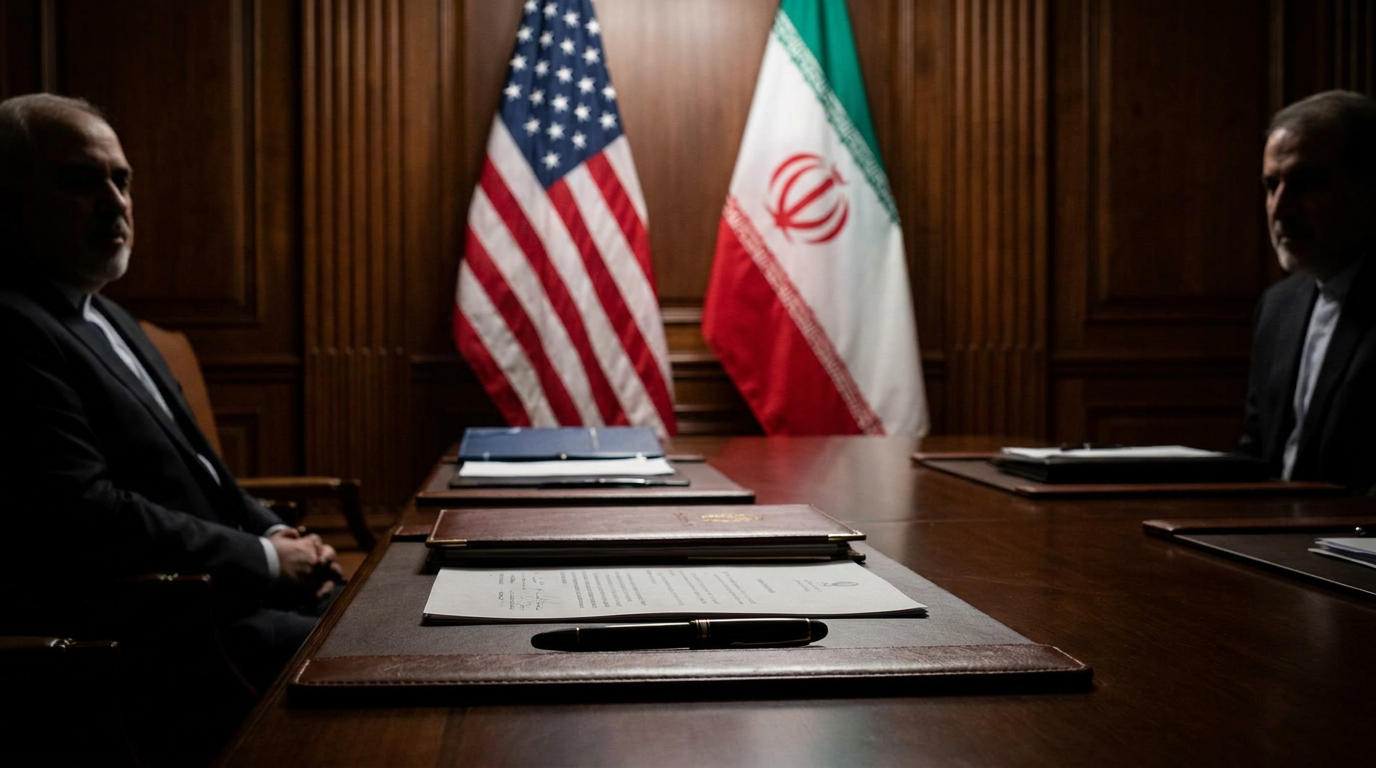
The Trump administration and Iranian officials have officially unveiled the sweeping 14-point text of a memorandum of understanding designed to end the U.S.-Iran war, reopen the critical Strait of Hormuz, and permanently cap Tehran's nuclear ambitions. Senior U.S. officials read the text to reporters on Wednesday, confirming earlier leaks of the document ahead of a formal signing ceremony scheduled for Friday in Lucerne, Switzerland. The preliminary agreement establishes a 60-day ceasefire across all military fronts and sets the stage for complex technical negotiations toward a final, binding peace treaty. While the document offers an immediate pause to a conflict that has severely disrupted global energy markets, officials caution that it is merely a framework, and the hardest diplomatic work lies ahead over the next two months.[1][2][3]
At the foundation of the memorandum is a mutual declaration of an immediate and permanent termination of military operations. According to the text, the United States, the Islamic Republic of Iran, and their respective allies commit to refraining from the threat or use of force against each other. This 60-day window is designed to freeze the battlefield entirely, allowing diplomats to transition from active warfare to structured negotiations. The text explicitly states that both nations will respect each other's sovereignty and territorial integrity, a standard diplomatic clause that carries immense weight following months of direct military confrontation and naval blockades.[1][6][7]
The core geopolitical trade-off centers on Iran's nuclear capabilities. The memorandum asserts that Iran explicitly commits to never developing or acquiring a nuclear weapon, a pledge the regime has made rhetorically in the past but is now codified as the basis for ending the war. More concretely, the agreement dictates that Iran's existing stockpile of highly enriched uranium will be neutralized. U.S. officials confirmed that the minimum methodology for this process will be "downblending" the material on-site under the strict, ongoing supervision of inspectors from the International Atomic Energy Agency. Negotiators emphasized that downblending is merely the starting point, and the U.S. will push for even tighter restrictions in the final treaty.[4][6][7]
In exchange for these nuclear concessions, the United States has agreed to provide immediate and highly lucrative economic relief. The text mandates that immediately upon the signing of the memorandum, the U.S. Treasury Department will issue sweeping waivers for the export of Iranian crude oil, petroleum products, and their derivatives. Crucially, these waivers also cover all associated services, including international banking transactions, insurance, and maritime transportation. This upfront sanctions relief provides an immediate economic lifeline to Tehran before a final deal is even finalized, a concession that has drawn intense scrutiny from hardliners in Washington who argue Iran is being rewarded prematurely.[2][6][8]

Beyond the immediate oil waivers, the agreement outlines massive long-term financial incentives if a final treaty is successfully negotiated. The United States and its regional partners pledge to establish a comprehensive, mutually agreed-upon plan for Iran's economic rehabilitation and development. The text explicitly guarantees financing of at least $300 billion for this reconstruction fund. While the exact contributors to this massive fund remain unnamed in the preliminary text, diplomatic sources indicate that multinational corporations and allied nations in Asia and the Middle East are expected to provide the bulk of the capital, provided Iran adheres to its nuclear commitments.[1][5][8]
The memorandum also addresses the billions of dollars in Iranian state assets that have been frozen in international accounts due to years of compounding U.S. sanctions. The United States commits to unfreezing these restricted funds and making them fully available to the Central Bank of Iran. However, senior administration officials stressed on Wednesday that this release is not instantaneous. The unfreezing of assets is explicitly tied to the progress of the nuclear talks over the next 60 days. As one official noted, the sanctions relief is directly linked to the nuclear settlement, ensuring that Iran only gains access to its capital if it performs on the required non-proliferation steps.[4][6][7]
The memorandum also addresses the billions of dollars in Iranian state assets that have been frozen in international accounts due to years of compounding U.S.
For global markets, the most vital and immediate relief comes in the strategic waterways of the Middle East. Under the terms of the agreement, the United States will immediately lift its naval blockade of Iran. In return, Iran has agreed to ensure the safe, toll-free passage of commercial vessels through the Strait of Hormuz for the duration of the 60-day negotiation period. The text mandates that maritime traffic must be restored to its pre-war volume within 30 days. To achieve this, Iran is required to remove all technical and military obstacles, including the neutralization of naval mines that were deployed during the height of the conflict.[1][6][7]

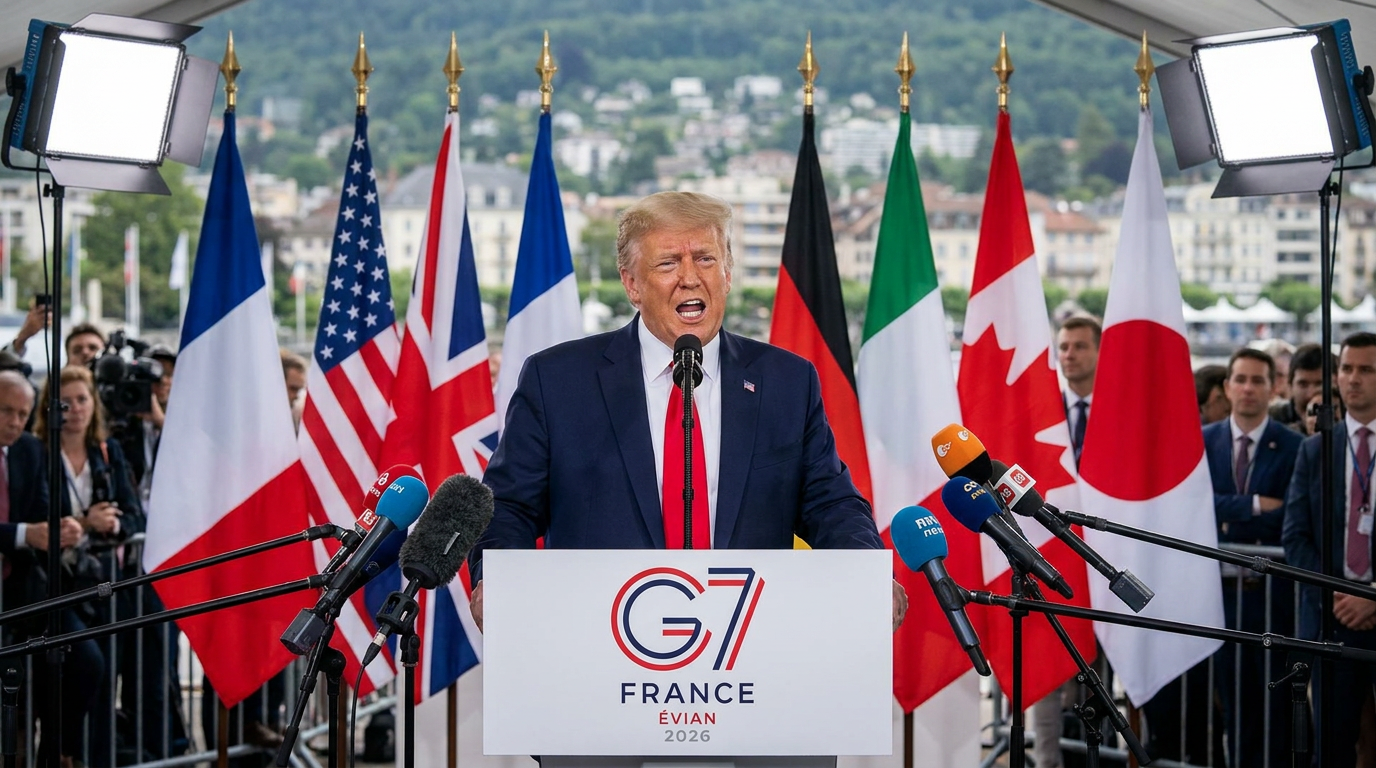
Speaking at the G7 summit in Évian-les-Bains, France, President Donald Trump vigorously defended the preliminary agreement, emphasizing that his primary strategic objective had been achieved. "The main thing is that Iran will not have a nuclear weapon," Trump told reporters, framing the memorandum as a historic victory for global security. The president also highlighted the immediate economic benefits of the deal, noting that the Strait of Hormuz would be completely open by Friday and predicting a massive positive reaction from global stock markets as the threat of a broader regional war subsides and oil prices stabilize.[4][6]
Despite his optimism, the president also issued a stark and graphic warning regarding Iranian compliance, making it clear that the U.S. military remains on high alert. Trump stated that he would not hesitate to abandon the talks and resume overwhelming military action if Tehran violates the terms of the memorandum during the 60-day window. "If I don't like it, if they don't behave, we'll go right back to dropping bombs right smack in the middle of their head," Trump declared during a lengthy press conference, underscoring the fragile and highly conditional nature of the ceasefire.[4][6]
The inclusion of a ceasefire "on all fronts, including in Lebanon" has emerged as one of the most significant and contentious flashpoints of the entire agreement. By explicitly naming Lebanon, the clause effectively requires Iran to rein in its powerful proxy militia, Hezbollah, which has been engaged in fierce fighting. Simultaneously, the text demands a halt to Israeli military operations in Lebanese territory. For Iran, binding all allied forces into the ceasefire was a crucial demand to protect its regional network, but for the United States, enforcing this clause requires navigating the deeply complex security imperatives of its closest Middle Eastern ally.[1][3][4][8]

Israel, which was reportedly kept out of the loop during the final drafting phases of the memorandum, has reacted with deep skepticism and outright resistance. Prime Minister Benjamin Netanyahu quickly distanced himself from the negotiations, stating that Israel has its own national security interests and will not leave the territory it currently occupies in southern Lebanon despite the U.S.-brokered ceasefire. Far-right members of Netanyahu's ruling coalition have gone even further, publicly calling for the Israeli military to ignore the agreement entirely, arguing that the Jewish state is not a signatory and cannot be bound by a memorandum that leaves Hezbollah intact.[4][5]
The diplomatic friction between Washington and Jerusalem spilled into public view at the G7, where Trump suggested that Netanyahu was jeopardizing the broader peace effort. Trump stated that he has had a great relationship with the Israeli leader but insisted that Netanyahu now has to "be more responsible with respect to Lebanon" and dial down the military aggression. The public rebuke highlights the widening gulf between the Trump administration's desire to quickly exit the conflict and Israel's determination to permanently degrade the military capabilities of Iranian proxies on its northern border.[4][5]
As the formal signing ceremony approaches, U.S. officials acknowledge the extreme fragility of the 60-day window. While the memorandum represents a historic diplomatic breakthrough, they stress it is merely a "political document" and that either side can walk away before a final, binding treaty is ratified. Negotiators will now pivot to the arduous task of finalizing the mechanisms for permanent sanctions relief, intrusive nuclear verification, and the eventual withdrawal of U.S. forces from surrounding areas. The success of the deal ultimately hinges on whether the technical details can be resolved before the political will evaporates.[5][6][8]
How we got here
Sunday
President Trump and Iranian officials digitally sign the preliminary 14-point memorandum of understanding.
Tuesday
Drafts of the agreement leak to international media outlets, revealing the $300 billion reconstruction fund and oil waivers.
Wednesday
Senior U.S. officials officially read the text of the memorandum to reporters, confirming its core provisions.
Friday
A formal, in-person signing ceremony is scheduled to take place in Lucerne, Switzerland, triggering the 60-day negotiation window.
Viewpoints in depth
U.S. Administration's view
The deal achieves the primary goal of preventing a nuclear-armed Iran while restoring global trade.
For the White House, the memorandum represents a major diplomatic and economic victory. By securing a written commitment from Iran to never build a nuclear weapon and forcing the downblending of existing enriched uranium, the administration argues it has neutralized the region's greatest long-term threat. Furthermore, the immediate reopening of the Strait of Hormuz is viewed as a critical win for the global economy, promising to lower energy costs and stabilize shipping routes without requiring a protracted, multi-year military occupation.
Israeli Government's view
The agreement prematurely rewards Tehran and fails to address the immediate threat of Hezbollah in Lebanon.
Israeli officials view the memorandum with profound skepticism, arguing that it grants Iran massive economic relief—including immediate oil waivers and a potential $300 billion fund—without dismantling its network of proxy militias. The inclusion of Lebanon in the ceasefire is particularly contentious, as Jerusalem insists it must maintain the freedom to operate militarily against Hezbollah to secure its northern border. Prime Minister Netanyahu's government fears the 60-day window will simply allow Iranian-backed forces to regroup while international pressure mounts on Israel to halt its offensives.
Iranian Leadership's view
The memorandum secures vital economic lifelines and reconstruction funds while preserving domestic sovereignty.
From Tehran's perspective, the agreement is a necessary pragmatic step to rescue an economy suffocated by years of sanctions and recent military blockades. Securing immediate waivers for crude oil exports and banking services provides instant relief, while the promise of a $300 billion reconstruction fund offers a long-term path to recovery. Crucially, by agreeing to downblend uranium rather than entirely dismantling its civilian nuclear infrastructure, Iran maintains its scientific capabilities while achieving the removal of the U.S. naval blockade and binding its regional allies into a protective ceasefire.
What we don't know
- It remains unclear which specific multinational corporations or regional partners will finance the proposed $300 billion reconstruction fund for Iran.
- The exact mechanisms for verifying the downblending of Iran's uranium stockpile during the 60-day window have not been fully detailed.
- It is unknown how the United States will respond if Israel defies the ceasefire and continues its military operations against Hezbollah in Lebanon.
Key terms
- Downblending
- The process of mixing highly enriched uranium with natural or depleted uranium to reduce its concentration, making it unusable for nuclear weapons.
- Sanctions Waiver
- A temporary exemption granted by the U.S. government that allows a country or company to engage in specific restricted activities, such as buying Iranian oil, without facing penalties.
- Memorandum of Understanding (MOU)
- A formal agreement between two or more parties that outlines the terms and details of a mutual understanding, often serving as the foundation for a future binding treaty.
Frequently asked
Is the U.S.-Iran war officially over?
Not yet. The memorandum establishes a 60-day ceasefire to allow for negotiations. A final, permanent peace treaty still needs to be drafted and signed.
What happens to Iran's nuclear program?
Iran has committed to never building a nuclear weapon and will 'downblend' its existing stockpile of highly enriched uranium under the supervision of international inspectors.
Will gas prices go down?
The agreement immediately lifts sanctions on Iranian oil exports and reopens the Strait of Hormuz, which is expected to increase global oil supply and potentially lower energy costs.
Why is Israel unhappy with the deal?
Israel argues the deal rewards Iran with sanctions relief without dismantling proxy groups like Hezbollah, and objects to the ceasefire clause that demands a halt to military operations in Lebanon.
Sources
Source coverage
8 outlets
4 viewpoints surfaced








[1]AxiosU.S. Administration & Negotiators
READ: Full U.S.-Iran memorandum of understanding
Read on Axios →[2]Fox NewsU.S. Administration & Negotiators
Trump administration unveils sweeping terms of proposed Iran agreement
Read on Fox News →[3]The New York TimesInternational Observers
A Look at the Text of the Agreement Between the United States and Iran
Read on The New York Times →[4]The GuardianInternational Observers
Middle East crisis live: Iran agrees to destroy enriched uranium stockpile, memorandum read out by US officials says
Read on The Guardian →[5]The Times of IsraelIsraeli Security Establishment
Multiple reports say agreement includes $300 billion fund for investment and reconstruction in Iran
Read on The Times of Israel →[6]TIMEU.S. Administration & Negotiators
The U.S. released the full text of the agreement it is set to sign with Iran on Friday
Read on TIME →[7]CNNInternational Observers
Read the full 14-point agreement between the U.S. and Iran
Read on CNN →[8]Middle East EyeIranian & Regional Voices
US agrees to $300bn reconstruction fund for Iran in draft peace deal
Read on Middle East Eye →

More in news politics
See all 6 stories →Birthright Citizenship
Supreme Court Upholds Trump Administration Directive Restricting Birthright Citizenship
8 sources
US-Iran Diplomacy
U.S. Releases Text of Iran Agreement Framework, Opening 60-Day Window on Nuclear Program
8 sources
Redistricting Fight
Georgia Republicans Decline to Redraw Election Maps in Special Session Following Supreme Court Ruling
7 sources
Fed Watch
Federal Reserve Holds Rates Steady as Warsh Signals Potential Hikes Amid Inflation Surge
8 sources
Every angle. Every day.
Get news politics stories with full source coverage and perspective breakdowns delivered to your inbox.