
The Era of the Black Box is Ending: How User-Controlled Algorithms are Rewiring Social Media
Major platforms like Threads, TikTok, and Bluesky are handing the algorithmic steering wheel back to users, marking a fundamental shift in how social media feeds are curated.
By Factlen Editorial Team

- Open-Web Advocates
- Believe true algorithmic control requires decentralized, open-source architecture where users can build and port their own feeds.
- Platform Incumbents
- Focus on adding steering mechanisms and reset buttons to existing engagement engines to satisfy user demand for control.
- Digital Wellbeing Analysts
- View algorithmic choice as a crucial tool for mental health, allowing users to break echo chambers and reduce doomscrolling.
What's not represented
- · Casual users who prefer passive feeds
- · Advertisers reliant on predictive targeting
Why this matters
For the first time in a decade, social media users are gaining the ability to dictate what they see online, breaking the grip of engagement-driven 'black box' algorithms. This shift empowers readers to escape echo chambers, curate their digital diets, and take control of their online wellbeing.
Key points
- Social media platforms are shifting away from opaque, predictive algorithms toward customizable, user-controlled feeds.
- Decentralized networks like Bluesky pioneered the 'marketplace of algorithms,' allowing users to build and share custom timelines.
- Incumbents like Threads and TikTok have responded by introducing algorithm resets, keyword filters, and explicit topic tagging.
- The shift empowers users to break out of echo chambers and curate healthier digital environments.
- Creators and marketers must adapt to an ecosystem where reach depends on active user choice rather than passive engagement bait.
For the better part of a decade, the social media experience has been dictated by a silent, invisible editor: the algorithm. These proprietary systems, often described as opaque "black boxes," watched every tap, linger, and scroll to predict exactly what would keep a user engaged. But a quiet revolution is taking hold across the digital landscape. From decentralized upstarts to Silicon Valley giants, platforms are beginning to hand the steering wheel back to the people scrolling. The era of the user-controlled algorithm has arrived, fundamentally altering the power dynamic between tech companies and their audiences.[1]
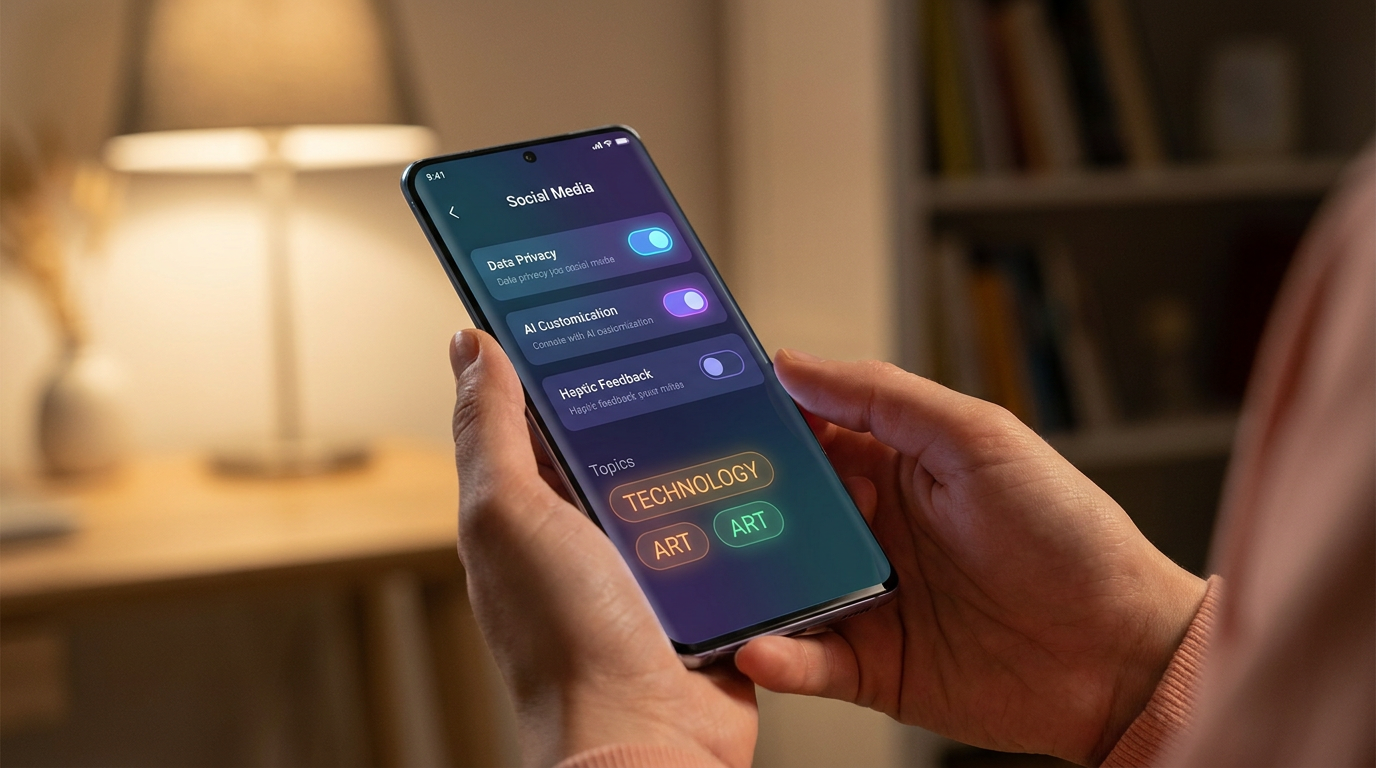
This shift represents a departure from the "engagement at all costs" model that defined the 2010s. For years, platforms relied on predictive scoring—a mechanism that assigns a mathematical probability to how likely a user is to interact with a post. If the system calculated that outrage or sensationalism would trigger a comment, that content was pushed to the top of the feed. Now, social media feeds are becoming increasingly customizable, with platforms introducing explicit tools that let users directly influence the algorithms powering their recommendations.[1]
The vanguard of this movement emerged from the decentralized web, specifically the Jack Dorsey-backed platform Bluesky. In 2023, Bluesky introduced one of the most significant architectural changes to social media in years: the ability for users to choose their own algorithms. Rather than relying on a single, centralized feed, Bluesky created an open marketplace of custom feeds. Users can subscribe to different algorithms built by third-party developers, swiping between them as easily as changing a television channel.[3][6]
The mechanics of Bluesky's custom feeds are remarkably transparent. Instead of guessing what a user wants based on passive behavior, the platform allows anyone to build an algorithmic timeline that filters posts by specific keywords, user lists, or engagement signals. A user might pin a feed dedicated entirely to cat photos, another that only shows posts from mutual followers, and a third that tracks mentions of a niche scientific topic. If a user dislikes the default "Discover" feed, they can simply unpin it and replace it with something else entirely.[3][6]

This philosophy of user agency is deeply intertwined with the broader "open social web" movement. Platforms like Mastodon, which operates on a decentralized protocol called ActivityPub, have long championed the idea that users should not be locked into a single corporate ecosystem. Recently, Mastodon expanded this vision by launching a newsletter feature that allows creators to reach audiences via email, bypassing algorithmic feeds entirely. The goal is to build an interoperable internet where users have ultimate control over how they consume and distribute information.[2]
The success of these user-centric models has not gone unnoticed by the industry's largest incumbents. Meta, the parent company of Instagram and Threads, has historically relied heavily on opaque, engagement-driven algorithms. However, the company is now methodically rolling out features that offer unprecedented levels of algorithmic transparency and control. On Threads, Meta's microblogging platform, users can now create up to 128 custom feeds based on specific topics or profiles, allowing them to curate streams of content that bypass the default "For You" algorithm.[4][7]
Threads has also introduced an AI-powered feature dubbed "Dear Algo," which allows users to explicitly tell the system what they want to see more or less of at any given moment. By typing a request directly into the app, users can temporarily adjust their feed's priorities—for example, asking for more sports updates during a live game, or requesting a pause on posts about a specific television show. This represents a shift from passive inference, which guesses what a user wants based on their clicks, to active instruction.[4]
This represents a shift from passive inference, which guesses what a user wants based on their clicks, to active instruction.
Even TikTok, the platform arguably most famous for its eerily accurate, highly addictive "For You Page" (FYP), is giving users more levers to pull. The ByteDance-owned app recently introduced tools like Topic Management and Smart Keyword Filters, allowing users to fine-tune their interests and explicitly block content they no longer wish to see. For users who feel their feed has become trapped in an unhelpful echo chamber, TikTok now offers a "Refresh" button that completely resets the FYP algorithm, wiping the slate clean so the system can learn the user's preferences anew.[5][8]

Instagram has similarly introduced an algorithm reset option, allowing users to clear their suggested content and start fresh. These reset buttons acknowledge a fundamental flaw in predictive algorithms: human interests change. A user who spent a weekend researching wedding venues might not want to see bridal content for the next three years. By allowing users to clear their algorithmic history, platforms are conceding that explicit user intent should occasionally override historical data.[5]
The implications of this shift extend far beyond individual user experience; they are actively reshaping the creator economy and digital marketing. For years, content creators and brands have been forced to play a guessing game, reverse-engineering black-box algorithms to figure out what formats or hooks will be rewarded with reach. In an environment defined by algorithmic choice, the strategy changes. Creators no longer need to optimize for a single, monolithic system; instead, they can focus on serving specific, highly engaged communities that have actively chosen to subscribe to relevant custom feeds.[6]
This transition also addresses some of the most persistent criticisms leveled against social media companies by digital wellbeing advocates. Algorithmic feeds have been widely criticized for prioritizing polarizing content, fostering echo chambers, and contributing to doomscrolling. By giving users the tools to curate their own digital environments, platforms are shifting a degree of responsibility—and power—back to the individual. A user who feels overwhelmed by political news can simply switch to a chronological feed of their friends, or a custom feed dedicated to a soothing hobby.[5][8]
However, the transition to user-controlled algorithms is not without its uncertainties. The primary question facing the industry is one of adoption: will the average social media user actually take the time to build, curate, and manage their own feeds? The default "For You" algorithm became dominant precisely because it requires zero effort from the user. It delivers a passive, lean-back experience that is highly effective at retaining attention.[1]

Early data from platforms like Bluesky suggests that power users and early adopters are highly enthusiastic about custom feeds, actively building and sharing complex algorithms with their communities. But for platforms with billions of users, like Instagram and TikTok, the majority of the audience may still default to the path of least resistance. The challenge for these tech giants will be designing user-controlled features that are intuitive and accessible enough that people actually use them, rather than burying them deep in a settings menu.[3]
Furthermore, algorithmic choice does not entirely eliminate the influence of the platform. Even when a user creates a custom feed on Threads or uses a keyword filter on TikTok, the underlying architecture of the app still plays a role in ranking and surfacing that content. True algorithmic independence currently exists only on decentralized platforms where users can host their own servers and write their own code.[4][8]
Despite these hurdles, the trajectory is clear. The era in which a handful of Silicon Valley engineers unilaterally decided what billions of people saw every day is slowly coming to an end. The introduction of custom feeds, algorithm resets, and explicit preference controls marks a maturation of the social media landscape. It is a recognition that users are not just data points to be optimized, but active participants who deserve a say in their digital diets.[1][6]
As these tools become more sophisticated, the internet may begin to look less like a series of walled gardens and more like a customizable dashboard. Whether through the open protocols of the Fediverse or the refined settings of mainstream apps, the future of social media is increasingly in the hands of the people scrolling. For the first time in a decade, the algorithm is starting to take orders from the user, rather than the other way around.[2][4]
How we got here
2017
ByteDance acquires Musical.ly, laying the groundwork for TikTok's highly predictive 'For You' algorithm.
May 2023
Bluesky launches 'custom feeds,' allowing users to build and subscribe to their own algorithms.
2024
Threads begins testing custom feeds to compete with decentralized platforms.
Feb 2026
Threads rolls out 'Dear Algo,' allowing users to explicitly tell the system what they want to see.
Jun 2026
Major platforms universally adopt user-controlled feed features, signaling a shift away from the black-box model.
Viewpoints in depth
Open-Web Advocates
Believe true algorithmic control requires decentralized, open-source architecture.
Proponents of the open social web argue that simply adding a 'reset' button to a corporate platform is not enough. They believe that true algorithmic choice requires decentralized infrastructure, where users are not locked into a single ecosystem. By utilizing open protocols like ActivityPub, platforms like Mastodon and Bluesky allow users to own their data, build their own curation tools, and port their audiences across different servers without relying on a centralized corporate entity.
Platform Incumbents
Focus on adding steering mechanisms to existing engagement engines.
Major tech companies maintain that their predictive algorithms are still the most effective way to surface relevant content to billions of users. However, they acknowledge the growing demand for transparency. Their approach is to keep the powerful 'black box' engines running but attach steering wheels—such as topic tags, keyword filters, and reset options—so users can course-correct when the algorithm misinterprets their interests or traps them in an unwanted content loop.
Digital Wellbeing Analysts
View algorithmic choice as a crucial tool for mental health and reducing doomscrolling.
Researchers and digital wellbeing advocates see user-controlled algorithms as a necessary public health intervention. They argue that engagement-optimized algorithms inherently favor outrage and polarization, which can negatively impact mental health. By giving users the power to actively curate their feeds, block specific topics, or switch to chronological timelines, these advocates believe social media can become a more intentional, less anxiety-inducing experience.
What we don't know
- Whether the majority of casual users will actually take the time to customize their feeds or simply default to the easiest option.
- How user-controlled algorithms will impact the advertising revenue models of major platforms.
- Whether these tools will genuinely reduce political polarization or simply allow users to build more entrenched echo chambers.
Key terms
- Algorithmic Choice
- The ability for users to select, customize, or build the algorithms that curate their social media feeds.
- Predictive Scoring
- A system used by traditional algorithms to assign a mathematical probability to how likely a user is to interact with a specific post.
- Custom Feed
- A specialized timeline created by a user or developer that filters content based on specific rules, keywords, or communities.
- The Fediverse
- A collection of decentralized social networks that can communicate with each other using shared open protocols.
- ActivityPub
- The open, decentralized social networking protocol that powers platforms like Mastodon.
Frequently asked
What is a custom feed?
A custom feed is a user-created algorithmic timeline that filters posts by specific rules, keywords, or communities, rather than relying on a platform's default algorithm.
How do I reset my TikTok algorithm?
You can clear your For You Page by navigating to Settings and Privacy, selecting Content Preferences, and tapping 'Refresh your For You feed' to start over.
Does Threads have a chronological feed?
Yes, Threads offers a 'Following' feed that displays posts from accounts you follow in chronological order, separate from the algorithmic 'For You' feed.
What is the Fediverse?
The Fediverse is a network of interconnected, decentralized social media servers, like Mastodon, that allow users to communicate across different platforms using open protocols.
Sources
Source coverage
8 outlets
3 viewpoints surfaced







[1]TechCrunchOpen-Web Advocates
Social media’s next evolution: user-controlled algorithms
Read on TechCrunch →Mastodon looks to newsletters to help revive the open social web
Read on TechCrunch →[3]EngadgetPlatform Incumbents
Bluesky releases its 'custom feeds' feature
Read on Engadget →[4]Social Media TodayPlatform Incumbents
Threads Rolls Out 'Dear Algo' Feed Refinement Option
Read on Social Media Today →[5]PCMagDigital Wellbeing Analysts
How to Reset Your Social Media Algorithms
Read on PCMag →[6]Bluesky BlogOpen-Web Advocates
Algorithmic Choice with Custom Feeds
Read on Bluesky Blog →[7]LifehackerPlatform Incumbents
Escape the Notorious Threads Algorithm Using Custom Feeds
Read on Lifehacker →[8]MetricoolDigital Wellbeing Analysts
TikTok Algorithm Guide: How to Change or Reset Your FYP
Read on Metricool →
Every angle. Every day.
Get technology stories with full source coverage and perspective breakdowns delivered to your inbox.