
US and Iran Unveil 14-Point Memorandum of Understanding to Halt Hostilities and Reopen Strait of Hormuz
The Trump administration has unveiled a sweeping 14-point memorandum of understanding with Iran that establishes a 60-day ceasefire, lifts the US naval blockade, and sets the stage for final nuclear negotiations.
By Factlen Editorial Team
- US Administration & Allies
- Views the deal as a necessary step to secure global shipping and prevent a nuclear Iran without taxpayer cost.
- Israeli Security Establishment
- Fears the immediate ceasefire is a premature concession that leaves Hezbollah intact and Israel vulnerable.
- Iranian Hardliners
- Argues that surrendering the highly enriched uranium stockpile strips Tehran of its primary strategic deterrent.
- Iranian Opposition
- Feels betrayed by the diplomatic lifeline, arguing it abandons the push for regime change and entrenches the government.
What's not represented
- · European shipping companies
- · Lebanese civilians
Why this matters
The memorandum represents a historic pivot in US-Iran relations, halting a regional war that has disrupted global shipping and drawn in multiple proxy forces. If finalized, the deal would reshape Middle Eastern security dynamics, reopen the critical Strait of Hormuz to global oil traffic, and fundamentally alter the US posture toward Tehran's nuclear program.
Key points
- The US and Iran have agreed to a 14-point memorandum of understanding to end regional hostilities.
- The agreement mandates the lifting of the US naval blockade in the Strait of Hormuz within 30 days.
- A 60-day negotiation window has been established to finalize the status of Iran's nuclear program.
- President Trump clarified that a proposed $300 billion investment fund for Iran will rely on private and foreign capital, not US taxpayers.
- The ceasefire halts military operations across all fronts, including Israeli engagements with Hezbollah in Lebanon.
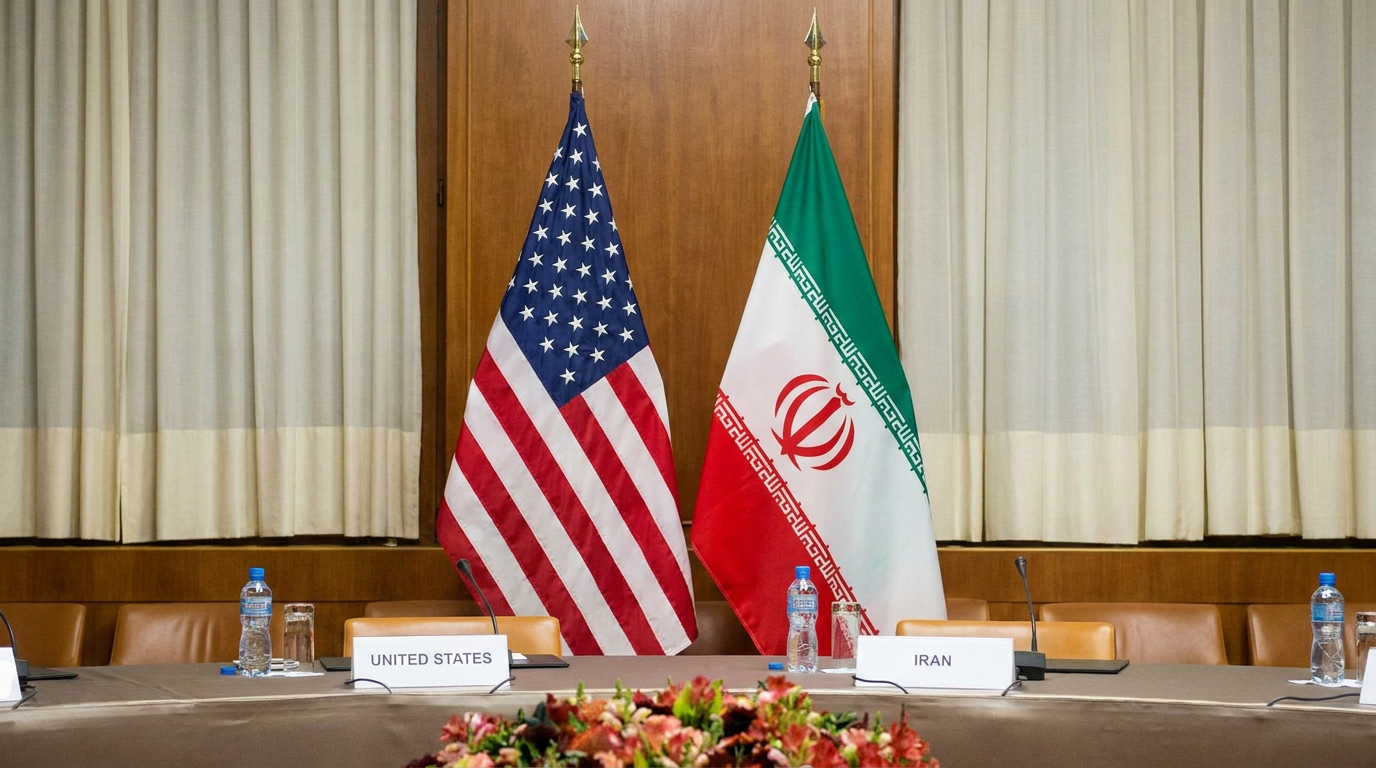
The Trump administration has unveiled a sweeping 14-point memorandum of understanding (MOU) with Iran, signaling a historic pivot aimed at ending a protracted regional war. The framework, expected to be formally signed in Switzerland on Friday, establishes an immediate ceasefire across all fronts, including the volatile border in Lebanon. The agreement outlines a 60-day window for Washington and Tehran to negotiate a final, binding accord regarding Iran's nuclear program and regional security. If implemented, the deal would fundamentally reshape Middle Eastern geopolitics, lifting a crippling US naval blockade and offering Tehran a pathway to massive economic relief.[1][2][8]
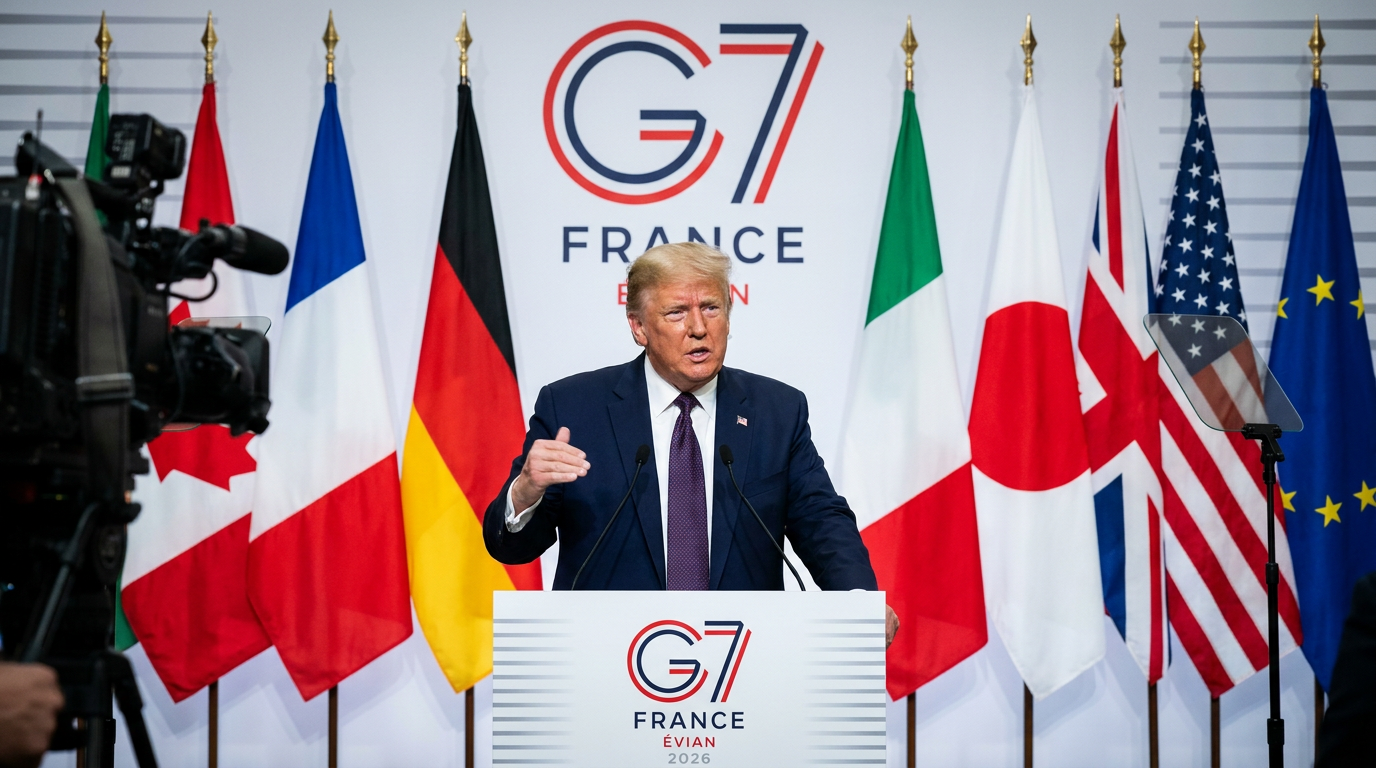
The immediate priority of the MOU is the restoration of global maritime trade through the Strait of Hormuz, a critical chokepoint for the world's oil supply. Under the terms of the agreement, the United States has committed to lifting its naval blockade and withdrawing its forces from the surrounding areas within 30 days. In exchange, Iran is required to remove naval mines and other technical obstacles, ensuring that merchant shipping returns to pre-war volumes. G7 leaders, meeting in France, released a joint statement supporting the deal specifically for its potential to reopen the strait and stabilize international trade.[2][3][7][8]
The nuclear component of the framework defers the most contentious issues to the upcoming 60-day negotiation period. While the MOU features a reiteration from Iran that it will never produce a nuclear weapon, the fate of its existing stockpile of highly enriched uranium remains unresolved. The text stipulates that any action on Iran's nuclear program, as well as the lifting of United Nations and International Atomic Energy Agency (IAEA) sanctions, will depend on the successful conclusion of a second, more detailed accord. Analysts note that the current pause prevents the US from applying additional military pressure during the talks, potentially limiting Washington's leverage.[2][4][7][8]

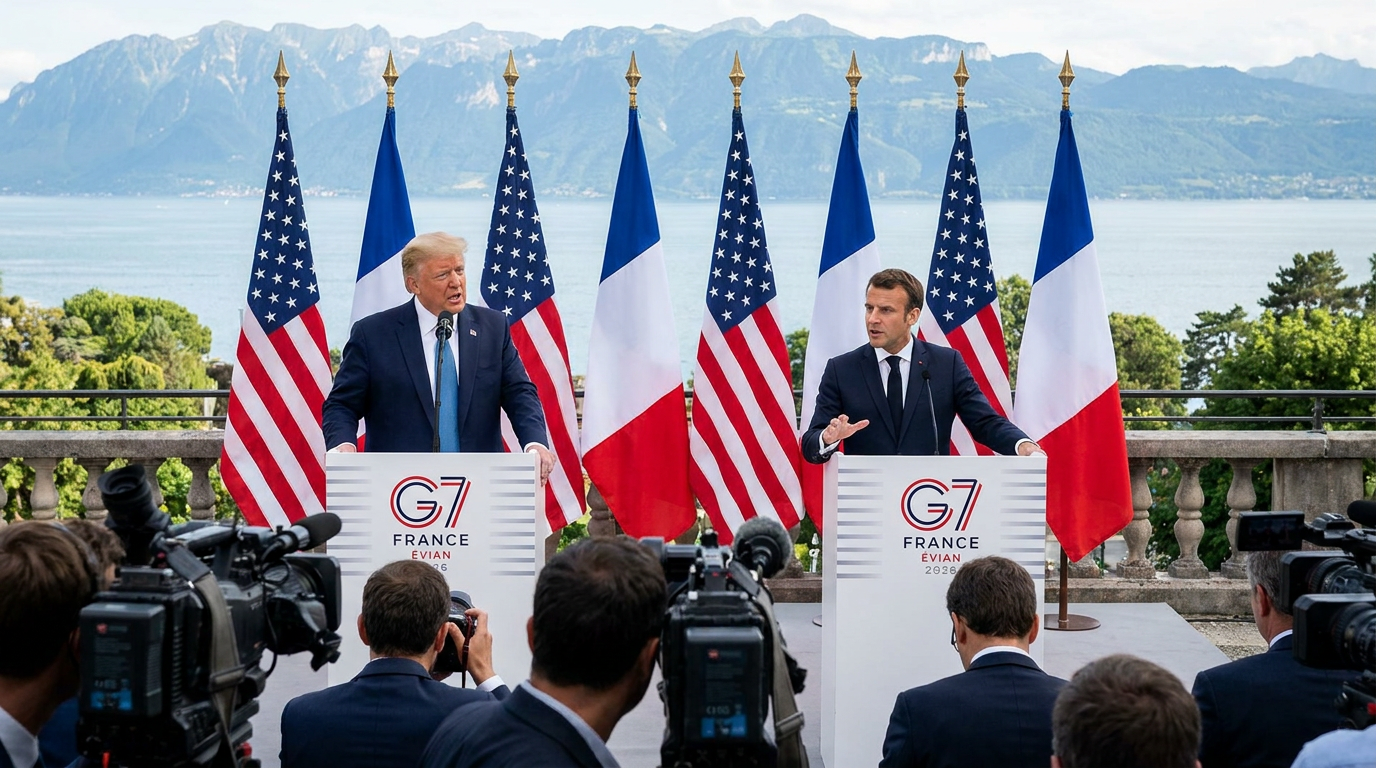
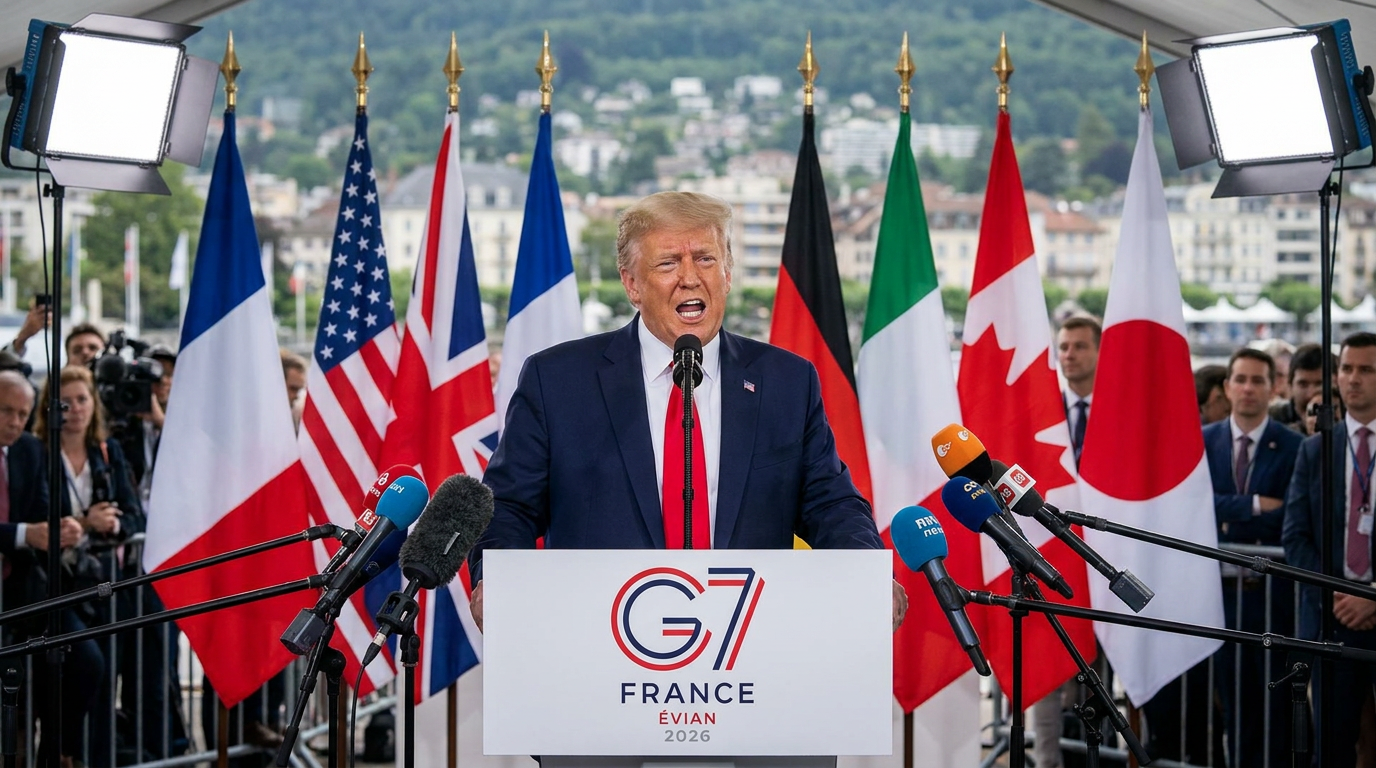
The most heavily scrutinized element of the framework is a proposed $300 billion economic development and reconstruction fund for Iran. Early reports suggested the fund was a direct concession to Tehran, sparking immediate political backlash. However, President Donald Trump forcefully pushed back against those characterizations during a press conference at the G7 summit in Evian-les-Bains. "We're not putting up 10 cents," Trump told reporters, clarifying that the fund would be a private investment vehicle financed by international companies and potentially Gulf Arab states, contingent entirely on Iran's future behavior.[3][4][5][8]
The most heavily scrutinized element of the framework is a proposed $300 billion economic development and reconstruction fund for Iran.
Vice President JD Vance corroborated the administration's stance, noting in a recent interview that Iran could only gain access to the Gulf-backed reconstruction fund if it fully complies with the final agreement, including the dismantling of its nuclear program. Sources familiar with the negotiations indicate that companies from Asia, South America, and the Gulf have already committed financing to the private fund, which is designed to provide both sides with a powerful economic incentive to finalize the peace treaty.[4][5]

The sudden diplomatic breakthrough has triggered profound anxiety within the Israeli government. Israeli officials were reportedly kept out of the loop during the final stages of the MOU drafting, leading to fears that the immediate ceasefire will leave Hezbollah—Iran's primary proxy in Lebanon—intact and capable of future strikes. The agreement mandates a full cessation of hostilities by the US and its allies, effectively halting Israeli military operations against Hezbollah that had been ongoing. In an effort to assuage these concerns, President Trump announced at the G7 that he had forwarded a draft of the MOU to Israeli Prime Minister Benjamin Netanyahu.[4][5][8]
Inside Iran, the prospect of a deal has exposed deep fractures between the ruling establishment, hardline factions, and the opposition. Hardline political groups, such as the Paydari Front, have warned that surrendering the country's highly enriched uranium stockpile would strip Tehran of its primary deterrent. These factions argue that without the nuclear leverage, Iran would be left vulnerable to future tactical strikes by Western or Israeli forces. They view the 60-day negotiation window with deep suspicion, fearing that the US intends to extract maximum concessions while delaying genuine sanctions relief.[6][7]

Conversely, Iranian exiles and opposition figures have expressed bitter disappointment, accusing the Trump administration of abandoning their cause. Many dissidents who had hoped the recent regional war would precipitate the collapse of the Islamic Republic now feel betrayed by the diplomatic lifeline extended to Tehran. Across social media, opposition voices have criticized the agreement as a capitulation that will ultimately enrich the regime and fund its network of proxy militias, rather than benefiting the Iranian populace. Despite the controversy, the 60-day clock is set to begin, launching a high-stakes diplomatic sprint that will determine the future of the Middle East.[6]
How we got here
May 2026
Escalating regional conflict and a US naval blockade severely disrupt commercial shipping in the Strait of Hormuz.
June 16, 2026
Saudi media and US analysts publish the leaked 14-point text of the US-Iran Memorandum of Understanding.
June 17, 2026
President Trump defends the framework at the G7 summit in France, clarifying the nature of the $300 billion investment fund.
June 19, 2026
Formal in-person signing of the agreement is expected to take place in Switzerland.
Viewpoints in depth
The US Administration's view
The deal achieves peace, secures the Strait of Hormuz, and prevents a nuclear-armed Iran without costing US taxpayers.
US officials argue that the 14-point framework represents a massive diplomatic victory that achieves the primary goals of the recent conflict without prolonged military engagement. By securing an immediate reopening of the Strait of Hormuz, the administration aims to stabilize global energy markets and restore international trade. Furthermore, the White House insists that the $300 billion reconstruction fund is entirely reliant on private and foreign capital, shifting the financial burden away from American taxpayers while maintaining strict behavioral contingencies on Tehran.
The Israeli Government's view
The immediate ceasefire is a premature concession that leaves Hezbollah intact and Israel vulnerable.
For Israel, the sudden halt to regional hostilities is deeply alarming. The agreement mandates a full cessation of military operations by the US and its allies, which effectively freezes Israel's ongoing campaign against Hezbollah in Lebanon. Israeli security officials fear that lifting the naval blockade and offering economic relief will allow Iran to resupply its proxy network. The lack of prior consultation on the final text has exacerbated concerns that Washington is prioritizing a quick diplomatic exit over the long-term dismantling of the Axis of Resistance.
Iranian Hardliners' view
Surrendering the highly enriched uranium stockpile strips Tehran of its primary deterrent against future strikes.
Factions within Iran's hardline political establishment, such as the Paydari Front, view the 60-day negotiation window as a dangerous trap. They argue that Iran's stockpile of highly enriched uranium is the only leverage preventing a full-scale Western or Israeli invasion. From their perspective, agreeing to dismantle the nuclear program in exchange for conditional economic relief repeats past diplomatic mistakes, leaving the Islamic Republic fundamentally vulnerable once its primary strategic deterrent is neutralized.
Iranian Exiles' view
The diplomatic lifeline abandons the push for regime change and entrenches the current government.
Iranian opposition figures and diaspora communities have reacted to the MOU with profound betrayal. Many dissidents believed that the severe economic and military pressure of the recent war would finally catalyze the collapse of the Islamic Republic. They argue that unfreezing assets and facilitating a $300 billion investment fund will only serve to enrich the regime's elite and finance its internal security apparatus, effectively crushing the domestic movement for democratic reform.
What we don't know
- Whether Iran will agree to dismantle its stockpile of highly enriched uranium during the 60-day negotiation window.
- Exactly which international companies and Gulf states have committed to the $300 billion private investment fund.
- How Israel will adapt its security posture regarding Hezbollah now that the US has committed to a regional ceasefire.
Key terms
- Memorandum of Understanding (MOU)
- A formal agreement between two or more parties that outlines the terms of a mutual understanding, often preceding a binding treaty.
- Strait of Hormuz
- A vital shipping chokepoint between the Persian Gulf and the Gulf of Oman, through which a significant portion of the world's oil supply passes.
- Highly Enriched Uranium (HEU)
- Uranium processed to increase the concentration of the U-235 isotope, which can be used for civilian nuclear power or nuclear weapons.
- Axis of Resistance
- A political and military alliance led by Iran, including proxy groups like Hezbollah in Lebanon and various militias across the Middle East.
Frequently asked
Is the US giving Iran $300 billion?
No. President Trump clarified that the US is not contributing government funds. The $300 billion figure refers to a proposed private investment fund backed by international companies and Gulf states.
Will the Strait of Hormuz reopen to shipping?
Yes. The MOU mandates that the US lift its naval blockade within 30 days, and Iran must remove technical obstacles and mines to restore merchant shipping to pre-war volumes.
Does this agreement finalize Iran's nuclear status?
Not yet. The MOU establishes a 60-day negotiation period to reach a final, binding agreement on Iran's stockpile of enriched uranium and its civilian nuclear needs.
Sources
Source coverage
8 outlets
4 viewpoints surfaced








[1]Fox NewsUS Administration & Allies
Trump administration unveils sweeping terms of proposed Iran agreement
Read on Fox News →[2]AxiosUS Administration & Allies
READ: Full U.S.-Iran memorandum of understanding
Read on Axios →[3]The GuardianUS Administration & Allies
Trump defends US-Iran deal at G7, denies US will fund $300bn investment
Read on The Guardian →[4]The Times of IsraelIsraeli Security Establishment
Multiple reports say agreement includes $300 billion fund for investment and reconstruction in Iran
Read on The Times of Israel →[5]The Jerusalem PostIsraeli Security Establishment
Trump says he sent Israel draft of MoU with Iran
Read on The Jerusalem Post →[6]Iran InternationalIranian Opposition
Iranians Divided Over US-Iran Memorandum of Understanding
Read on Iran International →[7]Institute for the Study of WarIranian Hardliners
Iran Update, June 16, 2026
Read on Institute for the Study of War →[8]i24NEWSIsraeli Security Establishment
Saudi media publishes full text of US-Iran Memorandum of Understanding
Read on i24NEWS →
More in news politics
See all 6 stories →Middle East Diplomacy
U.S. and Iran Release Draft Memorandum of Understanding to End Regional Conflict
7 sources
US-Iran Deal
US and Iran Agree to 60-Day Ceasefire and Memorandum of Understanding to End War
8 sources
US-Iran Peace Deal
US and Iran Agree to 14-Point Memorandum to End War and Reopen Strait of Hormuz
8 sources
US-Iran Deal
U.S. and Iran Release 14-Point Memorandum to End War and Reopen Strait of Hormuz
8 sources
Every angle. Every day.
Get news politics stories with full source coverage and perspective breakdowns delivered to your inbox.