
What Kevin Warsh's First Federal Reserve Meeting Means for the Economy
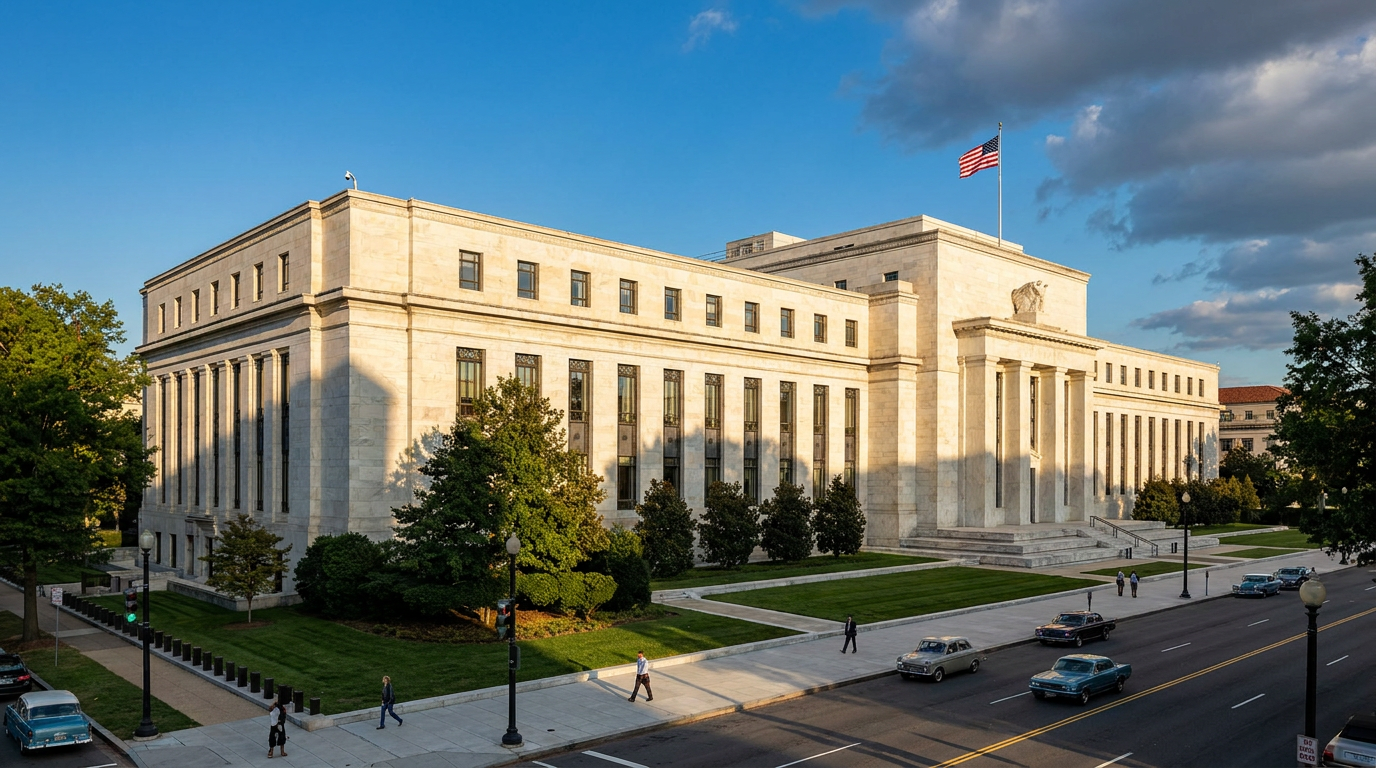
Newly appointed Federal Reserve Chairman Kevin Warsh presides over his first policy meeting this week, facing intense political scrutiny and a complex economic landscape. As the central bank weighs interest rates and balance sheet reductions, the outcome will directly impact consumer borrowing costs and market stability.
By Factlen Editorial Team
- Institutional Centrists
- Prioritize the Federal Reserve's independence and a strictly data-driven approach to monetary policy.
- Growth Advocates
- Argue for swifter rate cuts to prevent job losses, stimulate investment, and ease borrowing costs.
- Inflation Hawks
- Support aggressive balance sheet reduction and keeping rates higher for longer to ensure inflation is fully defeated.
What's not represented
- · Small Business Owners
- · First-Time Homebuyers
Why this matters
The Federal Reserve's interest rate decisions dictate the cost of mortgages, auto loans, and credit card debt for millions of Americans. With a new chairman at the helm, any shift in policy strategy will directly impact household budgets and the broader trajectory of the US economy.
Key points
- Kevin Warsh is presiding over his first FOMC meeting as Federal Reserve Chairman.
- The central bank is widely expected to hold its benchmark interest rate steady.
- Warsh is placing a renewed emphasis on shrinking the Fed's $6.9 trillion balance sheet.
- The White House is exerting political pressure on the Fed to lower borrowing costs.
- Markets are closely watching the 'dot plot' for clues on future rate cuts.
The Federal Reserve enters a new era this week as Kevin Warsh presides over his first Federal Open Market Committee (FOMC) meeting as chairman. The gathering in Washington comes at a pivotal moment for the U.S. economy, which continues to balance resilient growth with lingering inflationary pressures. Financial markets and consumers alike are watching closely to see how the new chief will steer the world's most powerful central bank.[1][7]
The immediate expectation among analysts is that the Fed will hold its benchmark interest rate steady at the current range of 3.50% to 3.75%. However, the true focus of this meeting extends far beyond the immediate rate decision. Investors are parsing every word for clues about the trajectory of future cuts and the central bank's broader monetary strategy under its new leadership.[7][8]
Warsh steps into the role under an intense political spotlight. The new chairman faces unyielding attention from the White House, which has historically pressured the central bank to lower borrowing costs to stimulate economic growth. Navigating this political pressure while maintaining the Fed's institutional independence will be one of Warsh's most significant early tests.[1][5]

To understand the stakes, it is essential to look at how the Fed's primary lever—the federal funds rate—ripples through the economy. While the Fed does not directly set mortgage or credit card rates, its benchmark rate determines what banks charge each other for overnight lending. When this rate stays elevated, banks pass those costs onto consumers, making it more expensive to finance a home, buy a car, or carry a credit card balance.[3]
Beyond interest rates, Warsh is bringing a renewed focus to the Federal Reserve's balance sheet. During the pandemic, the Fed bought trillions of dollars in Treasury bonds and mortgage-backed securities to pump liquidity into the financial system. Now, the central bank is engaged in "quantitative tightening" (QT)—allowing those bonds to mature without replacing them, effectively draining money out of the economy to cool inflation.[2][6]
The mechanics of the balance sheet are complex but crucial. By shrinking its portfolio, currently estimated at nearly $6.9 trillion, the Fed puts upward pressure on long-term interest rates, including mortgage rates. Warsh has signaled that he views the size of the balance sheet as a primary tool for monetary policy, potentially prioritizing its reduction even as the committee considers future cuts to the short-term federal funds rate.[2][6]

By shrinking its portfolio, currently estimated at nearly $6.9 trillion, the Fed puts upward pressure on long-term interest rates, including mortgage rates.
This dual approach—managing both the policy rate and the balance sheet—creates a delicate balancing act. If the Fed shrinks its holdings too quickly, it risks draining too much liquidity from the financial system, which could trigger volatility in the bond markets. Conversely, moving too slowly could allow inflationary embers to reignite.[6][8]
The economic backdrop against which Warsh is operating presents its own set of mixed signals. Core inflation has cooled significantly from its peak, hovering near 2.4%, but remains stubbornly above the Fed's 2% target. Policymakers must weigh the risk of cutting rates prematurely against the danger of keeping them high for so long that they trigger a recession.[5][7]
The labor market, a key pillar of the Fed's dual mandate, is also showing signs of underlying anxiety. While headline unemployment remains historically low, recent survey data indicates that less than one-third of global workers feel their jobs are secure. This underlying fragility suggests that the economy may be more sensitive to prolonged high interest rates than top-line data implies.[4]

A critical component of this week's meeting will be the release of the "Summary of Economic Projections," commonly known as the dot plot. This chart maps out where each Fed official expects interest rates to be at the end of the year and in the years to follow. For Wall Street, reading these projections is akin to deciphering monetary tea leaves, offering the clearest window into the committee's collective mindset.[7][8]
Global markets are also highly attuned to the shift in leadership. The U.S. dollar serves as the world's reserve currency, meaning the Fed's decisions dictate the rhythm of global finance. Emerging markets, in particular, are sensitive to U.S. rate policies, as higher domestic yields can draw capital away from developing economies and increase the burden of dollar-denominated debt.[8]

The climax of the two-day meeting will be Warsh's inaugural post-meeting press conference. Every nuance of his delivery, his willingness to push back on political pressure, and his framing of the balance sheet will be scrutinized. Unlike his predecessors, Warsh is expected to adopt a more direct communication style, potentially reshaping how the central bank telegraphs its intentions to the public.[1][2]
For the average consumer, the takeaway from Warsh's debut is that the era of ultra-cheap money remains firmly in the rearview mirror. While rate cuts may still materialize later this year, the new chairman's focus on quantitative tightening suggests that long-term borrowing costs, particularly for mortgages, may stay elevated even as short-term rates begin to ease.[2][3]
How we got here
March 2020
The Fed slashes rates to near zero and begins a massive bond-buying program to support the pandemic economy.
March 2022
The Fed begins an aggressive rate hike cycle to combat surging inflation.
June 2024
Inflation begins a steady decline, prompting a pause in rate hikes.
Early 2026
Kevin Warsh is nominated and confirmed as the new Federal Reserve Chairman.
June 2026
Warsh presides over his first FOMC meeting, shifting focus to the balance sheet.
Viewpoints in depth
The White House
Focuses on maximizing economic growth and job creation through lower borrowing costs.
Administration officials have consistently argued that with inflation cooling, the Federal Reserve should move more aggressively to cut interest rates. Their primary concern is that keeping rates elevated for too long will unnecessarily stifle business investment and consumer spending, potentially triggering a slowdown ahead of key political cycles. They view the Fed's current stance as overly cautious.
Inflation Hawks
Prioritize the complete eradication of inflation, even at the cost of slower economic growth.
Economists and policymakers in this camp warn that the "last mile" of defeating inflation is the hardest. They point to sticky service-sector prices and resilient consumer demand as reasons to maintain higher interest rates. Furthermore, they strongly support Warsh's focus on quantitative tightening, arguing that the massive expansion of the balance sheet during the pandemic must be unwound to prevent future asset bubbles.
Market Analysts
Seek predictability and clear forward guidance to price assets accurately.
For Wall Street, the actual rate decision is often less important than the communication surrounding it. Analysts are hyper-focused on the 'dot plot' and Warsh's press conference language. They are looking for a predictable roadmap regarding both rate cuts and the pace of balance sheet runoff. Any surprise or ambiguity from the new chairman could trigger significant volatility in both equity and bond markets.
What we don't know
- How aggressively Warsh intends to accelerate the runoff of the Fed's balance sheet.
- Whether the Fed projects one, two, or zero rate cuts before the end of the year.
- How Warsh will publicly respond to direct pressure from the White House during his press conference.
Key terms
- Federal Funds Rate
- The target interest rate set by the Fed at which commercial banks borrow and lend their excess reserves to each other overnight.
- Quantitative Tightening (QT)
- A monetary policy tool used by central banks to decrease the amount of liquidity in the economy, typically by letting bonds mature without reinvesting the proceeds.
- Dot Plot
- A chart published quarterly by the Fed showing where each of its policymakers predicts the federal funds rate will be in the future.
- Dual Mandate
- The Federal Reserve's two primary goals set by Congress: maximizing employment and stabilizing prices.
Frequently asked
Will the Fed cut interest rates at this meeting?
Most analysts expect the Fed to hold rates steady at this meeting, focusing instead on future projections and balance sheet management.
How does the Fed's balance sheet affect my mortgage?
When the Fed reduces its holdings of Treasury bonds and mortgage-backed securities, it puts upward pressure on long-term interest rates, which generally keeps mortgage rates higher.
Why is the President pressuring the new Fed Chairman?
The White House typically favors lower interest rates to stimulate economic growth and job creation, which can conflict with the Fed's goal of controlling inflation.
What is the 'dot plot' and why does Wall Street care?
The dot plot reveals the anonymous interest rate projections of Fed officials, giving markets a crucial roadmap for where borrowing costs are likely heading over the next few years.
Sources
Source coverage
8 outlets
3 viewpoints surfaced






[1]The New York TimesInstitutional Centrists
Political Spotlight Shines on Warsh for His First Fed Meeting as Chairman
Read on The New York Times →Warsh is focused on the Fed’s balance sheet. Here’s what you need to know.
Read on The New York Times →How the Fed’s rate decisions affect your wallet.
Read on The New York Times →[4]CNBCGrowth Advocates
Less than one-third of global workers feel their jobs are safe, ADP survey data shows
Read on CNBC →[5]The Wall Street JournalGrowth Advocates
Fed Chair Kevin Warsh Faces Pressure from White House on Rate Cuts
Read on The Wall Street Journal →[6]BloombergInflation Hawks
Warsh Signals Shift Toward Balance Sheet Reduction in First FOMC
Read on Bloomberg →[7]ReutersInstitutional Centrists
Federal Reserve holds rates steady in Warsh's first meeting, eyes future cuts
Read on Reuters →[8]Financial TimesInflation Hawks
Global markets watch closely as Warsh takes the helm at the US Federal Reserve
Read on Financial Times →
Every angle. Every day.
Get business stories with full source coverage and perspective breakdowns delivered to your inbox.