
The Solid-State Battery Breakthrough: Why 2026 is the Turning Point for EVs
After decades of laboratory research, solid-state batteries are finally entering pilot production, promising electric vehicles with double the range, 10-minute charging times, and zero fire risk.
By Factlen Editorial Team
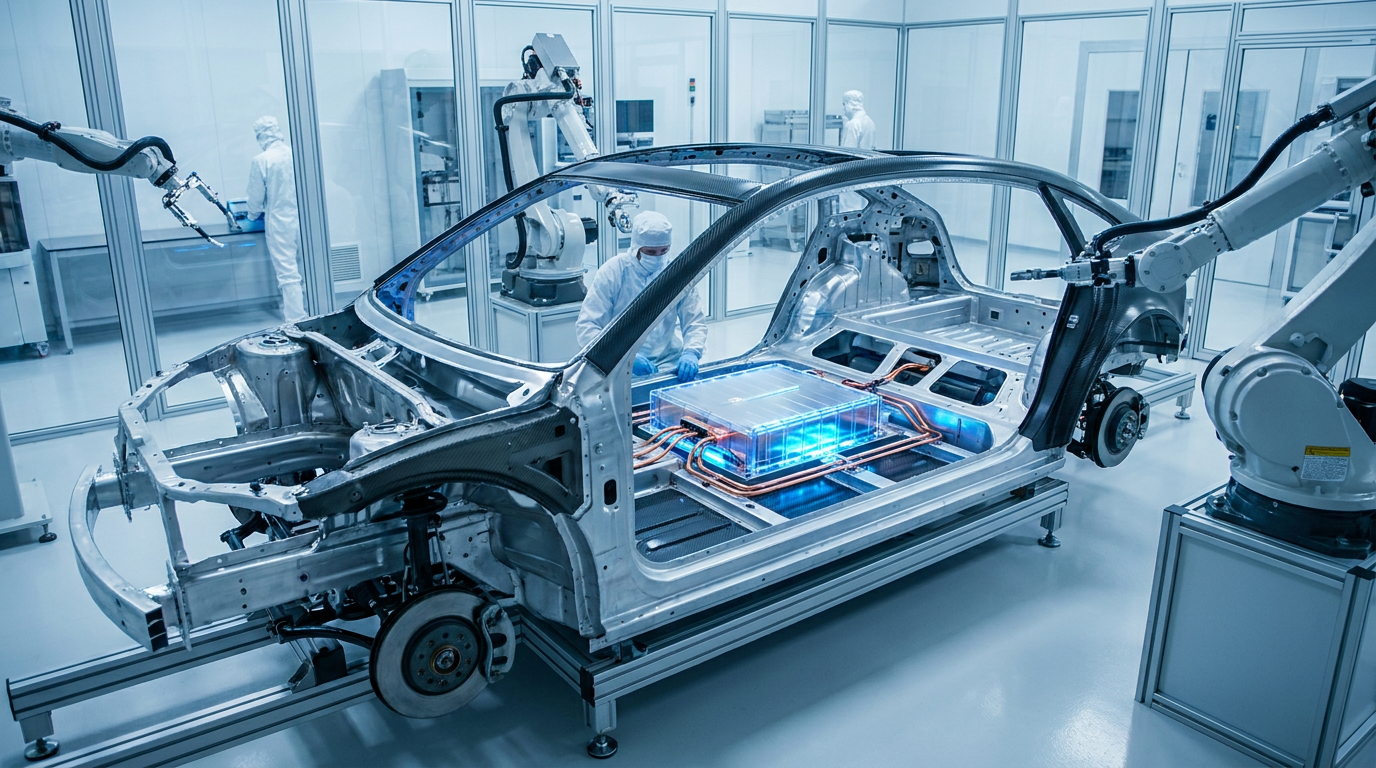
- Solid-State Pioneers
- Startups and tech-forward battery makers pushing for immediate commercialization and rapid iteration.
- Legacy Automakers
- Established car manufacturers taking a measured, infrastructure-first approach to commercialization.
- Industry Realists
- Manufacturing experts and analysts focused on the harsh economics of scale and yield rates.
What's not represented
- · Raw material suppliers
- · Independent safety regulators
Why this matters
Solid-state batteries solve the two biggest hurdles to mass EV adoption: range anxiety and charging time. By doubling energy density and enabling 15-minute fill-ups, this technology makes electric vehicles lighter, safer, and more practical than gas-powered cars.
Key points
- Solid-state batteries replace flammable liquid electrolytes with stable solid materials, eliminating fire risks.
- The technology allows for lithium-metal anodes, doubling energy density to 400-500 Wh/kg.
- QuantumScape and Greater Bay Technology have both launched pilot production lines for solid-state cells in 2026.
- Toyota is building a dedicated solid electrolyte supply chain, targeting a commercial vehicle launch in 2027-2028.
- High manufacturing costs mean early solid-state batteries will be limited to luxury vehicles and aviation before reaching the mass market.
For more than a decade, the electric vehicle industry has been chasing a singular, elusive holy grail of energy storage: the solid-state battery. Promising to double driving ranges, slash charging times to mere minutes, and eliminate the fire risks associated with current battery chemistries, the technology has long been trapped in the realm of laboratory science projects and theoretical white papers. But in 2026, the narrative has definitively shifted. Across California, Japan, and China, major battery developers and automotive giants are finally moving solid-state technology out of the lab and onto pilot manufacturing lines. This transition marks the beginning of a new era in automotive engineering, one that could ultimately make electric vehicles lighter, cheaper, and vastly more practical than their internal combustion predecessors.[6]
To understand why this breakthrough is so critical, one must look at the limitations of the lithium-ion batteries powering today's electric vehicles. Conventional EV batteries rely on a liquid electrolyte—a chemical solution that shuttles lithium ions back and forth between the anode and the cathode during charging and discharging. While effective, this liquid is inherently volatile and flammable. Under extreme stress, such as a severe crash, overcharging, or a manufacturing defect, the liquid can ignite, triggering a dangerous chain reaction known as thermal runaway. Furthermore, the physical properties of liquid electrolytes limit how fast a battery can safely absorb energy, which is why even the most advanced EVs still require 30 to 40 minutes for a standard fast-charge session.[6]
Solid-state batteries solve these fundamental problems by replacing the flammable liquid electrolyte with a stable, non-flammable solid material—typically a specialized ceramic, polymer, or sulfide glass. This seemingly simple substitution unlocks a cascade of engineering benefits. Most importantly, a solid electrolyte suppresses the formation of dendrites, tiny metallic whiskers that can grow inside liquid batteries and cause short circuits. By preventing dendrite growth, battery engineers can safely replace the bulky graphite anode used in traditional cells with a pure lithium-metal anode. This swap dramatically shrinks the physical size of the battery cell while vastly increasing the amount of energy it can hold.[1][6]

The resulting performance metrics represent a generational leap. Today's best lithium-ion batteries max out at an energy density of roughly 200 to 250 watt-hours per kilogram (Wh/kg). The solid-state cells entering pilot production in 2026 are targeting 400 to 500 Wh/kg. For the consumer, this means an automaker can either build an EV that travels 600 to 750 miles on a single charge, or they can cut the battery pack's weight and physical footprint in half while maintaining a standard 300-mile range. Safety margins also improve drastically; comparative testing shows that thermal events in solid-state systems do not begin until temperatures reach around 247 degrees Celsius, compared to just 90 degrees Celsius for conventional lithium-ion cells.[6]
The most visible symbol of this transition occurred in early 2026, when California-based QuantumScape inaugurated its Eagle Line in San Jose. Backed by billions in investment from Volkswagen, QuantumScape has spent fifteen years trying to crack the solid-state code. The launch of the Eagle Line—a highly automated suite of manufacturing equipment—represents the company's transition from research and development to actual production. QuantumScape CEO Siva Sivaram described the milestone as the company's Kitty Hawk moment, signaling that the foundational science is complete and the focus has now shifted entirely to manufacturing scale and yield.[1][2][7]
The Eagle Line is tasked with producing QuantumScape's QSE-5 cells, which will be shipped to automotive partners for real-world vehicle integration and testing. The performance data from these cells is striking. In extensive laboratory testing, the solid-state cells successfully completed 400 consecutive fast-charge cycles—replenishing from 10 percent to 80 percent capacity in just 15 minutes—while retaining over 80 percent of their initial energy capacity. By bringing EV charge times down to a window that closely mimics a traditional gas station fill-up, QuantumScape aims to permanently erase the charging anxiety that still deters many mainstream consumers from adopting electric vehicles.[1][7]

The Eagle Line is tasked with producing QuantumScape's QSE-5 cells, which will be shipped to automotive partners for real-world vehicle integration and testing.
While QuantumScape scales up in the United States, parallel breakthroughs are accelerating in Asia. China's Greater Bay Technology (GBT), a battery manufacturer backed by the GAC Group, recently announced that its first A-sample all-solid-state battery cells have successfully rolled off the production line. GBT is moving aggressively, targeting gigawatt-hour-level mass production by the end of 2026. This timeline makes GBT one of the first companies attempting to push solid-state technology directly into commercial vehicles within the current calendar year, reflecting the intense, high-stakes arms race dominating the Chinese EV sector.[3]
GBT's A-sample cells rely on a novel organic-inorganic composite electrolyte system, and the early safety validations have been rigorous. According to the company, the cells successfully passed extreme abuse testing—including needle penetration, severe extrusion, and thermal shock—without catching fire or exploding. Boasting an energy density that approaches 500 Wh/kg, GBT claims its cells will enable stable ultra-fast charging while showing minimal cycle-life degradation. If GBT can maintain these metrics at mass-production volumes, it could give Chinese automakers a significant competitive advantage in the global premium EV market.[3]
Meanwhile, Toyota—widely considered the early pioneer of solid-state research—is taking a more measured approach to commercialization. Despite viral social media rumors claiming that Toyota has already launched a solid-state EV, the Japanese automaker's official roadmap places its first commercial solid-state model in the 2027 to 2028 timeframe. Toyota demonstrated a working prototype vehicle as early as 2020, but the company has spent the intervening years quietly solving the complex manufacturing challenges related to cycle life, material durability, and supply chain logistics.[5]
To secure that supply chain, Toyota has partnered with Japanese oil giant Idemitsu Kosan and Sumitomo Metal Mining to build a large-scale pilot plant dedicated to producing solid sulfide electrolytes. Expected to be completed by the end of 2027, the facility will produce the highly specialized materials required for Toyota's battery packs. Toyota's internal targets align with the rest of the industry—driving ranges near 1,000 kilometers (621 miles) and fast-charging times around 10 minutes—but the company intends to debut the technology exclusively in its luxury Lexus brand, where higher vehicle margins can absorb the initial premium of the new batteries.[5]
Despite the flurry of 2026 pilot plant inaugurations, industry realists caution against confusing small-batch production with true mass-market adoption. Experts at the Chinese Academy of Sciences have publicly noted that while the fundamental science is now proven, large-scale, high-yield volume production of all-solid-state batteries will likely take another three to five years. Executives at major automakers like Geely echo this sentiment, pointing out that the path from pilot verification to millions of vehicles is blocked by three formidable hurdles: manufacturing yield rates, raw material costs, and the immaturity of the solid-state supply chain.[4]

Cost remains the most significant barrier. Current estimates suggest that all-solid-state battery cells cost between three to five times as much to produce as mainstream lithium iron phosphate (LFP) batteries. For a typical family EV, switching to a fully solid-state architecture today would add more than $10,000 to the cost of the battery pack alone. Because of this steep premium, early adoption will be strictly limited to high-end luxury vehicles, performance sports cars, and specialized applications like electric vertical takeoff and landing (eVTOL) aircraft, where the weight savings justify the exorbitant price tag.[4]
To bridge the gap between today's affordable lithium-ion cells and tomorrow's solid-state future, many battery manufacturers are deploying semi-solid batteries as an interim step. Semi-solid cells use a hybrid approach, combining a solid electrolyte with a small amount of liquid to improve conductivity and ease manufacturing. Companies like Dongfeng Motor and Nio are already integrating semi-solid packs into their vehicles, offering a compromise that delivers higher energy density than traditional batteries without requiring a complete reinvention of the factory floor.[4]
Regardless of the exact month a fully solid-state vehicle arrives at a local dealership, 2026 will be remembered as the definitive turning point for electric mobility. The theoretical debates over chemistry and physics have ended; the engineering blueprints are now being executed on factory floors. As pilot lines ramp up and production costs inevitably begin their downward curve, the solid-state battery is poised to eliminate the final compromises of EV ownership, transforming the electric car from an environmental alternative into the undisputed standard for global transportation.[1][5][6]
How we got here
2020
Toyota demonstrates an early working prototype of a solid-state battery vehicle, proving the concept outside the lab.
June 2023
QuantumScape releases testing data showing its cells can retain over 80% capacity after 400 fast-charge cycles.
Early 2026
QuantumScape inaugurates the Eagle Line in California, marking the start of automated pilot production for automotive sampling.
Mid 2026
China's Greater Bay Technology produces its first A-sample all-solid-state cells, targeting mass production by year's end.
2027–2028
Projected commercial launch window for the first luxury electric vehicles equipped with true solid-state batteries.
Viewpoints in depth
Solid-State Pioneers
Startups and tech-forward battery makers pushing for immediate commercialization.
Companies like QuantumScape and Greater Bay Technology argue that the fundamental science is solved and the focus must now be purely on scaling manufacturing. They point to successful pilot lines and rigorous A-sample testing as proof that solid-state cells can be integrated into consumer vehicles before the end of the decade, prioritizing rapid iteration to capture early market share.
Legacy Automakers
Established car manufacturers taking a measured, infrastructure-first approach.
Giants like Toyota and Volkswagen view solid-state technology as a long-term play rather than an immediate silver bullet. They argue that rushing the technology to market risks quality control issues and supply chain bottlenecks. Instead, they are investing heavily in foundational infrastructure—like dedicated solid electrolyte chemical plants—and plan to introduce the batteries slowly through low-volume luxury brands before attempting mass-market scale.
Industry Realists
Manufacturing experts and analysts focused on the harsh economics of scale.
Researchers and supply chain executives warn that the gap between a successful pilot plant and gigawatt-hour mass production is massive. They emphasize that solid-state cells currently cost up to five times more than standard lithium-ion batteries. From their perspective, the industry must solve severe yield-rate challenges and raw material costs before solid-state can truly replace affordable lithium iron phosphate (LFP) chemistries in everyday family cars.
What we don't know
- Exactly how quickly manufacturing yield rates will improve to bring costs down to parity with lithium-ion batteries.
- Whether the global supply chain for specialized solid electrolytes can scale fast enough to meet automaker demand.
- Which specific vehicle models will be the first to offer a fully solid-state option to the public.
Key terms
- Solid electrolyte
- A stable, non-flammable solid material (like ceramic or sulfide glass) that conducts ions between a battery's anode and cathode, replacing the volatile liquid used in traditional batteries.
- Lithium-metal anode
- A high-capacity battery component made of pure lithium metal. It stores significantly more energy than traditional graphite anodes but can only be safely used with a solid electrolyte.
- Energy density
- A measure of how much energy a battery can hold relative to its weight, usually expressed in watt-hours per kilogram (Wh/kg). Higher density means more driving range without adding weight.
- Thermal runaway
- A dangerous, unstoppable chain reaction inside a battery where overheating causes the liquid electrolyte to catch fire or explode.
- Semi-solid battery
- A transitional battery technology that uses a hybrid of both solid and liquid electrolytes to improve performance and safety while keeping manufacturing costs lower than pure solid-state cells.
Frequently asked
What makes a solid-state battery different from a regular EV battery?
Traditional EV batteries use a flammable liquid chemical to move energy back and forth. Solid-state batteries replace that liquid with a stable, solid material like ceramic or glass, which is safer and holds much more energy.
Will solid-state batteries make EVs charge faster?
Yes. Because solid electrolytes are more stable and resist overheating, they can safely absorb energy much faster. Early pilot cells have demonstrated the ability to charge from 10% to 80% in just 10 to 15 minutes.
When can I actually buy a car with a solid-state battery?
While pilot production began in 2026, true mass-market availability is still years away. Early commercial models are expected in luxury vehicles around 2027 or 2028, with affordable mainstream adoption likely happening after 2030.
Will solid-state batteries catch fire?
They are vastly safer than current batteries. The solid materials used are non-flammable, and testing shows they can withstand extreme heat, crushing, and puncturing without triggering the thermal runaway fires associated with liquid lithium-ion cells.
Sources
Source coverage
7 outlets
3 viewpoints surfaced






[1]ElectrekSolid-State Pioneers
QuantumScape inaugurates Eagle Line pilot for solid-state battery production
Read on Electrek →[2]InsideEVsSolid-State Pioneers
QuantumScape's 'Kitty Hawk Moment': Solid-State Batteries Enter Pilot Production
Read on InsideEVs →China ramps up solid-state EV battery production with GBT breakthrough
Read on Electrek (GBT) →[4]GasgooIndustry Realists
Solid-State Batteries: The True Distance Between Lab and Production
Read on Gasgoo →[5]EVWorldLegacy Automakers
Toyota's Solid-State Battery Roadmap: Reality vs. Rumor
Read on EVWorld →[6]EVTech NewsIndustry Realists
The electric vehicle industry is entering a transformative phase in 2026
Read on EVTech News →[7]BatteryTech OnlineIndustry Realists
QuantumScape CEO details solid-state commercialization blueprint
Read on BatteryTech Online →
Every angle. Every day.
Get technology stories with full source coverage and perspective breakdowns delivered to your inbox.