
DOJ Clears Historic $111 Billion Paramount and Warner Bros. Discovery Merger
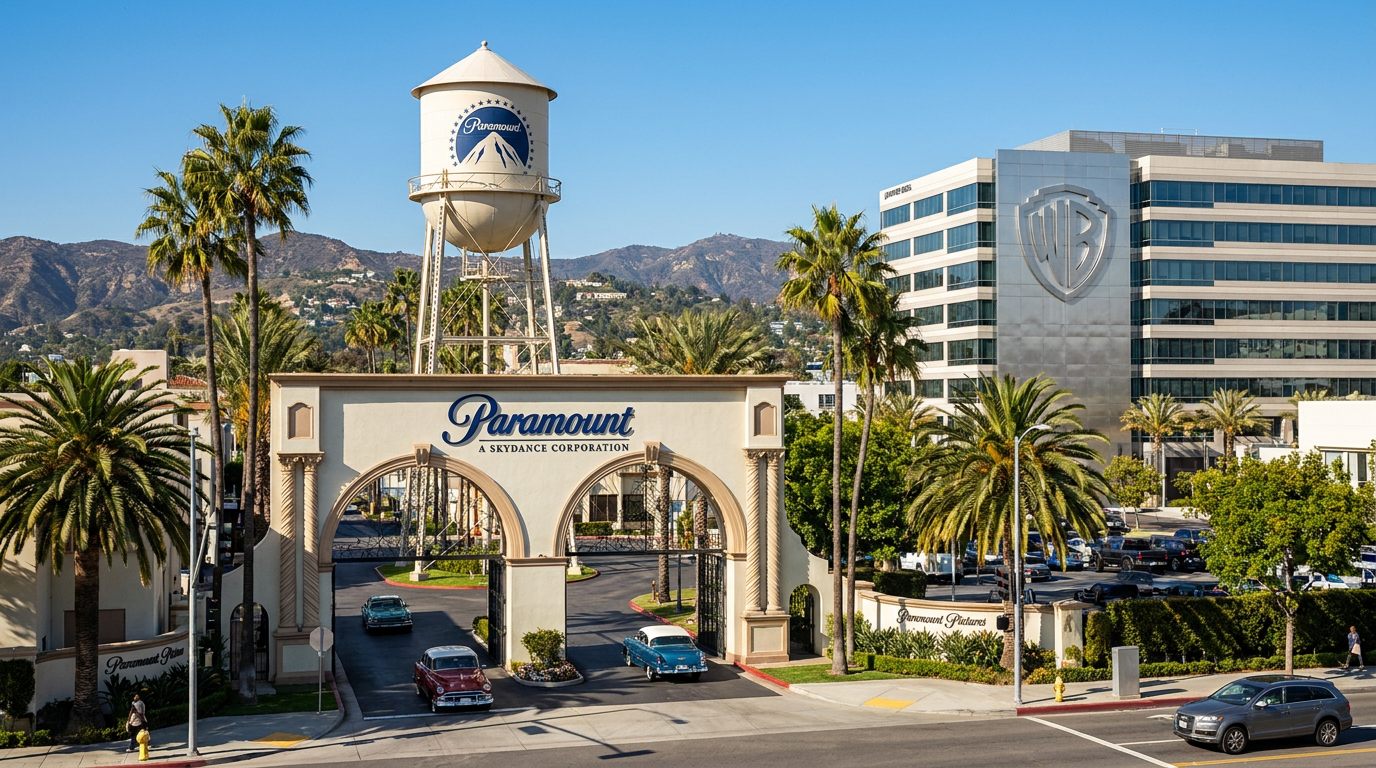
The U.S. Justice Department has formally approved Paramount Skydance’s massive acquisition of Warner Bros. Discovery, clearing the biggest regulatory hurdle for the $111 billion deal.
By Factlen Editorial Team
- Federal Regulators
- The U.S. Justice Department views the merger as a necessary evolution to maintain a competitive streaming market.
- Corporate Leadership
- Executives emphasize the financial synergies and the creation of a unified, premium content library.
- Industry Critics & State Officials
- Watchdogs warn of excessive media consolidation, potential job losses, and the influence of foreign funding.
- International Watchdogs
- European and UK regulators are scrutinizing the deal's impact on local markets and its foreign funding structure.
What's not represented
- · Independent film producers concerned about fewer major studio buyers.
- · Consumers worried about potential subscription price hikes for the combined streaming service.
- · Employees at CBS News and CNN facing potential editorial consolidation.
Why this matters
For consumers, this historic merger signals the end of the fragmented 'streaming wars' era. By combining HBO's prestige television, Warner Bros. films, CBS live sports, and Paramount's extensive catalog under a single subscription, the deal promises a unified mega-platform that directly rivals Netflix in scale and convenience.
Key points
- The U.S. Justice Department approved Paramount Skydance's $111 billion acquisition of Warner Bros. Discovery.
- Regulators concluded the merger will increase competition by creating a robust rival to tech-backed streaming giants.
- The deal combines major assets including CBS, CNN, HBO Max, Paramount+, and Warner Bros. Pictures.
- Paramount+ and HBO Max are expected to merge into a single streaming platform with roughly 200 million subscribers.
- The acquisition follows a fierce bidding war where Paramount beat out an $82.7 billion offer from Netflix.
- The merger still faces regulatory reviews from the UK's Competition and Markets Authority and the European Commission.
The U.S. Department of Justice has officially greenlit Paramount Skydance’s $111 billion acquisition of Warner Bros. Discovery, removing the most significant regulatory roadblock to one of the largest media consolidations in Hollywood history. The DOJ's Antitrust Division announced the conclusion of its rigorous eight-month investigation on June 12, 2026, determining that the massive transaction does not violate federal antitrust laws. The approval allows the companies to proceed with integrating their vast entertainment empires without requiring any divestments or behavioral remedies.[1][2][4]
In a public statement detailing the decision, federal regulators concluded that the merger is "not likely to result in harm to competition or American consumers." The comprehensive review process examined over two million internal documents from more than 80 corporate custodians. Investigators scrutinized the potential market impacts across three primary sectors: linear television broadcast, theatrical film development and distribution, and the rapidly evolving streaming video on demand market.[1][3]
Rather than viewing the consolidation as a monopolistic threat, the Justice Department argued that the combined entity will actually "increase competition across the media and entertainment ecosystem." Regulators noted that by pooling their intellectual property and technological infrastructure, Paramount and Warner Bros. Discovery will forge a "robust competitive alternative." This scale is deemed necessary to challenge the dominance of tech-backed streaming giants like Netflix, Amazon, and Apple, which have increasingly dictated the terms of the modern entertainment landscape.[2][5]
The sheer scale of the resulting media conglomerate is unprecedented, bringing together a sprawling portfolio of legacy assets. The merger unites the CBS broadcast network, CNN, and Discovery's unscripted television empire under a single corporate umbrella. It also marries two of Hollywood's oldest and most prestigious film studios—Paramount Pictures and Warner Bros. Pictures—consolidating a century of cinematic history and highly lucrative franchises.[4][5]

For consumers, the most immediate and tangible impact will be felt in the streaming market. Industry analysts expect the newly formed company to merge Paramount+ and HBO Max into a single, unified platform. This combined service would boast a subscriber base of approximately 200 million, instantly rivaling Netflix's global reach. Subscribers would gain access to a library that spans prestige HBO dramas, live CBS sports broadcasts, and blockbuster theatrical releases, effectively ending the fragmented "streaming wars" era for these specific brands.[4][5]
For consumers, the most immediate and tangible impact will be felt in the streaming market.
The DOJ's approval marks the culmination of a dramatic corporate bidding war that captivated the entertainment industry throughout late 2025 and early 2026. Warner Bros. Discovery initially placed itself up for auction in October 2025, seeking to maximize shareholder value amid a shifting media landscape and mounting operational costs. The decision triggered a fierce competition among Hollywood's heaviest hitters.[6]
Netflix aggressively pursued the acquisition, submitting an $82.7 billion offer in December 2025 that the Warner Bros. Discovery board initially favored. The proposed Netflix deal would have spun off the linear television networks into a separate company. However, Paramount Skydance—backed by David Ellison—launched a hostile all-cash tender and continually sweetened the pot, forcing the board to reconsider its options.[1][6]
On February 27, 2026, the two companies reached a definitive agreement for Paramount to acquire Warner Bros. Discovery for $110.9 billion, translating to $31 per share in cash. This represented a massive 139% premium over Warner Bros. Discovery's undisturbed share price prior to the bidding war. Following months of internal debate, Warner Bros. Discovery shareholders formally voted to approve the sale in late April.[4][6]

Corporate leadership projects that the integration will generate roughly $6 billion in synergies. These cost savings will be achieved by eliminating overlapping operations, streamlining production pipelines, and consolidating marketing efforts. Executives argue this financial efficiency will allow the newly formed giant to improve profitability and invest more heavily in premium original content.[4]
However, the DOJ's clearance does not mean the deal is entirely free of obstacles, as international regulators are actively scrutinizing the transaction. The United Kingdom’s Competition and Markets Authority recently opened an investigation to determine if the merger will substantially lessen competition in the UK market, setting an August 7 deadline for its initial findings.[1][7]
Similarly, the European Commission is conducting its own antitrust review, with a tentative deadline of July 7. European regulators are reportedly paying close attention to the funding structure behind the Paramount Skydance bid. The acquisition is heavily supported by a combined $24 billion commitment from three sovereign wealth funds based in Saudi Arabia, the United Arab Emirates, and Qatar. Upon closing, these foreign funds will hold a 38.5% non-voting stake in the combined company.[1][6]

Domestically, the merger also faces potential state-level challenges. California Attorney General Rob Bonta publicly stated that the transaction "remains under investigation by my office," signaling that state attorneys general could still file lawsuits to block or alter the deal. Despite these lingering hurdles and concerns from industry critics regarding media consolidation, the federal green light sets the stage for a seismic realignment of the global entertainment industry by the end of 2026.[1][2]
How we got here
October 2025
Warner Bros. Discovery board places the company up for auction to maximize shareholder value.
December 2025
Netflix submits an $82.7 billion bid, which is initially endorsed by the WBD board.
February 2026
Paramount Skydance secures a definitive agreement to acquire WBD for $110.9 billion in cash.
April 2026
Warner Bros. Discovery shareholders formally vote to approve the merger.
June 2026
The U.S. Department of Justice officially clears the merger following an eight-month antitrust investigation.
Viewpoints in depth
Federal Regulators
The U.S. Justice Department views the merger as a necessary evolution to maintain a competitive streaming market.
The DOJ's Antitrust Division concluded that blocking the merger would actually harm consumers by leaving legacy studios unable to compete with tech giants like Amazon and Apple. By allowing Paramount and Warner Bros. Discovery to combine their resources, regulators believe the new entity will serve as a 'robust competitive alternative' in the streaming space. They also determined that the consolidation of linear television networks and theatrical studios would not substantially reduce consumer choice or artificially inflate prices.
Corporate Leadership
Executives emphasize the financial synergies and the creation of a unified, premium content library.
For Paramount Skydance and Warner Bros. Discovery leadership, the $111 billion deal is a survival strategy in an increasingly expensive media landscape. Executives project $6 billion in operational synergies, which they argue will be reinvested into high-quality original programming. By combining Paramount+ and HBO Max, leadership believes they can finally offer a comprehensive subscription package that rivals Netflix in both scale and prestige, reducing subscriber churn and stabilizing long-term revenue.
Industry Critics & State Officials
Watchdogs warn of excessive media consolidation, potential job losses, and the influence of foreign funding.
Critics of the deal, including California Attorney General Rob Bonta, argue that merging two of Hollywood's largest studios will inevitably lead to massive layoffs and fewer opportunities for creative professionals. There is also widespread concern regarding the consolidation of major news organizations, specifically the merging of CBS News and CNN under one corporate roof. Furthermore, industry watchdogs have raised alarms about the $24 billion in backing from Gulf sovereign wealth funds, questioning the long-term implications of foreign state investment in American media infrastructure.
What we don't know
- The exact timeline for when Paramount+ and HBO Max will be integrated into a single application.
- Whether the UK or European regulatory bodies will demand divestments or behavioral remedies before approving the deal.
- How the newly formed company will handle the editorial independence of CBS News and CNN.
- If state attorneys general, such as California's Rob Bonta, will file lawsuits to block the merger.
Key terms
- Antitrust Division
- The branch of the U.S. Department of Justice responsible for enforcing laws against monopolies and ensuring fair competition in the marketplace.
- Synergies
- Cost savings and financial benefits achieved when two companies merge and eliminate overlapping operations or combine their resources.
- Linear Television
- Traditional broadcast and cable television programming that is watched at a scheduled time, such as CBS or CNN.
- Sovereign Wealth Fund
- A state-owned investment fund that invests in real and financial assets globally to benefit the country's economy.
- Tender Offer
- A public, open offer to buy some or all of the shares in a corporation directly from the existing shareholders.
Frequently asked
Will Paramount+ and HBO Max merge into one app?
Yes, industry analysts expect the two streaming services to combine into a single platform, creating a unified library with approximately 200 million subscribers.
Did Netflix try to buy Warner Bros. Discovery?
Yes, Netflix submitted an $82.7 billion rival bid in December 2025, but Paramount ultimately won the bidding war with a $110.9 billion all-cash offer.
Is the merger completely finalized?
Not yet. While the U.S. Department of Justice has approved the deal, it still faces regulatory reviews from the UK's Competition and Markets Authority and the European Commission.
Who owns Paramount Skydance?
Paramount is controlled by David Ellison's Skydance Media, with financial backing from American investors and a 38.5% non-voting stake held by sovereign wealth funds from Saudi Arabia, the UAE, and Qatar.
Sources
Source coverage
7 outlets
4 viewpoints surfaced







[1]The GuardianIndustry Critics & State Officials
DOJ approves $111bn Paramount-Warner Bros Discovery merger despite competition fears
Read on The Guardian →[2]Associated PressFederal Regulators
Paramount Skydance merger with Warner Bros. Discovery won't harm competition, consumers, DOJ says
Read on Associated Press →[3]PoliticoFederal Regulators
Justice Department clears Paramount's $111B acquisition of Warner Bros. Discovery
Read on Politico →[4]Broadband TV NewsCorporate Leadership
Department of Justice clears Paramount-Warner Bros. Discovery merger
Read on Broadband TV News →[5]IBCCorporate Leadership
US Department of Justice approves Paramount's acquisition of Warner Bros. Discovery
Read on IBC →[6]WikipediaInternational Watchdogs
Proposed acquisition of Warner Bros. Discovery by Paramount Skydance
Read on Wikipedia →[7]ReutersInternational Watchdogs
UK competition watchdog opens probe into Paramount, Warner Bros Discovery merger
Read on Reuters →
Every angle. Every day.
Get entertainment stories with full source coverage and perspective breakdowns delivered to your inbox.